Strong winds ripple water;
  Forest trees are laid low...
  A bitter urge to die --
  One can't come; one can't go.
 Ten decades flow, stream-like;
  Riches are cold, gray ash.
 Life 's a death procession --
  Unless you're adept and brash,
  And can take up the sword
  To hasten the anguish...
 No rustling dry leaves, or
 Leaky roof as you languish.
NOTE: The late Tang Dynasty poet, Sikong Tu (a.k.a. Ssŭ-k‘ung T‘u,) wrote an ars poetica entitled Twenty-Four Styles of Poetry. It presents twenty-four poems that are each in a different tone, reflecting varied concepts from Taoist philosophy and aesthetics. Above is a crude translation of the nineteenth of the twenty-four poems. This poem’s Chinese title is 悲慨, and it has been translated as: “Despondent,” and “Sorrowful.”
Call the roller of big cigars,
 The muscular one, and bid him whip
 In kitchen cups concupiscent curds.
 Let the wenches dawdle in such dress
 As they are used to wear, and let the boys
 Bring flowers in last month's newspapers.
 Let be be finale of seem.
 The only emperor is the emperor of ice-cream.

Take from the dresser of deal,
 Lacking the three glass knobs, that sheet
 On which she embroidered fantails once
 And spread it so as to cover her face.
 If her horny feet protruded, they come
 To show how cold she is, and dumb.
 Let the lamp affix its beam.
 The only emperor is the emperor of ice-cream.
Should the wide world roll away
   Leaving black terror
   Limitless night,
 Nor God, nor man, nor place to stand
   Would be to me essential
 If thou and thy white arms were there
   And the fall to doom a long way.
Available on Project Gutenberg
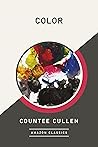
This excellent collection of lyric poetry is by one of the greats of the Harlem Rennaissance. The poems include a range of forms and sizes from single quatrain epitaphs to poems of several pages, with those in between (including a number of sonnets) being most common. Like Dickinson, Cullen had a fondness for common meter (a.k.a. hymn meter,) and it is prevalent throughout. The topics include serious matters, such as race and death, but there is no lack of whimsicality within these pages.
The book is divided into four sections: “Color,” “Epitaphs,” “For Love’s Sake,” and “Varia.” The first is the most serious of tone. (Interestingly, the epitaphs and other poems on death often take a lighthearted, even humorous, tone.)
I’d highly recommend this collection for poetry readers. It’s fun to read, and the poems are skillfully crafted.















 Tiger Riding for Beginners