BOOK REVIEW: Houdini: The Ultimate Spellbinderby Tom Lalicki

Houdini: The Ultimate SpellbinderHoudini: The Ultimate Spellbinder by Tom Lalicki
My rating: 4 of 5 stars

Amazon page


This is a biographical sketch of the life—mostly the professional life–of Harry Houdini. I call it a sketch rather than a biography because it’s a short work (less than 100 pages) and it’s not the case that Erik Weisz (a.k.a. Ehrich Weiss, a.k.a. / stage-name: Harry Houdini) led a life too dull to merit full-length biography. There are several biographies available. I present this not as a criticism, but to make the reader aware that one will be reading the condensed version of Houdini’s story. If what you seek is a short and sweet description of the highlights of Houdini’s life, this is the book for you. If you are a huge fan and want to know as much as you possibly can including the intimate nitty-gritty, you might start with one of the full biographies and / or even the books written by Houdini [Full-disclosure: most of them were ghost-written as I understand it.]

Houdini was a fascinating person in many ways. Parallels have been drawn between Houdini and fictional heroes, notably Bruce Wayne / Batman. At first this seems like an inappropriate comparison because Houdini was a showman to the core—not one to hide his light under a bushel. However, what such comparisons get to is that Houdini was preternaturally fit for his time and his approach to illusions relied not only on his smarts but on his conditioning. He developed some tricks that other magicians couldn’t repeat even if they knew the trick in great detail. The average man just wasn’t physically capable of pulling them off. Today there are artists such as David Blaine who follow in Houdini’s footsteps, but Houdini blazed a trail in this regard.

There’s another way in which the Batman comparison may be more apropos than it first seems. While Houdini didn’t fight violent criminals like the Joker or Bane, he did take on the con artists—most notably mediums who preyed on grieving family members. Like most magicians today—notably Penn & Teller and James Randi—Houdini was adamant that his tricks were products of skill and involved no supernatural powers whatsoever. As I say, today magic is heavily populated by science nerds who love that magic is the exploitation of the limitations of our sensory and nervous system organs, and who reject the supernatural, but in Houdini’s day there were still many frauds and charlatans in the industry. (It should be noted that Houdini invariably discovered these medium’s tricks or the restrictions that he insisted upon to study the act were unacceptable and the mediums and they backed out, but when he put out a challenge that he could figure out any magic trick he was shown three times he was stumped. However, the magician who stumped him, Dai Vernon, made no claims of supernatural abilities. He was just a supremely skilled close-up magician and—to be fair—showed Houdini multiple versions of the same trick, making it virtually impossible for Houdini to pin down the trick. Note: this story isn’t in Lalicki’s book, but is something I read in another book, I think in “Fooling Houdini“.)

The book has quite a few graphics, notably photos and old posters. There is also a brief chronology and a biography at the book’s end.

I enjoyed this book. While it’s concise, it’s not colorless. It reads well. If you are looking to get a quick look at the life of this fascinating person, check it out.

View all my reviews

BOOK REVIEW: The Way of the Iceman by Wim Hof and Koen De Jong

The Way of The Iceman: How The Wim Hof Method Creates Radiant Longterm Health--Using The Science and Secrets of Breath Control, Cold-Training and CommitmentThe Way of The Iceman: How The Wim Hof Method Creates Radiant Longterm Health–Using The Science and Secrets of Breath Control, Cold-Training and Commitment by Wim Hof
My rating: 5 of 5 stars

Amazon page


Wim Hof is often presented as a freak of nature. If you’re flipping through the science channels, you might see a segment that shows him subjecting himself to extremely cold temperatures with no ill effects. This book is an attempt by Hof, and co-author Koen De Jong, to counter the proposition that he’s some sort of mutant (or—worse–that his demonstrations are cons) by offering a method by which anyone can achieve the same feats. It should be noted that long before Hof and YouTube came on the scene, there were people [notably Taoist and Tibetan Buddhist monks] performing similar acts.

Hof’s method (called the “Wim Hof Method” or WHM herein and in this book) consists of three components: cold training, breath exercises, and commitment building. The book explores this three-legged stool from both the scientific and practical dimensions. There’s one chapter on each of these elements that describes what it does to the body and how it contributes to well-being, and later chapters both describe what scientific studies have found so far and outline the approach by which the reader can explore the WHM on their own.

There’s a lot of front matter in this book (two forwards, a prologue, and an introduction), but the book more-or-less consists of seven chapters. The first of these is a mini-bio of Hof. It describes a fascinating event in Hof’s youth in which he was exposed to cold, as well as his travels to India in an attempt to find a yoga teacher. [As is the case with most people who come to India seeking to find that quintessential guru—i.e. a half-naked, weather-beaten, and forehead paint-streaked classical guru—he found that he had to wade through a sea of charlatans and shysters while never finding the true masters who are likely hidden away in caves in the Himalayas. Note: this is not to say that one can’t find excellent yoga instruction in India but it’ll likely be by someone fully clothed and not someone smoking pot on a ghat in Varanasi.] This resulted in Hof taking an experimental approach in which he studied the effects of various activities on himself (and such experimentation is what he advocates for others as well.) It should be noted that Hof didn’t invent this method from scratch—e.g. the breath component is based on Tibetan Tummo meditation.

As mentioned, Chapters 2 through 4 explore the three components of the WHM, i.e. cold training, breath exercise, and commitment building, respectively. These chapters describe the science of how these three elements generally (as opposed to a later chapter that describes studies in more depth) act upon the body. The commitment section describes a number of arduous feats such as climbing Kilimanjaro in a T-shirt and shorts, but also describes the role of diet (with particular emphasis on the fast-5 diet which is similar to, but not precisely, what Hof came to practice organically.)

Chapter 5 dives more deeply into the science than does the preceding chapters, and focuses on the studies in which Hof has participated in his attempt to facilitate a better understanding of his method.

The penultimate chapter suggests what the WHM might do for people in various classes, including: healthy people, athletes, and people suffering from various physical and mental ailments. With respect to the latter, there is discussion of exemplary cases as well as the possible means by which the training might act.

The final chapter is a brief outline of how the WHM can be put into practice by readers. There is also a sample log by which practitioners can chart their experience.

There are a range of graphics including line diagrams and photographs. Most of the photographs are inspirational shots of Hof in action, but there are diagrams and other graphics used to convey scientific ideas. There’s a recommended reading page as well as a works cited page. Both lists are small and confined to a few key sources of information, with the latter being the more scholarly works. There is also a glossary that may prove handy for some readers.

This book is illuminating and many stand to benefit from it. I found the approach of the authors to be sound; it’s basically “see for yourself.” This book could easily have been a sales brochure, and in some ways it is, but the fact that it emphasizes the science and the suggestion that the reader try the practice lends credibility. I’d highly recommend this book for anyone who wants to expand and explore the limits of their capability.

View all my reviews

BOOK REVIEW: The Science of Breath by Swami Rama et. al.

Science of BreathScience of Breath by Swami Rama
My rating: 4 of 5 stars

Amazon page


This is an oldie, but a goody. The first edition came out in 1979, but as its intent is to provide an overview of the anatomy and physiology of breath for yoga practitioners, the fact that it doesn’t access the bleeding edge of respiratory science isn’t all that detrimental.

This short book consists of four chapters. Two chapters are by the famous yogi Swami Rama, and the other two are written by medical doctors. The first chapter is an introduction to breath from the yogic perspective. It both explains why it’s so important to understand and work with breath and introduces the mythic physiology (prana, nadi, chakra, etc.) that has historically been used to explain pranayama (breath exercises.)

The second chapter is written by Dr. Alan Hymes and it explains the mechanics of respiration. While Chapter 2 focuses on the anatomy of breathing, it begins with an explanation of cellular respiration to introduce the role of breath in powering muscles. There is a fine explanation of the operation of the diaphragm and the intercostal muscles in breathing.

Chapter 3 is written by Dr. Rudolph Ballentine, and it delves into the role of the nose and nasal cavities in respiration. Breathing through the nose is emphasized in both yoga and many other systems of breath training (e.g. the Buteyko and Wim Hof methods.) This is because the nasal cavities perform many useful functions such as moisturizing and warming air, capturing pollutants, and extract heating and moisture from exhaled breath. Besides exploring nasal anatomy and physiology, Dr. Ballentine describes jala neti shatkarma (nasal cleansing with salt water) and nadi shoudhana (alternate nostril breathing.)

The final chapter, written by Swami Rama, mostly describes various techniques of pranayama (breathing exercises) and related practices bandhas and mudras (locks and seals in which bodily parts are contracted or constricted.) However, the chapter begins with a mix of physiology and mythic physiology. That is, it explains some topics not addressed earlier–such as the interaction between the nervous and the cardiovascular systems as well as chakra.

My standing complaint about books that weave together science and pseudo-science is mitigated a bit herein. My problem with putting these ideas together is that it can be difficult for the reader to determine what concepts reflect reality and which offer models to help one visualize energy. However, except for the last chapter, this book does a good job of keeping these ideas separate. The chapters by the medical doctors present the science with minimal intrusion of unscientific concepts. Swami Rama does present science and mythology together, but not so much scrambled together in a confusing mish-mash.

Chapters 2 through 4 use a number of graphics to help present the material. In the middle chapters these largely consist of line drawings to convey the relevant anatomical features or physical actions. The last chapter adds photographs to demonstrate relevant postures. There is a page of recommended readings, but it’s more of an advertisement for other books put out by the Himalayan Institute than the recommendation of books on the science of breath.

I found this book to be educational. It packs a lot of useful information into a concise package and is readable to a layman. I’d recommend it for yoga practitioners and others who are engaged in breath work.

View all my reviews

BOOK REVIEW: The First and Last Freedom by Jiddu Krishnamurti

The First and Last FreedomThe First and Last Freedom by Jiddu Krishnamurti
My rating: 4 of 5 stars

Amazon page


The edition of the book I’m reviewing is the Harper Collins e-book with a Forward by Aldous Huxley and in which more than half of the page count consists of appendices of Krishnamurti’s answers to various broad-ranging questions (i.e. What is the meaning of life, and such?) Jiddu Krishnamurti was a philosopher of Indian origin who passed away in 1986. This was one of his early books (first published 1954, though this is a 2010 edition) and it covers quite a bit of philosophical ground.

Krishnamurti’s teaching attracted a unique audience and existed in a unique space—at least back in his time. The topics he addressed were traditionally in the domain of spiritual philosophy, theology, or theosophy, but Krishnamurti downplayed belief and spiritualism. His teachings were attractive to those who were interested in developing their minds and selves, but who were dismayed by religiosity and all that such proclivities brought with it. Like mysticism, his ideas are about turning inward, but sans the notion that there’s a deity residing inside. In Krishnamurti’s writings, one hears echoes of Emerson’s suggestion that one must trust oneself and not get tangled up in the ideas of others—though, again, Emerson was clearly a believer. There’s also overlap with the ideas of some secular humanists, though they tend to be more scientists and less interested in meditations of the sort that have usually been relegated to spirituality in the past. (This has, of course, changed considerably in the decades since Krishnamurti’s death. Now this is a thriving space.)

The book itself consists of 21 chapters, and then there are 38 question-appendices. The chapters are 140+ pages and the appendices are cumulatively the same length. The appendices may be offered to attract readers who read the original book in a different edition. (It’s not so much a padding situation, because the 21 chapter book is long enough to stand as a book in print edition in and of itself.) The question section offers past readers a substantial amount of new material while providing an opportunity to reread the book.

There’s too much material covered by this book to make it worth accounting for it all. The overall theme of looking within to find one’s answers plays out across topics like fear, desire, the tension between individual and society, etc.

There’s good and bad news about readability. The good news is that, as one might expect of a book with almost 60 chapters (or chapter-like appendices) in a book of less than 300 pages, the information is delivered in bit-sized chunks. The bad news is that Krishnamurti was a thinking-man’s thinker. He’s not troubled to employ story-telling, humor, or the spinning of interesting language. This is raw philosophizing, and so it reads incredibly dryly unless one is a philosophy-lover to the core.

I would recommend this book for philosophy lovers.

View all my reviews

BOOK REVIEW: What Does Fear Do To You? by J. Krishnamurti

What does fear do to you?What does fear do to you? by Jiddu Krishnamurti
My rating: 3 of 5 stars

Amazon page


This book is one in a series called “Krishnamurti for the Young.” It deals with an important subject: fear and the adverse consequences of fear unchecked. Jiddu Krishnamurti was an Indian philosopher who was being groomed for a leadership position in the Theosophical Society as a young man, but he withdrew from that organization to pursue a more independent-thinking and non-sectarian philosophy.

Judging from the fact that the first edition of this book is dated 2004 and Krishnamurti passed away in 1986, it’s safe to say that this work is cobbled together from a combination of unpublished and previously published speeches and writings. There’s a page of sources and acknowledgements that provides the citations for the previously published writings. This is presented in end-note format.

The first half of the book is a story from Krishnamurti’s life that transitions into the basic theme of the book. The second half is presented in the form of questions and answers. The questions are clearly of the type children would ask, and so they may have been from school visits and the like.

It’s a short book of fewer than 30 pages–appropriate in length for kids. It has simple child-friendly drawings that were based on originals drawn by children. While the text is edited to a readability level suitable for children, as I’ll explain below, the material by-and-large isn’t presented in manner conducive to reaching children.

The book is a bit cerebral for young children in places–both in terms of the approach to delivering the material and the concepts presented. It may be of use to older children (but they may feel it’s targeted for younger kids based on the graphics.) The central message is sound: that one can watch one’s fear and see that it’s a mental product and then one can figure out how to respond to the emotion without acting impulsively or destructively. However, a more story-centric approached would better serve kids. There’s a story at the beginning about Krishnamurti walking close to a rattlesnake, but after that it becomes much more of a philosophy and psychology lesson. Krishnamurti frequently uses Socratic Method (asking questions instead of lecturing to help the reader discover a conclusion.) This method is of greater benefit to adults and young adults than young children.

I also felt that this was clearly an adults-eye view that could have benefited from a more child-eyed worldview. There’s an assumption that kids are afraid of everything and everybody and that adults are the experts in being fearless who can teach kids everything they need to know. Only an adult whose inner-child had been brutally murdered could think something so inherently ridiculous. As someone who’s taught kids yoga and martial arts, I can tell you that this is clearly not the case. In some domains, kids are far more expert fearlessness than are adults. This is something that could be tapped into to better make the point.

It seems to me that this book might be most productively read by someone who’s going to teach kids about fear and how to manage their fears. It’s great information, but it’s not presented in a manner that seems likely to grab a child’s attention. It’s not presented in an interesting fashion, and it deals in topics like conscious and consciousness that are heady for a youngster.

View all my reviews

BOOK REVIEW: Greatest Ever Boxing Workouts by Gary Todd

Greatest Ever Boxing Workouts - including Mike Tyson, Manny Pacquiao, Floyd Mayweather, Roberto DuranGreatest Ever Boxing Workouts – including Mike Tyson, Manny Pacquiao, Floyd Mayweather, Roberto Duran by Gary Todd
My rating: 3 of 5 stars

Amazon page


This will be a quick review as the book is simple and straightforward in its approach. The author interviewed 30+ boxers, and each chapter corresponds to a boxer. A few of these boxers are household names, e.g. Tyson, Duran, Pacquiao, and Mayweather, but others may or may not be known to those who aren’t fight fanatics.

Each chapter consists of three sections. The first and longest of each is an overview of that boxer’s career, but it’s the other two sections that are most relevant to the book’s title and theme. One of these sections is an interview that asks a series of 14 questions about how the respective boxer organized his training day, and the other is a description of the boxer’s workouts (typically there was more than one workout—i.e. sparring v non-sparring days.)

If you’re a big boxing fan, this book will be interesting to you particularly for some of the insights about the boxers. The author is clearly knowledgeable in that regard. If you are mostly interested in the book from a fitness perspective, and seek to learn about working out for combative sports, it’s of decidedly less value. It still has some fascinating information, but you’ll probably find it tedious and of limited usefulness. The question and answer section elicits answers from one word to a couple of sentences and the workouts are a page each. What is fascinating is how similar the day in the life of a boxer is, and, specifically, how standardized workouts are. What I mostly found intriguing was when someone stuck out as having a different mode of operating. For example, most started their days very early (often going back to sleep after road-work) but a few were clearly night owls. One can also see a little of how approaches have shifted between the earliest fighters and the ones active until recently.

There are plenty of photographs in the book, but they are the only graphics. There isn’t much else by way of ancillary matter. (i.e. there is a section of pictures of the author with various boxers, but that—of course—is primarily of interest to the author.)

In one sense the book is quite limited and tedious, but it’s also interesting to see how thirty different fighters answered the exact same pallet of questions. There is some insight into nutrition, sleep schedules, optimal time for workouts, etc. However, the book doesn’t drill deep.

If you’re a fight fan, fascinated by boxers and their careers, I’d recommend this book. For those who are buying it thinking they’ll get some insight into how to prepare as a boxer, I’d say said insight will be extremely limited. That said, the book isn’t much of a time investment, and so if you can get it cheap you may find it of some benefit.

View all my reviews

BOOK REVIEW: The Checklist Manifesto by Atul Gawande

The Checklist Manifesto: How to Get Things RightThe Checklist Manifesto: How to Get Things Right by Atul Gawande
My rating: 5 of 5 stars

Amazon page


Checklists have a bad, bureaucratic rap. Like Taylor’s time and motion studies and forms filed in triplicate, checklists seem to exist only to compound the drudgery of the workplace. Furthermore, many of the sectors in which checklists are most necessary are also those in which they are certain to be resisted—i.e. places in which there is a strong leader who is unused to having his or her instructions challenged: e.g. operating rooms and airplane cockpits. The element that ties those two locations together (along with other places where checklists are found) is that they are domains in which extremely complex activities take place, and in which one missed detail can have tragic consequences.

While the main story being told in this book is about the author’s experience leading a task force to build a surgical checklist and research its efficacy via a global study. However, Dr. Gawande takes us on the rounds of industries that found checklists before medicine did, and which had a thing or two to teach doctors about building and using them—notably the construction and air travel industries.

The book consists of nine chapters. After an Introduction that features a surgical case exemplifying how unexpected case characteristics can easily be overlooked when seconds count, the problem of extreme complexity is described as a rationale of the need for checklists in Chapter 1. While we tend to think we humans are tailor-made for complexity, the fact of the matter is that we aren’t. Mother Nature gives no capabilities that aren’t demanded to survive in the environment in which one evolved. So while we’ve done a great deal of cultural evolution to increase our capacity to deal with complexity (checklists included), the fact of the matter is that our minds and bodies are limited instruments. We can only hold a few items in short-term memory at once. We are no good at multi-tasking—despite the fact that most people feel otherwise. And when stress throws us into “fight or flight” mode, we develop tunnel-vision, not helping our capacity to see the minutiae in the big picture.

Chapter 2 delves into the checklist as solution to the aforementioned problem of extreme complexity. This chapter begins with the story of a bomber aircraft that had awesome capabilities but was deemed too complex for a single pilot to fly. (All it needed was a checklist.) The chapter then goes into medical examples. The first is a study of one of the major cause of infections: central line insertions. This offers a prime example of a procedure in which medical staff members know exactly what to do, but often small details are overlooked leading to disastrous outcomes. Then there is the case in which a little girl was saved against apparently impossible odds, in part due to a checklist performance.

Chapter 3 is entitled “The End of the Master Builder,” and as that name suggests, it’s largely about the role of checklists in construction. Construction can be compared and contrasted with medicine. The major similarity is that both fields have such high degrees of complexity that many specialists must be involved. The major difference is that time isn’t so critical in construction. (Just stopping and mulling over a solution is frequently not an option in surgery.) The biggest takeaway of this chapter is that it’s not only the tasks to be performed that need to be on the checklist but also the communication between team members.

Chapter 4 explains how centralized decision-making can be death in complex environments. The principle case discussed was how Wal-Mart out-performed the government in the wake of Hurricane Katrina in large part because leadership supported but did not dictate to managers of the stores in the storm-damaged area. However, the most fascinating piece of information for me was the explanation of why Van Halen had its infamous contract rider about having a bowl of M&M’s with all the brown ones removed. Apparently, no one cared about the candy. It was just an easy way to see at a glance whether anyone had been through the minutiae of the document–minutiae that included critical information such as how much weight the stage had to accommodate—i.e. safety issues not so easily observed but which would be potentially devastating if missed.

Chapter 5 tells the story of the World Health Organization (WHO) contacting Dr. Gawande and his first attempt at building and implementing a surgical checklist. As to be expected, there was a lot about that initial trial that wouldn’t work.

This led the author to go to what he calls “The Checklist Factory” in Chapter 6. Said “factory” is at Boeing, and it writes and updates all the checklists for Boeing aircraft—which are then modified by the individual airlines, presumably within limits governed by regulatory agencies. While the construction people taught Gawande that communication had to be on the checklist, the aircraft people taught him the need to simplify. One can’t put every detail on the list, only those that could be easily overlooked with devastating consequences. (i.e. One doesn’t need to write “Make an incision” because that’s impossible to forget, but one does include “Ensure antibiotics were delivered.”) Boeing also taught the author that there are two different flavors of checklist: READ-DO and DO-CONFIRM.

Chapter 7 describes the pilot study of the revised surgical checklist in eight hospitals in eight different countries (four developed and four developing.)

Chapter 8, “The Hero in the Age of Checklists,” explores the problem mentioned above about there being resistance in a many sectors (including medicine) because those leaders have rock star vibe going. We admire risk-takers and those who excel under pressure, but checklists seem to run counter to those traits. Thus, even when it’s clear that checklists save lives, there can be a reluctance to adopt them. Of course, as in the airline industry, eventually the checklist becomes accepted, and its use becomes second nature.

Chapter 9 tells of one of the author’s own surgical foibles, and how it led him to work to improve the procedure in order to reduce the risk of that kind of accident. It’s also an example of how the checklist kept the tragedy from being much worse.

This book has its sources annotated, but contains no graphics or other ancillary matter.

I’d recommend this book, particularly for those who work in the domain of complexity. However, I read it because it was referenced in a book I’d read on decision-making under fear. So it may also be of interest to you if you’re into questions of optimal human performance.

View all my reviews

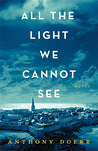
BOOK REVIEW: All the Light We Cannot See by Anthony Doerr

All the Light We Cannot SeeAll the Light We Cannot See by Anthony Doerr
My rating: 5 of 5 stars

Amazon page


This review will be short because, JUST READ IT.


“But, historical fiction isn’t my bag,” he said.


This isn’t that kind of historical fiction—i.e. the kind that binds one in a web of cultural minutiae and reads like a history book writ purple. This book will make you enrapt.


“But, I don’t like war stories. Too violent,” she said.


I bet you’ll like this one. Yes, it’s set during World War II, and war’s ugly face peeks around the corner from time to time, but one also sees how ordinary people do extraordinary things when exposed to the crucible of war. War doesn’t just bring out the worst; it also forces people to be better than they’ve ever had cause to be. The book is largely about a girl living under occupation and isn’t so much about life on the front lines.


How can I so boldly assert that one should read this particular book? (I normally lay out the facts first and only at the end make a recommendation.) Because this is one of the best crafted novels I’ve read. It’s extremely readable and engaging. The characters are superbly developed and one feels one knows them. Even the closest thing to a villain (if you don’t count war as the villain) is a complex and nuanced character who one wants to understand better.


I will tell you something substantive about the novel. It interweaves the stories of two teenage characters whose lives are fated to become entwined through the fortunes (and misfortunes) of war. The first is a blind girl who lives with her father in Paris. Father and daughter flee when the Nazis occupy France and end up living on the coast at Saint Malo with her great-uncle who is a shut-in owing to his experience in the last Great War. Of course, the move to the coast only delays the occupation and the point at which the war comes to them.


The other lead character is a German orphan boy with a gift for science who gets prematurely drawn into the war because of his great intellect and skill with radios. Not only are these characters both people who readers are drawn to, they both experience great growth over the course of the story. Imagine being blind in a war zone–or even just being a young nerd drafted into the war–and you can taste some of the emotional tension that resonates throughout this book. I won’t say that it’s all happy endings. It never is in war.


I’d highly recommend this book for all readers.

View all my reviews

BOOK REVIEW: Tropic of Cancer by Henry Miller

Tropic of CancerTropic of Cancer by Henry Miller
My rating: 3 of 5 stars

Amazon page


This, Henry Miller’s first novel, is about a young man living a bohemian life in Paris in the late 1920’s. It reads autobiographically. It’s often said that literary fiction downplays story in favor of character development. This isn’t necessarily true today, but it seems to be the case with this 1934 novel. There’s not much story—though a little one is packed in at the very end. The book does illuminate the lead character, but the reaction that character evokes is neither love nor hate but more of an “ewww” of disgust. Put another way, he’s like a Chuck Palahniuk anti-hero (e.g. think of Victor from “Choke”), but without out the quirky humor to make him amusing and interesting. This will make more sense in the next paragraph.

This book is often classified as erotica, but many readers might not find it to be erotic. Like a shock-jock, Miller chooses the most vulgar term to stun rather than using descriptive language to arouse. The lead (and other characters) spends a lot of time in bed with prostitutes, but at the same time he’s sleeping on the couch of some acquaintance or grumbling that he can’t afford a sandwich. Lest one think I’m hammering the book because of gratuitous sex, let me say that it’s not the sex that I find dismaying but a guy whose priorities are so askew of Maslow’s hierarchy as to make one wonder if he’s of the same species. There’s an uncanny valley with this character, only not with respect to facial appearance. All of that would be fine if the character experienced change over the course of the book, but the character neither grows nor is destroyed. I should also point out that I like Palahniuk’s anti-hero stories, but Miller takes himself too seriously to be fun, and I think that fun is the only way such a character makes for appealing reading.

So far I’ve made this book sound horrible, but I didn’t savage it with a sour rating. Ergo, there must be some redeeming value. There is. Miller’s use of language is intermittently gorgeous. He gets in these streams of consciousness in which poetry infuses into his prose. During these times, the story—such as it is—disappears even further into the hinterland, but the words can spark. Maybe Miller should’ve forgotten the hype that the novel is the ultimate literary art form and devoted his efforts to poetry.

I offer a qualified recommendation of the book. If you’re a reader of erotica and heard that this was a classic of that genre, then pursue it with caution. However, if you love words artfully twisted into little flashes of light, maybe you should check it out.

It goes without saying that there’s graphic content, but there are other reasons readers might be sensitive to this book. Not that I encourage avoiding a book because a character makes one feel ill-at-ease. (On the contrary, I frequently encourage it.) If a lead who comes off as simultaneously lusting after and despising women is a trigger for you, be forewarned this is such a character. (Note: He may also be anti-semitic, racist, and homophobic as well, but those elements aren’t explored in great detail. It could well be that the character doesn’t like humans in general. Maybe he was supposed to be a robot after all [hence the uncanny valley] and in that case I recant this review.)

View all my reviews

BOOK REVIEW: Missing Link Discovered by P. Marer, Z. Buzady, and Z. Vecsey

Missing Link Discovered: Planting Csikszentmihalyi's Flow Theory into Management and Leadership Practice by using FLIGBY, the official Flow-Leadership GameMissing Link Discovered: Planting Csikszentmihalyi’s Flow Theory into Management and Leadership Practice by using FLIGBY, the official Flow-Leadership Game by Paul Marer
My rating: 4 of 5 stars

Amazon page


So, you’re a leader and you’ve experienced Flow. Self-criticism vanished. Time fell away. The task was challenging, but the performance felt effortless. Your attention was rapt, and any craving for distractions disappeared. Maybe you even had a spate of creativity. You come away feeling great. Clarity reigns. Maybe you found Flow at work, but maybe it was skiing, golfing, or composing haiku. Either way, after thinking about how to repeat the feat, your next thought is, “What could my business [or organization] achieve if my people were in this state of mind for even a fraction of each day?” Increased productivity? Decreased healthcare costs and / or disruptions from sick days? Maybe, you’d see fewer complaints between stressed co-workers, or coming from customers? Regardless, you know that Flow is elusive and fickle. It may seem that the harder you seek it, the less success you have. You pick up a couple of books on finding Flow—maybe you watch some TedTalks on YouTube–and they provide helpful tips for finding the state for yourself, but most don’t have much to say on facilitating Flow for others.


That’s where FLIGBY comes in, and “Missing Link Discovered” is a companion to FLIGBY. [Note- “FLIGBY” is short for “FLow is Good Business for You,” which ties it into the work of positive psychologist Mihaly Csikszentmihalyi who both coined the term “Flow” and wrote a book entitled “Good Business” about both achieving Flow in the workplace and how some businesses succeed in the simultaneous pursuit of profit and virtue. Csikszentmihalyi was actively involved in the development of the FLIGBY game. The “missing link” referenced in the title is between leadership and Flow.] FLIGBY is an educational video game in which the player assumes the role of General Manager (GM) of a winery. The last GM was a hard-driving pursuer of profit who left the winery’s mission and values in a muddle and its employees stressed out and at each other’s throats. The player makes about 150 decisions over the course of the 23 scenes that map to a timeline of one’s first half a year as GM. While the player still has to consider the usual business objectives–such as profitability–to succeed one also has to help one’s employees find Flow. The game is used by both by professors of business education courses (e.g. in MBA programs) and by corporate trainers.


As this is a review of the book and not the FLIGBY game, I won’t talk too much more about it beyond this paragraph. However, I did have an opportunity to play the game and found it to be both educational and engrossing. The scenes are live-action, and the cast did a great job of creating the emotional tension necessary to make one feel a stake in the decisions. There’s a narrative arc that unfolds over the course of the game, and so it appeals to the way our brains best take in information. Of course, the game also pays attention to those factors that facilitate Flow, such as offering immediate feedback and an increasing challenge such that the difficulty rises with one’s skill.


I’ll now clarify what I mean by the book being “a companion” to the FLIGBY game. It’s not a game manual. [i.e. The nuts and bolts of how to navigate the game as well as general background information are provided within the game itself as well as through a series of digital appendices—a list of which is included in the book.] Rather, “Missing Link Discovered” is intended to bring readers up to speed in three areas relevant to the FLIGBY game. These areas are delineated by the book’s three parts. Part I (Ch. 1 – 3) introduces Flow and explains how its pursuit fits into the larger scheme of leadership responsibilities. It begins with an introduction to Flow and Csikszentmihalyi’s research, then links Flow and leadership, and—finally–describes the set of leadership skills used in the game.


The second part (Ch. 4 – 8) introduces the game, situates it in the context of serious games (those for which entertainment is a secondary concern), and discusses the topic of feedback in great detail (Note: feedback is a crucial issue because delayed or inadequate feedback is one of the major reasons that people have trouble achieving Flow–particularly in a workplace setting.) The last chapter in this section is a collection of captioned photos that charts the development of the game from the first meeting with Professor Csikszentmihalyi to the game’s use for both instruction and research.


While the first two parts of the book are relevant to all players, the last part is aimed at Professors, corporate trainers, and researchers. It consists of two chapters. Chapter 9 discusses such issues as where in an individual’s education or training the game should be situated, and how it should be presented. The last chapter (Ch. 10) is a bit different in that it opens up a discussion about the research potential offered by FLIGBY. Given the game’s widespread use in both academia and the corporate world, a great deal of data is collected that can be used anonymously by researchers to study interesting research questions (e.g. how players in differing demographics or job positions make decisions.)


The book offers a number of ancillary features that increase its usability and clarity. The first of these features are two single-page summaries that introduce readers to Flow and FLIGBY, respectively. Besides the aforementioned photo chapter, the book has many diagrams and other graphics to clarify concepts addressed in the text. The book is footnoted throughout, and provides a glossary of key terms. It should also be noted that there is an introduction by Professor Csikszentmihalyi in which he describes his involvement in the project and presents his thoughts on the value of FLIGBY.


I recommend this book, particularly for those who will be playing FLIGBY or who are in the process of determining whether FLIGBY is right for one’s students or employees. From corporate programs in mindfulness to interest in Flow-based leadership, all signs point to a workplace revolution in which there is a long overdue convergence of incentives and objectives between employees and employers. It’s been a long road from Henry Ford’s plan to make sure all employees could afford the cars the company made to the explosion of Google’s “Search Inside Yourself” program and others like it, but this revolution is picking up steam and if you’re unaware, you might want to look into it.

View all my reviews