BOOK REVIEW: How We Feel by Giovanni Frazzetto

How We FeelHow We Feel by Giovanni Frazzetto
My rating: 4 of 5 stars

Amazon page


Frazzetto’s book tells us what neuroscience can and can’t tell us about seven core emotions: anger, guilt, anxiety, grief, empathy, joy, and love. Doing so puts the neuroscience of emotion into a broader context of art, philosophy, the humanities, and the legal / political domains. Most often this serves to make the book more interesting by offering stories beyond the case files of neurologists and neuroscience researchers, but it does result in occasional editorializing.

The book consists of seven chapters, each of which is linked to one of the emotions listed in the preceding paragraph. These chapters always tell us the rudiments of what science has learned about the brain’s role in said emotion, but they often offer insights from other disciplines as well as providing more general information about the brain that the author found particularly relevant to the topic at hand.

The first chapter delves into anger. Besides the neuroscience of rage, we learn a bit about the expression of emotion (e.g. through facial appearance; a theme revisited in other chapters), and the degree to which genetics plays a role in proclivity towards anger. This chapter serves to set up general concepts, and so we also learn about what an absence of emotion looks like (e.g. indecisiveness.) And in compliance with the law that every pop science book on neuroscience tell the story of Phineas Gage (the foreman who got rebar shot through his brain and lived to tell the story—though in an uncharacteristically hostile way), Frazzetto knocks it out early.

Chapter two explores the topic of guilt. It should be noted that some of these chapters discuss more than one related emotion, and here we learn how shame and regret are differentiated from guilt. There’s an interesting story about Caravaggio and how his own guilt-ridden story influenced one of his most famous paintings.

Chapter three is about anxiety, and also takes on fear. In addition to the neuroscience, we get a discussion of relevant philosophy, specifically that of Heidegger. Here, the author also describes brain plasticity.

The next chapter investigates grief. As I suggested above, there are multiple points where emotional expression is discussed, and this chapter has one of the most extensive of such discussions. In terms of general concepts, Frazzetto introduces the reader to neurotransmitters. One also learns how grief is related to physical pain.

Chapter five elucidates empathy. A lot of this chapter discusses acting, and the need for actors and actresses to be able to acquire empathy from the audience. The reader learns the story of Stanislavski, and how he went about creating his self-named acting system which remains widely used. This chapter also explains mirror neurons that allow one to recognize expression and to mimic others.

The penultimate chapter is about joy, and here we learn more about expression of emotions and, specifically, the seeming universality of smiles. There is a discussion of poetry as it pertains to the emotion at hand. Having introduced neurotransmitters earlier, the reader learns about dopamine, its role in happiness, and how a number of drugs have been created that increase our natural dopamine’s effect or mimic it.

The last chapter is about love. Of course, we learn about oxytocin and vasopressin, two neurochemicals famously associated with loving behavior. There is also a fascinating discussion of Capgras Syndrome. In this condition, the patient feels that his loved ones have been replaced by impostors. That may not seem relevant until one realizes that the proposed mechanism for this illness is damage to parts of the brain that control emotional connection. Without an emotional connection, the person feels that said individuals can’t be his / her dearest friends and family—though his senses register that they are exact duplicates in every way. The brain builds a rationalization that they must be impostors. Of course, no emotion evokes more resentment towards materialist explanations rooted entirely in biology than that of love.

The book is extensively annotated and also has a bibliography. There are many graphics throughout the book from line drawn diagrams of brains to photos of brain scans to the artwork “David with the Head of Goliath” mentioned relative to the discussion of Caravaggio’s guilt.

There are a number of books in this domain (i.e. the neuroscience of emotion) and if you were only going to read one, I don’t think I’d recommend this one as it. However, if you are into this topic, it is definitely worth a read. It’s interesting and insightful, and has a unique approach.

View all my reviews

BOOK REVIEW: Sitting Still Like a Frog by Eline Snel

Sitting Still Like a Frog: Mindfulness Exercises for Kids (and Their Parents)Sitting Still Like a Frog: Mindfulness Exercises for Kids by Eline Snel
My rating: 4 of 5 stars

Amazon page


Anyone who’s ever taught children mindfulness, concentration, or relaxation knows that one can’t use the same tried and tired approach one does with adults. One must recognize the strengths and weaknesses that children’s level of cognitive development brings. [That said, I’ve found myself in front of a room full of kids who sat with the unflinching stillness of bronze Buddha statues, but that’s because regular practice was part of their school experience.] This is the twin premise of Snel’s book: that one needs to tailor one’s approach to teaching children to be mindful, and that their practice needs to be integrated into their life on the whole.

It should be pointed out that the book isn’t just a collection of exercise for children. It’s also a book for parents to help them align their approach to parenting to the mindfulness that the child is developing. It’s also a book of application. That is, it’s not about practicing mindfulness meditation in the abstract; it’s about using the understanding that arises from that practice to improve behavior and emotional coping.

Chapter 1 introduces the topic of mindfulness and sets up the book’s approach as well as explaining the use of the audio exercise that go along with the book. The second chapter explains a mindful approach to parenting by which parents can adopt a calmer and less emotionally charged approach to interacting with their child. Chapter 3 explains how and why breath is used as the basic anchor point to life in the here and now. Chapter 4 suggests how attention can be improved, and mindful eating is used as a tool to advance this objective. The next chapter explores how mindfulness can be practiced using the body as a means to anchor one’s awareness while simultaneously being more aware of what’s going on with one physically. There is discussion of mindful walking, but most of the chapter is about teaching children to be more cognizant of what they feel as a precursor to being more emotionally aware.

The next several chapters cover emotional awareness and how to improve response to emotional situations (both for the child and for the parent.) Chapter 6 uses the analogy of a weather report as a means for children to evaluate their emotional state. Chapter 7 expands on the topic by considering how one can manage one’s response to emotions. The crucial topic of witnessing the changing nature of emotional states is the subject of Chapter 8.

The last two chapters examine how to cultivated desirable character traits in children. The penultimate chapter describes how kindness can be fostered as a skill in children. The last chapter is entitled “Patience, Trust, and Letting Go” and that probably adequately describes the gist of the topics covered. The concept of an “inner movie theater” is discussed as a tool to facilitate building the desired characteristics.

There’s a single page bibliography and a table of audio exercises at the end. As far as graphics are concerned, they are mostly whimsical drawings of frogs.

I found this book to be concise, informative, and designed to appeal to the child’s need for concrete–as opposed to abstract—conceptualization of this, otherwise cerebral, topic.

I’d recommend this book for parents, teachers, and others who interact with children.

View all my reviews

BOOK REVIEW: Better Balance by Salamon and Manor

Better Balance: Easy Exercises to Improve Stability and Prevent Falls (Harvard Medical School Special Health Report Book 6)Better Balance: Easy Exercises to Improve Stability and Prevent Falls by Suzanne E. Salamon
My rating: 4 of 5 stars

Amazon page


Balance is one of those qualities that one takes for granted until it fails. Actually, given our bipedal stance, it’s extraordinary that we aren’t falling down all the time. Achieving a stable upright posture takes a lot of complex anatomy and physiology operating flawlessly. I picked up this book because I believe a yoga teacher should be cognizant of the range of capacities for balance that might be seen while teaching. If one teaches students in their 20’s to their 40’s, the need for balance modifications and capacity building might not come up much. It’s when one deals with the very young as well as older students that one sees flawed balance in large measure. [And—let’s face it—the very young can fall down 30 times, pop right back up each time, and be all the stronger for it, and so mature students are the major concern.]

This isn’t the first book in this series of Harvard Medical School Guides that I’ve read and reviewed, and probably won’t be the last. (see: “Your Brain on Yoga,” “Guide to Tai Chi,” and “Low Back Pain.”) I’ve found the series to be beneficial because it presents scientifically sound information, but isn’t afraid to give alternative approaches—such as yoga and tai chi—their due when the studies show that said activities are of benefit. This book is no exception. At several points the authors mention tai chi as being beneficial, and the book includes a yoga balance workout as one of the six that it contains.

The book is organized into 13 sections (i.e. chapters.) The first chapter describes how our vestibular (inner ear), visual, and proprioceptive (the nervous system elements that track where one’s body parts are) systems interact to keep us upright.

Chapter 2 presents an overview of a range of conditions that affect balance. Some of these influence balance specifically and exclusively, but many are conditions that one might not associate with balance problems though they’ve been shown to increase the risk of imbalance. There are sections about which medications have side-effects adversely affecting balance as well as what your doctor may be able to do about balance problems.

Chapter 3 is a “Special Bonus Section” and is of particular importance to mature readers or those who care for said individuals. The topic is preventing falls, and this section describes common causes of falls and offers checklists of considerations for setting up the environments in which those with balance problems will be active.

Chapter 4 introduces various types of activities that improve balance, and chapter 5 is a brief guide to considerations relevant to beginning a balance workout such as whether to consult one’s doctor and what safety precautions should be considered.

In chapter 6, the authors propose how balance workouts can be merged into one’s overall fitness plan. A lot of this chapter is an introduction to exercise—e.g. how much is needed, and what the benefits are. Then there are some tips about how to smoothly merge balance with other exercises.

Chapter 7 presents more specific considerations for beginning balance workouts. Unlike chapter 5, this section provides information about equipment, warm-ups, and how to interpret the instructions for the workouts. The latter is beneficial because the workouts are in a one page per exercise format, and this section negates the need to be needlessly repetitive.

The next six sections (chapters 8 through 13) are various balance workouts that are organized in an easiest to hardest format. The first is a beginner’s workout, which is performed with a chair—used for sitting in some exercises and as a prop in others. The second is a standing balance workout that features simple static balance maneuvers. The level of challenge is similar to that of the first workout, except that one is without a chair prop. The third workout adds in movement to help maintain balance through steps and motion. The next workout is similar but utilizes another prop, a 360 step (a circular step of similar height to the more common Reebok rectangular step, but circular.) The penultimate workout uses a pseudo-balance beam. The author’s mention a product put out by Beamfit, but other manufacturers produce a similar product. It’s a low, dense foam beam that sits on the floor. The last workout utilizes classic Hatha Yoga poses, and features both expected poses like tree pose (vrksasana) and others such as down dog (adho mukha svanasana) that might come as a surprise.

There’s a resources section and glossary at the end. The book presents many graphics, most notably photos of each of the exercises in the six workouts.

I’d recommend this book for anyone who needs an overview of the problems of balance and what can be done about them. It’s short, readable, and user-friendly.

View all my reviews

BOOK REVIEW: Yoga Nidra by Swami Satyananda Saraswati

Yoga NidraYoga Nidra by Swami Prakashanand Saraswati
My rating: 4 of 5 stars

Amazon page


Yoga nidra literally means “yogic sleep,” and it’s a technique in which one systematically pursues a high degree of relaxation. Still, it’s a bit of a misnomer in that one doesn’t actually fall asleep. In theory, that is, most practitioners will have the experience of falling asleep at some point in practice. That’s because one is entering a hypnagogic state in which one is on the leading edge of falling asleep. It’s not always easy to stay on one side of that line (without being excessively mentally aroused.) The practice is typically done with a teacher who verbally instructs the students (live or via a recording)—because it’s quite hard to keep the sequence straight without an excessively high level of mental arousal—particularly for new practitioners.

This 8-stage practice has multiple purposes. One is simply to achieve a relaxed state. Note: it can be successfully used with individuals who suffer from insomnia, but with the notable risk that they may have trouble not falling asleep during the practice if they come to associate yoga nidra too strongly with sleeping. I know that I—who could never sleep in planes or on buses—found it useful for getting sleep when one’s mind tends toward an overly mentally aroused state. The technique is also used to tap into the subconscious. If you’ve ever noticed the strange imagery that pops up as one is going to sleep, you are witness to the subconscious at work.

The book is divided into three parts. The first part offers background on the topic. It describes both yogic and scientific explanations for the working of this practice and its sequential arrangement. The middle part describes variations on the practice, including scripts. While I mentioned that the basic approach consists of 8 stages that are sequentially arranged, there are many ways to vary the practice depending upon how much time one has and what one’s specific objective is. So the middle part describes several options including one optimized toward children (who have slightly different needs due to cognitive development.) [FYI: the eight stages are: 1.) Preparation for practice, 2.) Resolution (i.e. sankalpa), 3.) Rotation of awareness around the body systematically, 4.) Awareness of breath, 5.) Awareness of sensations /opposites, 6.) Visualization, 7.) Repeating one’s resolution, 8.) closing.] The final part delves deeper into scientific explanations of the state of yoga nidra and its health benefits.

There are four appendices that present research on yoga nidra with respect to: 1.) stress and heart disease, 2.) biofeedback, 3.) brain imaging, and 4.) altered states of consciousness. There is also a reference section arranged by topics. The book has many graphics from line drawn diagrams to color plates of brain scans (if one has a hard-copy or an e-format that supports them.)

I found this book to be extremely valuable. It’s definitely a guide book and its readability varies. It can be technical in places (but most laymen shouldn’t have a problem following it), and it can be repetitive in the middle where it’s mostly descriptions of variations on the practice. It does include stories in a few places, but is intended as a text rather than to entertain and so it’s not without some dry spots.

I’d highly recommend this book as a reference for those who teach yoga nidra. It will definitely expand upon (and help one keep straight) what one learned in teacher training and yoga nidra workshops.

View all my reviews

BOOK REVIEW: A Clockwork Orange by Anthony Burgess

A Clockwork Orange A Clockwork Orange by Anthony Burgess
My rating: 5 of 5 stars

Amazon page


While it’s a title that probably has had many readers scratching their heads, “A Clockwork Orange” is the perfect title for Burgess’s book. Our brains—while highly capable—are a stringy, wet mess of complexity, and to treat them like a clockwork machine is to invite trouble as well as to muddle what it means to be human.

This book is set in a dystopian future and features Alex, the head of a small band of teenage ne’er-do-wells who roam the streets engaging in random acts of violence. After Alex has a falling out with his band, they abandon him to be captured by the police. Institutionalized, he finds that he’s no longer a lion among sheep, but is a teenager among hardened criminal men. He’s eager to get out and after a violent precipitating event; he’s enrolled in a program that will use drugs and operant conditioning (i.e. the so-called Ludovico technique) to “cure” him of violent tendencies. Once he’s cured, they release him as he’s no longer a threat to society.

The technique works perfectly, but with the side-effect that the classical music that he used to love now makes him violently ill—because said music was used for dramatic effect in his conditioning. The days after his release are no picnic as he has run-ins with past enemies and has no ability to stand up for himself–any violence makes him ill to a physically debilitating level. He finds himself being used by anti-government dissenters who make him a poster-child for the level of authoritarianism the government has stooped to. The government ultimately caves to public opposition, and reverses the procedure. At first Alex immediately goes back to his ultra-violent ways with a newly formed crew, but he finds himself changing.

There are a couple of warnings of note. First, Alex and his friends speak in a dialect called Nadsat that is a kind of pidgin of Russian and English. It’s not hard to follow. Context usually makes the meaning clear, and only a handful of twists on Russian words are used and they are used repeatedly to the point their meaning becomes second nature. However, it should be noted that a considerable amount of the book is not in straightforward English. For example, “horrorshow” actually means “good” and it comes from the Russian хорошо (phonetically: “horosho”) which means “good.”

Second, if you’re buying a secondhand copy, make sure it has 21 chapters. In the US, an edition was released with the last chapter stripped out. (Note: some people do like it better without the last chapter, but you should probably experience it as the author intended and make up your own mind about which is best.) Needless to say, the tone of the ending is completely changed depending upon whether the last chapter is included or not.

The organization is straightforward, and consists of three parts with seven chapters each. The beginning is before Alex goes to prison, the middle is while he’s incarcerated and his experience of the Ludovico Technique, and the last part is from Alex’s release onward.

This book is a classic for good reason. It’s both an intense story and a thought-provoking morality tale. I’d highly recommend it.

View all my reviews

BOOK REVIEW: Submission by Marthe Blau

SubmissionSubmission by Marthe Blau
My rating: 4 of 5 stars

Amazon page


This book describes the life-cycle of one woman’s submissive relationship with a dominant man. Her relationship with the man isn’t sexual in the conventional sense–though she participates in lots of sex and he commands her to engage in various sexual activities. It’s a relatively tame and more modern variant of the tale told in the famous “The Story of O” written by another Frenchwoman, Pauline Réage (a.k.a. Anne Desclos.)

While “Submission” is like any number of stories of submissive individuals being dominated by a dominant and / or sadistic partner, it does carve out a unique space. The female lead is a highly regarded lawyer who is married with a family. She isn’t on the weak side of some power dynamic (i.e. it’s not a secretary / boss or employee / employer kind of tale.) That’s not that different from “Story of O” in which the lead is a successful photographer, but it does add complexity to the lead’s motivation.

It also makes the story’s main question a little bit more intriguing. That question being, how long can the relationship go on with the demands on her becoming progressively more intense (re: degrading) while the intimacy of the relationship isn’t increasing as she’d like? This tension builds to a climax at a point where the man momentarily shifts from the cool dominant to an angry abusive.

It goes without saying that the book contains graphic sexual scenes and won’t be the cup of tea of puritans or those with delicate sensibilities. Included among acts described are bisexuality, public nudity, wearing of sex toys in public settings, and mostly mild sadism.

“Submission” is interesting both as a work of erotica and as a psychological sketch. There seem to be many books out there that tell similar stories, so it’s hard to place this one. I wouldn’t call it exceptional in any way, and I found “The Story of O” to be more intriguing and intense. That said, while I haven’t read the “50 Shades…” books, from what I heard about them, this one likely surpasses them in terms of writing and the building of characters of verisimilitude. [That said, the “50 Shades…” books have obviously been immensely popular for a reason, and that reason—near as I can tell—is they tap into a fantasy in which a man who is extraordinary in every way (genius-billionaire-playboy-philanthropist-with-six-pack-abs) falls for a woman who is mediocre in every way because she submits to his will. “Submission” won’t scratch that itch.]

The book is short, clocking in at a less than 220 pages. It does have a discernible plot, though it’s more character-centric. A little more depth with the lead character and her dominant could be interesting. As it is the reader is left to draw many conclusions about the characters’ motivations—which, admittedly, has its advantages.

If you know what you are getting into, I’d recommend this book.

View all my reviews

BOOK REVIEW: Perv by Jesse Bering

Perv: The Sexual Deviant in All of UsPerv: The Sexual Deviant in All of Us by Jesse Bering
My rating: 4 of 5 stars

Amazon page


“Perv” is an examination of human sexuality outside the norm. As one might expect from the back blurb mention of a woman who was aroused by the Eiffel Tower, the book provides many a revelatory “things-that-make-one-go-HUH?” moment. The author’s humor–and willingness to offer cringe-worthy personal confessions–makes the book all the more readable. (e.g. As an example of the author’s humor: “As an adolescent male, you’re basically an ambulant sperm factory with an incompetent foreman…”) The book is in the vein of Mary Roach’s “Bonk” (something about sexuality triggers the urge to go monosyllabic), but Bering carves out his niche in deviant territory, while Roach’s book provides a more balanced look at the subject (although both books exploit anomalies to make for interesting reading.)

There are two ways in which this book wasn’t the one I expected, one of which is entirely my fault for reading too much into some words in the book blurb while ignoring others. I think the author and/or publisher must take some responsibility for the other as the subtitle itself leads one to expect a different emphasis in the book beyond the first chapter. First, I expected more insight into why people engage in these behaviors. Are there explanations rooted in our evolution? Does a given act result from some cross-wiring in the brain? There’s a cursory mention of science in the book’s description which led me to expect it to go much further beyond a cataloging of anomalous sexual behavior. To be fair, the author does back load an interesting discussion on the role of theory of the mind into the last chapter and there is some of this discussion throughout. However, the book spends much more time on history and semantics than I expected. Semantics sounds boring, but there are some fascinating insights into how words came to be used, and how usages have changed over time. (Also, the reader may be surprised at the huge vocabulary of “-philias” [objects of love / attraction] that’s not unlike the more well-known one for “-phobias” [fears.])

The second way this wasn’t the book I expected was that—owing to the subtitle “the sexual deviant in all of us”—I expected much more discussion of widespread but unconventional sexual proclivities (e.g. exhibitionism, voyeurism, dominance / submission, role-play.) Instead, Bering spends a lot of time discussing rare fetishes for materials, animals, objects, etc, and also extremely high-profile (but also rare) proclivities such as pedophilia and vovarephilia (cannibalistic arousal.) One can see the appeal from the book selling perspective. Said emphasis provides a lot of WTF and giggle-inducing moments to keep up the reader’s interest. However, if you’re expecting drilling down into [no double entendre intended] why people engage in these activities, mostly you’ll get playful variants on “the heart wants what the heart wants” and not so much insight into whether there are unseen Darwinian mechanisms at work or whether there’s some synaptic cross-wiring. I doubt this is a conscious attempt to avoid dealing with the un-PC ramifications of finding some deviant behaviors to be explicable in terms of brains that are operating within expected parameters while others may only be explained in terms of something not working as usual. I doubt this because Bering seems quite willing to take the book in uncomfortable directions. I’m not certain that there’s not an unconscious bias away from considering the “why” questions because it risks putting one in the cross-hairs even if one reports in an objective and non-judgmental way. (Perhaps there’s a lack of scientific findings to report for the same reason.)

Still, while I didn’t get the book that I expected, there were some surprising bonuses to weigh into the mix. Bering provides interesting food-for-thought on a few topics. One of these is what he calls the “naturalistic fallacy,” which is the idea that whether an activity can be considered acceptable depends upon whether one sees it elsewhere in nature (i.e. besides humanity.) This has been used over the years to divide acceptable from unacceptable “perversions”—often by people who had little to no idea what activities are or aren’t seen across the animal kingdom. (We do, after all, see monkeys literally throwing their poop.) Another challenging area of consideration is whether society’s extreme distaste for pedophilia leads us to write laws that actually exacerbate child abuse and exploitation (e.g. completely CGI [computer generated imagery] pornographic material is illegal, and—according to the author—there is reason to believe that–were it not—exploitation of children would decline.)

The book consists of seven chapters. An introductory chapter sets up the idea of sexual deviance and its changing definitions. Chapter 2 is about the many ways in which people manage to overcome their instincts toward disgust in order to engage in sexual activities. Chapter 3 looks at various forms of hypersexuality (e.g. nymphomania) and the changing definitions over time—and the biases contained therein (i.e. it was once thought to be a condition only females could experience.) Chapter 4 considers various paraphilias—i.e. unconventional sources of arousal. Chapter 5 deals with the subjective experience of many of these sexual behaviors and how that brushes up against societal norms. Chapter 6 delves into the topic of age and attraction discussing pedophilia, hebephilia, ephebophilia, teleiophilia, and gerontophilia. Of these, the vast majority of people are teleiophilics (attracted to full-grown adults) with hebephilic and ephebophilic tendencies not being uncommon (i.e. attraction to pubescent or post-pubescent youths.) Much of the discussion is about pedophilia and the legal entanglement of pedophilia and ephebophilia. Chapter 7 delves into the science and psychology in a way that I wished the rest of the book had.

There are no graphics in the book. It does have both chapter end-notes and bibliographic notes (the former being more foot-note like elaborations and the latter being mostly sources.)

I found this book interesting. It was more historical and semantic (dealing in the terminology of deviant sexuality and its changing nature over time) and less scientific and psychological than I expected, but it was still loaded with interesting information and insights. I’d recommend this book with the provisos mentioned, i.e. that it might not be the book you expect and may deal much more in rare proclivities than one expects.

View all my reviews

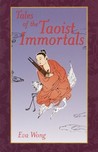
BOOK REVIEW: Tales of the Taoist Immortals by Eva Wong

Tales of the Taoist ImmortalsTales of the Taoist Immortals by Eva Wong
My rating: 3 of 5 stars

Amazon page


This book tells of the key events in the lives of forty Taoist immortals. While the title (specifically the word “tales”) might lead one to think that this is a book of stories, it is only so in the most general sense of the word “story.” Satisfying stories show a character confronted by barriers to obtaining some desired goal. That isn’t the case in the overwhelming majority of the “tales” in this book, and the few in which the individual is confronted with a challenge she usually uses her superpowers to magic the problem away. (To be fair, Taoist sages aren’t known for being ambitious and thus have few goals to chase after. There are more examples of individuals turning down high offices in these character sketches than there are characters attempting to obtain some objective.)

If you are looking to learn more about key figures in Chinese history and mythology, this book will serve your purpose through brief (2-3 page) character sketches that hit the highlights. However, if you are looking for something like the “Book of Chuang Tzu” with clever morality tales, that’s not at all what you’ll find in this book. There are a couple of exceptions, but they are rare nuggets.

Each of the 40 chapters provides one character sketch of life events with a brief bio at the end. The 40 chapters are divided into five parts by the class of individual being mentioned (i.e. the eight immortals, sages, magicians, diviners, and alchemists.) There is a line drawing (reminiscent of block print) for each of the chapters that depicts the immortal in action. The only ancillary matter is a brief introduction.

As I suggested, if one is looking for information about the lives of Taoist immortals, one may find this to be a good source—particularly if one doesn’t want to get bogged down in minutiae. The entire book is less than 200 pages. On the other hand, if one is looking for stories or morality tales, one will likely find this book leaves one wanting.

View all my reviews

BOOK REVIEW: An Introduction to Indian Philosophy Chatterjee & Datta

An Introduction to Indian PhilosophyAn Introduction to Indian Philosophy by Satischandra Chatterjee
My rating: 4 of 5 stars

Amazon page


India has spawned a number of philosophical systems over the centuries. Chatterjee and Datta provide an overview of Indian philosophy by comparing and contrasting nine major schools of Indian philosophy—the six orthodox schools plus three well-known heterodox schools. The dividing line between orthodox and unorthodox hinges upon whether a philosophy accepts the Vedas as sources of authority.

After an introductory chapter that lays out the concepts that will be needed throughout the remainder of the book as well as providing brief sketches of nine philosophical schools, the remainder of the book is a one chapter per school examination of metaphysics, ethics, theology, epistemology, etc. The authors first consider the heterodox schools: i.e. Carvaka (a materialist /atheist approach), Jain (one of the major Indian religions), and Buddhist. After examining the heterodox approaches, Chatterjee and Datta take on the orthodox schools in the following order: Nyaya, Vaisesika, Sankhya, Yoga (which you may not have realized was a philosophical system), Mimamsa, and Vedanta.

There are a number of questions that recur as the authors compare these schools to each other. A major point of consideration is presence or absence of belief in a god, and—for those systems that believe in a God or gods—what is the role of said deity. It might seem that all the orthodox systems would be theistic, but this isn’t the case (e.g. Sankhya.) Another key question is how one can know something, i.e. what is acceptable authority—can one only trust one’s own senses or can one trust everything but one’s own senses? Then there is the matter of ethics and how each system regards ethical behavior. Of course, there are some elements that are unique to a given system, and so it’s not entirely a matter of comparison and contrast.

There are no graphics in the book and the ancillary material is limited to footnotes, a select bibliography, and prefaces to the various editions of the book. Note: I read the 2007 / 7th Edition of the book.

I won’t say this book isn’t dry. It’s a philosophy textbook, after all. However, it does provide a solid overview of the topic and seems to take great efforts to be unbiased (to the extent of sometimes not challenging philosophical ideas that are patently unsound in favor of reporting what advocates of the tradition propose.)

I’d recommend this book for anyone who’s looking for an overview of Indian philosophy.

View all my reviews

BOOK REVIEW: Turtle Island by Gary Snyder

Turtle Island (Shambhala Pocket Classics)Turtle Island by Gary Snyder
My rating: 4 of 5 stars

Amazon page


If you’re not a reader of latter-20th century American poetry, then maybe you’ve heard of Gary Snyder’s fictional doppelgänger, Japhy Ryder, even if you haven’t heard of Snyder, himself. Ryder appears in Jack Kerouac’s “Dharma Bums” as a friend and mentor to Kerouac’s own fictional persona, Ray Smith. If you do remember Ryder, you have some insight into the themes that recur throughout this collection. Said themes include reverence for nature and an appeal to Eastern philosophical and religious traditions–most specifically Zen. Though there are other themes that you might not be expecting, such as fatherhood and the overarching theme of North America.

This collection consists of 63 pieces divided into four parts. Except for those of the last part, the pieces are all poetic. In other words, there are 58 poems and five short prose essays. The poems cover a lot of ground, though they are all free verse. Some of them are spare and others are prose poetry. They range from a few lines to a few pages. The vast majority of the poems put nature at the fore. Some have the tone of haiku—though not its form. By that I mean the tendency to describe without letting in analysis or judgement, attempting to offer a pure reflection of scenes from nature. There are some points at which Snyder veers into political commentary, e.g. with lists of statistics—some of which have no meaning as written (see: “Fact” the first piece in the section “Magpie’s Song”) and rants against the Liquid Metal Fast Breeder Reactor (LMFBR)–a technology that one suspects the poet knows no more about than does the reader. But for the most part the poems are portraits of North American wilderness, and can be enjoyed as such.

I found this collection to be enjoyable and evocative. Snyder transports one into North America’s great outdoors. I’d recommend this work for poetry readers.

View all my reviews