A learned man came to me once.
 He said, "I know the way, -- come."
 And I was overjoyed at this.
 Together we hastened.
 Soon, too soon, were we
 Where my eyes were useless,
 And I knew not the ways of my feet.
 I clung to the hand of my friend;
 But at last he cried, "I am lost."
I shall go back again to the bleak shore
  And build a little shanty on the sand,
  In such a way that the extremest band
  Of brittle seaweed will escape my door
 But by a yard or two; and nevermore
  Shall I return to take you by the hand;
  I shall be gone to what I understand,
  And happier than I ever was before.
 The love that stood a moment in your eyes,
  The words that lay a moment on your tongue,
  Are one with all that in a moment dies,
  A little under-said and over-sung.
 But I shall find the sullen rocks and skies
  Unchanged from what they were when I was young.
The clock will go slow
 If you watch it, you know;
   You must work right along and forget it.
 So study your best
 Till it's time for a rest,
    The clock will go fast, if you let it!
A kind in glass and a cousin, a spectacle and
 nothing strange a single hurt color and an
 arrangement in a system to pointing. All
 this and not ordinary, not unordered in not
 resembling. The difference is spreading.
There is a singer everyone has heard,
  Loud, a mid-summer and a mid-wood bird,
  Who makes the solid tree trunks sound again.
 He says that leaves are old and that for flowers
  Mid-summer is to spring as one to ten.
  He says the early petal-fall is past
  When pear and cherry bloom went down
      in showers
  On sunny days a moment overcast;
  And comes that other fall we name the fall.
 He says the highway dust is over all.
 The bird would cease and be as other birds
  But that he knows in singing not to sing.
 The question that he frames in all but words
  Is what to make of a diminished thing.
An old man in a lodge within a park;
   The chamber walls depicted all around
   With portraitures of huntsman, hawk,
      and hound,
   And the hurt deer. He listeneth to the
      lark,
 Whose song comes with the sunshine
      through the dark
   Of painted glass in leaden lattice bound;
   He listeneth and he laugheth at the
      sound,
   Then writeth in a book like any clerk.
 He is the poet of the dawn, who wrote
   The Canterbury Tales, and his old age
   Made beautiful with song; and as I read
 I heard the crowing cock, I hear the note
   Of lark and linnet, and from every page
   Rise odors of ploughed field or flowery
       mead.










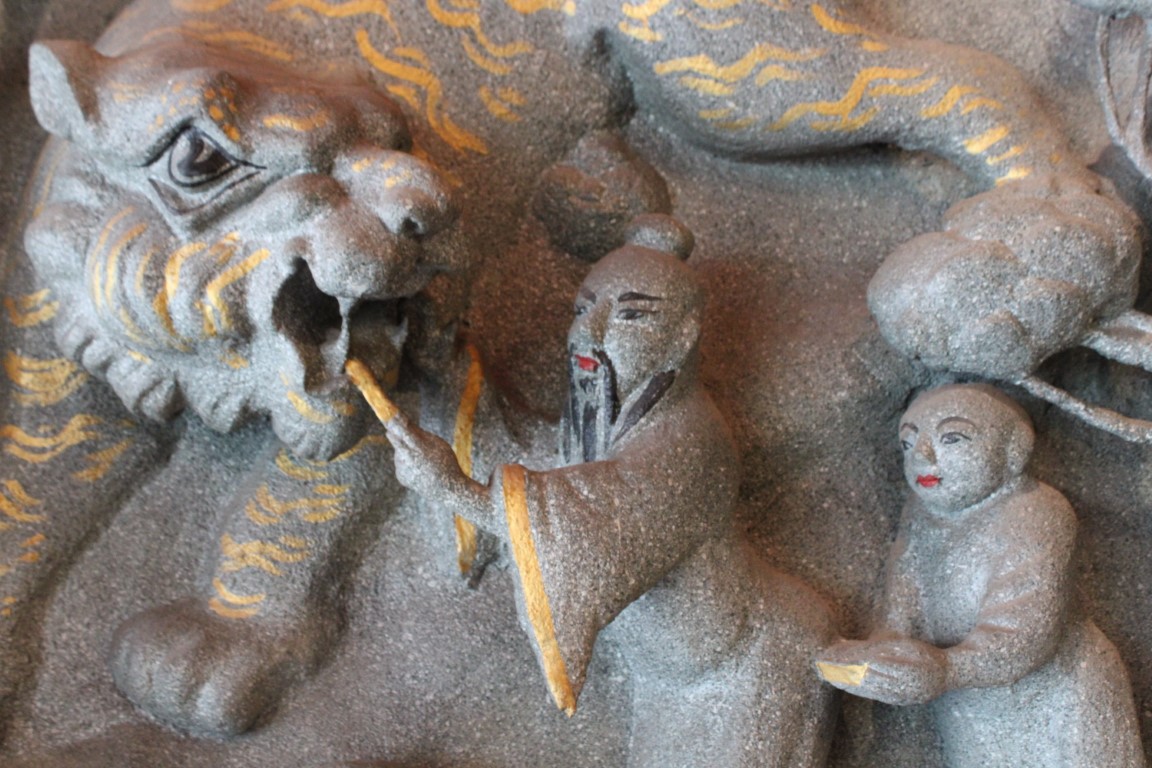

 Tiger Riding for Beginners