PROMPT: Disagree

Daily writing prompt
What public figure do you disagree with the most?

These days? Trump — hands down. Beyond a few of his stated policy objectives, there is more and more I disagree with every day. (I emphasize “stated” because there is so little that’s coherent in his actions to prove he is really interested in advancing said objectives.) For example, I do agree that the swelling deficits (budget and trade) are something that should be treated as unsustainable. I’m not of the “a current account deficit is just a capital account surplus, so turn that frown upside-down” ilk. However, erratic and untargeted tariff policies that hurt successful sectors (e.g. agriculture and services) and which will only put the toothpaste back in the tube (bring [human] factory labor back to the US on a huge scale) by crashing the US into Third World status are not the way.

I disagree with this inexplicable monomaniacal obsession with heavy industry, while injuring those sectors that have done well in recent decades.

I agree with… Powell, that there is a high chance of stagflation if the Fed takes a loose money stance. The problem is… Trump. Ordinarily, it would be good to dump some money on an economy that is struggling. But the problem is that Trump is like a salesperson that would like to sell customers something, but he also enjoys chasing them around the store with an axe. The problem is that people and companies don’t make big purchases when they are afraid and the future is uncertain. (This is why even getting investment in robotic factories isn’t happening.) There’s uncertainty because of the tariffs. There’s uncertainty about whether companies will have to pay bribes to Trump, personally. There’s uncertainty about whether the legal and institutional frameworks that have so long made America an appealing place to invest and innovate will survive. So, if the Fed injects money but consumer confidence and investment are flat because of said uncertainty, then that money will be purely inflationary. [Remember, inflation is too much money chasing too few goods. More money needs to meet more demand for stuff.]

I disagree that one can have one’s cake and eat it, too. Specifically, tariffs need to be either for revenue generation or for policy negotiations, they can’t be both, but Trump talks like he doesn’t understand this. If tariffs are going to be the new primary source of government income, they need to bring in money sustainably. If they are a negotiating tool to lever policy, you need to be ready to negotiate them away in return for your own objective wins.

I definitely disagree with the ignoring of Supreme Court decisions. It’s particularly disconcerting to see him ignore 9 – 0 decisions, which means that even his own appointees could not find a hairsbreadth of wiggle room in the law by which his actions could be viewed as lawful.

I disagree with picking a raft of pretty-idiots / talking-heads for positions that require high levels of emotional intelligence and — you know — intelligence intelligence. If it weren’t for the fact that America has the most awesome and professional military in the world, I’d be especially afraid that Hegseth was going to destroy it. But while I think the US Military will be around long after he’s gone, I’m suspect he will have done damage to morale and operational efficiency.

I disagree with favoring dictators over longtime allies. [While I would agree that it’s good that Europe is taking on more of the burden of their own defense, I’m concerned that trashing relations to do so will not prove a sound approach.]

I disagree with all the attempts to play from the Putin-Orban Populist Dictators’ Playbook.

While I’m not at all averse to seeing cuts to the Federal bureaucracy, I do disagree with — you know — firing people before you understand what they do and whether it’s critical to health and safety, the necessary conduct of governance, or oversight against fraud and abuse.

I disagree that one should talk about making loophole end-runs around Constitutional prohibitions.

But, I ramble on…

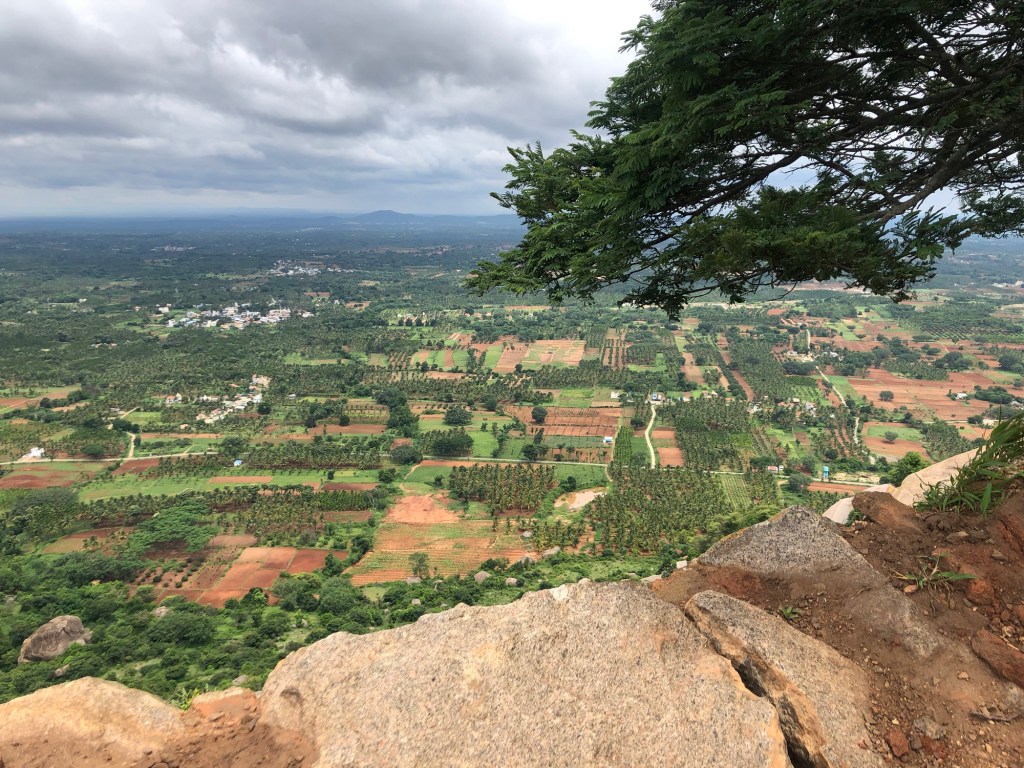
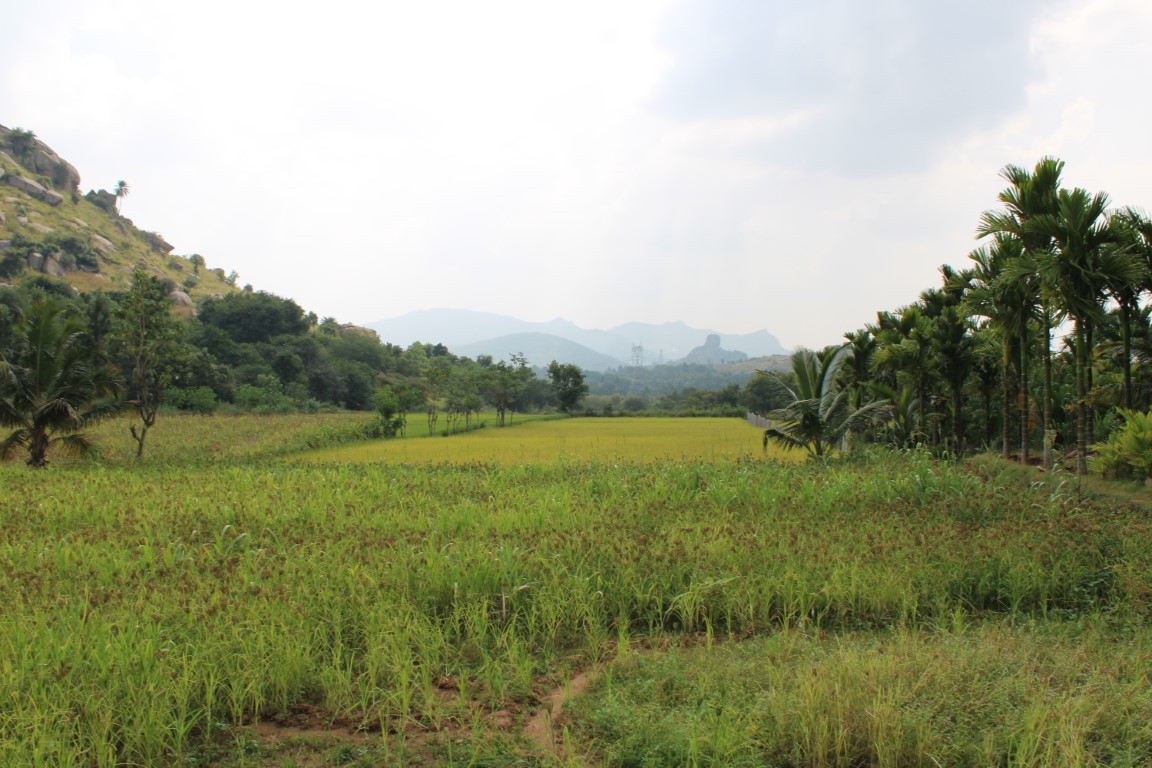
DAILY PHOTO: South Karnataka Farmland

“Feeling for the Farmers” by Li Shen [w/ Audio]

Hoeing farmer, as heat haze roils,
His flowing sweat waters the soil.
All those who know food on a plate
Should feel each grain comes of that toil.

NOTE: The title of this poem (悯农, or Mǐn Nóng) is often translated as “Toiling Farmers,” though “Compassion for Farmers” or “Pity Farmers” would be closer to the literal translation.

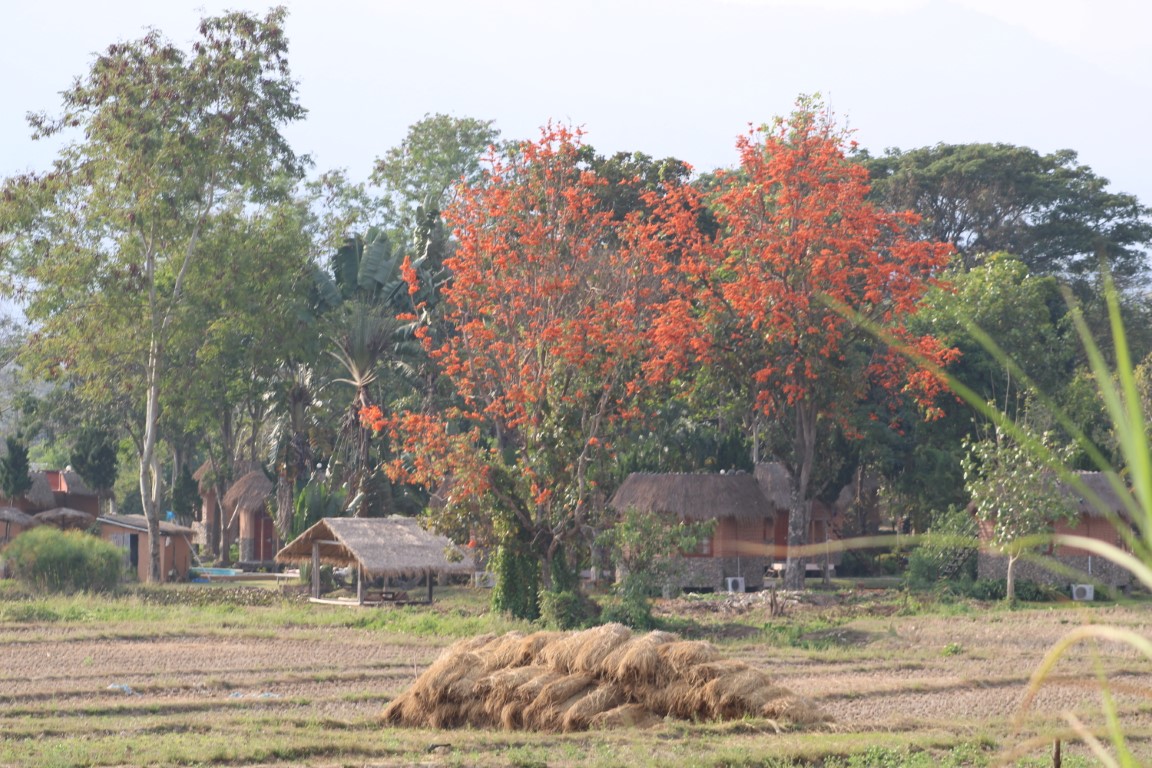
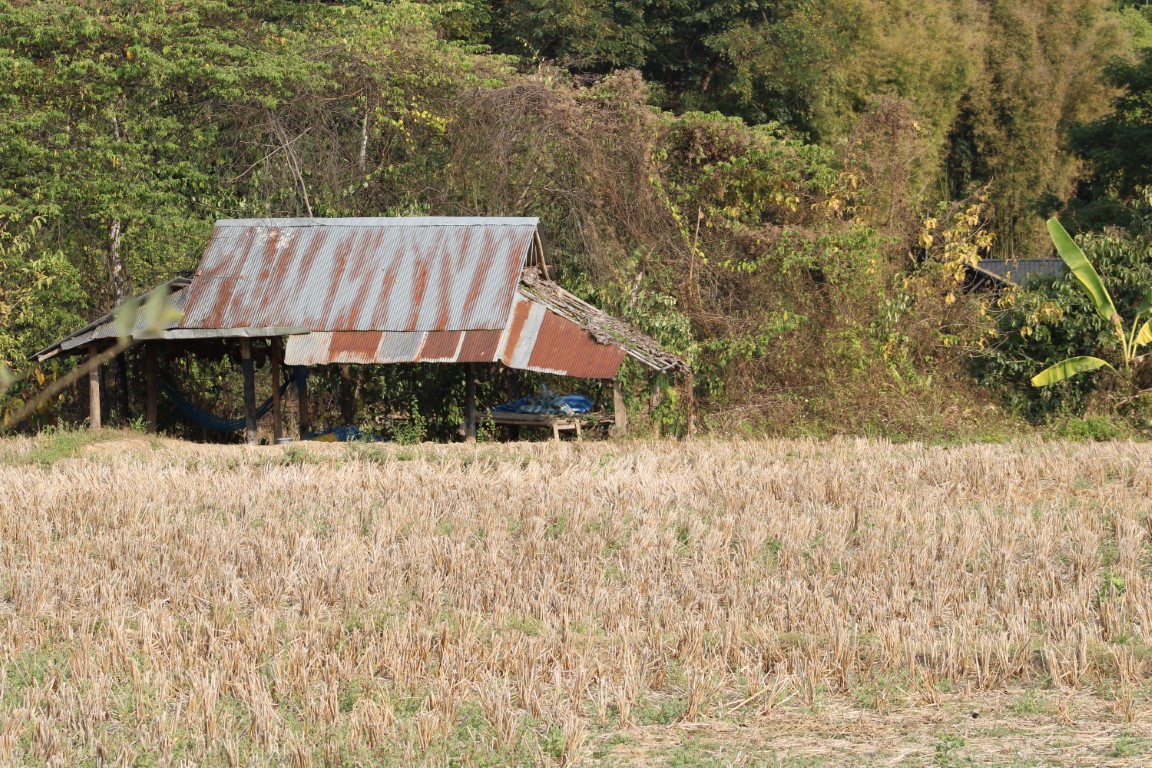
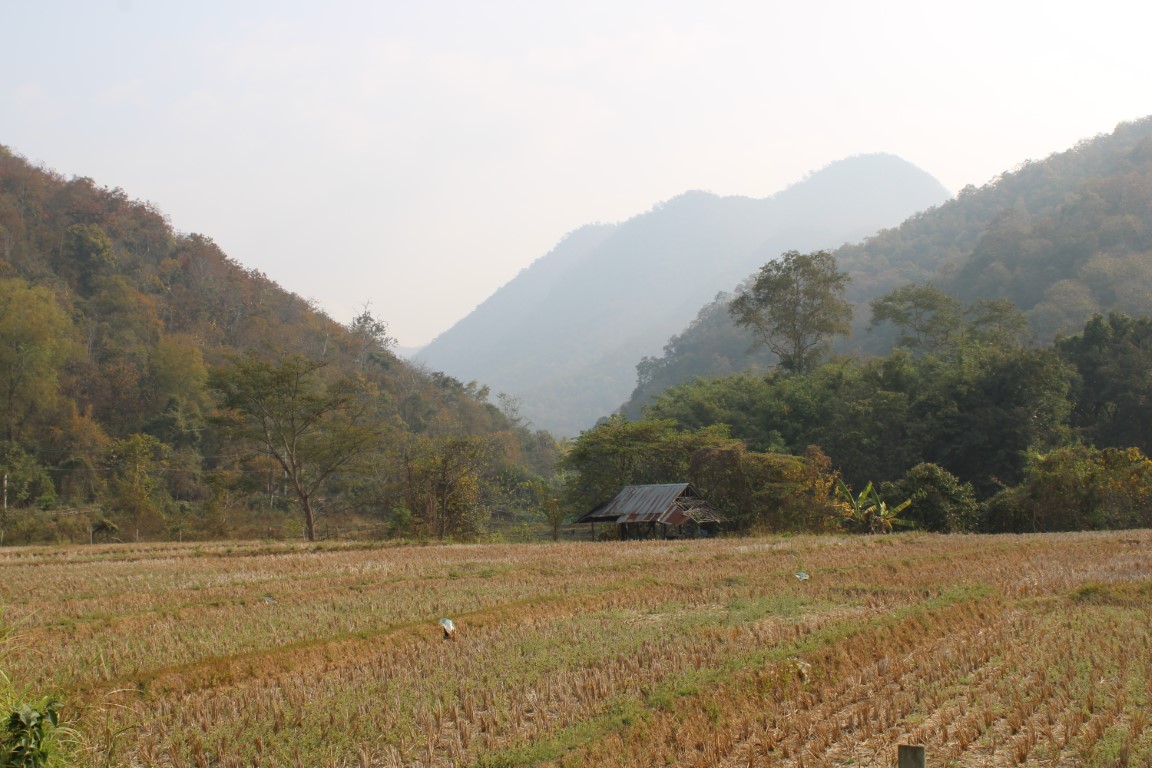
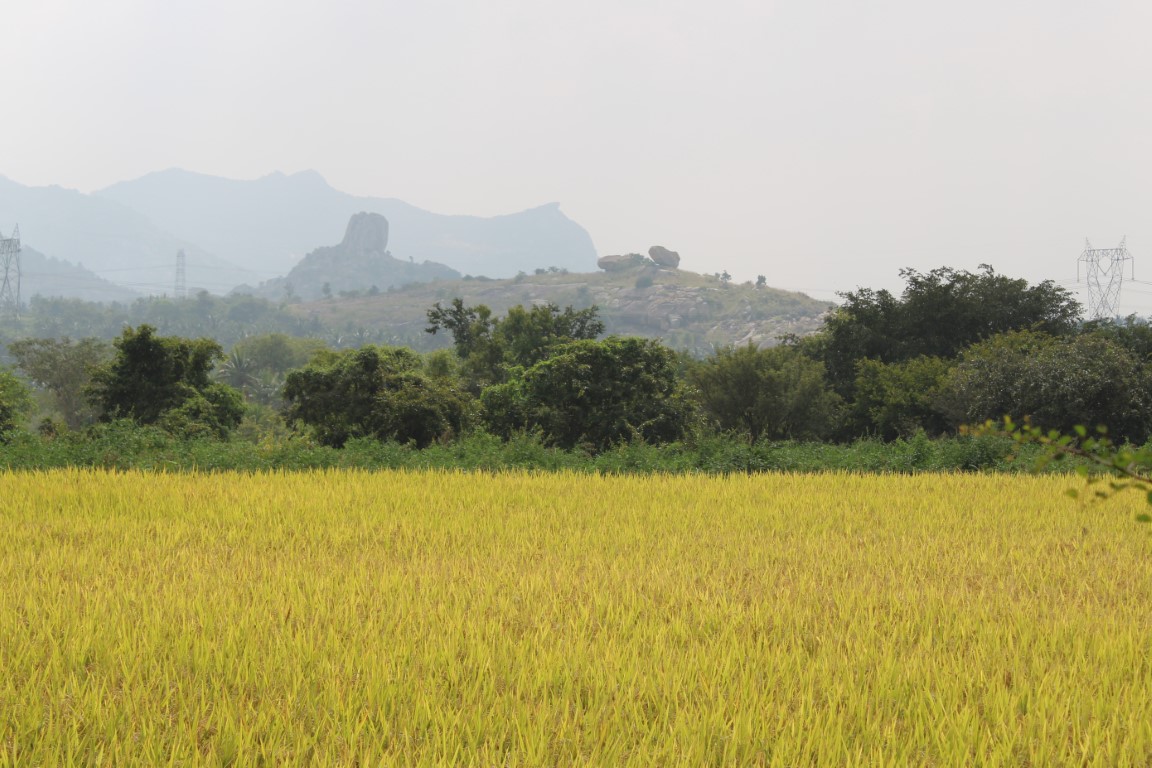
DAILY PHOTO: North Thailand Farmland

PROMPT: Meat

What are your feelings about eating meat?

The condensed version is, I’m fine with it. As a traveler, I try to eat mostly things locals eat. While I don’t go to great effort or expense to sample the most rare and exotic foods, I’ve eaten snake in China, croc in Zambia, horse in Kyrgyzstan, and guinea pig in Peru. Anything that regular people eat where I’m visiting is fair game. [That is part of the process of breaking down the invisible barriers between us’s and them’s so as to not enter into the interaction with a feeling of superiority because: “my arbitrary cultural conventions are better than your arbitrary cultural conventions.”]

I do believe that everyone would be better off if they were closer to [i.e. more intimately familiar with] the source of their food. I feel this of myself as well, though I did have the benefit of growing up on a small farm and seeing at close range the origins of food and how life moves on to being food. (By different mechanisms [hopefully — #SoylentGreenIsPeople,] it’s a process that I am fully aware will apply to me, as well. Ultimately, nothing living gets out of this world without being transformed through a process of being food. In my case –probably — I’ll be food to bacteria and fungi, but if I have a good run and am eaten by a tiger or wild dogs, I’d not begrudge them the meal.)

In fact, as I’ve learned more about how plants and trees live, e.g. sending warning pheromone signals to neighboring trees when under attack by insects, I’ve come to see the logic by which people determine what life is edible and what isn’t as mere species-chauvinism and anthropomorphizing. It is true that there are excellent points about the environmental benefits of some form of vegetarian diet. However, when one starts to talk to environmental vegetarians about eating insects (one of the most sustainable protein sources available, supposedly,) many will shove their fingers in their ears and sing, “La-la-La-la, I don’t want to hear this.”

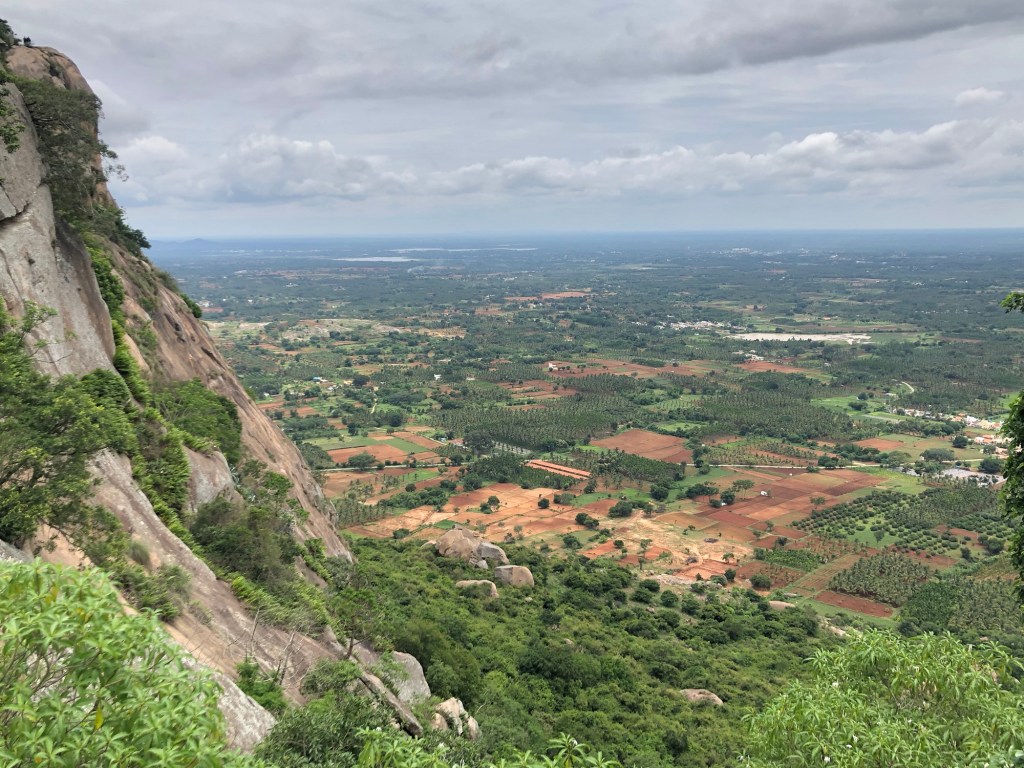
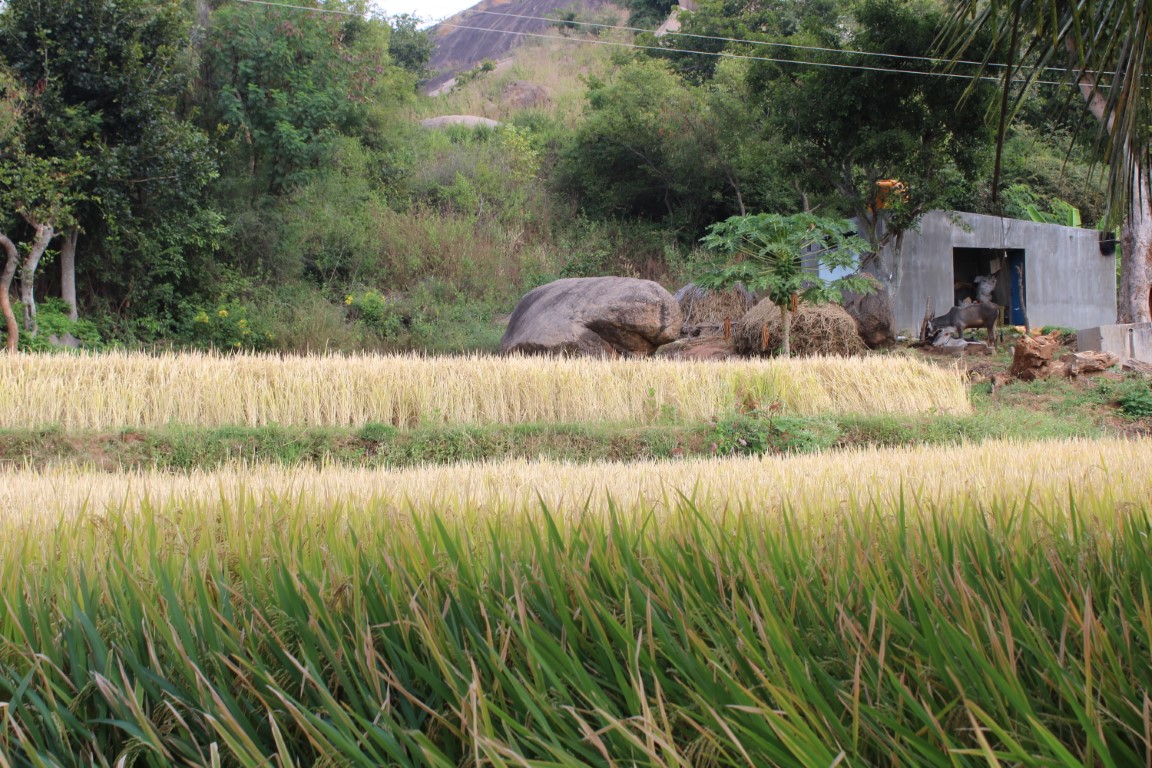
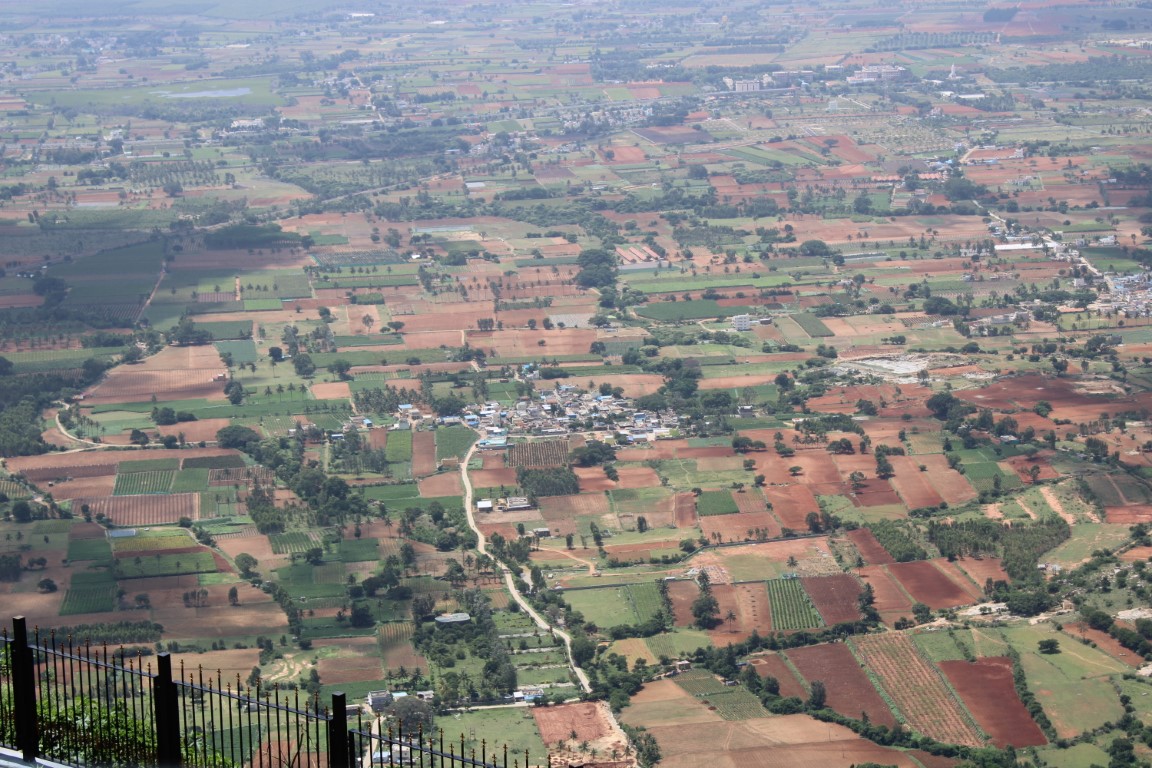
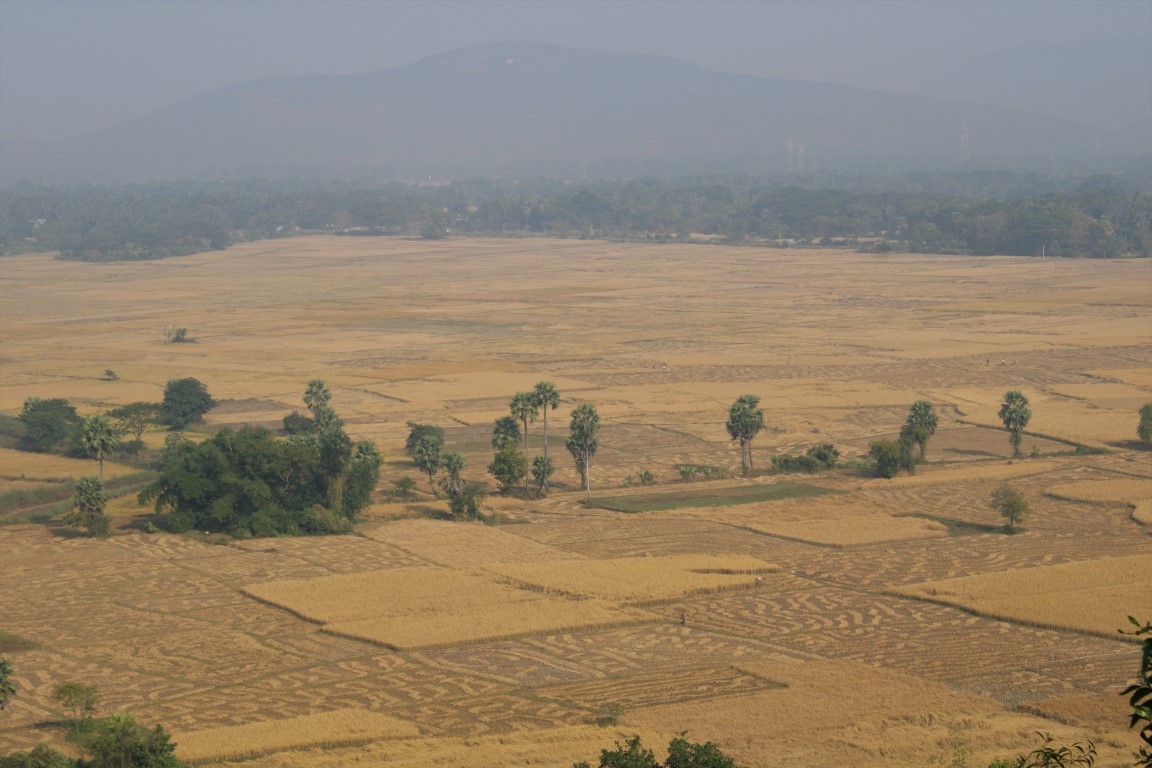
DAILY PHOTO: Autumn Fields in South India

Farmland, Unchecked [Free Verse]

From a hilltop,
   farmland stretches
    to the horizon:
 
parceled into rectangles
   of brown, beige, and oh 
    so many shades of green.

It must be the tropics,
    for ripe grain to 
     coexist with verdant
      & fallow patches.

So different from the farmland
    of my youth
     where all the rectangles 
      were one of two colors -
      because everyone had to
      pack into the same tight
      growing season. 

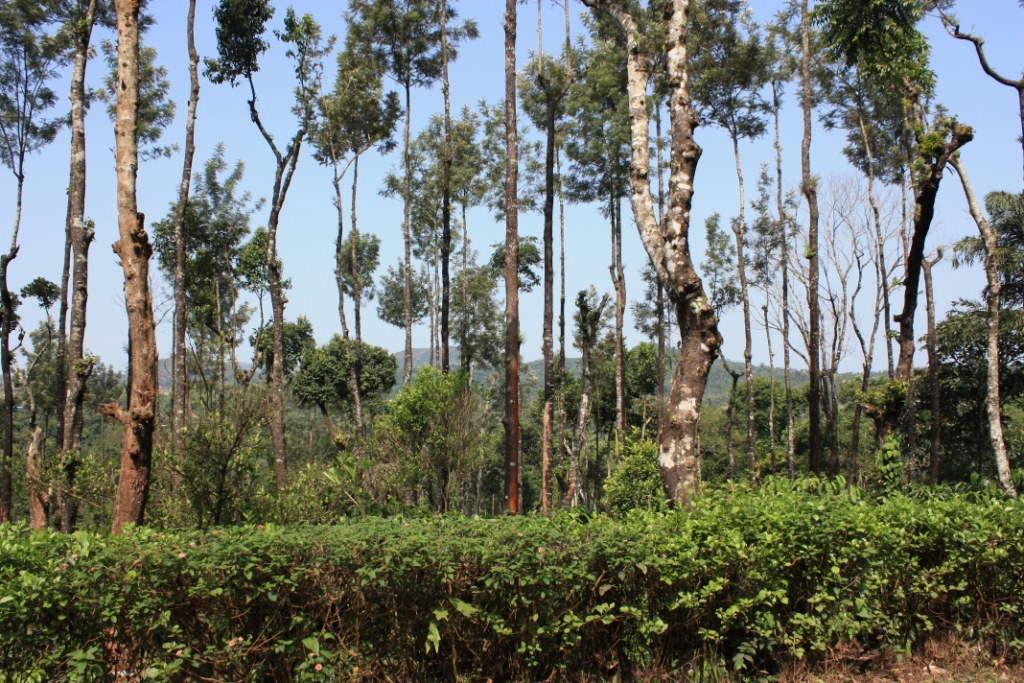
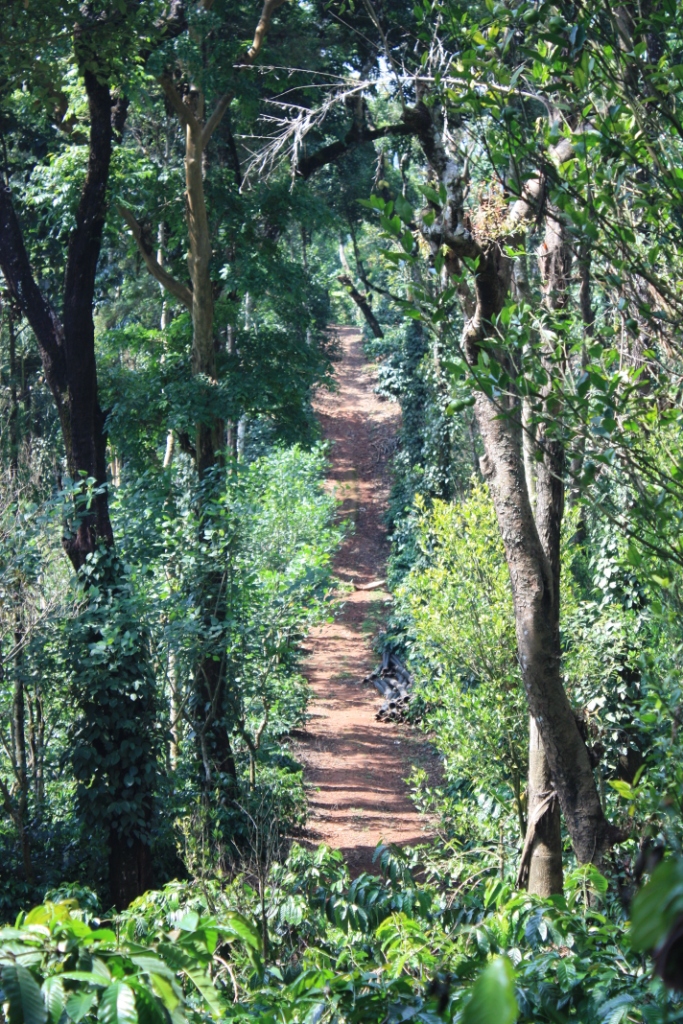
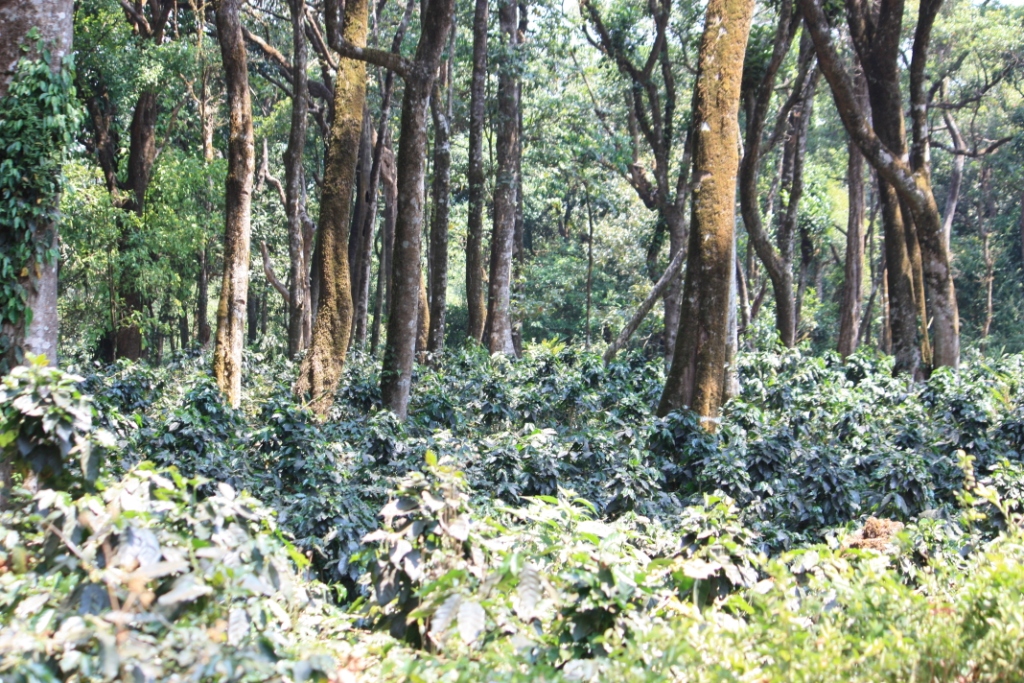
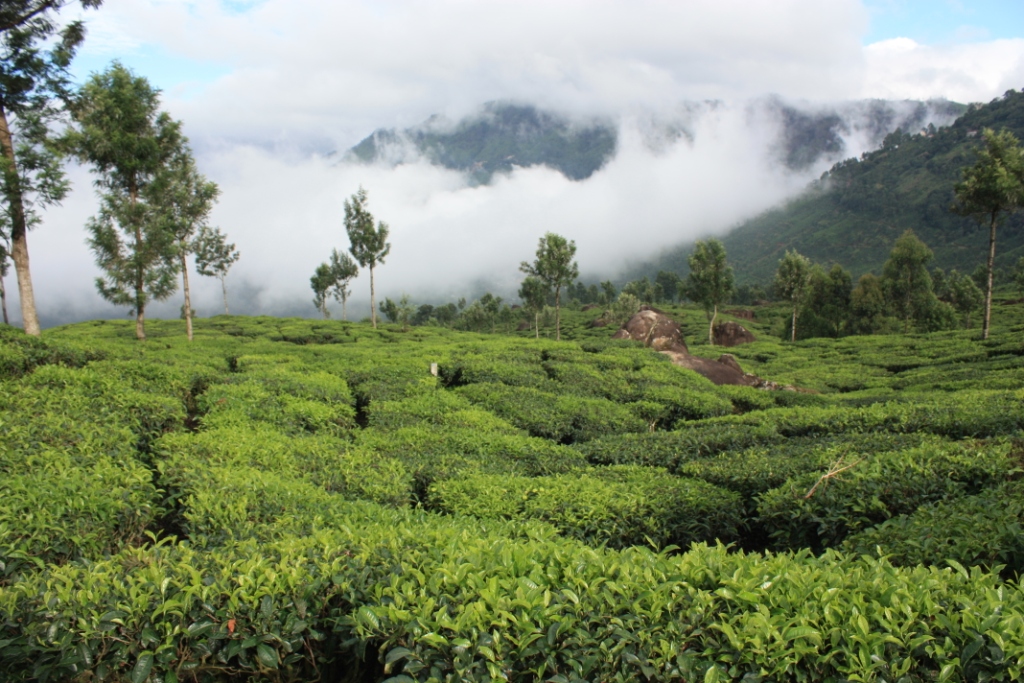
DAILY PHOTO: Coffee or Tea? Why Not Coffee & Tea

Taken on a Coffee & Tea Plantation in Coorg (Kodagu)

BOOK REVIEW: The One-Straw Revolution by Masanobu Fukuoka

The One-Straw RevolutionThe One-Straw Revolution by Masanobu Fukuoka
My rating: 5 of 5 stars

Amazon.in Page

I kept running into references to this book in my readings about food and farming, and, eventually, I figured it must be a must-read. One topic that’s of interest to me (and should be of interest to everyone) is how [or, perhaps, whether] humanity can be sustainably fed, given the realities of human nature. Fukuoka (d. 2008) was at the vanguard of what’s been called the “natural farming” movement (a term he admitted he didn’t love.) He spent decades growing rice, other grains, and fruits in rural Shikoku, Japan, using a minimalist approach.

The book mixes philosophy, biography, commentary on food / nutrition, and instruction in Fukuoka’s approach to agriculture. Guided by a philosophy of “wu wei” (i.e. “effortless action,”) Fukuoka figured out how to reduce the amount of effort and resources put into farming, while maintaining crop yields that were competitive with the standard farming model. His approach appears backwards, lazy, and unlikely to succeed. He didn’t plow his fields. He planted by casting seed into the previous crop before harvesting it (note: he alternated rice with winter grains.) He didn’t weed, but rather let white clover grow freely and used the stalks and chaff from one harvest as cover for the next (again, rotating crops,) a cover that biodegraded into nutrients. He used no chemicals, neither fertilizer nor insecticide. And yet, important details of his approach kept his yields up while using minimal resources to maximum effect by operating in accord with nature (e.g. no insecticides seems to risk infestation, but it also means that you haven’t killed the creatures that eat pests.)

Fukuoka’s philosophy combines the principles of nature, Buddhist & Taoist concepts, and – believe it or not — something reminiscent of Nihilism (without calling it such.) There are parts of the book that some might find disagreeable. For example, Fukuoka uses an analogy that draws on the Mahayanist view of the distinction between Mahayana and “Hinayana” that Theravadins may find offensive (fyi: the older branch of Buddhism considers “Hinayana” to be derogatory and believes it’s a label based on a mistaken belief.) [To be fair, Fukuoka explicitly stated that he belonged to no religion and he claimed no expertise on the subject.] More likely to take offense are scientists and agricultural researchers, a group who takes it from both barrels. [Fukuoka says his opposition to scientists is that they fill the same role in society as the discriminating mind plays in mental activity, and he values the non-discriminating mind.]

I found this book to be loaded with food-for-thought. It raises a number of questions that aren’t answered inside (e.g. is Fukuoka’s approach scalable?,) but it’s a fascinating and highly readable introduction to natural farming. I’d highly recommend it for those interested in the subject.


View all my reviews

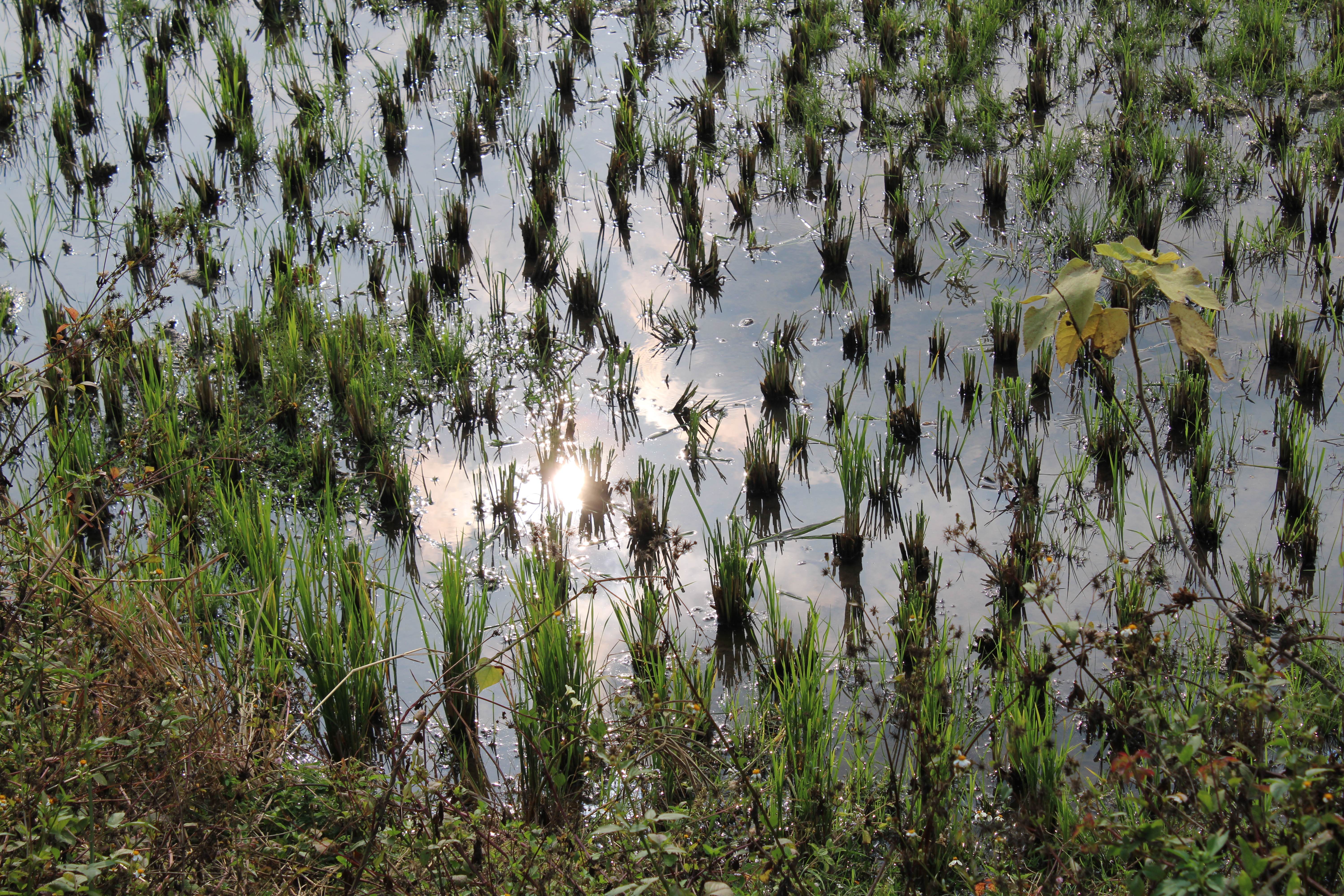
Harvest Mind [Common Meter]

The heavy heads of lolling grain 
were shifting in the breeze.
A harvester did chomp it down,
reaping before the freeze.

Now we'll stare at the naked field,
feeling something 's been lost,
seeing nothing but stalk stubble -
stiffened and white with frost.

What's culled from the harvest mind
when all the fields are cleared,
and dancing plants of robust grain
are newly disappeared?