BOOK REVIEW: The Claiming of Sleeping Beauty by A.N. Roquelaure (a.k.a. Anne Rice)

The Claiming of Sleeping Beauty The Claiming of Sleeping Beauty by A.N. Roquelaure
My rating: 3 of 5 stars

Amazon page


This is a bawdy take on the tale of Sleeping Beauty—and, in particular, the aftermath of her rescue and awakening. There are many such adult-targeted books based on children’s fairy tales, but the reader should be particularly aware of the nature of this story because it’s fairly hard-core. Since one may associate the fairy tale with lighthearted stories, many readers won’t be ready for the wide-ranging sexual and sadistic activity that goes on in this book. If you’re a hard-core sado-masochist, you may object that this isn’t so intense in subject matter. That’s probably true for you, but for the run-of-the-mill reader, it’s pretty wild stuff. In essence, Sleeping Beauty enters into a finite period of sexual slavery (technically more sexual indentured servitude) in repayment for her rescue.

Part of the reason that there may be misunderstandings of what this book is, is how it’s been marketed. There was a cover blurb on the version I read that says “If you liked 50 Shades, you’ll love the sleeping beauty trilogy.” This statement is clearly meant to capitalize on the success of those books. While I haven’t read any of the “Fifty Shades” books, I doubt that the claim is true. This book is somewhere between “Fifty Shades” and the works of the Marquis de Sade. While E.L. James’ books work on a one-on-one dynamic that forms an S&M tinged romance, Roquelaure / Rice’s book is about sexual servitude of individuals who are essentially stabled in a more harem-like situation. While they are both books that revolve around the psychology of dominance and submission, the dynamic of the two is quite different. From what I’ve heard about James’s works, Rice’s book is probably better written and it may even be a bit more psychologically sophisticated. However, if you’re expecting that “mommy porn” dynamic in which a man who is extraordinary in every way (billionaire / 6-pack having / philanthropist / speaks ten languages fluently / and has a doctorate in quantum rocket dynamics) takes a mediocre woman merely because she completely submits to him, you’ll probably be disappointed.

Because people’s ideas of what’s hard-core varies, I’ll touch on that. There is a huge amount of bondage and physical punishment. There’s no gore, no breaking of skin, nor any permanent damage /disfigurement. There’s no horror aspect to the book. As far as sexual acts are concerned, they are both heterosexual and homosexual in nature. There are a finite number of options, and I think they’re pretty much all touched on at some point. There’s no bestiality, scat, nor pedophilia—so if those are your limits, you’re safe.

This book was clearly outlined and written with the intention of being a trilogy or multi-part work. That is to say, the story arc is not particularly satisfying as a stand-alone book. This may, in part, also be because of the lack of importance of story to hardcore erotic works, but I suspect that the author / publisher had a thick tome and needed some place to chop it into standard length books to maximize revenue. I probably won’t read the other books, in part because this trend toward putting out books that don’t stand alone as stories cheeses me off a bit. As you might expect, the ending feels abrupt and seems more about leaving the reader dissatisfied (i.e. wanting to read the rest) rather than leaving them satisfied (having seen the character grow and change.)

Instead of making an explicit statement of recommendation, I’ll say that if you read the review and are intrigued, give it a read. If you read the review and are disgusted, avoid it. It’s as simple as that.

View all my reviews

DAILY PHOTO: Macaques of Bharachukki Falls


Taken in July of 2014 at Bharachukki Falls


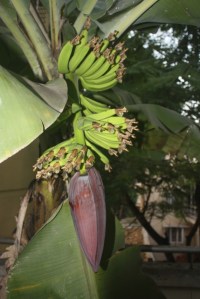
POEM: Banana Plant

your purple plumb bob

bounces on a banana-laden stalk


your long leaves

twist & tear

like the Tacoma Narrows bridge

when wind whips over


every annum

foliage falls

stalk sags

yet you will rise and be reborn

DAILY PHOTO: Kolam Competition in Cubbon

Taken on November 11, 2017 in Cubbon Park, Bangalore

DAILY PHOTO: Children’s Day Flower Displays

Taken on November 11, 2017 in Bangalore

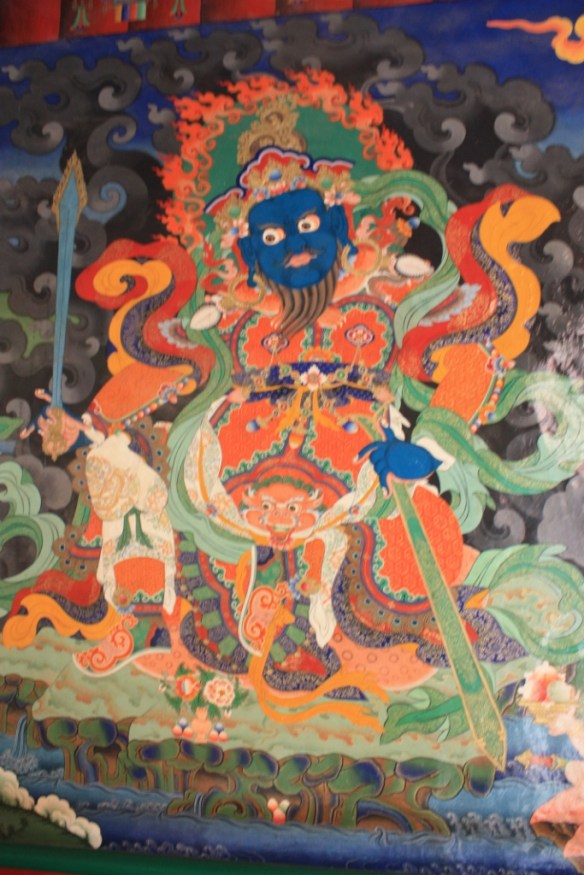
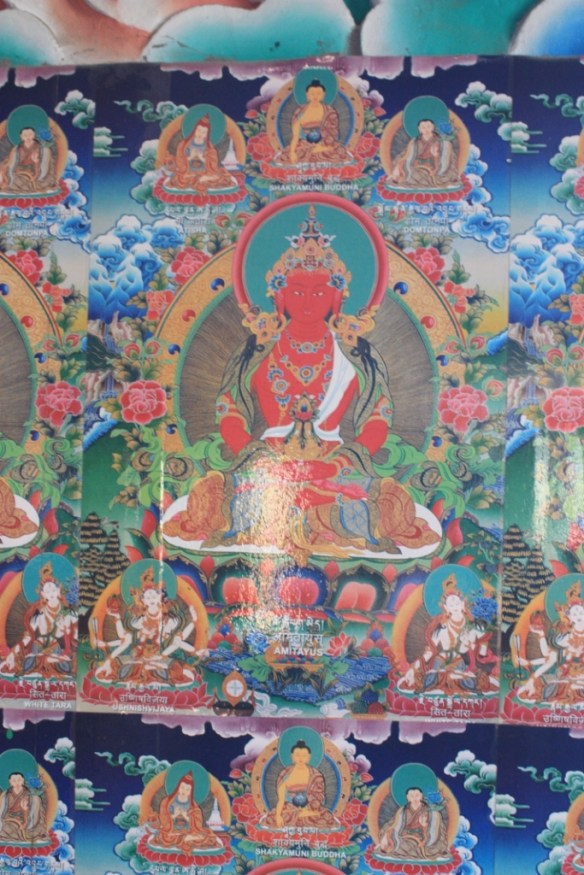
DAILY PHOTO: Thangka Paintings Around India

Taken at Lamayuru Temple in Ladakh in August of 2016


Taken at Diskit Monastery in Nubra Valley in August of 2016


Taken at Namdroling Monastery at Bylakuppe in March of 2014


Taken at McLeod Ganj in June of 2015

5 Facts about Hyperkyphosis

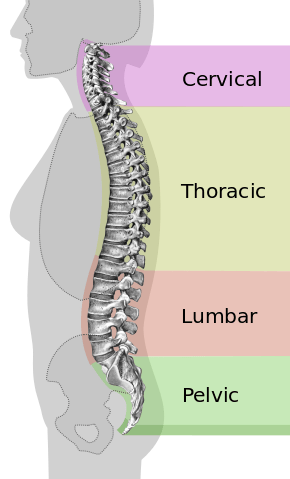
Source: William Crochot via Wikipedia


Hyperkyphosis (a.k.a. Excessive Thoracic Kyphosis, “Dowager’s Hump”, or often just called Kyphosis) is an excessive outward curve of the thoracic (chest) region of the spine. There are many causes and contributors to this problem, but–for the purposes of this post–I’ll be focusing on postural kyphosis. There is a natural curvature in this part of the spine that is healthy. However, as is also true of the lumbar spine, the amount of curvature can become excessive, leading to a number of health conditions.


5.) Hyperkyphosis increases the risk of injurious falls in older people. Having one’s head forward, when combined with a lack of capacity to respond quickly to loss of balance, makes it more likely one will fall and hurt oneself.

Source: Kado, D.M., et. al. 2007. Hyperkyphotic posture and risk of injurious falls in older persons: the Rancho Bernardo Study. J Gerontol A Bio Sci Med Sci. Vol. 62: 652-657.


4.) As far as the muscles of your upper back and neck are concerned, an 11 pound head can weigh 40 to 50 pounds when it’s forward positioned. Hyperkyphosis and forward head position tend to go hand in hand. If you purposely slump your back you’ll see why.

Source: Hansraj, K.K. 2014. Assessment of stresses in the cervical spine caused by posture and position of head. Surg Technol Int. Vol. 25(Nov): 277-279.


3.) There is reason to believe the young are becoming more prone to hyperkyphosis in conjunction with “text neck” from spending lots of time slumped over their phones.

Source: in addition to the Hansraj journal article above, see also: Ward, Victoria.2015. Children ‘becoming hunchbacks’ due to addiction to smart phones. The Telegraph. October 16. Online edition; last accessed Nov. 7, 2017.


2.) Yoga can help reduce hyperkyphosis. A test group who practiced hour-long sessions of yoga three days a week for 24 weeks showed an improvement in the flexicurve angle of kyphosis.

Source: Greendale, G.A., et. al. 2013. Yoga decreases kyphosis in senior women and men with adult onset hyperkyphosis: results of a randomized controlled trial. J Am Geriatr Soc. 57(9): 1569-1579


1.) Older individuals may be at risk for fractures, particularly when doing spine flexing movements, but careful use of spinal extensions (e.g. hands free cobra or superman shalabasana [locust]) can build strength and reduce fracture risk.

Source: Katzman, W.B., et. al. 2010. Age-related hyperkyphosis: its causes, consequences, and management. J Orthop Sports Ther. 40(6): 352-360

DAILY PHOTO: Mountain Lakes

Taken in August of 2016 in Kashmir

DAILY PHOTO: Snowcaps of Salkantay

Taken in July of 2010 in the Peruvian Andes


BOOK REVIEW: Cave of Tigers by John Daido Loori

Cave of Tigers: The Living Zen Practice of Dharma Combat (Dharma Communications)Cave of Tigers: The Living Zen Practice of Dharma Combat by John Daido Loori
My rating: 4 of 5 stars

Amazon page


This book is a collection of transcripts of what are called dharma encounters, dokusan, or dharma combat. It’s a practice in Zen Buddhism involving a verbal interaction between student and teacher. Each of the twenty chapters takes a teaching of some past master of Zen (mostly Master Dogen), and explores it through these student-teacher interactions. The chapters begin with an introduction to the teaching at hand, conclude with a wrap up paragraph, and in between are an assortment of transcripts.

There’s a clear pro and con. Because information is presented in an unconventional format, there’s potential to gain insights that one might not otherwise. The students are trying to interact with the teacher in an unorthodox and outside-the-box manner. That’s part of the training. So as they relate the teachings to events in their own life or their own unique way of viewing the world, one gains access to those off angles of insight.

On the other hand, reading the transcripts can be repetitive as the teacher is trying to make sure that all students have some common understanding. It’s also not clear whether there was much selectivity in picking the encounters that were presented. Some readers might enjoy that it’s like being there at the monastery, but others might find reading the book a little bit like watching sausage making. While there are clever and insightful students, there are also individuals who seem to just be trying to get there turn over with, who appear to have no interest in the topic at hand, or who think some random action like a war-whoop will be evaluated as a deep and meaningful insight on the subject by the teacher (spoiler alert: it almost never is.) One should also not assume factual correctness in the student’s commentaries (e.g. at one point one of the students incorrectly identifies Vishnu as “the destroyer,” but [in Hindu mythology] Vishnu is the preserver / maintainer and it’s Shiva who is the destroyer. This error is of little consequence to the point being made, but the reader should be aware that the priority was to be faithful in conveying the transcripts rather than to accurately convey information.)

The organization seems sound enough. The book begins with rudimentary topics such as zazen (sitting meditation) and progresses into more philosophical and esoteric topics. As mentioned, there are twenty chapters, each built around a specific teaching and with the same organization. The only ancillary material besides the front matter (a Forward and an “Invitation to Dharma Encounter”) is a glossary (which is a worthy addition given the wide-ranging terminology in English, Japanese, Chinese, and Sanskrit, as well as the many names of individuals and documents that may be unfamiliar to the uninitiated.)

I enjoyed this book. As I say, it has its positives and negatives, but—on the whole—it was insightful and interesting. I’d recommend it for anyone interested in Zen, particularly anyone who intends to spend time at a monastery or meditation center.

View all my reviews