Mongoose [Haiku]

a pausing mongoose 
looks at me, 
as I look at it

DAILY PHOTO: Two Views of Varkala Beach

Taken in March of 2016 at Varkala

Plotting Crows [Haiku]

two crows stand
on a branch in parallel;
the plot is afoot

DAILY PHOTO: Almaty Cityscapes

Taken in the Summer of 2019 in Almaty

Iron String [Free Verse]

Emerson said,
"Trust thyself: every heart vibrates to that iron string."


REM said,
"What's the frequency, Kenneth?"


Will Kenneth's waves propagate down the line?

If so, would they add to,
or cancel out, 
the waves of others?

That depends on the frequency, Kenneth!

I guess that's why Michael Stipe
took such an impassioned interest 
in the question.

Is it even a good thing if one's waves
add to those of another?

Might it not become disharmonious,
like a runaway washing machine,
shaking violently,
parts flying through the air
in smooth ballistic arcs
only to bounce and clatter 
in dull discordance.

Does one's iron string
even need to come into contact
with Kenneth's? 

Might not the wave energy 
passing through the air
stir up a resonance in one's bones?

Questions, such as these, haunt me --
not to mention:

Who, exactly, is Kenneth?

Grass Yellow Butterfly [Tanka]

the Grass-Yellow finds
a place in the dry leaves
where its green tint
is more ornamental 
than it is camouflage

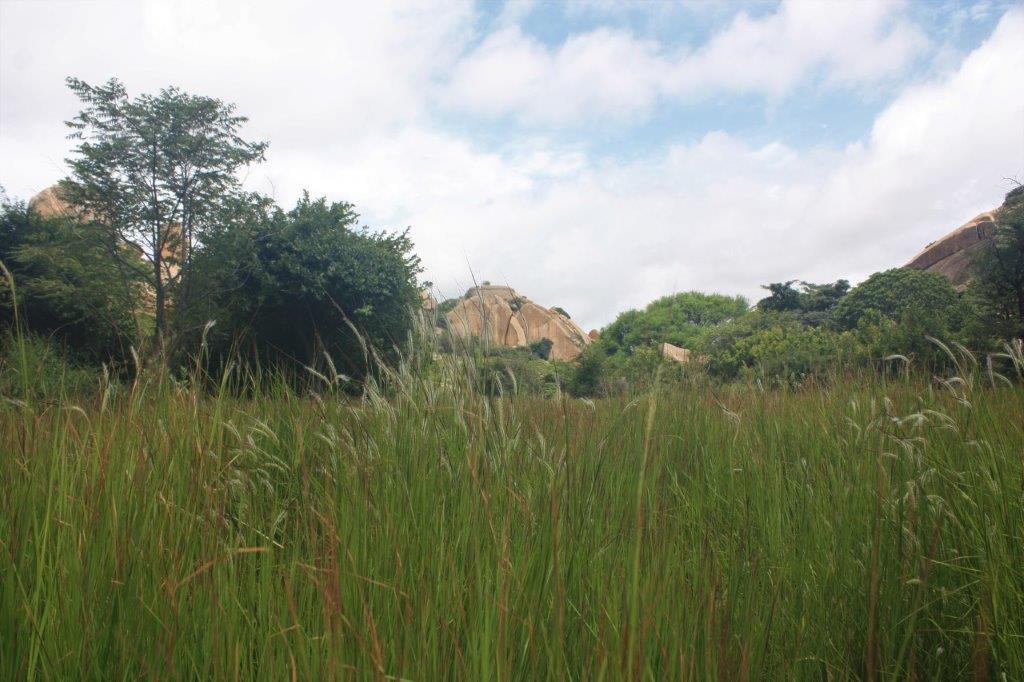
DAILY PHOTO: Walking in the Tall Grass, Chitradurga

Taken in Chitradurga Fort in September of 2021

BOOK REVIEW: DMZ, VOL. 1: ON THE GROUND by Brian Wood

DMZ, Vol. 1: On the GroundDMZ, Vol. 1: On the Ground by Brian Wood

My rating: 5 of 5 stars

Amazon.in Page

DMZ is a work of dystopian fiction that ditches the tired plot devices like Zombies and Nuclear Holocaust in favor of the fresh and simple idea of the American political divide run amok. The demilitarized zone (DMZ) in question is a sealed off New York City that exists in an armed and anarchic state.

The story features a journalism intern, Matty Roth, who helicopter crashes with a news crew in the NYC DMZ. At first, Roth is in over his head and just looking to escape to safety, but over the course of this volume he undergoes trial by fire and comes out the other side following his journalistic impulse to share the stories of the DMZ, stories which are much richer and more complex than people have been led to believe.

I had mixed feelings about the story as it feels like the protagonist is robbed of agency by always being saved. However, the story does show the character grow considerably and to face challenges voluntarily, and the assistance he receives does demonstrate community and humanity in a place that is supposed to be devoid of both.

Ultimately, I found the concept compelling and was deeply pulled into the world of this story. If you’re up for dystopian fiction, you might give it a try.


View all my reviews

BOOK REVIEW: Ways of Seeing by John Berger

Ways of SeeingWays of Seeing by John Berger
My rating: 5 of 5 stars

Amazon.in Page

This book challenges one to not just look at what’s in a picture, but to reflect upon the nature of seeing and what it tells one about the deeper meaning of a painting or photograph. For example, who is seeing – i.e. whose perspective would the picture be from and what might the artist be saying about such a person? Also, what are the subjects looking at, and what does that convey (e.g. come-hither, lost in thought, etc.)

The book’s seven chapters alternate text + picture chapters (the odd chapters) with ones that are only pictorial (i.e. the even chapters.) The first chapter lays out the concept of ways of seeing, and subsequent chapters consider how those ideas can be applied to specific questions. Chapter three, for example, discusses what the differences between how men and women are depicted says about inherent societal biases. Chapter five explores the relationship between possessing and seeing, and also how everyday people begin to be rendered in art. Chapter seven investigates what the author calls “publicity” and how pictures are used to evoke dissatisfaction with what is and desire to be something else. Here one sees how advertising and marketing exploits these concepts.

The picture-only chapters are intriguing. One can see the commonality in the pictures and practice discerning what the author is trying to convey. One of the book’s central ideas is that seeing precedes reading, and that we learned to extract information from images before we did so from words.

The book has strange formatting, employing bold text and thumbnail art. The font didn’t bother me. I don’t know whether it was used to raise the page count on a thin book, or what. I will say that the thumbnail art can be a little hard to make out, even in the Kindle edition where it can be magnified somewhat. Most of the paintings can be internet searched quite easily, but the advertisements that are used to show how art is applied to marketing, not so much.

I found this book to provide excellent food-for-thought, and would recommend seeing / reading it.


View all my reviews