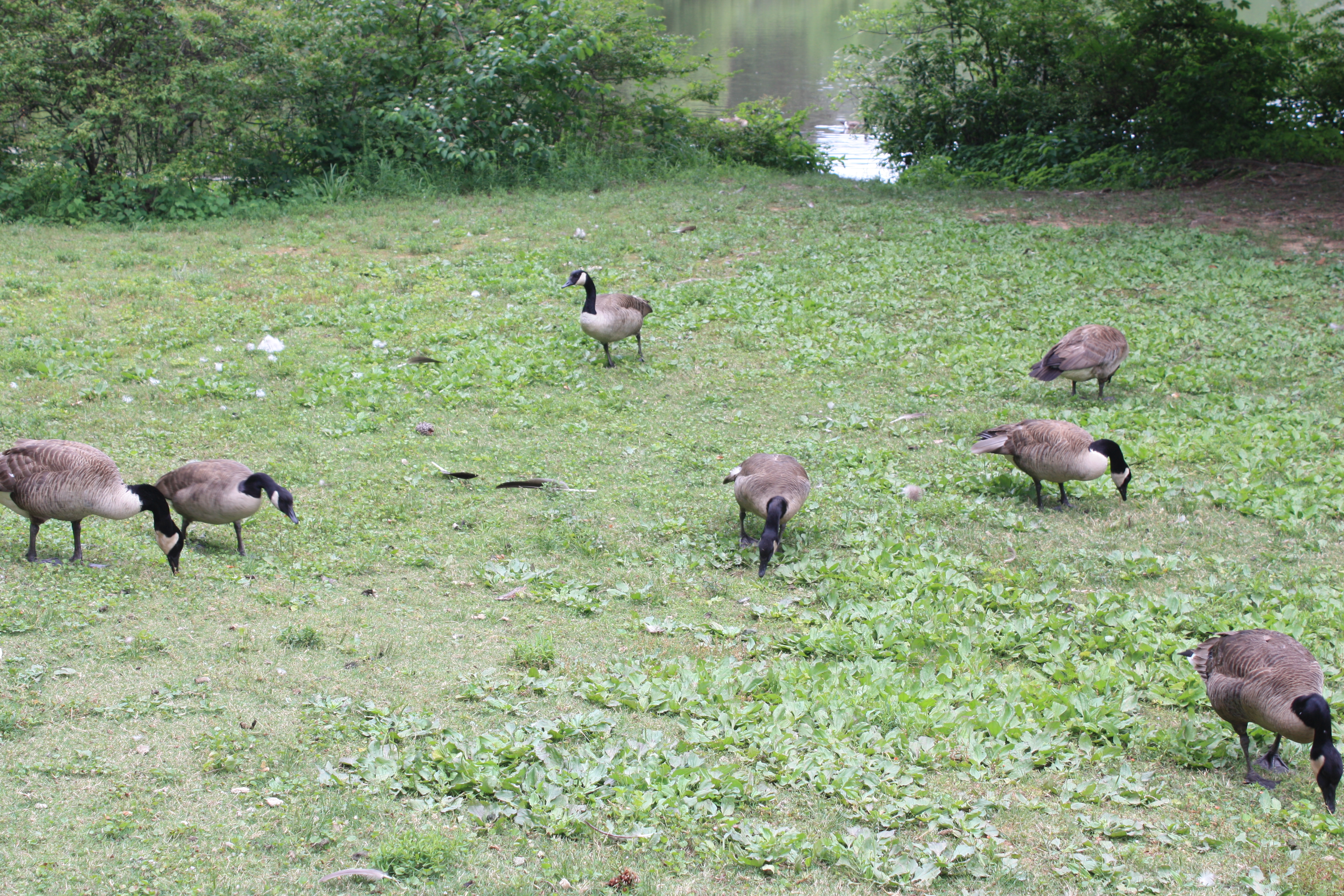
Peahen [Kyōka]

peahen treads softly
to avoid scaring insects.
people plod around,
taking the bird's picture.
the peahen thinks, "Really!"

DAILY PHOTO: Ajmeri Darwaza, Jaipur

Image

BOOK REVIEW: Dao De Jing: A Minimalist Translation by Lao Zi [Trans. Bruce R. Linnell]

Dao De Jing: A Minimalist TranslationDao De Jing: A Minimalist Translation by Lao Zi
My rating: 5 of 5 stars

Available Free on Project Gutenberg

The Dao De Jing presents the core philosophy of Taoism, a philosophy that values simplification, non-action, naturalness, spontaneity, and recognition of opposites in [and their influence on] each other. There are numerous editions (this is the Wang Bi / “standard” ed.) and English translations of this Daoist tract, and the translation matters because the Dao De Jing is at once simply stated and arcane. I liked what Linnell did with this translation, which – as the subtitle suggests – he aimed to make simple and straightforward.

One nice feature of this translation is that each of the 81 chapters has four segments: the original Chinese text, a readable English translation, a word-for-word literal translation, and notes. Having the Chinese, a literal translation, and notes can be helpful when one has trouble deciphering the more cryptic passages. Another nice feature is an appendix in which the author discusses another scholar’s hypothesis that the chapters of the Dao De Jing were composed in layers, and Linnell re-orders the chapters as suggested by this hypothesis. Finally, the book ends with a Jefferson Bible-esque excerpt collection that takes all the places where Lao Zi wrote “Thus the sage:” and builds a single composition describing a wise person.

If you’re interested in Taoist philosophy, you may want to read this translation, whether you’re new to the Dao De Jing or you’ve read other translations or editions in the past.


View all my reviews

Pufferfish [Senryū]

beached pufferfish.
better we meet 
on my turf

DAILY PHOTO: Cliff & Beach, Varkala

Image

BOOK REVIEW: Invention and Innovation by Vaclav Smil

Inventions and Innovations: A Brief History of Infatuation, Overpromise, and DisappointmentInventions and Innovations: A Brief History of Infatuation, Overpromise, and Disappointment by Vaclav Smil
My rating: 5 of 5 stars

Amazon.in Page

Release Date: February 14, 2023

This book is about technological failures, the various ways in which technologies fail, and what lessons can be learned from these failures when hearing about new “world-changing breakthroughs.” The author explores nine technologies in depth, three for each of three varieties of technology failure.

The first group are those technologies that came online as promised, fixing a major problem, only to later be discovered to have side-effects deemed disastrous. The examples used are: leaded gasoline, DDT pesticide, and CFC (Chlorofluorocarbon) refrigerant. These technologies have come to be associated with health defects, air pollution, ecological collapse, and ozone depletion.

The second group (like the first) came online, but then never became competitive with existing technologies. The technologies presented as examples are: airships, nuclear fission for power production, and supersonic flight. Airships died out not only because of the Hindenburg disaster, but also because people preferred airplanes to a craft with the combined slowness of a boat and the crash potential of a plane. Nuclear fission became untenable for new commercial power plants due to a risk premium on build costs even though it doesn’t contribute to global warming and (once powerplants are paid for) is exceedingly cheap per kilowatt-hour. Supersonic flight was just too costly and short-ranged to compete with subsonic flight.

The final group are those technologies that failed to come online at all, despite intense efforts. These include travel by vacuum tube (i.e. Hyperloop, and, yes, like at the bank but with people inside) nitrogen-fixing grains (negating the need for fertilizer,) and nuclear fusion. Despite the celebrity billionaire love of Elon Musk and Richard Branson, hyperloop isn’t advancing because of challenges of maintaining vacuum over large distances. Making cereal grains that feature the nitrogen-fixing capabilities of legumes has also proven more difficult than expected. Nuclear fusion recently experienced a moment in the sun when, for the first time, they got more energy out of it than was needed to achieve it. (This wasn’t written about in the review copy I read, but I suspect will be mentioned in the finished book. At any rate, it doesn’t negate the author’s point as it’s still just one breakthrough of several that would be needed for the technology to be commercially viable.)

In the last chapter, the author gets into a number of other technologies with shorter discussions that are meant to illustrate specific issues with excessive technological optimism. He also investigates some technologies that he believes need to come down the pike, given our present and expected future challenges.

I found this book fascinating. The author seems to love being contrarian (he not only contests popular optimism by those overestimating technological progress but also contests the pessimism regarding the first group of failed technologies, so it appears that he enjoys pointing out how mass opinion [or the opinion of another smart person] is wrong.) That said, there’s a great deal of thought-provoking information in the book. And, I think it can help people more critically consider claims about up-and-coming technologies.


View all my reviews

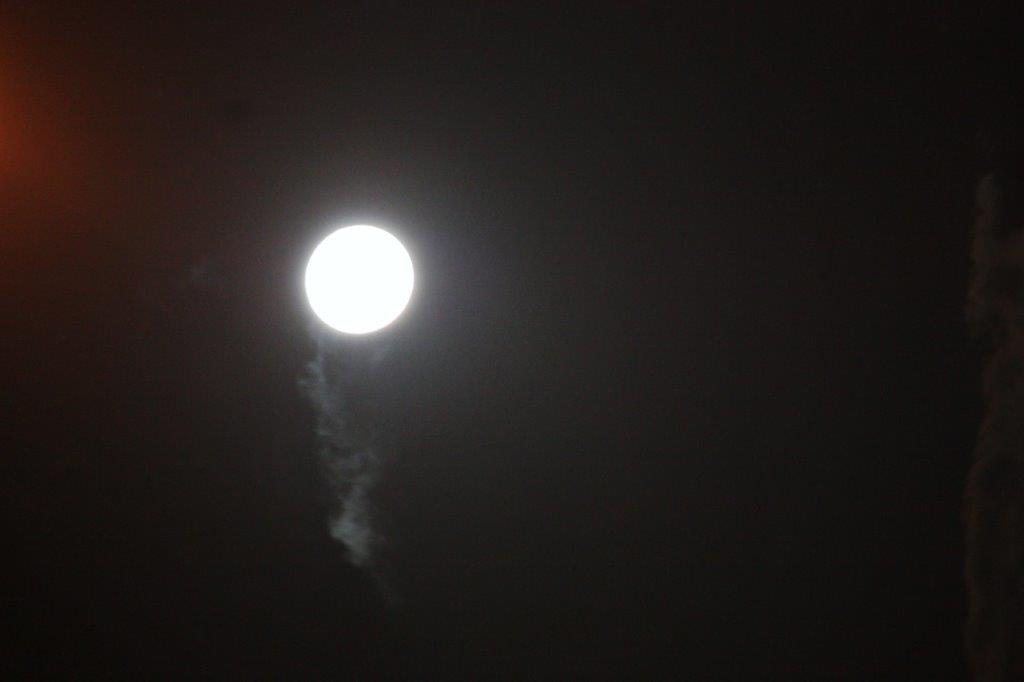
Moon Gazing [Haiku]

moon gazing.
 priests and prostitutes
  look to the same orb

Wake Up! [Haiku]

the overnight train.
 foggy mind / sleep deprived:
  sunrise sky painting

DAILY PHOTO: Scenes from the Kyrgyzstani Desert