“Rooms” by Charlotte Mew [w/ Audio]

I remember rooms that have had their part
  In the steady slowing down of the heart.
The room in Paris, the room at Geneva,
The little damp room with the seaweed smell,
And that ceaseless maddening sound of the tide --
  Rooms where for good or for ill -- things died.
But there is the room where we (two) lie dead,
Though every morning we seem to wake and might just as well seem to sleep again
  As we shall somewhere in the other quieter, dustier bed
  Out there in the sun -- in the rain.

PROMPT: First Computer

Daily writing prompt
Write about your first computer.

My first computer was my brain interfaced with a No. 2 pencil. Yes, I date that far back in the technology stream.

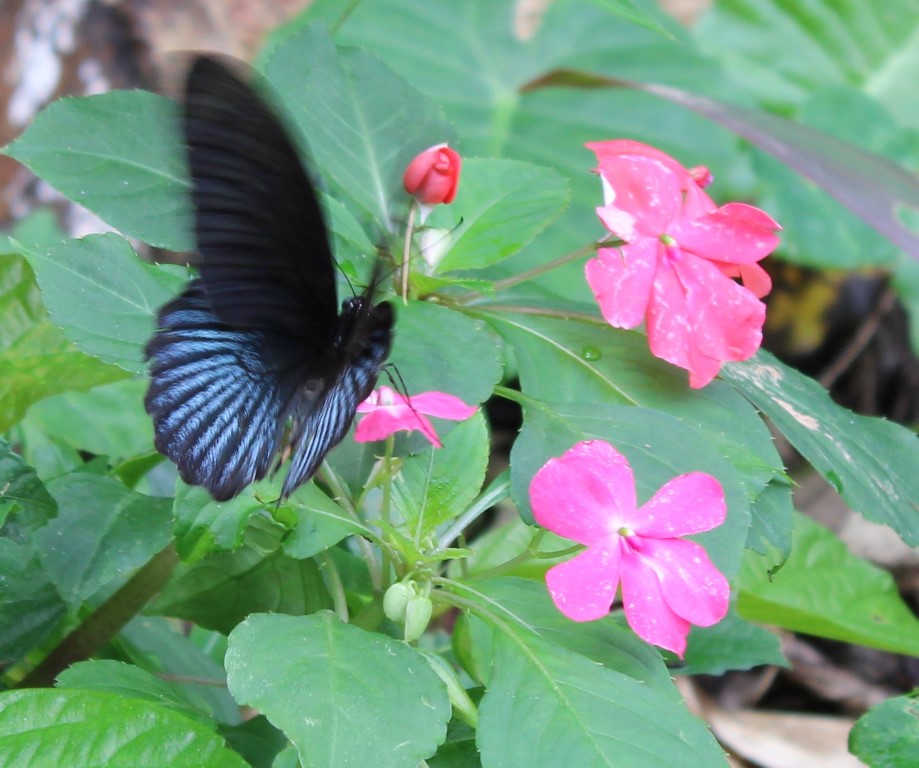
Dueling Colorful [Haiku]

Butterfly shows off
its luminous blue wings
 to hot pink flowers.

BOOKS: “Deep, Deep the Courtyard” [庭院深深] trans. by Xu Yuanchong

庭院深深:最美的宋詞英譯新詮 (Traditional Chinese Edition)庭院深深:最美的宋詞英譯新詮 by 吳俁陽(賞析)
My rating: 5 of 5 stars

Publisher Website

This is a bilingual (Chinese / English) anthology of Song Dynasty poetry. It features more than 140 poems by almost fifty poets of the Song Dynasty, but a few of the Song poetic rockstars are particularly well represented (e.g. Su Shi, Qin Guan, Ouyang Xiu, and Xin Qiji.) The principal language of the book is Chinese (Mandarin) and so, while the poems themselves appear in English as well as Chinese, the ancillary matter is only in Chinese. Said ancillary matter includes notes, contextual information, bio-blurbs on the poets, and brief front and back matter.

I learned after reading the translations, that the translator was Xu Yuanchong and that he was (i.e. he’s now deceased) a very big deal as a translator, translating classical Chinese poetry into both English and French. All in all, I enjoyed the translations and found them to be sound as poems in their own right. That said, my personal preference would have been to have had less effort put into maintaining rhyme. I suspect a closer transmission of the ideas of the originals could have been achieved without the forced constraint of rhyme. Furthermore, while in many cases metering was attended to, sometimes it was not, leaving those poems to have a doggerel quality. [I come to this conclusion by comparing a few of the poem’s translations to those by other translators as well as to literal translations.] That said, the translator was clearly no slouch, and his stylistic choices were likely informed by what was popular during his career.

This book is part of a series. Other volumes include: In the Thick Woods a Deer Is Seen at Times (Tang Dynasty poems) and A Pair of Swallows Fly (from The Book of Songs, a.k.a. The Classic of Poetry.) I picked this book up in Taipei’s Zhongshan Book Street (Eslite Bookstore,) and don’t know how widely available the books of this series are outside of Taiwan, but if you are interested in Classical Chinese poetry and can find a copy, I’d recommend it.

View all my reviews

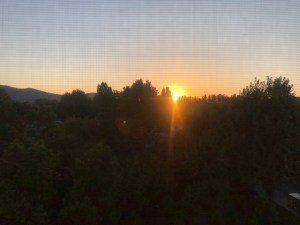
Sneaky Sun [Free Verse]

A small arc of sun
stands above the trees

Like the tufts of hair
that give away the
hiding boy who can’t
judge hairdo height.

The next time I turn around,
I see Sun -- fully out and
stalking up behind me,
   looming larger.

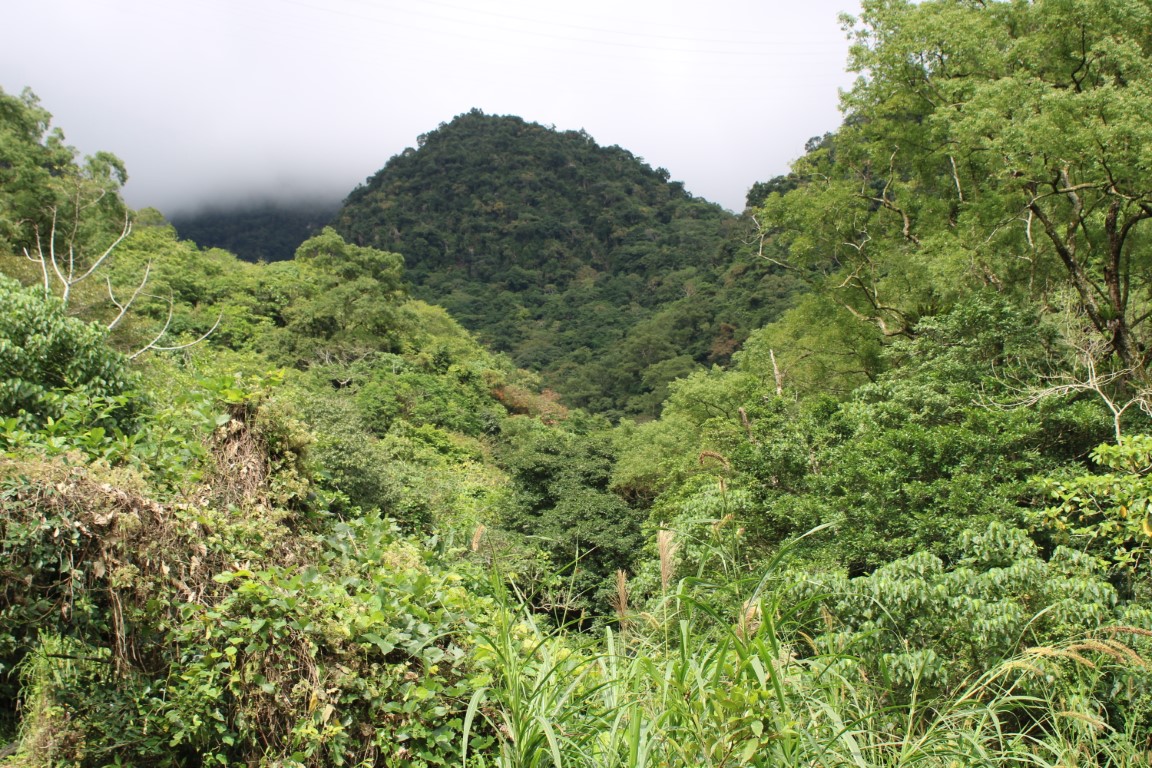
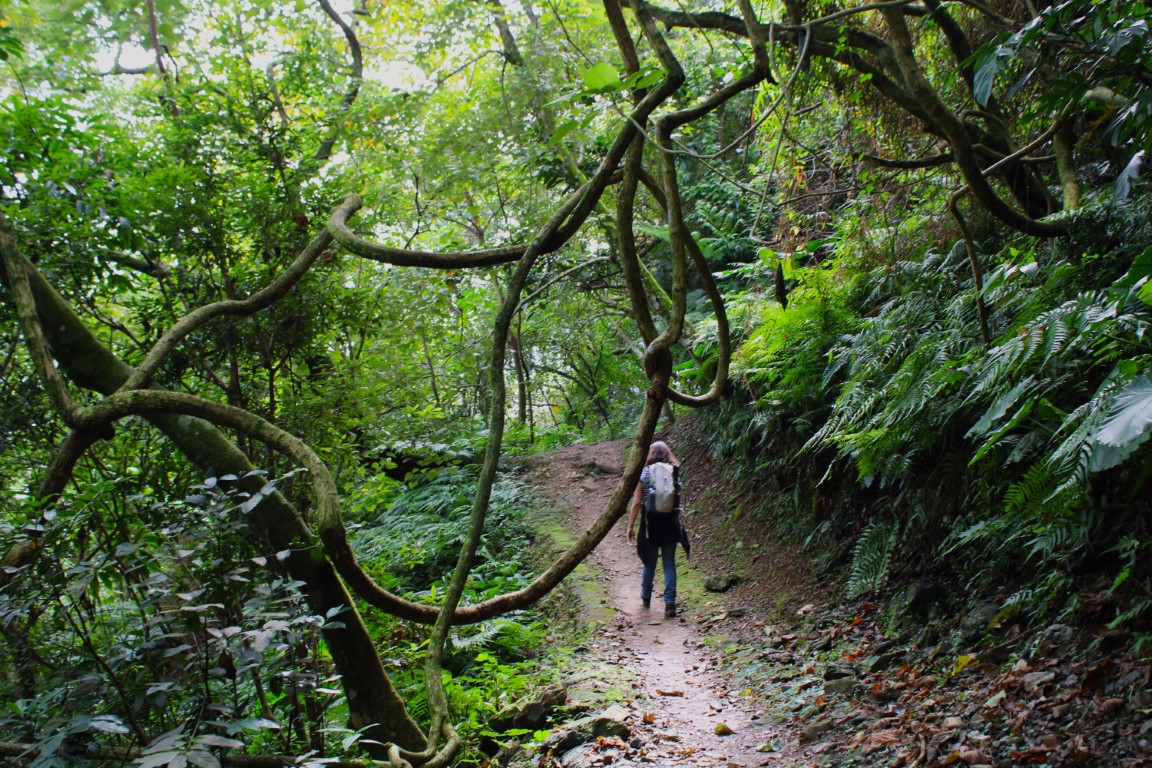
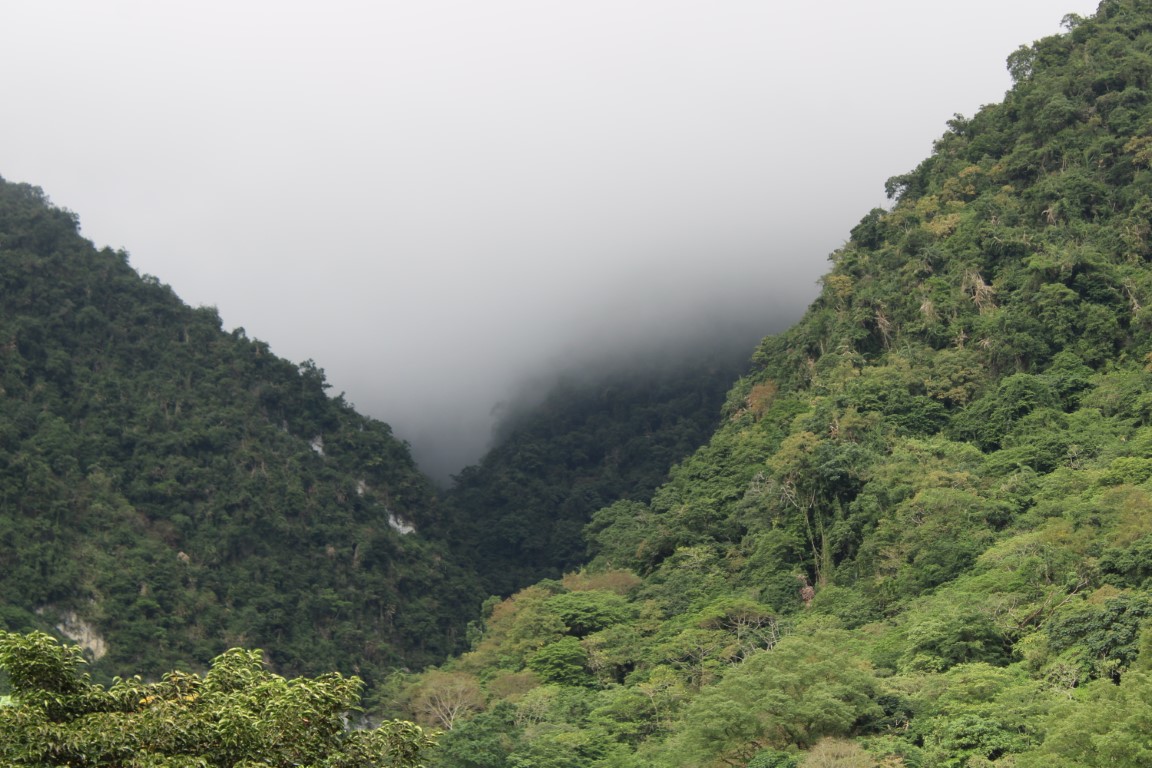
DAILY PHOTO: Scenes from Zuocang Trail

“Curtain” by Paul Laurence Dunbar [w/ Audio]

Villain shows his indiscretion,
Villain's partner makes confession.
Juvenile, with golden tresses,
Finds her pa and dons long dresses.
Scapegrace comes home money-laden,
Hero comforts tearful maiden,
Soubrette marries loyal chappie,
Villain skips, and all are happy.

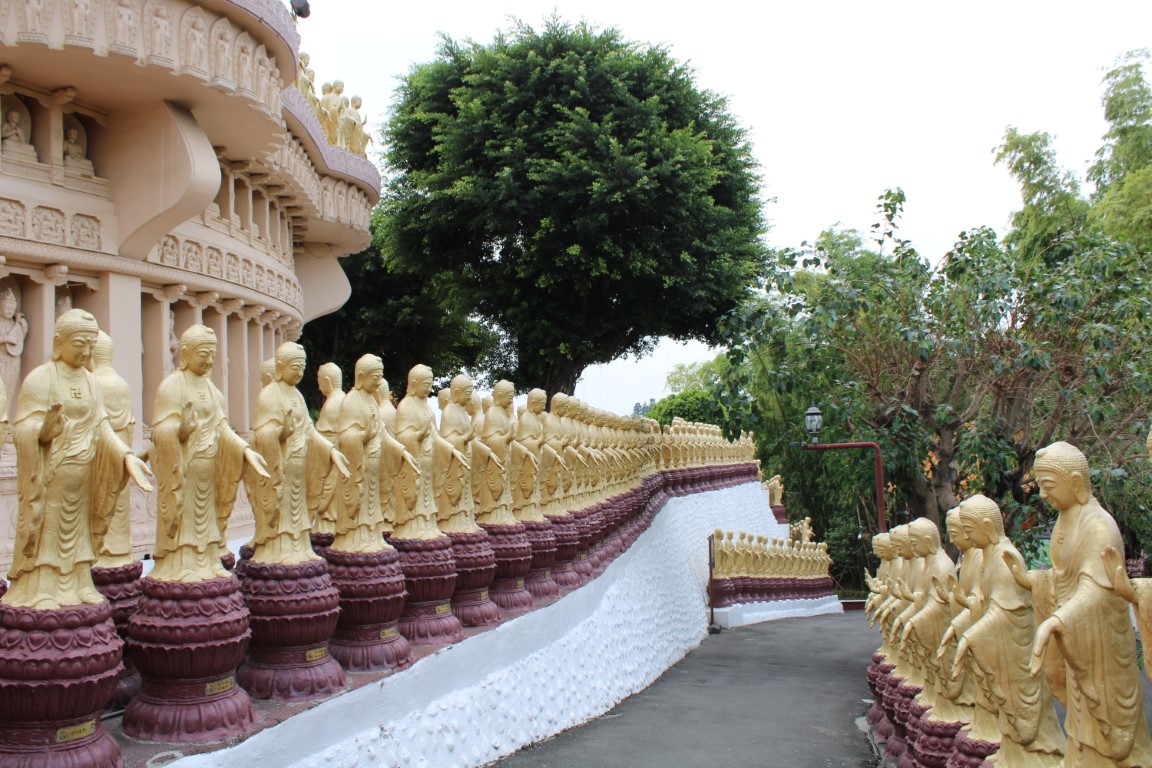
Infinite Golden Buddhas [Free Verse]

Infinite golden Buddhas
 stretch along the path.

Each step occurs
 in the presence of one
 and the presence of all
 and the presence of none --
  simultaneously.

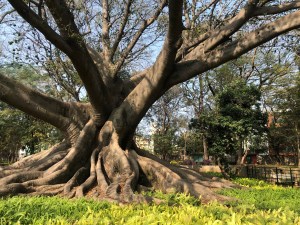
World Tree [Haiku]

white silk-cotton tree,
sinuously sprawling —-
chaining earth to sky.

BOOKS: “Smoke and Ashes” by Amitav Ghosh

Smoke and Ashes: A Writer's Journey through Opium's Hidden HistoriesSmoke and Ashes: A Writer’s Journey through Opium’s Hidden Histories by Amitav Ghosh
My rating: 5 of 5 stars

Amazon.in Page

Release Date: February 15, 2024 [NOTE: for this edition; the book is already out in some markets in some additions.]

Ghosh has written a fascinating exploration of the profound global consequences of that pretty red flower, the opium poppy. I find the events surrounding the Opium Wars to be among the most incredible stories humanity has written. It is mind-blowing that a substance could be so utterly addictive as to spur wars and global social and economic upheavals. That substance is, of course, tea. Ah, you thought I was going to say opium (or its relative, heroin,) didn’t you? But while opium is fantastically addictive, its addicts were by-and-large in peaceful stupors in (or on) their clouds during the time in question. It is the uppity Earl Grey addict who was draining Britain’s treasury of precious metals, and — as addicts do in their impoverished desperation — turned to dealing drugs.

There have been many books written on this subject, but Ghosh carves himself a niche. First, while accounts often focus tightly upon the central adversarial relationship of Britain versus China, Ghosh examines at leisure the roles of two lesser discussed players — India (not only as a subject of Great Britain but also as an autonomous actor) and America. The importance of India’s involvement, from being a major producer and processor of opium to sourcing the sepoys who actually fought the Opium Wars, has been largely ignored, and Ghosh helps to clear up distortions in the historical record. Second, the book investigates questions around America’s opioid crisis and what history can tell us about its drivers. In particular, what does the China’s explosion of addiction tell us about what might have spurred America’s crisis?

This is a readable and compelling nonfiction exploration of the influence of opium from a writer who has produced novels (e.g. the “Sea of Poppies” trilogy) set around these historical events.

I’d highly recommend this book for individuals interested in the influence of Opium, particularly if one is curious about how history relates to the recent crises and what role Indians and Americans played in events.

View all my reviews