5 Minefields of Armageddon for 2013

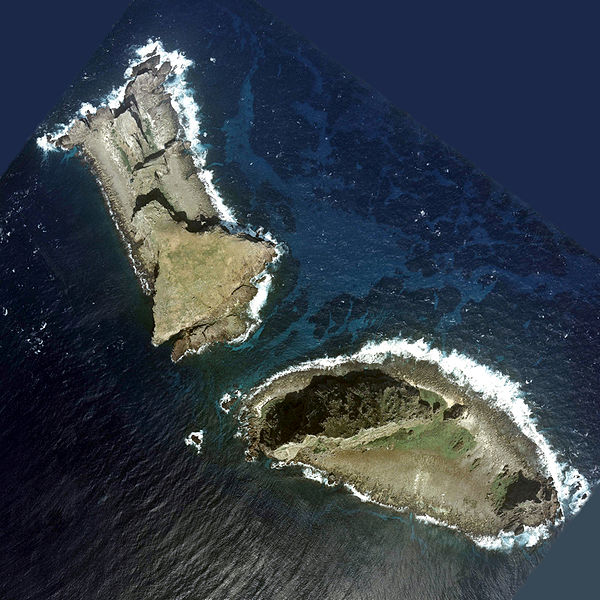
National Land Image Information, Ministry of Land, Infrastructure, Transportation & Tourism, Japan

National Land Image Information, Ministry of Land, Infrastructure, Transportation & Tourism, Japan

1.) Ever heard of the Senkakus? What about Diaoyus? If not, you should look them up. When you’ve been wearing a gas mask for the 33rd day straight, you may want to know about the chunks of rock in the East China Sea that we tripped into nuclear winter over. Simmering tensions between Japan and China have been flaring up over these islands of late. So you’re probably wondering who lives there who’s so important that it’s worth wandering through a minefield that could trigger World War III. If you answered, “absolutely no one,” give yourself a prize.  They’re uninhabited. It’s not the islands themselves that anyone gives a rat’s as about, it’s the ramification they have for underwater drilling rights.

The reader may accuse me of hyperbole. (Shh! Dont tell anyone, but– of course– that’s what I do.) After all, China has a boldly stated “No First Use” policy. That is, they claim they will not use nukes in a first strike. Given that Japan isn’t a nuclear weapons state (NWS), there doesn’t seem to be much risk. Except that a.) Japan lives under the U.S. nuclear umbrella;  b.) Japan is the non-NWS that could develop nuclear weapons in the shortest time imaginable — they have the material, infrastructure, and technical know-how (okay, Germany is in the same bag); and c.) see #2

KimJongUn3

2.) North Korea conducted its third nuclear test. This presents a risk because: a.) it provides an incentive for Japan to build its own nukes (particularly if faith in the US umbrella wanes.) b.) [and more importantly] Kim Jong Un has too many yes-men, and no one to slap him in his chubby face and say, “are you smoking powdered unicorn horn?” In other words, he doesn’t have a good idea of what he can get away with before the world unleashes a crate of whoop-ass on his sad country. So he wanders in the minefield.

3.) Europe is getting depressed. Fat and happy Europeans are productive and polite. Downtrodden Europeans have been known to swallow some pretty despicable narratives, and– in doing so– drag the world into war. At the moment this seems really far-fetched. These political movements are at best in the political fringe of countries on Europe’s fringe, right? Maybe so. Time will tell.

4.) If America’s economy is crash-landed, everyone is going to be hit by the debris. This will be depressing, see #3 and then multiply globally. Times like these  echo Churchill’s comment, “Democracy is the worst form of government, except for all those other forms that have been tried from time to time.” Any person, company, or government that sees the train coming in the distance but can’t find its way off the tracks can’t be expected to thrive for long.

5.) India and Pakistan, enough said…

BOOK REVIEW: Vagabonding by Rolf Potts

Vagabonding: An Uncommon Guide to the Art of Long-Term World TravelVagabonding: An Uncommon Guide to the Art of Long-Term World Travel by Rolf Potts

My rating: 5 of 5 stars

Vagabonding is a book about how to make the leap from a cubicle-dwelling company-man (or woman) to a wandering free-spirit.

This book serves two functions. The first is to answer questions about how one goes about seeing the world if one is not independently wealthy or a recent lotto winner. In this role it provides information such as how one can fund one’s travel time, and, perhaps more importantly, how one can get a job after one has an 18 month void in one’s resume.

The second function is to psyche one up to take the leap. In this role it is more persuasive than informative. In both roles it succeeds, but it is in this second role that it is most useful. The Introduction title is “How to Win and Influence Yourself” and Chapter 1 is entitled “Declare your Independence.”

Each chapter has a list of tips and/or references, quotes from those who have done it, and a profile of a famous person associated with the lifestyle, including: Thoreau, Whitman, Muir, and Annie Dillard. The quotes show you that mere mortals have made this leap. The profiles show that you that you will be in excellent company if you do it.

One of the most important themes in this book is simplified living. If one isn’t independently wealthy, one will have to make “sacrifices” to adopt this lifestyle. However, if one learns to live lean, one will be able to make do with much less. One must also live lean during one’s travels. Potts’s advice is to travel light, and leave the electronics at home. (The latter may seem impossible these days, but as a person who recently lost a laptop in a travel accident, I respect the logic.)

I highly recommend this book for anyone who is ready to take the leap, but only if you’re serious.

View all my reviews

DAILY PHOTO: Sacsayhuamán in the Peruvian Andes

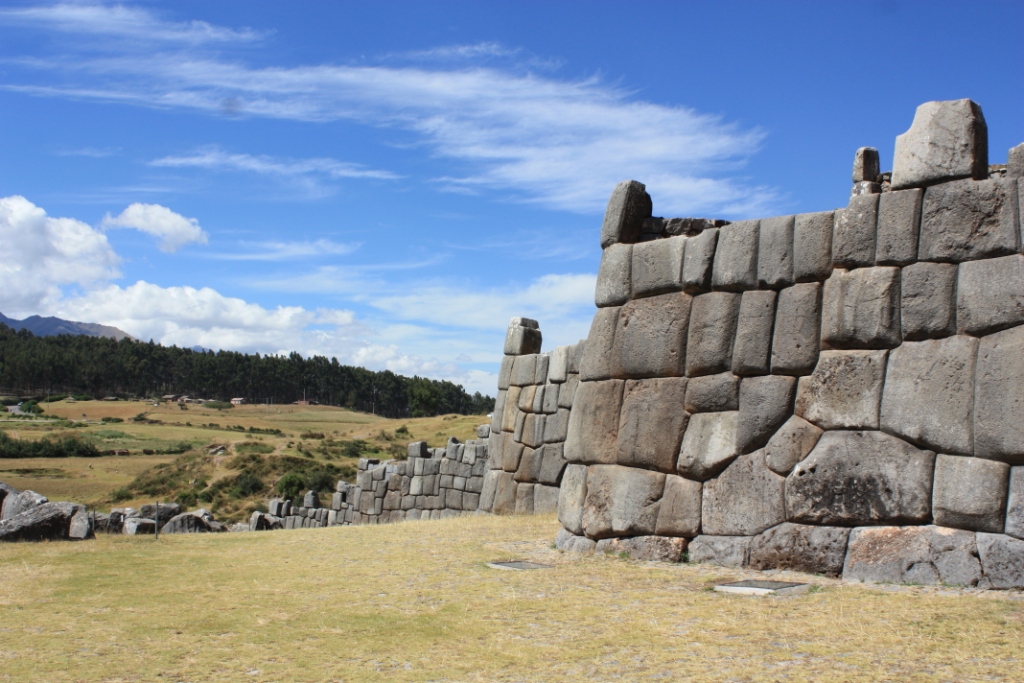
This Incan site overlooks Cusco, Peru.

This Incan site overlooks Cusco, Peru.

Sacsayhuamán may well be the first Incan site you see, if you fly into Cusco. It sits on a hill overlooking Cusco. If you’re in the mood to stretch your legs and aren’t too queasy from the elevation (Cusco, 11,200ft), it’s  not too difficult a walk from the city center.  You can use the Cristo Blanco (huge white Jesus), which shares the same hill, as a navigational reference.

The Incans were the master masons. These stone walls were made without mortar. Yes, those irregularly shaped blocks sit perfectly on each other and have for hundreds of years.  The one thing that Sacsayhuamán has that other sites don’t is a naturally occurring fun park of slides. One can also traverse a pitch black cave, and get spectacular overview shots of the city.

Naturally occurring slides

Naturally occurring slides

BOOK REVIEW: The Girl with the Dragon Tattoo by Stieg Larsson

The Girl with the Dragon Tattoo (Millennium, #1)The Girl with the Dragon Tattoo by Stieg Larsson

My rating: 4 of 5 stars

A disgraced reporter and an emotionally-troubled/intellectually-gifted ward of the state pair up to solve a forty-year old locked door mystery. In the process of investigating what happened to a young woman who vanished without a trace from an island estate, they end up solving a much bigger set of mysteries– and putting their lives in peril in the process.

Both of the lead characters are well-developed and sympathetic, if not necessarily likable in a conventional sense. Mikael Blomkvist is a bit of womanizer or at least a lady’s man– whatever you wish to call him, he sleeps with at least three major female characters over the course of the book. He is also rash (or, perhaps, aggressive) in his professional life. However, he is also pragmatic and kind. Lisbeth Salander is not just tattooed but also pierced, leather-clad, and goth. Her story of female empowerment may be largely responsible for the wild success of this book. When she finds herself abused and violated, she takes matters into her own hands. Her strength and intelligence, wrapped in a package that suggests neither trait, is beguiling.

The book is obviously highly readable, but it’s oddly structured. It climaxes early, leaving well over a hundred pages at the end to wrap up subplots. This includes the disposition of Blomkvist’s professional predicament and the question of with whom he will ride off into the sunset. These are threads that couldn’t be left hanging, but it begs the question of why one reads to the bitter end– though you certainly will.

I guess I should mention that this isn’t a book for the faint of heart or the puritanical– in case one hadn’t already grasped that. It is graphic and intense in spots.

I did see the Daniel Craig/Rooney Mara version of the movie. I’m told it was not as good as the first film, which was made is Sweden (I should have mentioned the book is set in Sweden.) However, I thought it was quite good, and fairly true to the book given the challenges of turning a 650 page novel into a movie.

View all my reviews

DAILY PHOTO: The Cohen Building in Nashville

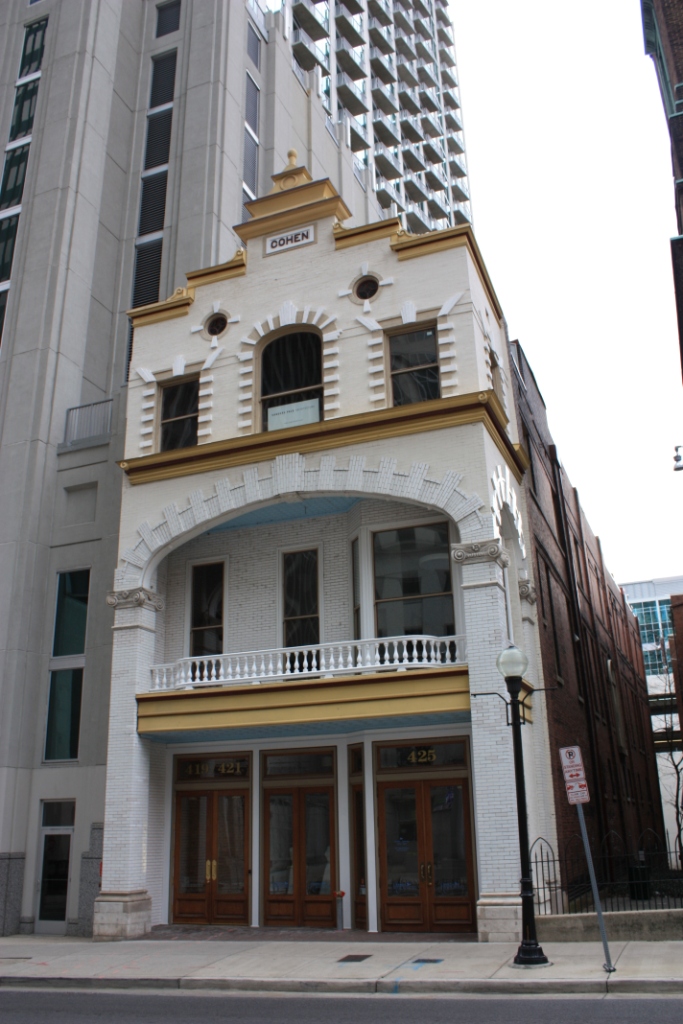
The Cohen Building

The Cohen Building

The Cohen building is a meticulously restored historic building in Nashville, Tennessee. Today it is dwarfed by the adjacent buildings.

BOOK REVIEW: Dracula by Bram Stoker

DraculaDracula by Bram Stoker

My rating: 4 of 5 stars

Dracula leaves Transylvania to find a new pool of victims, and the only thing standing between him and the people of London is Dr. Van Helsing and his cast of allies.

The novel begins with the arrival in Transylvania of Jonathan Harker, a real estate agent from England. Both Harker and his beloved wife, Mina, play an important role in unraveling the mystery of Dracula. Soon after a ghost ship rams into port, Lucy Westenra (a friend of Mina’s) begins to suffer an unusual illness. A Dr. Seward brings in Dr. Van Helsing who has a rare expertise in her particular ailment. Professor Van Helsing’s knowledge is essential to driving Dracula out of London and back to Transylvania. They pursue the vampire– resulting an a final show down.

Bram Stoker uses a series of journal entries, letters, and memos to convey the story. This is an interesting approach, and popular at that time, but it does have its limitations.

Dracula was written early in the age of science and reason. While it was an age of superstition, there is an attempt to elevate vampirism from a strictly supernatural phenomena to one in which science has something to say.

The 19th century language and approach to tension makes for a less gripping tale than one would likely see today, but it is still a very readable book.

View all my reviews

DAILY PHOTO: Trinity College at Cambridge

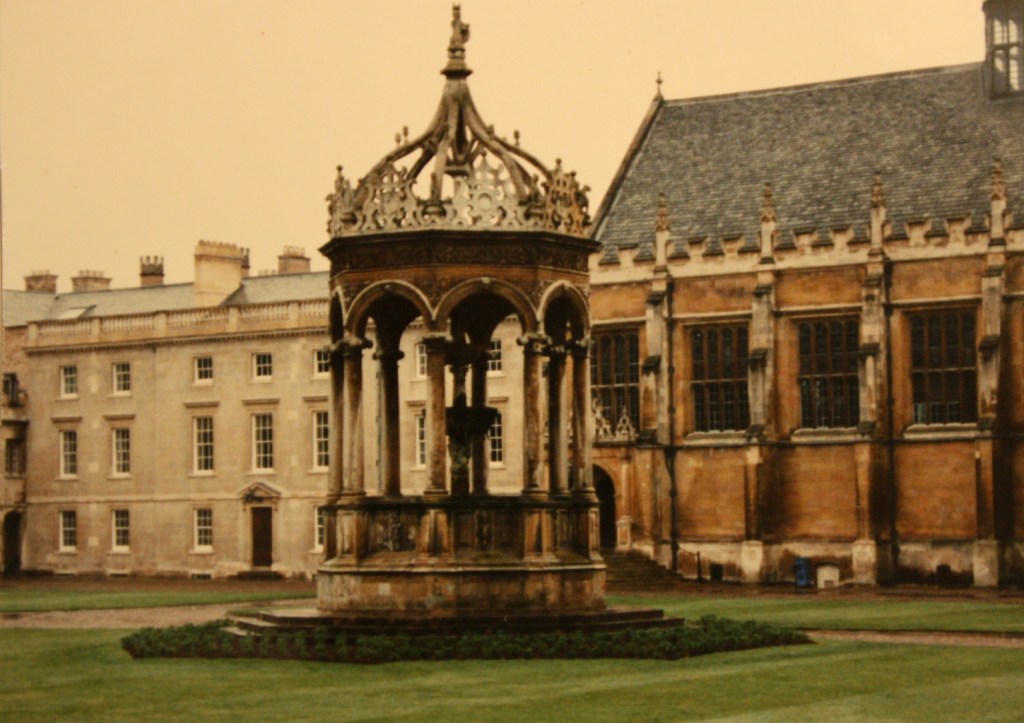
Gazebo in a courtyard.

Gazebo in the Trinity College Courtyard

This photo was shot on a drizzly day in 1989 at Trinity College, Cambridge University. It was converted from a film photo to digital, hence the sepia sky.

BOOK REVIEW: The Book of Five Rings by Miyamoto Musashi

A Book of Five Rings: The Classic Guide to StrategyA Book of Five Rings: The Classic Guide to Strategy by Miyamoto Musashi

My rating: 5 of 5 stars

Miyamoto Musashi is probably the most famous swordsman in Japan’s history. Oddly enough,he’s not known for his experience in battle(he lived at the tail end of the Warring States period and was only in a couple of battles), but for his time spent in musha shugyo (warrior’s errantry), during which he engaged in over 60 duels. It is The Book of Five Rings that largely accounts for his continued fame. That being said, Musashi was quite the renaissance man, a painter and sculptor of note. He also left behind a school of swordsmanship, Niten Ichi-ryū.

The Book of Five Rings is divided into five parts: earth scroll, water scroll, fire scroll, wind scroll, and void scroll.

The earth scroll provides an overview of martial science and an introduction to Musashi’s school, which is noted for its simultaneous use of both the large and short sword. A section is devoted the rhythm of martial arts, a crucial topic. It also includes what might be considered Musashi’s 9-point budō kun (a list of warrior precepts.)It’s worth mentioning a couple of these.
#7 Become aware of what is not obvious.
#9 Do not do anything useless.

The Water scroll describes Musashi’s approach to swordsmanship. It covers a range of elements of a martial art including footwork, the focus of one’s eyes, physical posture, mental posture, techniques,kiai (spirit shout), and approaches to cutting and thrusting.

The Fire scroll deals with the strategic or interactive aspects of the battle. Among my favorite quotes from this scroll is, “If your own power of insight is strong, the state of affairs of everything will be clear to you.”

The Wind scroll teaches us about other martial arts. Musashi discusses martial arts that use an unusually long sword, an atypically short sword, that focus on powerful strikes, and those that focus on many rapid strikes. He contrasts other martial arts with his own on subjects such as their focus with the eyes and their footwork.

The void scroll deals with, well, emptiness.

Musashi had great insight into strategy from his career of dueling. His book is worth being read and reread.

View all my reviews

DAILY PHOTO: Rural Shrine Near Maewang, Thailand

In Thailand, there's a temple everywhere.

In Thailand, there’s a temple everywhere.

If you’ve been to Southeast Asia, you’ve probably seen gleaming golden temples even in remote, impoverished portions of the countryside . However, when it comes to the really off-the-beaten path areas occupied by just a few hill tribe farmers, one might think they’d be forced to hoof it to the nearest big shiny temple. Not so. There are little shrines like this one, marked by saffron cloth tied to trees, out in the middle of the jungle.

TODAY’S RANT: Hyper-relativistic Mathematical Zones: or, When Will my Car be Done?

Albert Einstein theorized that distance and time are relative depending upon one’s speed. In everyday life we rarely notice this because of a little-known tenet of General Relativity that says, “Whenever one attempts to approach the speed  of light, there will be an octogenarian in the left-hand lane.”

Since the early 20th century, physicists have thought they were this close (author holds up hand with thumb and index fingers about 3/4 of a centimeter apart) to being able to explain the whole shebang. Figure out why very small things behave differently from very big things, and, Bob’s your uncle, we’ve got your Eureka moment.

I, however, think physicists will find that they have yet another hurdle to solve (mixed metaphor intended, smartypants.) This has to do with certain zones in which conventional measurements of space and time break down even when one is only moving at the speed the planet is revolving (24 hours/day, I think, no that sounds wrong somehow.)

I don’t think physics is quite prepared to explain why an hour in a mechanic’s shop is equal to about 4.33 hours on the outside. We’ve all experienced the inverted time-dilation effect of the Department of Motor Vehicles. According to Einsteinian relativity, time slows as one approaches the speed of light. However, time slows even more when one is in the slowest state of movement possible, the DMV line.

I won’t go into the distance contraction effects localized to the crotch region of men who wear wife-beaters and gold hood ornaments around their necks.

Are these just zones in which bistromathics trump mathematics (Sorry only readers of Douglas Adams’s Life, the Universe, and Everything will get that reference.)

Any Unified Field Theory must explain these phenomenon before I can accept it.