
Farmyard fun: or, that hay bale may have had a stroke.

Farmyard fun: or, that hay bale may have had a stroke.
 So Long, and Thanks for All the Fish by Douglas Adams
My rating: 4 of 5 stars
My reviews of the previous books in the series are linked below:
Hitchhiker’s Guide to the Galaxy
Restaurant at the End of the Universe
Life, the Universe, and Everything
This, the fourth book in the H2G2 trilogy, feels different from the others. First, it’s not so much about the ensemble cast featured in the other books. This is a book about Arthur, plain and simple. Arthur is reunited with Ford Prefect only in chapter 36 of 40, though there are Ford chapters interspersed preceding that reunion. Marvin the depressive robot makes it into the final chapter, but his appearance seems random and purposeless (except that it interjects a Marvin’s typical humor to nice effect.) Zaphod and Trillian are only mentioned in passing.
Second, romance plays a significant part in the story line, answering the previously perennial question, “Will Arthur ever get laid?”
It will be no surprise to readers of the earlier books that the title, So Long, and Thanks for All the Fish, was the final message of the dolphins before they jetted from the Earth–they being the only ones on the planet who knew the Vogons were about to destroy Earth to make way for a hyperspace bypass.
The story begins with Arthur being dropped on a planet that looks suspiciously like the Earth that he knows was destroyed. He hitches a ride with a young man and his delirious sister, Fenchurch. He develops an inexplicable connection with Fenchurch, and their burgeoning romance makes up a considerable part of the story. Fenchurch had had an epiphany right before what she can’t help feeling was the destruction of the world, and she is traumatized by her inability to remember.
The only difference between this planet and the one Arthur knows is that–he later finds out–this one is entirely devoid of dolphins. His house is even where he left it with a couple of months of dust and dirt accumulated. The only thing out-of-place is a new fishbowl engraved with “So long, and thanks for all the fish.”
The couple, once united, go to meet an eccentric scientist who claims to know what happened to the dolphins. The eccentric, who goes by the name Wonko the Sane, has a house built inside-out to symbolize that he is outside the asylum–the asylum being the rest of the world. Wonko shows the couple his engraved fishbowl, and they then realize that all three of them (including Fenchurch) received such bowls. Wonko tells them that they should have put their ear to the bowl’s mouth. They do so, and hear a message from the “Save the Humans” organization, which is a dolphin charity group whose name says it all.
Fenchurch wants to see the universe, and so when Ford lands back on Earth–having come to investigate why the Hitchhiker’s Guide entry for Earth has been expanded from “mostly harmless”–they go off together. Their first stop is to read God’s final message to His created. I’ll not tell you the message. So ends the book–well there’s a little epilogue which is nearly meaningless in isolation.
While it’s off-kilter from the other books, this one shares Adams’ usual absurdist humor. However, in keeping with the different feel, one of the best laughs I had in this book was not absurdist humor at all. That laugh resulted from a story told by Arthur to Fenchurch as an icebreaker. He had once bought a packet of crisps and a beverage and sat down at a table to work the crossword at a train station. The station cafe was crowded and so a stranger ended up sitting across the table from him. The man opened the package of crisps and ate one. Taken aback, Arthur didn’t know what to do. Being non-confrontational in a reserved British fashion, all he could manage to do was to ignore the man’s encroachment and take his own crisp to eat. The man, not to be out done, took another. They proceeded like this until the entire pack had been consumed. To Arthur’s mortification, when he got up to go to his train, he found that his packet of crisps was under his newspaper, untouched. Something about that struck me as hilarious.
Here is the song from the movie of the same name.

Taken: Summer 2011
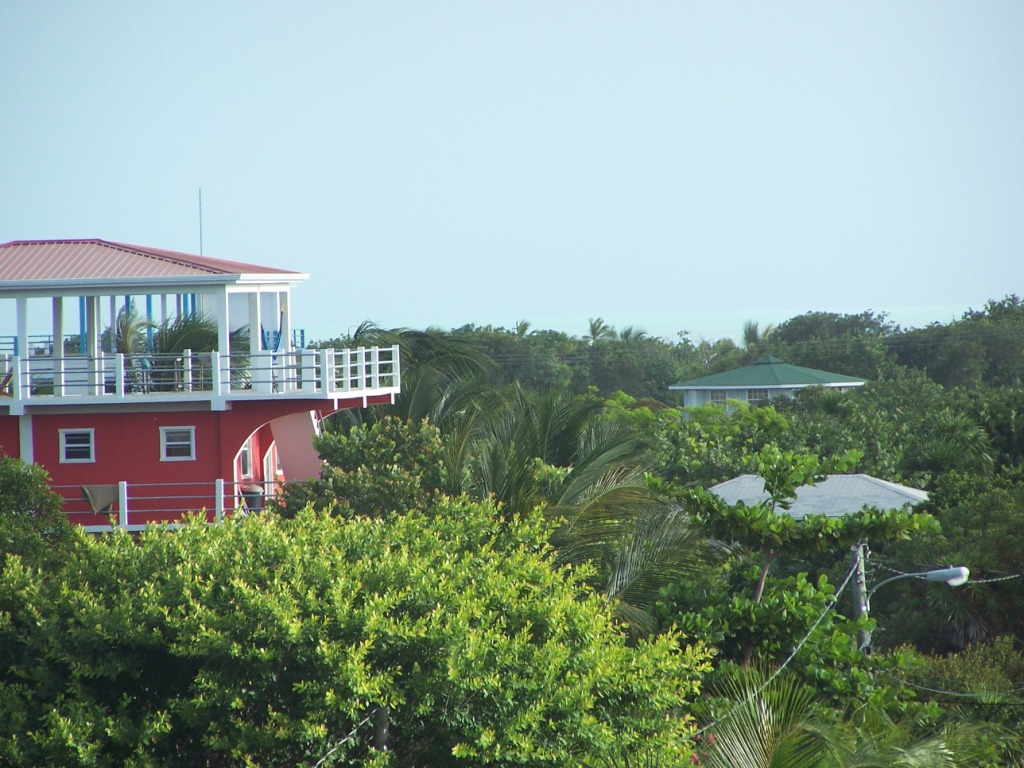
Taken from the rooftop gazebo of a B&B.
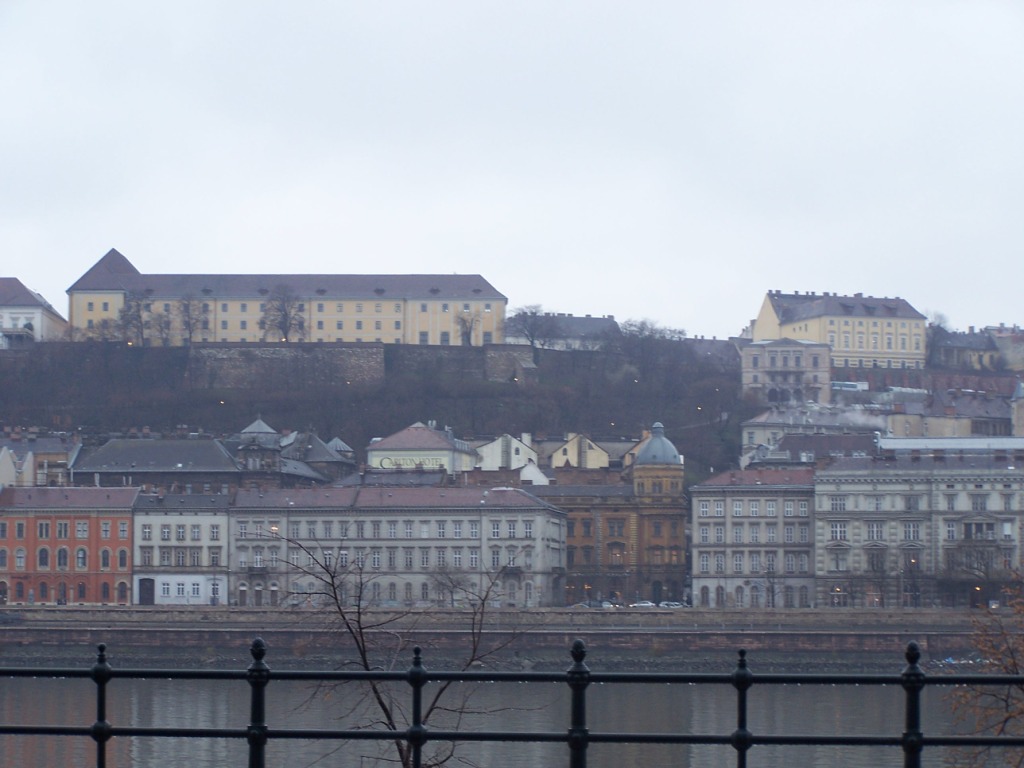
Buda from Pest; Taken in December of 2008

Three women standing around chatting in the nude, as happens all the time… in the minds of men. Taken in Tokyo in the Summer of 2008.
I’m on a Publisher’s Weekly listserv, and today they had the fifth installment of a challenging game on their website. They posted original book cover art for classic works of literature with the title and author removed. I had a fun time with it, and if you are a literature junky, you may too.
I’ll provide links if you are interested in checking it out.
Can You Guess These Classic Books From Their Phantom Covers [Installment 1]
Can You Guess These Classic Books From Their Phantom Covers (Round 2)
Can You Guess These Classic Books From Their Phantom Covers (Round 3)
Can You Guess These Classic Books From Their Phantom Covers (Round 4)
Can You Guess These Classic Books From Their Phantom Covers (Round 5)
Here is an easy one so you can get a feel for what I’m talking about. Most are much harder.
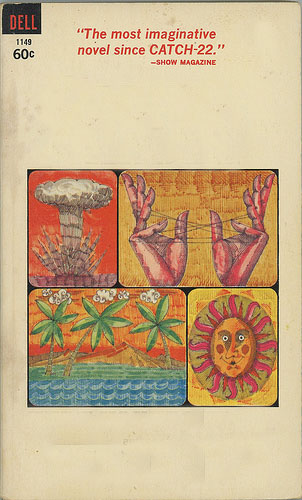
This is one of the easiest ones.
So, I’ve been doing a lot of home improvement lately. My life, largely divided between having my nose to either a laptop or a book, has prepared me to find out how to do any task in record time–in theory. Give me a few minutes and I can find out how to–in theory–install a cardiac shunt. That’s from a starting point of not knowing what a “cardiac shunt” is or even if it’s a real thing. The problem is that this background has in no way prepared me to interact with the physical universe. (So while I can find out everything one needs to know about cardiac shunts in a short period of time, and even probably understand [or look up] all of the arcane language in the scientific journals, I wouldn’t offer me $100 to install your cardiac shunt if I were you.)
I ramble. So I know how to optimize my search terms to find out how to do exactly what I need to do. Then I watch the video and I’m filled with great confidence, having seen exactly how easy it is. And then I wallpaper myself to the wall. The whole time the experts in the video are doing the task, they are filling my head with false confidence. “See how easy that was?… People think this requires an expert, but…”
It occurs to me that this might just be a strategy by such experts. My training as an economist invariably leads me to ask one question–from an economist’s perspective it’s the root question about any human behavior. That question is, “What’s the incentive?” What is the incentive for a professional wallpaper hanger to make a do-it-yourself video? We don’t see travel agents (if such mythical creatures still exist) doing videos on how to use Orbitz, Kayak, or Travelocity. My training as a human has led me to be skeptical of munificence in all its forms. I think the strategy is to build false expectations. If one went into a home improvement chore knowing that it was going to be a hellish nightmare, one would have the right state of mind to get through it. However, if one thinks it’s going to be easy-peasy, then one ends up ripping one’s hair out and creating holes in the wall for an expert to–lucratively–repair.
That’s just one theory. I have others. Now, I know that you are familiar with the common adage, “It’s a poor workman who blames aliens or Hindu deities.” Still, I can’t help but feeling that the wallpaper hanging experts in the YouTube videos had extra appendages that I couldn’t see due to some sort of psychic block or CGI erasure (i.e. like when they take the wires out of kung fu movies.) It’s my contention that one would have to have extra arms, like Vishnu, to keep the paper that straight and perfect as it’s applied. At one point I thought I’d made a breakthrough in string theory when I saw my wallpaper curl into more than three dimensions simultaneously, but it may have just been rage-induced brain hypoxia.
So why would multi-armed aliens, or Vishnu, make home improvement videos? How should I know. I can speculate that Vishnu might enjoy practicing Shakti, which–as I understand it–is the ability to make the impossible possible, the impossible in this scenario being effortless wallpaper hanging. The aliens might just be testing whether our species has the fine motor skills to challenge them in their impending takeover.

The Chattahoochee at Lake Lanier
[Yes, it has come to this–the last bastion of a weary scoundrel. I am rerunning “greatest hits” posts from my first blog. But, if you haven’t seen it, it’s new to you.]
It is easy enough to forget that one is in an authoritarian Communist country when visiting Beijing. They have gone to great lengths to avoid that which Communists around the world have most excelled–constructing buildings that display both a complete lack of creativity and not the slightest hint of visual appeal. On the contrary, the Chinese are putting up some very cutting-edge architecture such as the trouser-leg building, the bird’s nest stadium, and they have even been known to bolt visually interesting facades onto buildings constructed in an era during which they were practicing a more traditional form of Communism. Also, there are few places in the world where market economics thrive more apparently. When I first visited Hungary in the early 1990’s, I was surprised to go into shops and be totally ignored by the sales staff – in some cases while vigorously trying to get their attention. They were simply lagging behind in getting a hang of capitalism. In China, on the other hand, no one would complain that one is being ignored by the sales staff. On the contrary, one is more likely to feel smothered by them. One sales girl of about 1/5th my size actually tried to physically restrain me from leaving by grabbing my wrist.

Oh, there are the hints of the nature of the regime. When one is in Tiananmen Square, there are lists of rules played squakingly over loudspeakers in the manner reminiscent of a concentration camp. However, this is the rare exception. In many cases the Chinese have gone to great lengths to put rules in a positive form. You won’t see “Don’t Walk on the Grass”, but rather signs that say things like “Please Protect the Greenery.” I was told second-hand that someone saw a van pull up and whisk away a local wearing a Tibetan Independence T-shirt while I was visiting, but I cannot corroborate that was true. In general, what I saw was reflective of a market economy in a country that mixed prosperity and poverty in a way not unlike other developing nations that are transitioning upward.

I suggest a visit to the Military Museum for two reasons. First, it houses a sizable and impressive collection of weapons, sculptures, and displays, and it covers a lot of history (mostly 20thcentury, but not exclusively so.) It also seems to be a secret of sorts. It is not a secret in terms of being hard to find. It is located right above a Line 1 subway station that bears its name. That is, where most stations have a name showing in both Chinese characters and the romanized alphabet spelling of the Chinese word, this stop is labeled “Military Museum” in English. However, we had two Beijing guidebooks from large and well-known travel book publishers, and neither had coverage of the museum. This seemed odd because military history is not exactly a rare interest among tourists, and, once inside, it became apparent that this was an extensive museum. My wife and I were two of five non-Chinese tourists that we saw at the Museum, and there were probably a couple hundred visitors throughout the museum at the time.
I think the reason for the lack of visitation by non-Chinese is related to the second reason I recommend a visit here. That is, it gives one a reminder that one is in a Communist country and insight into the nature of what a Communist regime is, and what it does. It is not for those who take umbrage in the face of propaganda, and it is not nearly as friendly as other tourist destinations. There are many statements, such as reference to the Korean War as something like the “Proud War to Overthrow US Aggression in Korea”, that would probably be offensive to many. However, if you are one who can find amusement in an Orwellian framing of events, this museum is for you. Sign-after-sign gives the impression that Mao’s forces were able to crush the Kuomintang, who were armed with the latest and best American arms, while relying on pitchforks, spears, and halberds – because , of course, they always employed superior strategy and had the support of all of the people.

To be fair it doesn’t take an authoritarian regime to put out propaganda, all manner of nationalist forces do this. (In some ways, China reminds me more of a heavily nationalist country than a Communist one. I am told that China has a lesser proportion of its economy owned by the government than some Western democracies, and so the definition of a communist country as one in which the government controls the means of production may not be entirely reflective of China.) While I visited Tokyo on this same trip, I did not get a chance to go to Yasukuni Shrine, which has a museum apparently as full of propaganda as this Chinese Military Museum. Obviously, the two museums mentioned have polar opposite perspectives. The Yasukuni Museum portraying Japan as the victim, rather than perpetrator, of aggression during the Second World War.
However, I am still curious why this is not a destination for the tourists? It is not the case, by any means, that the propaganda is all over the top. In fact, it is, in some cases, subtle. It is also not the case that the museum is altogether hostile to the US and other Western countries. (It should be mentioned that there are some well-deserved anti-Western statements such as those relating to the Opium War.)

There are a few distinct displays of positive relations. For example, among the small arms exhibitions there are cases that pay respect to American gunsmiths such as Samuel Colt.

If imitation is the sincerest form of flattery, then there are quite a number of examples of such flattery in the museum. As I was walking around on the first floor, which holds tanks, missiles, artillery pieces, and other sizable weapons, I came upon what I thought for a moment was an American Humvee. I briefly wondered where they would have gotten one. They have a large number of US World War II era weapons that were either left during that war or shipped to the Kuomintang during the Chinese Civil War, and even a few Viet Nam-era US weapons that presumably made their way from the Communist Vietnamese. However, I was soon disabused of the notion that it was an American Humvee by the placard that said that it was, in fact, a Chinese made “Mengshi” FAV. I have since read that a company in China is actually licensed to make them, and buys a number of the parts from US firms. They also had the spitting image of a Claymore Mine. I have no idea if it was legally licensed or not (but I suspect not.)

There is also a Hall of Friendship that houses a wide range of gifts given to the Defense Minister and other Ministry personnel over the years from various countries. The largest block of these seem to be from Warsaw Pact era countries during the Cold War. However, there are a wide range of countries represented including the US.

Last but not least, in the gift shop you could actually buy “US Ranger” T-shirts and other American military logoed goods (not authentically logoed, mind you, but rather the type of over-the-top imagery that is sold in “Soldier of Fortune” magazine), but the fact that it is sold in a Museum run by the People’s Liberation Army (PLA) is interesting to say the least. As an aside, we came across the PLA surplus store while we were there, and they also sold such US military related wears.
I highly recommend a trip to Beijing. You may need an oxygen supply occasionally, but the food is good, the people friendly, the goods inexpensive, and the history amazing. For anyone interested in history, and particularly military history, the museum has a lot to offer as well– just suspend your disbelief at the audacity of the propaganda at the door.
Those interested in the museum can see more on my other blog .


