If you could have something named after you, what would it be?
Maybe an atomic bomb. It would be nice to get in the last word.
If you could have something named after you, what would it be?
Maybe an atomic bomb. It would be nice to get in the last word.

I knew a simple soldier boy
 Who grinned at life in empty joy,
 Slept soundly through the lonesome dark,
 And whistled early with the lark.

In winter trenches, cowed and glum,
 With crumps and lice and lack of rum,
 He put a bullet through his brain.
 No one spoke of him again.

You smug-faced crowds with kindling eye
 Who cheer when soldier lads march by,
 Sneak home and pray you'll never know
 The hell where youth and laughter go.
 Nuclear War: A Scenario by Annie Jacobsen
Are you patriotic? What does being patriotic mean to you?
I certainly was as a young man, but increasingly I have shifted towards a more “citizen of the world” worldview. I’m no doubt influenced by my admiration for the life of Socrates (such as we know it,) who was said to have been a valiant and fearsome hoplite warrior in his youth but came to call himself a Citizen of the World. As one becomes governed less by passions and more by reason, it becomes easier to have a logically consistent ethics by doing so.
Consider the question: “Is it wrong to stab a person in the back without warning, a person who you do not know, a person who doesn’t know a thing about you and has never done you any personal wrong, a person who to your knowledge has always lived a good and virtuous life?”
Of course, the immediate impulse is to say that that act is clearly wrong. Really, the only case we can attempt to successfully counter argue would be a soldier in war or a military action acting on lawful orders against an enemy combatant. But everything becomes messy. Is it enough that the soldier is operating on “lawful orders?” In that case, is the soldier a moral individual, if he lacks agency? To what degree can a infantryman or spec ops soldier know that it is – in fact – a lawful order? Can a lawful order be morally and ethically reprehensible and indefensible? The questions abound, and that’s why I suspect Socrates – lover of questions as he might have been – had a shift in philosophy about the matter over the course of his life.
It may seem I’m arguing that this is growth or betterment, but maybe it’s just the natural progression of a life. Maybe we need more passion in our youth and more agency as we age.
Of course, in those elder / “citizen of the world years,” the Athenians straight up murdered their onetime hero, so maybe I have not picked the best role model.

Enraged, I lean on the rail as rain ceases.
 I look skyward, and sigh -- then roar.
 My grand legacy has crumbled to dust:
 A journey of thirty years and 8,000 li.

Young men, don't let regret come with gray hair!
 The shame of Jingkang lingers -- a foul taste
 We Generals must wash from our mouths.
 Let's charge our chariots through Helan Pass
 To feast on the flesh of our foes & drink their blood.
 Only then can we return home with honor.
In Chinese, the poem is entitled 滿江紅 (Man Jiang Hong,) “The Whole River, Red”:
怒髮衝冠,憑欄處,瀟瀟雨歇。
 抬望眼,仰天長嘯,壯懷激烈。
 三十功名塵與土,八千里路雲和月。
 莫等閒白了少年頭,空悲切。
 靖康恥,猶未雪;
 臣子恨,何時滅?
 駕長車踏破賀蘭山缺!
 壯志飢餐胡虜肉,笑談渴飲匈奴血。
 待從頭收拾舊山河,朝天闕。

In Flanders fields the poppies blow
 Between the crosses, row on row,
      That mark our place; and in the sky
      The larks, still bravely singing, fly
  Scarce heard amid the guns below.

We are the Dead. Short days ago
  We lived, felt dawn, saw sunset glow,
       Loved and were loved, and now we lie,
          In Flanders fields.

Take up our quarrel with the foe:
   To you from failing hands we throw
       The torch; be yours to hold it high.
       If ye break faith with us who die
    We shall not sleep, though poppies grow
         In Flanders fields.
Doomsday preppers prepare for Armageddon,
 neatly arranging food, supplies, and weapons.
   A combo of OCD
    & whooping hillbilly?
 I think I'll just let the warheads beckon.
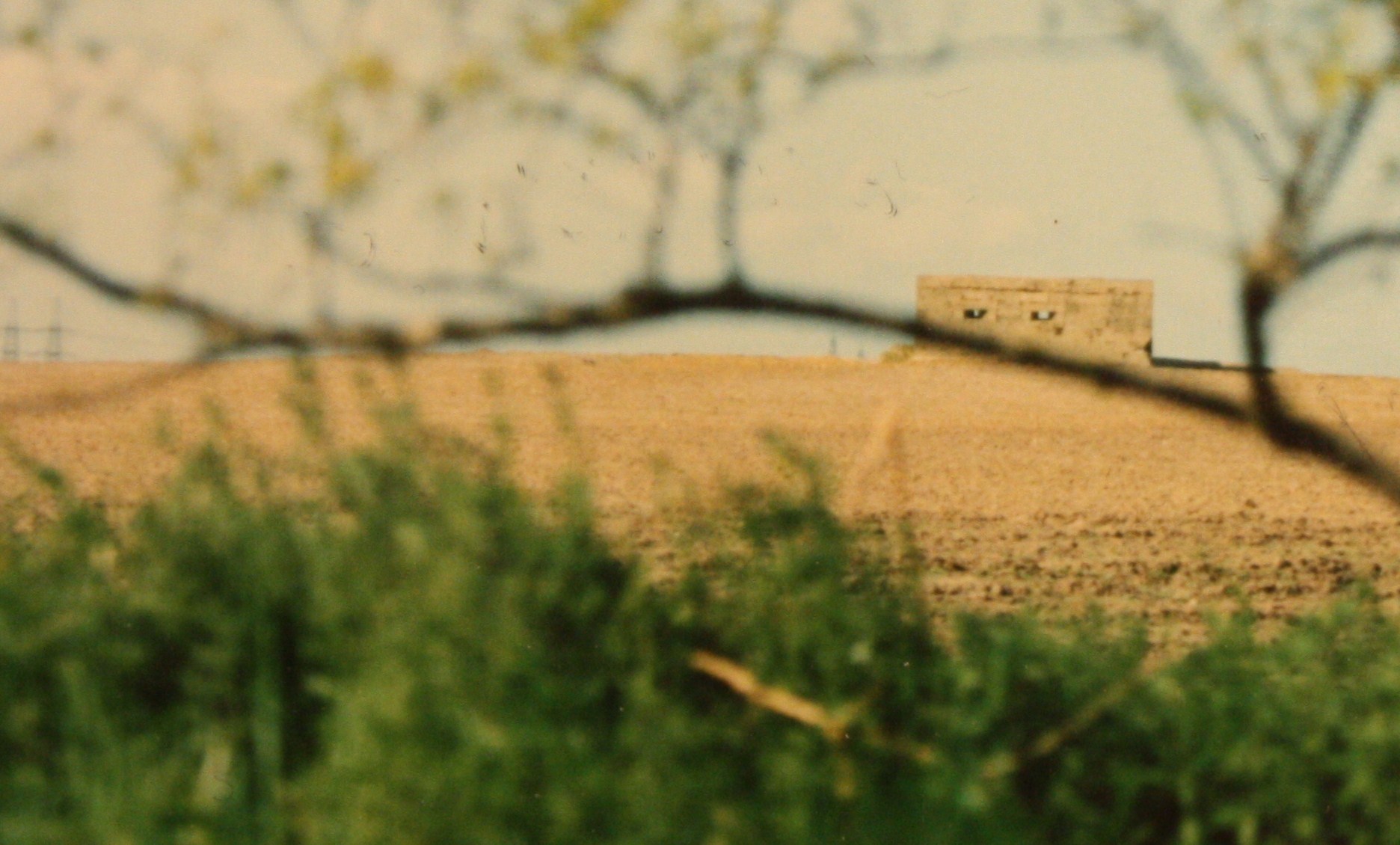
what is this place,
 with its defensive bunkers
  on every rise?
 lasting vestiges of war,
  so unlike my childhood home.
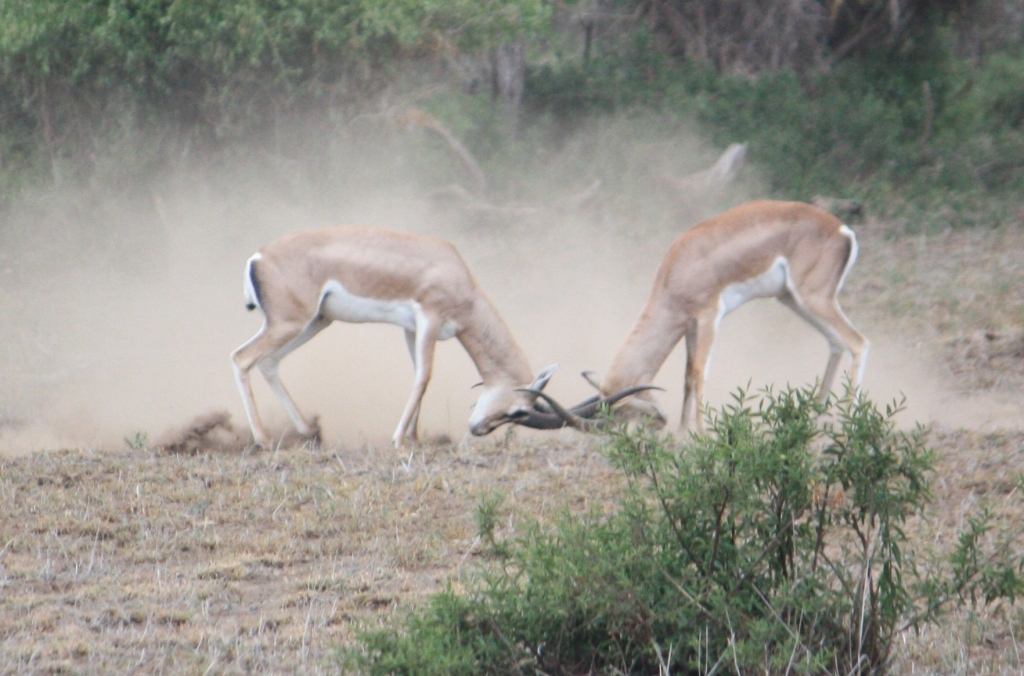
two young gazelles
 lock horns and head-wrestle,
  then quit and move on.