Sonnet 53 by William Shakespeare [w/ Audio]

What is your substance, whereof are you made,
That millions of strange shadows on you tend?
Since every one hath, every one, one shade,
And you, but one, can every shadow lend.
Describe Adonis, and the counterfeit
Is poorly imitated after you;
On Helen's cheek all art of beauty set,
And you in Grecian tires are painted new.
Speak of the spring and foison of the year:
The one doth shadow of your beauty show,
The other as your bounty doth appear;
And you in every blessèd shape we know.
In all external grace you have some part,
But you like none, none you, for constant heart.

“Quantum Mutata” by Oscar Wilde [w/ Audio]

There was a time in Europe long ago,
When no man died for freedom anywhere,
But England's lion leaping from its lair
Laid hands on the oppressor! it was so
While England could a great Republic show.
Witness the men of Piedmont, chiefest care
Of Cromwell, when with impotent despair
The Pontiff in his painted portico
Trembled before our stern embassadors.
How comes it then that from such high estate
We have thus fallen, save that Luxury
With barren merchandise piles up the gate
Where nobler thoughts and deeds should enter by:
Else might we still be Milton's heritors.

“America” by Claude McKay [w/ Audio]

Although she feeds me bread of bitterness,
And sinks into my throat her tiger’s tooth,
Stealing my breath of life, I will confess
I love this cultured hell that tests my youth.
Her vigor flows like tides into my blood,
Giving me strength erect against her hate,
Her bigness sweeps my being like a flood.
Yet, as a rebel fronts a king in state,
I stand within her walls with not a shred
Of terror, malice, not a word of jeer.
Darkly I gaze into the days ahead,
And see her might and granite wonders there,
Beneath the touch of Time’s unerring hand,
Like priceless treasures sinking in the sand.

“I shall go back again to the bleak shore” by Edna St. Vincent Millay [w/ Audio]

I shall go back again to the bleak shore
And build a little shanty on the sand,
In such a way that the extremest band
Of brittle seaweed will escape my door
But by a yard or two; and nevermore
Shall I return to take you by the hand;
I shall be gone to what I understand,
And happier than I ever was before.
The love that stood a moment in your eyes,
The words that lay a moment on your tongue,
Are one with all that in a moment dies,
A little under-said and over-sung.
But I shall find the sullen rocks and skies
Unchanged from what they were when I was young.

“The Oven Bird” by Robert Frost

There is a singer everyone has heard,
Loud, a mid-summer and a mid-wood bird,
Who makes the solid tree trunks sound again.
He says that leaves are old and that for flowers
Mid-summer is to spring as one to ten.
He says the early petal-fall is past
When pear and cherry bloom went down
in showers
On sunny days a moment overcast;
And comes that other fall we name the fall.
He says the highway dust is over all.
The bird would cease and be as other birds
But that he knows in singing not to sing.
The question that he frames in all but words
Is what to make of a diminished thing.

Sonnet 3 by William Shakespeare [w/ Audio]

Look in thy glass and tell the face thou viewst,
Now is the time that face should form another,
Whose fresh repair if now thou not renewest,
Thou dost beguile the world, unbless some mother.
For where is she so fair whose uneared womb
Disdains the tillage of thy husbandry?
Or who is he so fond will be the tomb
Of his self-love, to stop posterity?
Thou art thy mother's glass, and she in thee
Calls back the lovely April of her prime;
So thou through windows of thine age shalt see,
Despite of wrinkles, this thy golden time.
But if thou live rememb'rd not to be,
Die single, and thine image dies with thee.

Sonnet 87 by William Shakespeare [w/ Audio]

Farewell, thou art too dear for my possessing,
And like enough thou know'st thy estimate.
The charter of thy worth gives thee releasing:
My bonds in thee are all determinate.
For how do I hold thee but by thy granting,
And for that riches where is my deserving?
The cause of this fair gift in me is wanting,
And so my patent back again is swerving.
Thyself thou gav'st, thy own worth then not knowing,
Or me, to whom thou gav'st it, else mistaking;
So thy great gift, upon misprision growing,
Comes home again, on better judgement making.
Thus have I had thee as a dream doth flatter:
In sleep a king, but waking no such matter.

“Worldly Place” by Matthew Arnold [w/ Audio]

Even in a palace, life may be led well!
So spake the imperial sage, purest of men,
Marcus Aurelius. But the stifling den
Of common life, where, crowded up pell-mell,

Our freedom for a little bread we sell,
And drudge under some foolish master's
ken
Who rates us if we peer outside our pen --
Match'd with a palace, is not this a hell?

Even in a palace! On his truth sincere,
Who spoke these words, no shadow ever
came;
And when my ill-school'd spirit is aflame

Some nobler, ampler stage of life to win,
I'll stop, and say: "There were no succour
here!
The aids to noble life are all within."

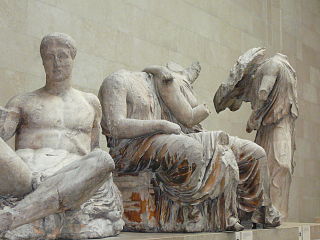
“On Seeing the Elgin Marbles” by John Keats [w/ Audio]

My spirit is too weak -- mortality
Weighs heavily on me like unwilling sleep,
And each imagined pinnacle and steep
Of godlike hardship tells me I must die
Like a sick eagle looking at the sky.
Yet 'tis a gentle luxury to weep
That I have not the cloudy winds to keep
Fresh for the opening of the morning's eye.
Such dim-conceived glories of the brain
Bring round the heart an undescribable feud;
So do these wonders a most dizzy pain,
That mingles Grecian grandeur with the rude
Wasting of old time--with a billowy main --
A sun--a shadow of a magnitude.

“Nuns Fret Not at Thier Convent’s Narrow Room” by William Wordsworth [w/ Audio]

Nuns fret not at their convent's narrow room;
And hermits are contented with their cells;
And students with their pensive citadels;
Maids at the wheel, the weaver at his loom,
Sit blithe and happy; bees that soar for bloom,
High as the highest Peak of Furness-fells,
Will murmur by the hour in foxglove bells:
In truth the prison, into which we doom
Ourselves, no prison is: and hence for me,
In sundry moods, 'twas pastime to be bound
Within the Sonnet's scanty plot of ground;
Pleased if some Souls (for such there needs must be)
Who have felt the weight of too much liberty,
Should find brief solace there, as I have found.