Harvest Mind [Common Meter]

The heavy heads of lolling grain 
were shifting in the breeze.
A harvester did chomp it down,
reaping before the freeze.

Now we'll stare at the naked field,
feeling something 's been lost,
seeing nothing but stalk stubble -
stiffened and white with frost.

What's culled from the harvest mind
when all the fields are cleared,
and dancing plants of robust grain
are newly disappeared?

Primary Colors [Haiku]

prayer flags hang,
in bright primary colors --
dense with unread text

Cow & Egret [Haiku]

the egret turns
as if to spurn its cow,
but it'll be back

Still River [Haiku]

branch-draped moss
high in the treetops:
wind wiggled

BOOK REVIEW: The Heart of American Poetry by Edward Hirsch

The Heart of American PoetryThe Heart of American Poetry by Edward Hirsch
My rating: 5 of 5 stars

Amazon.in Page

Out: April 19, 2022

This book presents forty poems from prominent American poets, interspersed with essays by Hirsch offering background on the poet, the poem, and how the poem reflects upon America. It’s a fine collection of poems, and a thoughtful discussion of them. There will be something new to most readers. While most of the poets are well-known and while there are a few highly anthologized poems: e.g. Emma Lazarus’s “The New Colossus,” Dickinson’s #479 [Because I Could Not Stop for Death,] and Eliot’s “The Love Song of J. Alfred Prufrock,” there are many more off the beaten path selections to be discovered.

As for whether the selection captures the heart of American poetry, on that wouldn’t necessarily agree. That said, it’s presented as Hirsch’s personal selection; the pieces in it are great poems, and he has as much right to his views as anyone. The anthology does capture many elements of the American poetic voice. It does a fine job of capturing the many strains of dissent, critique, and resistance from the Harlem Renaissance (e.g. Langston Hughes) to that of the indigenous peoples (e.g. Joy Harjo) to the Beats (e.g. Allen Ginsberg.) What Hirsch seems less comfortable with is the Whitmanian voice of affection and admiration for the country. In writing about Whitman and Frost, Hirsch makes comments about their lack of appeal to him, apparently their respective unbridled positivity and folksiness were found unbecoming of a poet. I felt the fact that Hirsch had to search out one of Whitman’s more angsty and dark compositions in order to be happy with Whitman’s inclusion was telling (Hirsch could hardly leave Whitman out and present the book as capturing the essence of American poetry.)

The anthology reflects much of the cultural and artistic diversity seen in America, but it eschews the middle America voice (i.e. 70% of the poems are from New Jersey and northward up the Atlantic coast, and while New York may be the country’s cultural and publishing capital, skilled poets from South of the Mason-Dixon and more than 150 miles from the Atlantic coast aren’t as much rare flukes as this anthology would suggest.)

I enjoyed reading this anthology, and I learned a great deal from the essays that went along with each poem. The book is definitely worth reading. Mopey Plath-loving New Yorkers are more likely to find it representative of the voice of American poetry than sanguine Whitman-loving Hoosiers, but it’s an enlightening read, either way.


View all my reviews

Fleeting Blue [Haiku]

a splotch of blue
catches my eye, i look
and it flits away

Poetry on the Cob [Free Verse]

People sometimes tell me 
they have trouble understanding poetry.

That's because they consume it
as they would a banana,
starting at one end and chomping
down to the other.

Poetry has to be consumed like 
corn on the cob.

One should start at one end
and work down to the other,
but then one has to 
go back to the beginning --
change one's angle of perspective --
and - again - go from one end to the other.

I can't
emphasize
this point about changing 
one's angle of perspective
enough. 

There is a difference:
with corn on the cob, one rotates the corn,
but, with poetry, one has to rotate something 
within the reader.
Otherwise, one is just chomping into
an empty rut -
a track devoid of sustenance.

Then, one has to repeat the process
until every last morsel has been consumed. 

That's how one ingests poetry.

The World Below [Haiku]

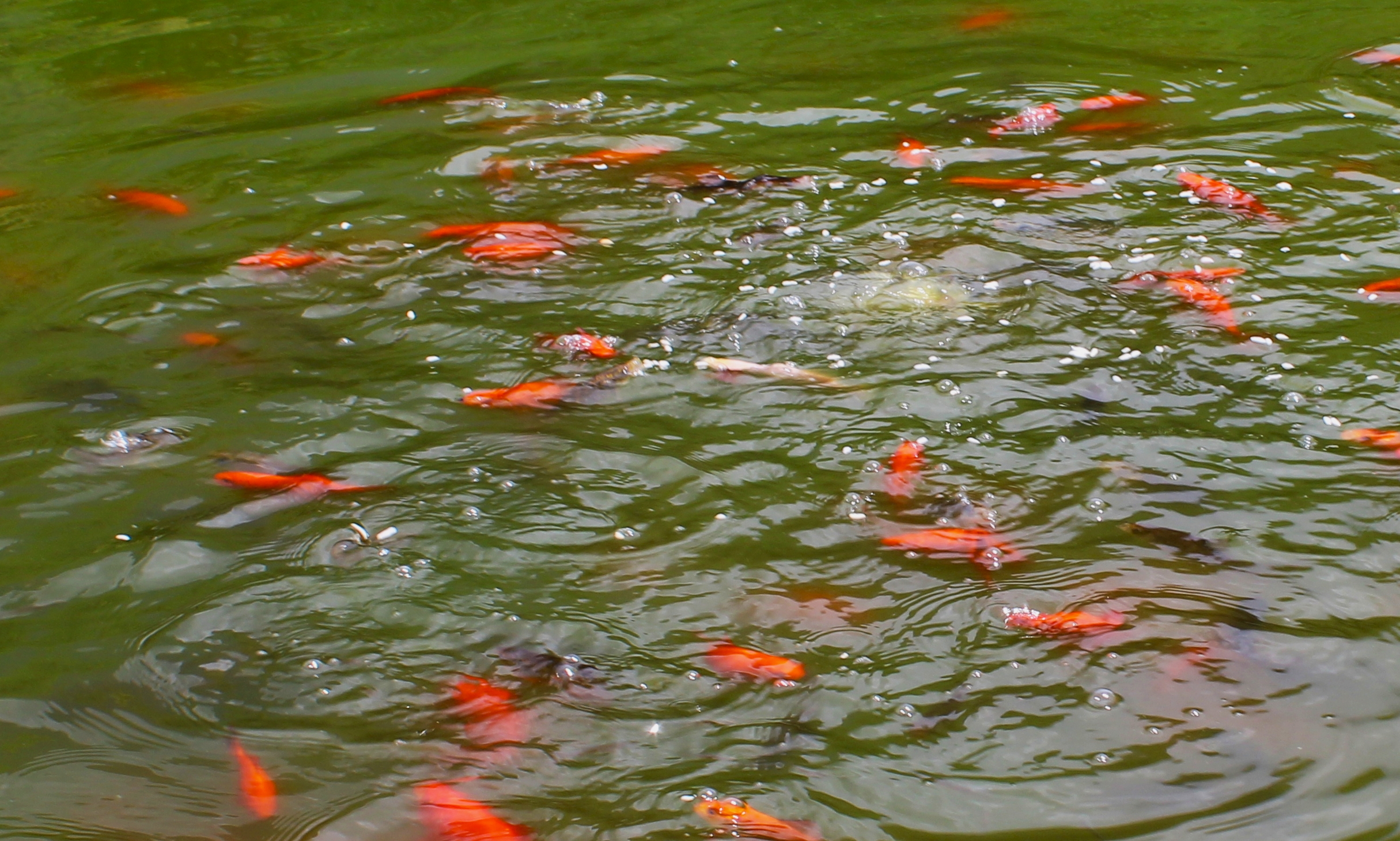
the pond reflects 
tiny things, yet makes the world
feel infinite

Light on Moss [Haiku]

morning light catches
the moss, and i see it for
the first time

The Raging River of Human Nature [Free Verse]

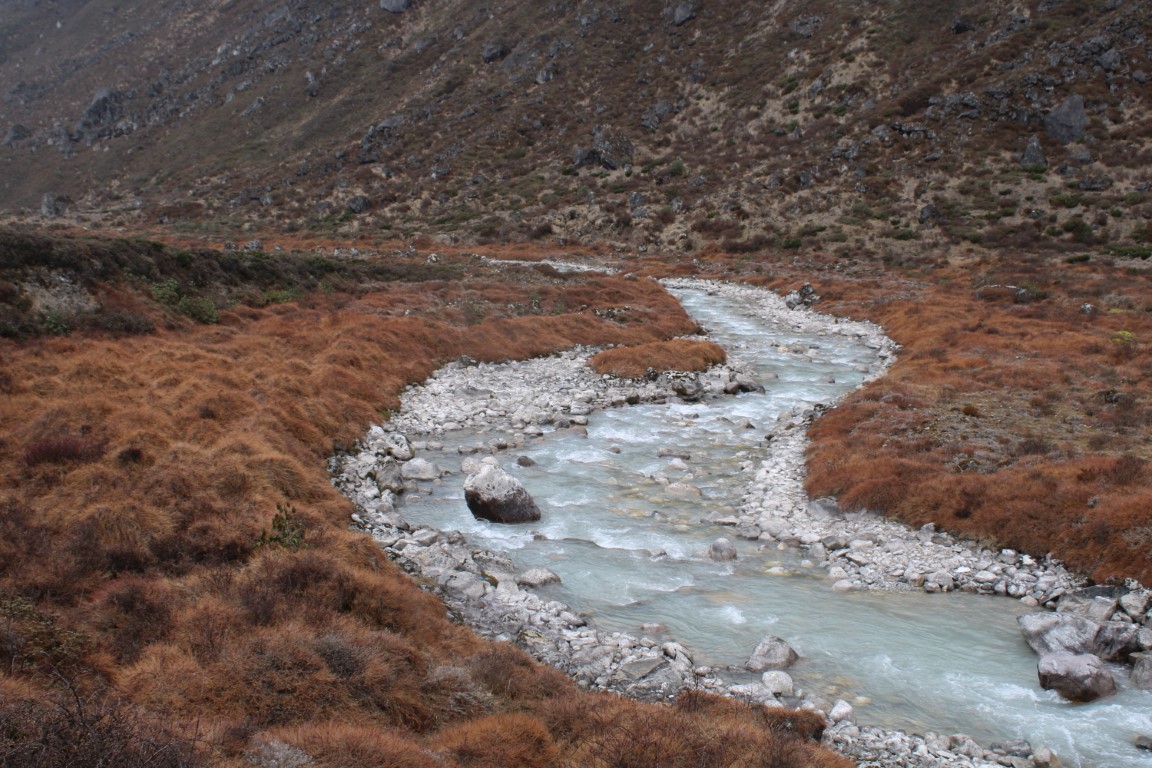
Human nature is a raging river
which a few shitty sandbags of common sense
will not detour. 

Some people stand on the bank
and shout at the river.
I will admit, I've done the same.

But those words neither soak in
nor bounce off that raging river --
they're made silent,
dying in air. 

Some people try to steer
the river by splashing at the lapping waters
near its edge,

But none of them is Moses,
not one can dam a river by force of will.

And - even if one could --
eventually, that person would have to let go,
leaving a backed up and angry river
to rage onward.