BOOK: “Cajun Night Before Christmas” by Trosclair

Cajun Night Before Christmas (The Night Before Christmas Series)Cajun Night Before Christmas by Trosclair
My rating: 5 of 5 stars

Publisher Site — Pelican Books

As it happens, I was just in New Orleans during Christmas and stumbled onto this book, which is well regarded regionally but pretty much unheard of beyond. It is essentially the poem “A Visit from Saint Nicholas” (a.k.a. “Twas the Night Before Christmas,”) but conveyed in the Cajun dialect, featuring a Santa that is a bit scruffier and who is transported by alligators rather than reindeer. It adds a bit of humor as well as regional flavor to the poem. As one would expect, it’s illustrated in the style of a children’s story book.

If you find yourself in bayou country during the holiday season, I’d highly recommend you give it a read.

View all my reviews

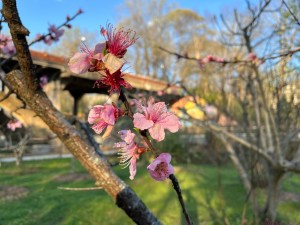
Lake Ice [Lyric Poem]

Sun-sparkles on the lake’s far end
look icy cool beneath blue skies,
but Winter shivers, I suspend,
because late Spring is telling lies.

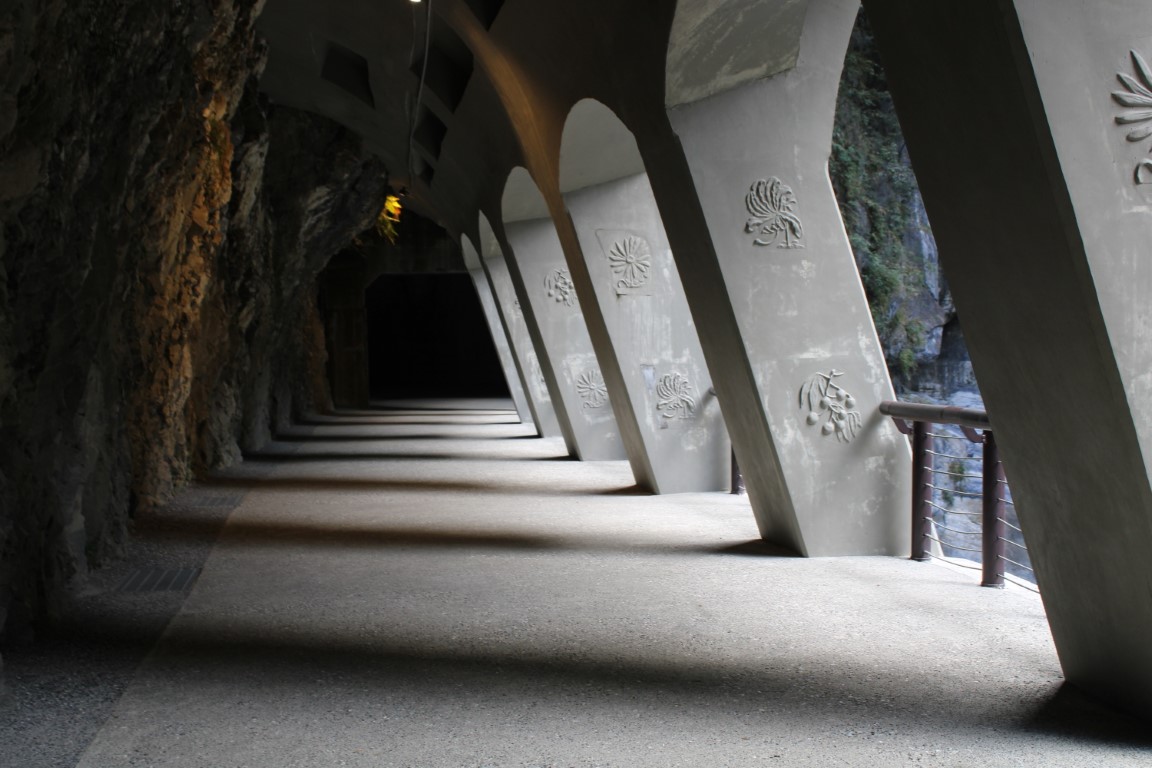
Passing Buddha [Lyric Poem]

The train is speeding down the line.
Gold Buddha glints in the sunshine.
Jarring is the train whistle’s whine,
we plunge into a dark tunnel.

Green Hills [Lyric Poem]

So many hills I have seen
That grow so soft and thick and green.
Though jagged rocks sit down below
The grass and shrubs and weeds that grow
Through cracks and gaps, in mud patches --
Sprawling wide from tight-knit batches
That stone cannot constrain or kill.

BOOKS: “The Suppressed Poems of Ernest Hemingway”

The suppressed poemsThe suppressed poems by Ernest Hemingway
My rating: 4 of 5 stars

Available online – Public Domain

I read this book because my curiosity was piqued by a reference to poems Hemingway published in Der Querschnitt, a reference that was made in a biography of Hemingway I’ve been reading recently (Forty-Three Ways of Looking at Hemingway by Jeffrey Meyers.) Five of the seventeen poems in the book are from Der Querschnitt. (Ten of the poems were published in a book entitled Three Stories and Ten Poems and a couple are odds and ends.)

The Der Quershnitt pieces are bawdy by 1920’s standards, though not particularly for today. The other poems can be a bit intense, dealing in subjects like death in war (Champs D’Honneur,) suicide (Montparnasse, and a curse upon literary critics (Valentine,) but tend to be a bit more refined (excepting Valentine. which may be the least elevated of the collected poems.)

The poems include a mix of lyric, free verse, and prose poem, though all are fairly short (the longest, The Soul of Spain, fits in three pages.)

My favorite was a short lyric poem entitled The Age Demanded, which considers the paradox of the 1920’s as a progressive age, restrained. I also found T. Roosevelt to be fascinating because in the act of critiquing Teddy Roosevelt, Hemingway (wittingly or not) gives us a bit of autobiography. (i.e.“And all the legends that he started in his life // Live on and prosper, // Unhampered now by his existence.”)

I give Hemingway more credit for saying interesting things by virtue of being bold than for saying anything in a particularly interesting way, but it’s enough to make these poems worth reading.

View all my reviews

Surrender [Lyric Poem]

Let the flood sweep 
one away — out
of the shallows,
into the deeps.
Don’t ever cry;
Don’t ever weep;
Just feel the speed
Carry one on.

The Fray [Lyric Poem]

Rainy December day
blows in - not long to stay.
From season to season,
without any reason,
sometimes we feel the fray.

Autumn [Lyric Poem]

The chill is here.
The sky never
bluer.

The colors turn,
with leaves ever
fewer.

Until a last
hanger-on yields
to a weak breeze.

BOOK: “The Wanderer’s Song” by Johann Wolfgang von Goethe [trans. by John Kent]

The Wanderer's Song: Essential Poems (Pushkin Press Classics)The Wanderer’s Song: Essential Poems by Johann Wolfgang von Goethe
My rating: 4 of 5 stars

Publisher Site — Pushkin Press Classics

This is a new translation of select poems of Johann Wolfgang von Goethe. It’s a clever and varied set of poems by one of German literature’s all-time greats, a polymath of the 18th and early 19th centuries.

It can be a challenge for a general poetry reader to relate to this work. Over two hundred years since most of these poems were composed, the collection reflects a worldview quite different from that which one finds today. That said, the translations are readable and pleasant and don’t feel strained or clunky, and the collection has instances of sublimity. Having no background in German Literature, I can’t say how true the translations are to source material, but they stood solidly as poems in their own right. The book does offer a substantial introduction by the translator for individuals who are particularly interested in the German literature, translation decisions, or the life of Goethe.

I would recommend this for poetry readers, even though casual readers may find it a bit archaic. If you like the Romantic poets, and haven’t given Goethe a try, it’s well worth the time investment.

View all my reviews

AUSTRIA LIMERICK

There once was a man from Austria
prone to coffee house nausea.
“Our cafés are held dear,
but I can’t go near…”
said that lonely, skinny man of Austria.