BOOK REVIEW: The Ghetto, and Other Poems: An Annotated Edition by Lola Ridge [ed. Lawrence Kramer]

The Ghetto, and Other Poems: An Annotated EditionThe Ghetto, and Other Poems: An Annotated Edition by Lola Ridge
My rating: 5 of 5 stars

Amazon.in Page

Release Date: January 17, 2023

Non-annotated edition at Project Gutenberg

This collection was originally published in 1918, and, therefore, the original edition is public domain and can be acquired via Project Gutenberg or other such sites. However, this review is for the new Fordham University Press edition, the value-added of which is primarily to be found in the annotations — as well as in the inclusion of an abridged version of the titular poem that appeared in The New Republic. (i.e. There are two versions of “The Ghetto,” in this edition, one in an appendix.) The annotations definitely add benefit for the average poetry reader because, being over a hundred years old, many of the poet’s allusions will not be self-evident. That said, if you’re reading the poetry purely as artistic language and don’t really care about the author’s allusions or intended messages, the annotations might not have much value for you.

I was captivated by Ridge’s poems. She wrote a great deal of poetry of dissent and protest, and – as with standup comedy – it’s no simple matter to take on such subject matter and still produce an appealing product. [That’s part of the reason why the annotations can be valuable, because the metaphors and allusions may not be clear for a reader who can only access a literal reading of the poems.]

If you’re interested in American poetry, and particularly that of social objection, this collection is worth reading.


View all my reviews

BOOK REVIEW: Lessons by Ian McEwan

LessonsLessons by Ian McEwan
My rating: 5 of 5 stars

Amazon.in Page

Get Speechify to make any book an audiobook

This book not only shows the characters learning their lessons, it has a few teachings for the reader, as well. The story follows the protagonist, Roland Baines, as he receives a series of harsh life lessons, at the center of each is a woman. There is Miriam, his piano teacher at boarding school, a woman who enters into a manipulative sexual relationship with Roland while he’s still a minor. There is Alissa, the wife who abandons Roland and their seven-month-old child to pursue her writing career. Finally, when a woman, Daphne, comes along with whom he can at last have a healthy relationship with a dependable partner, he has difficulty embracing the relationship because of his earlier experiences. We also witness the intergenerational learning of Alissa, whose mother never made good on her own potential as a writer.

The lessons for the reader are profound. First, after developing an intense and visceral dislike for Alissa because she abandons a baby and seems so oblivious to the suffering her actions have caused (e.g. her husband being suspected of a murder that never happened,) we are reminded that disappearing dads are par for the course; we may think poorly of them, but we rarely have an intense emotional response to such situations. Second, we are offered insight into the “intentional fallacy” – i.e. thinking one knows the author’s intentions and subjective thought processes from what she writes.

I found this to be a powerful story that asks one to confront all manner of intriguing questions. (e.g. If an individual ditches her [or his] family for career, does it make a difference if that person is the best at what she does or if she’s mediocre or if she stinks?) I’d highly recommend this novel for readers of literary fiction.


View all my reviews

BOOK REVIEW: Classical Mythology: A Very Short Introduction by Helen Morales

Classical Mythology: A Very Short IntroductionClassical Mythology: A Very Short Introduction by Helen Morales
My rating: 5 of 5 stars

Amazon.in Page

Get Speechify to make any book an audiobook

This book examines the mythology of ancient Greece and Rome, reflects upon how these myths have come to be understood and used in the modern world, and proposes how these understandings may represent partial or incorrect views – in some cases. This approach can be seen from the book’s opening chapter, which investigates how Europa (a figure primarily known for being raped by Zeus) came to be namesake of the continent where classical mythology developed. In later chapters, there’s an exploration of how partial or erroneous understandings of Classical Mythology have been applied to psychoanalysis (ch. 5,) sexuality (ch. 6,) and New Age practices such as astrology and goddess worship (ch. 7.)

I learned a great deal from this book. I particularly enjoyed the discussion about what might have been if Freud had picked a different mythological figure to fixate on, other than Oedipus. How the famed psychiatrist might have extracted lessons that better stood the test of time than those that came about in reality.

While there’s not a great deal of room in a book such as this to explore the full scope of classical myths, the author does use a variety of myths – often well-known stories that don’t require a great deal of backstory – to make the book interesting and thought-provoking.

If you’re looking for a book on Classical Mythology, particularly one that discusses how it (for good or ill) appears in today’s world, I’d highly recommend this brief guide.

View all my reviews

BOOK REVIEW: War & Peace: The Graphic Novel Adapted by Alexandr Poltorak [from the work by Leo Tolstoy]

War and Peace: The Graphic NovelWar and Peace: The Graphic Novel by Leo Tolstoy
My rating: 4 of 5 stars

Amazon.in Page

Release Date: September 27, 2022

Get Speechify to make any book an audiobook

Ambitious. Many readers will feel it’s overly ambitious or even impossibly ambitious. It’s not just the challenge of capturing a sprawling 1,220-page tome in a 220-page graphic novel. Tolstoy’s work has a vast cast of characters and captures a broad set of both fictional and factual events whose broad contours are determined by Napoleon’s wars in Europe, culminating in his adventures into Russia. (In other words, the narrative arc wasn’t organized in such a manner as to be readily compressible, but to capture real world events.)

I must make a confession. Usually, when I’m reviewing a graphic novel adaptation of a work of literature, I’ve read the source material. In this case, I haven’t, and so I may not be the best person to comment on how accurately Poltorak and Chukhrai condense events. I can say that the pacing of the book – particularly in the latter half – is a bit like taking in the world through the window of a speeding train. Of the two most important characters, this is particularly true of the experience of Prince Andrew, whose major moments are “blink and you’ll miss them.” Pierre’s arc seems to be covered in greater detail, though still at breakneck pacing.

Given all that, many people will say to themselves: “Realistically, I am never going to read a 1000+ page novel about the experience of Russian aristocratic families leading up to and during the Napoleonic French invasion, even if it has love triangles, conniving inheritance disputes, and plenty of good ole family dysfunction.” The early part of the book is mostly rich people sitting around at soirees discussing war (in peace) as they live out their various familial and romantic dramas. If you’re that person, this graphic novel maybe the perfect solution for you, and I’d recommend it.

View all my reviews

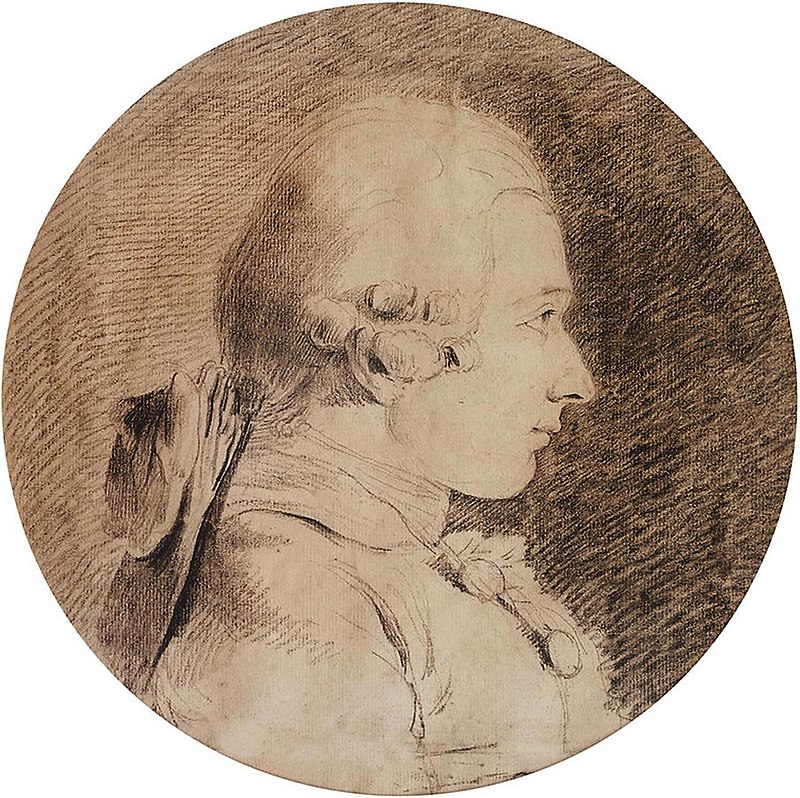
Marquis de Sade Limerick

There once was a Marquis named de Sade
whose philosophy many found odd:
The pursuit of pleasure,
by any measure,
is to spoil by not sparing the rod!

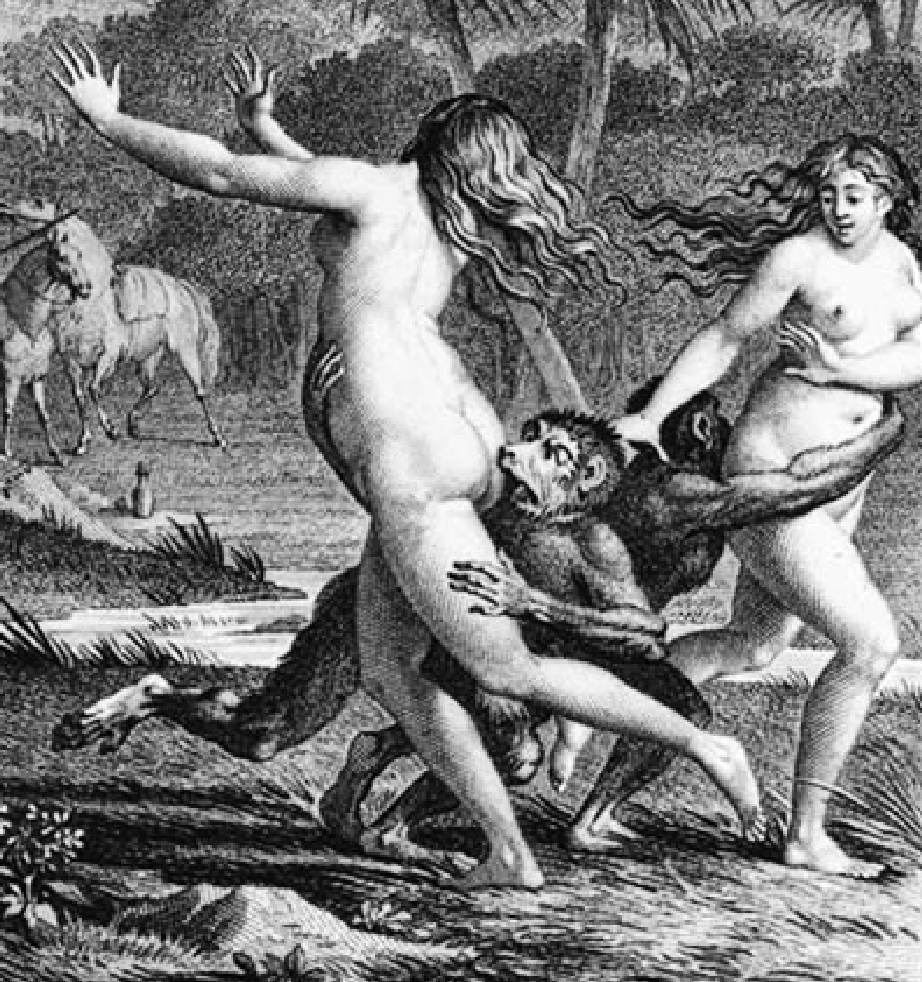
Panglossian Limerick

From an 1803 edition of Candide
There was a philosopher named Pangloss
whose sole objective was to get across:
Ours is the best of worlds!
And yet, the crapper swirled
and nothing escaped but dregs and dross.

BOOK REVIEW: Candide by Voltaire

CandideCandide by Voltaire
My rating: 5 of 5 stars

Amazon.in Page

Get Speechify to make any book an audiobook

Do we live in the best of all possible worlds? “Candide” attempts to wrestle with this question. The protagonist, Candide, is taught by his tutor – the renowned philosopher, Pangloss – that their’s is the best possible world. However, as the story unfolds as one bad turn of events after the next, it becomes harder to argue that there couldn’t be a better world.

Candide is forced to flee from his love (Cunegonda,) is conscripted into wartime military service, is arrested for heresy, becomes a serial killer, acquires and subsequently loses a fortune, is robbed, finds himself in the middle of war and other conflicts, and stumbles into and then flees what might be the closest his world has to a utopia, el Dorado. And, it could be argued, Candide gets off relatively easy. Cunegonda is raped, sliced open, and enslaved. Her brother, the Baron, is run through and is also enslaved. Pangloss gets syphilis, is hung, is partially dissected, and is enslaved, as well.

And yet, to the end, Pangloss retains his (and Liebniz’s) belief that they live in the best of all possible worlds. Candide (kind of) does as well, though at the book’s end he’s fatigued by the question and just wants to distract himself from it with some gardening. The degree to which Candide sticks to his guns is impressive, not only because of everything that goes wrong, but also because he gets a new mentor / friend, Martin, a mentor diametrically opposed to the views of Pangloss. Like Pangloss, Martin is also a philosopher, but Martin’s worldview is much less optimistic, but it also reflects the crucial idea that how bad or good the world is has more to do with one’s perception of it than the events that one experiences. (When Candide asks Martin who has it worse: one of the deposed kings they met or Candide, himself, Martin said he couldn’t know without experiencing what’s in the mind of each.)

Despite the steady flow of negative happenings, the book doesn’t definitively answer the thematic question. How could it? The most it can say is that we don’t live in the best of all imaginable worlds, but we can’t know whether those worlds we imagine are possible. For one thing, we are forced to recognize that humans are flawed and that nature is indifferent, and these factors might play a role in the variation between best imagined world and the world we know. For another thing, maybe we couldn’t handle a more perfect world. The old lady character asks the group whether all the trials they’ve collectively suffered are worse, or better, than sitting around doing nothing – as they happened to be [not] doing at that moment.

This book provides a thought-provoking journey, and it’s well worth reading.

View all my reviews

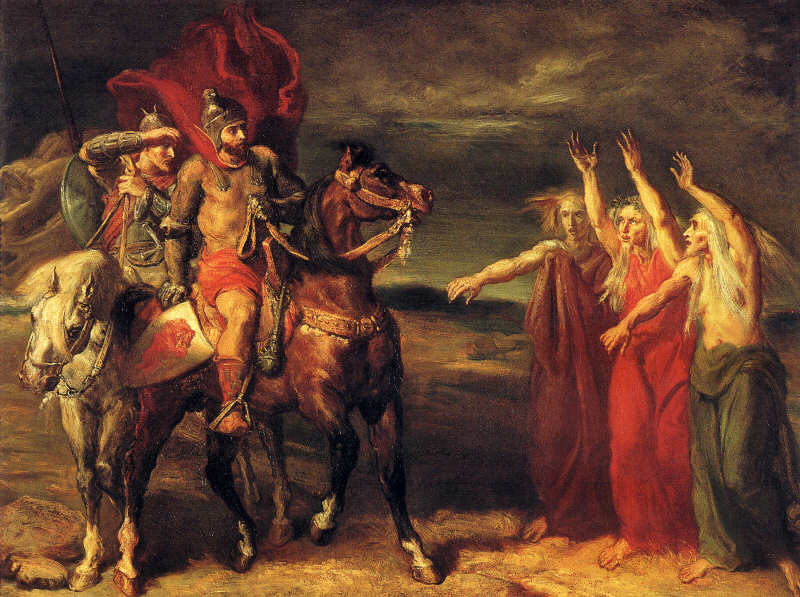
Macbeth Limerick

Macbeth and Banquo Meeting the Witches;
Théodore Chasséria (1855)
There was a great General named Macbeth.
All that kept him from kingship was a death,
but - as with a Pringle -
he couldn't do a single.
So, he showed seven more their last breaths.

BOOK REVIEW: American Poetry: A Very Short Introduction by David Caplan

American Poetry: A Very Short IntroductionAmerican Poetry: A Very Short Introduction by David Caplan
My rating: 5 of 5 stars

Amazon.in Page

Get Speechify to make any book an audiobook

This book does a great job of helping the reader understand what distinguishes the American strain of poetry from other poetic traditions, particularly the one from which it sprang and to which it’s most closely related, linguistically speaking: i.e. English poetry. Among the unique aspects of American poetry are a shift toward more idiosyncratic poetry, a shift that flows from America’s individual-centric orientation, the employment of American idiom – especially informal language, the connection to other American artforms (e.g. Blues music,) the diversity of form and style that resulted from being a diverse population, and the loud and clear expression of dissenting voices.

The page limitations of a concise guide keep this book from drifting wide in its discussion. The reader will note that it’s focused on mainstream poetry, and there’s little to no mention of counter-cultural movements, e.g. the Beats (e.g. Ginsberg and Synder) are not discussed. However, even within the restriction to mainstream poets, there’re only a few poets that are discussed in depth. Of course, these include the two poets largely considered the pillars of the American form: Walt Whitman and Emily Dickinson. It also includes two poets who were challenging cases for a discussion of national poetic movements: W.H. Auden, a Brit by birth who spent most of his poetry writing years in America; and T.S. Eliot, who was an American by birth but moved to Britain. Both poets produced poetry of importance while on both sides of the Atlantic, and, so, the question is whether anything of note can be said about their poetry vis-a-vis its location of origin (and, if not, have we exited the era in which nationality of poetry is worth discussing?)

I learned a great deal from this book. Again, if you’re looking for a broad accounting of American poetry, this isn’t necessarily the book for you, but if you want to gain a glimpse of the interesting and unique elements of American poetry through a few of its most crucial poets, this is an excellent choice.


View all my reviews

BOOK REVIEW: Myth: A Very Short Introduction by Robert A. Segal

Myth: A Very Short IntroductionMyth: A Very Short Introduction by Robert A. Segal
My rating: 4 of 5 stars

Amazon.in Page

Get Speechify to make any book an audiobook

This book situates myth amid the broader body of scholarship by examining what role myth plays within – or in opposition to – various academic disciplines, including: science, philosophy, religion, the study of ritual, literature, psychology, structuralism, and social studies. The book is organized so as to compare competing ideas of various major scholars in each of the aforementioned domains. So, as the blurb is upfront about, the book doesn’t spend much time talking about what myths are, and the discussion of how myths are structured is only made as relevant to distinguishing various hypotheses.

One does obtain some food-for-thought about what myths are as one learns how different scholars have approached myth. Questions of how narrowly myth should be defined (e.g. only creation stories v. all god and supernatural tales,) and how myths compare to folktales, national literatures, and the like are touched upon. One also learns that some scholars took myths literally (and, therefore, saw them as obsolete in the face of science and modern scholarship,) but other scholars viewed myths more symbolically.

If you’re looking for an introductory book to position myth in the larger scholarly domain and to examine competing hypotheses about myths, this is a great book for you. However, those who want a book that elucidates what myths are (and aren’t) and how they are structured and to what ends, may find this book inadequate for those objectives. Just be aware of the book you’re getting.


View all my reviews