“Slender” [Poetry Style #3] by Sikong Tu [w/ Audio]

Picking, picking where water flows
From a distant fountainhead.
Moving up the narrow valley,
One may see a stunning beaut.
Peachtrees laden with ripe fruit
As breezes blow by the water
And willows wind along the stream,
While warblers consult with branch-mates.
The more one walks, the more Truth joins,
And more Truth may reveal the Way.
If this world is without end,
The old must be made new again.

NOTE: The late Tang Dynasty poet, Sikong Tu (a.k.a. Ssŭ-k‘ung T‘u,) wrote an ars poetica entitled Twenty-Four Styles of Poetry. It presents twenty-four poems that are each in a different tone, reflecting varied concepts from Taoist philosophy and aesthetics. Above is a crude translation of the third of the twenty-four poems. This poem’s Chinese title is 纤秾. Giles translated the title as “Slim — Stout” and it’s also been translated as “Delicate – Rich.”

Tamed (Lyric Poem]

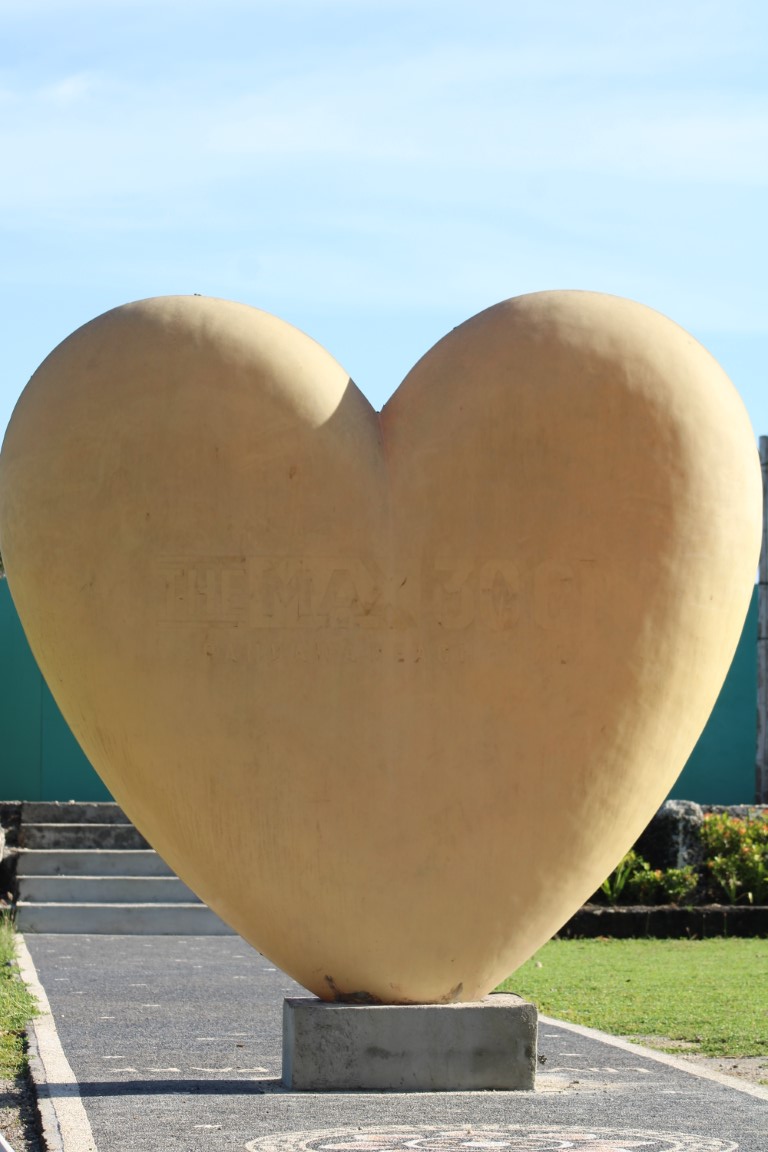
Mural in Mtatsminda Park, Tbilisi
Ah, so nice to be Tamed --
Never again the same.
What style of Wild do you
Think one could retain?

Being tamed would just be aces,
If one could keep some Wild, in traces.

“Success is counted sweetest” (112) by Emily Dickinson [w/ Audio]

Sucess is counted sweetest
By those who ne'er succeed.
To comprehend a nectar
Requires sorest need.

Not one of all the purple Host
Who took the Flag today
Can tell the definition
So clear of victory

As he defeated -- dying --
On whose forbidden ear
The distant strains of triumph
Burst agonized and clear!

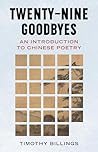
BOOK: “Twenty-Nine Goodbyes” by Timothy Billings

Twenty-Nine Goodbyes: An Introduction to Chinese PoetryTwenty-Nine Goodbyes: An Introduction to Chinese Poetry by Timothy Billings
My rating: 5 of 5 stars

Publisher website

The premise of this book is simple, Billings presents twenty-nine different translations of a famous farewell poem by the Tang Dynasty poetic genius, Li Bai, and compares, contrasts, and critiques them in detail. The included translations weren’t all crafted in the English language, but English translations (of the translations) are presented as needed. There are translations from French, Spanish, Japanese, and even modern Mandarin Chinese — among others.

Despite how that may sound, it is a tremendously readable book. Billings writes with engaging prose, employs humor (especially when critiquing his own contribution in the final chapter,) and uses complicated jargon only when necessary and with comprehensible explanations.

Still, it does take a certain level of passion to read because one is repeatedly examining the same poem, and one has to have an interest in the minutiae of said poem and – more importantly — an interest in the broader lessons conveyed about translation. If whether a color is translated as green or blue (or what symbolic object tumbles on the ground, or what sound a horse makes) doesn’t seem change the emotional experience of the poem for you, then you’ll probably have a hard time getting into this book. That said, the ability to take a longitudinal view –seeing same points in a given poem through the lens of different poets and translators cross time and cultures, does offer insight that one would be unlikely to get from reading any of the twenty-nine translations in isolation as part of a single translator’s collection of translations.

The most useful thing the book did for me was to increase my understanding of the nature of translation and its tradeoffs, as well as to elucidate how easy it is to miss the mark when one is translating from a perspective so different in time and worldview.

I’d highly recommend this book for anyone interested in Tang Dynasty poetry, translation, and the interface of culture and language.

View all my reviews

“If thou must love me” [Sonnet 14] by Elizabet Barrett Browning [w/ Audio]

If thou must love me, let it be for nought 
Except for love's sake only. Do not say,
"I love her for her smile -- her look -- her way
Of speaking gently, -- for a trick of thought
That falls in well with mine, and certes brought
A sense of pleasant ease on such a day" --
For these things in themselves, Beloved, may
Be changed, or change for thee -- and love, so wrought,
May be unwrought so. Neither love me for
Thine own dear pity's wiping my cheeks dry:
A creature might forget to weep, who bore
Thy comfort long, and lose thy love thereby!
But love me for love's sake, that evermore
Thou mayst love on, through love's eternity.

“Raven at Dusk” by Matsuo Bashō [w/ Audio]

on a barren branch
a raven has perched —-
autumn dusk

“Second Fig” by Edna St. Vincent Millay [w/ Audio]

Safe upon the solid rock the ugly houses stand:
Come and see my shining palace built upon the sand!

“An Akan Lullaby” by Anonymous [w/ Audio]

Someone would like to have you for her child
but you are mine.
Someone would like to rear you on a costly mat
but you are mine.
Someone would like to place you on a camel blanket
but you are mine.
I have you to rear on a torn old mat.
Someone would like to have you as her child
but you are mine.

NOTE: I have no specific author or translator information for this poem. (The former may not be surprising as it may be lost to history.) At any rate, my source is Classic Poems to Read Aloud, an anthology selected by James Berry (1995; Kingfisher Publications,) and it was titled “Lullaby.” That book cites a Cambridge University Press volume entitled African Poetry, edited by Ulli Beier, as its source.

“Autumn” by Amy Lowell [w/ Audio]

All day I have watched the purple vine leaves
Fall into the water.
And now in the moonlight they still fall,
But each leaf is fringed with silver.

“Scorn not the Sonnet” by William Wordsworth [w/ Audio]

British (English) School; William Wordsworth (1770-1850) ; National Trust, Wordsworth House; http://www.artuk.org/artworks/william-wordsworth-17701850-130624
Scorn not the Sonnet; Critic, you have frowned,
Mindless of its just honours; with this key
Shakespeare unlocked his heart; the melody
Of this small lute gave ease to Petrarch's wound;
A thousand times this pipe did Tasso sound;
With it Camöens soothed an exile's grief;
The Sonnet glittered a gay myrtle leaf
Amid the cypress with which Dante crowned
His visionary brow: a glow-worm lamp,
It cheered mild Spenser, called from Faery-land
To struggle through dark ways, and, when a damp
Fell round the path of Milton, in his hand
The thing became a trumpet; whence he blew
Soul-animating strains -- alas, too few!