I wander thro' each charter'd street,
 Near where the charter'd Thames does flow,
 And mark in every face I meet
 Marks of weakness, marks of woe.

In every cry of every Man,
 In every Infant's cry of fear,
 In every voice, in every ban,
 The mind-forged manacles I hear.

How the Chimney-sweeper's cry
 Every black'ning Church appalls;
 And the hapless Soldier's sigh
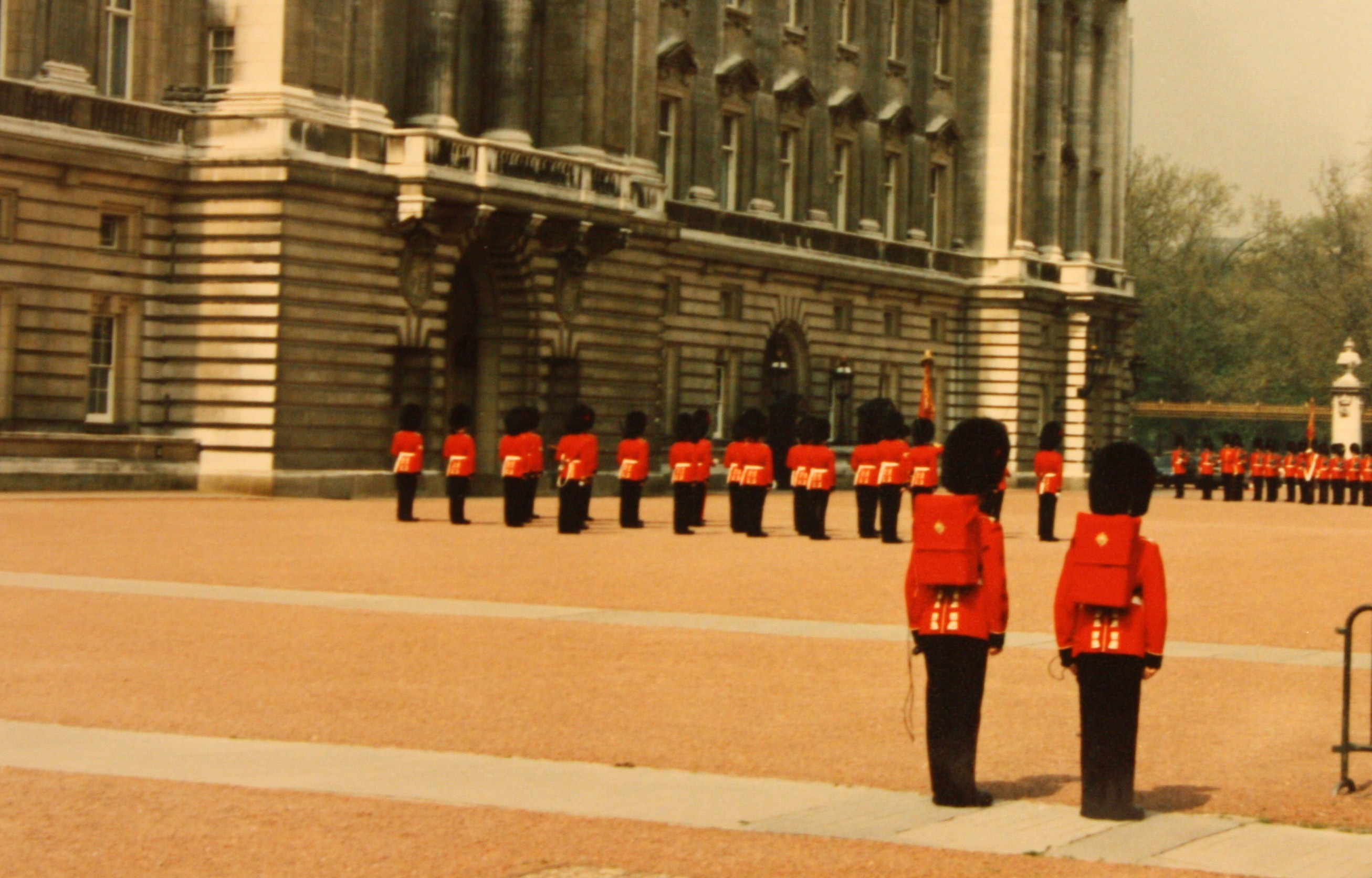
 Runs in blood down Palace walls.

But most thro' midnight streets I hear
 How the youthful Harlot's curse
 Blasts the new born Infant's tear,
 And blights with plagues the Marriage hearse.
If you can keep your head when all about you
   Are losing theirs and blaming it on you,
 If you can trust yourself when all men doubt you,
   But make allowance for their doubting too;
 If you can wait and not be tired by waiting,
   Or being lied about, don't deal in lies,
 Or being hated don't give way to hating,
   And yet don't look too good, nor talk too wise:

If you can dream -- and not make dreams your master;
   If you can think -- and not make thoughts your aim:
 If you can meet with Triumph and Disaster
   And treat those two imposters just the same;
 If you can bear to hear the truth you've spoken
   Twisted by knaves to make a trap for fools,
 Or watch the things you gave your life to, broken,
   And stoop and build 'em up with worn-out tools:

If you can make one heap of all your winnings
   And risk it on one turn of pitch-and-toss,
 And lose, and start again at your beginnings
   And never breathe a word about your loss;
 If you can force your heart and nerve and sinew
   To serve your turn long after they are gone,
 And so hold on when there is nothing in you
   Except the Will which says to them: "Hold on!"

If you can talk with crowds and keep your virtue,
   Or walk with Kings - nor lose the common touch,
 If neither foes nor loving friends can hurt you,
   If all men count with you, but none too much;
 If you can fill the unforgiving minute
   With sixty seconds' worth of distance run,
 Yours is the Earth and everything that's in it,
   And -- which is more -- you'll be a Man, my son!
I will arise and go now, and go to Innisfree,
   And a small cabin build there, of clay and wattles made:
 Nine bean-rows will I have there, a hive for the honey-bee,
   And live alone in the bee-loud glade.

And I shall have some peace there, for peace comes dropping slow,
   Dropping from the veils of the morning to where the cricket sings;
 There midnight's all a glimmer, and noon a purple glow,
   And evening full of the linnet's wings.

I will arise and go now, for always night and day
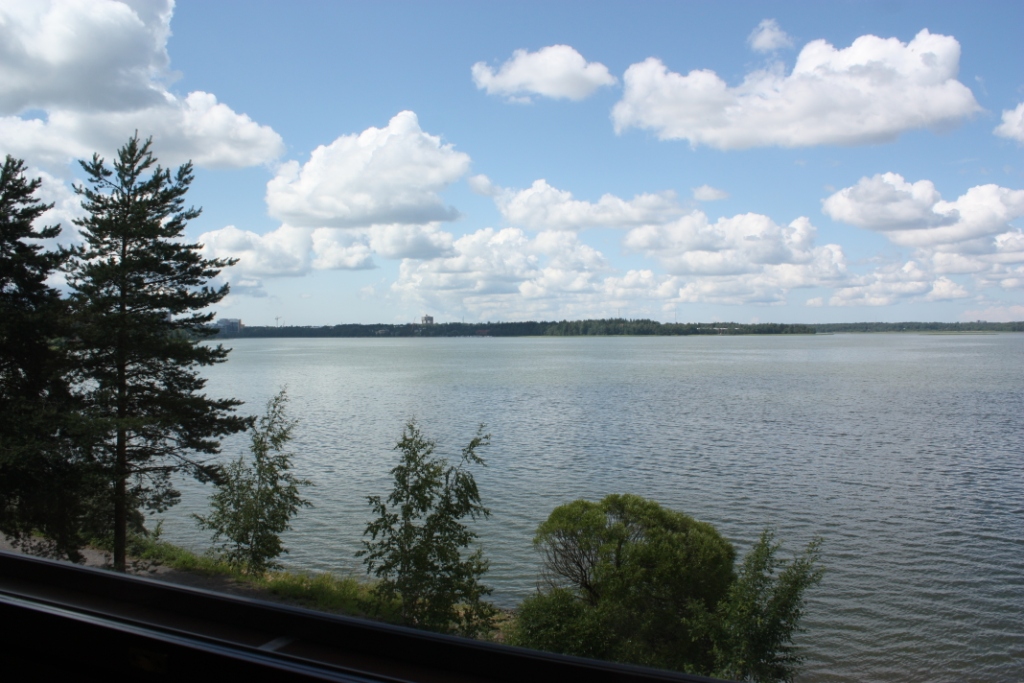
   I hear lake water lapping with low sounds by the shore;
 While I stand on the roadway, or on the pavements grey,
   I hear it in the deep heart's core.
Full fathom five thy father lies,
   Of his bones are coral made;
 Those are pearls that were his eyes:
   Nothing of him that doth fade,
 But doth suffer a sea-change
   Into something rich and strange:
 Sea nymphs hourly ring his knell.
          Ding-dong!
     Hark! Now I hear them,
          Ding-dong, bell!
In Xanadu did Kubla Khan
     A stately pleasure-dome decree:
 Where Alph, the sacred river, ran
 Through caverns measureless to man
     Down to a sunless sea.
 So twice five miles of fertile ground
 With walls and tower were girdled round:
 And there were gardens bright with sinuous rills
 Where blossom'd many an incense-bearing tree;
 And here were forests ancient as the hills,
 Enfolding sunny spots of greenery.

But O, that deep romantic chasm which slanted
 Down the green hill athwart a cedarn cover!
 A savage place! as holy and enchanted
 As e'er beneath a waning moon was haunted
 By woman wailing for her demon-lover!
 And from this chasm, with ceaseless turmoil seething,
 As if this earth in fast thick pants were breathing,
 A mighty fountain momently was forced;
 Amid whose swift half-intermitted burst
 Huge fragments vaulted like rebounding hail,
 Or chaffy grain beneath the thresher's flail:
 And 'mid these dancing rocks at once and ever
 It flung up momently the sacred river.
 Five miles meandering with a mazy motion
 Through wood and dale the sacred river ran,
 Then reach'd the caverns measureless to man,
 And sank in tumult to a lifeless ocean:
 And 'mid this tumult Kubla heard from afar
 Ancestral voices prophesying war!

     The shadow of the dome of pleasure
     Floated midway on the waves;
     Where was heard the mingled measure
     From the fountain and the caves.
 It was a miracle of rare device,
 A sunny pleasure-dome with caves of ice!

     A damsel with a dulcimer
     In a vision once I saw:
     It was an Abyssinian maid,
     And on her dulcimer she play'd,
     Singing of Mount Abora.
     Could I revive within me,
     Her symphony and song,
     To such a deep delight 'twould win me,
 That with music loud and long,
 I would build that dome in air,
 That sunny dome! those caves of ice!
 And all who heard should see them there,
 And all should cry, Beware! Beware!
 His flashing eyes, his floating hair!
 Weave a circle round him thrice,
 And close your eyes with holy dread,
 For he on honey-dew hath fed,
 And drunk the milk of Paradise.
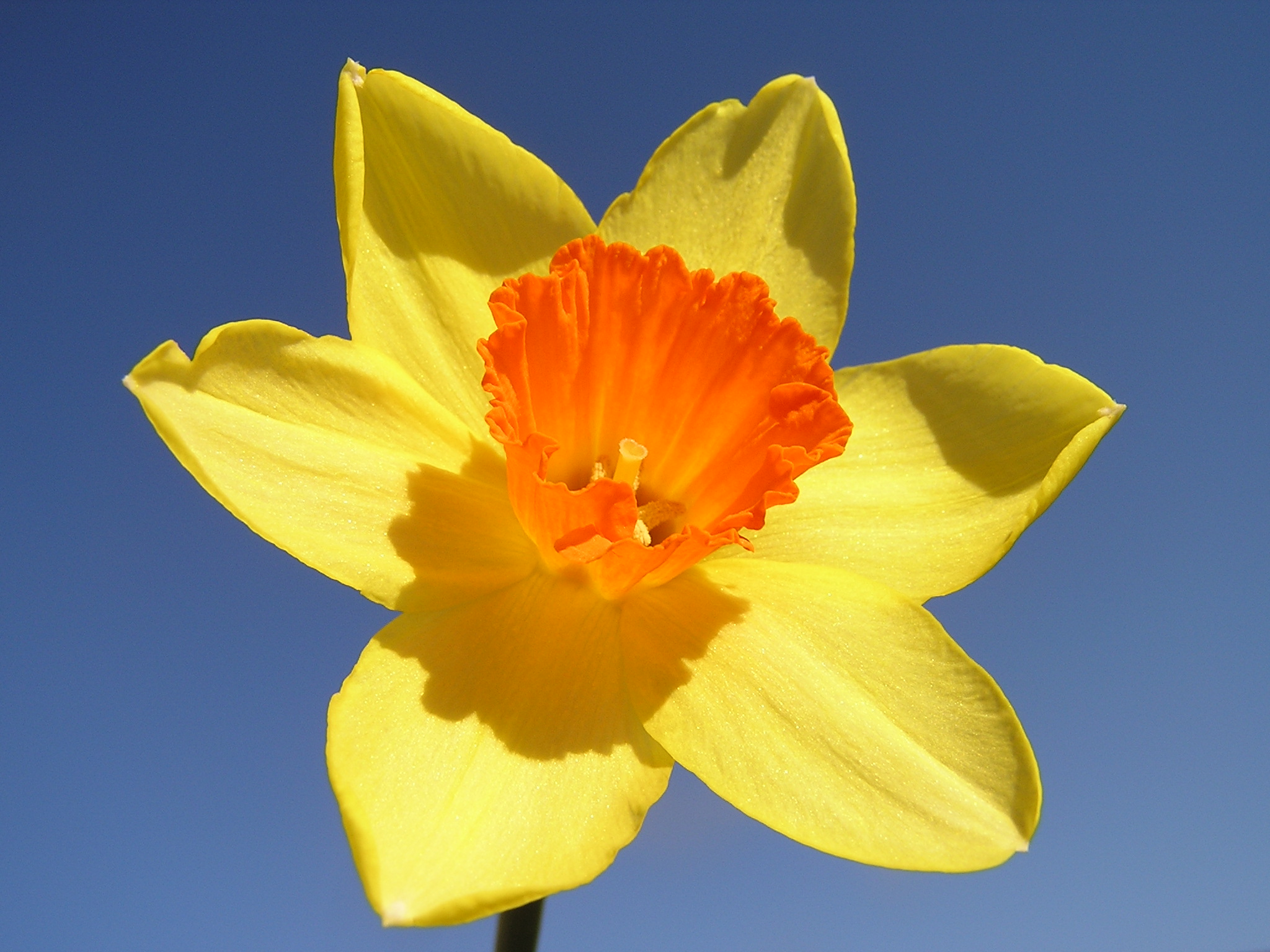
I wandered lonely as a cloud
   That floats on high o'er vales and hills,
 When all at once I saw a crowd,
   A host, of golden daffodils;
 Beside the lake, beneath the trees,
   Fluttering and dancing in the breeze.

Continuous as the stars that shine
   And twinkle on the milky way,
 They stretched in never-ending line
   Along the margin of a bay:
 Ten thousand saw I at a glance,
   Tossing their heads in sprightly dance.

The waves beside them danced; but they
   Out-did the sparkling waves in glee:
 A poet could not but be gay,
   In such a jocund company:
 I gazed -- and gazed -- but little thought
   What wealth the show to me had brought:

For oft, when on my couch I lie
   In vacant or in pensive mood,
 They flash upon that inward eye
   Which is the bliss of solitude;
 And then my heart with pleasure fills,
   And dances with the daffodils.
Turning and turning in the widening gyre
   The falcon cannot hear the falconer;
 Things fall apart; the centre cannot hold;
   Mere anarchy is loosed upon the world,
 The blood-dimmed tide is loosed, and everywhere
   The ceremony of innocence is drowned;
 The best lack all conviction, while the worst
   Are full of passionate intensity.

Surely some revelation is at hand;
   Surely the Second Coming is at hand.
 The Second Coming! Hardly are those words out
   When a vast image out of Spiritus Mundi
 Troubles my sight: somewhere in sands of the desert
   A shape with lion body and the head of a man,
 A gaze blank and pitiless as the sun,
   Is moving its slow thighs, while all about it
 Reel shadows of the indignant desert birds.
   The darkness drops again; but now I know
 That twenty centuries of stony sleep
   Were vexed to nightmare by a rocking cradle,
 And what rough beast, its hour come round at last,
   Slouches toward Bethlehem to be born?
She walks in beauty, like the night
   Of cloudless climes and starry skies,
 And all that's best of dark and bright
   Meets in her aspect and her eyes,
 Thus mellow'd to that tender light
   Which heaven to gaudy day denies.

One shade the more, one ray the less
   Had half impair'd the nameless grace
 Which waves in every raven tress
   Or softly lightens o'er her face,
 Where thoughts serenely sweet express
   How pure, how dear their dwelling-place.

And on that cheek and o'er that brow
   So soft, so calm, yet eloquent,
 The smiles that win, the tints that glow
   But tell of days in goodness spent,--
 A mind at peace with all below,
   A heart whose love is innocent.
Amazon.in Page
This play is an amusing cautionary tale on the dangers of “Bunburying” and / or leading a double life. “Bunburying,” a term coined by Wilde in this play, is the act of concocting meetings with a fictitious friend to get out of tedious familial (and other social) obligations. Don’t want to go to Aunt Bessie’s potluck? Tell her that your friend with a plausibly absurd name (e.g. Bunbury) has ruptured a disc in his back and desperately needs your assistance. Bunburying is the specialty of one of the two bachelor characters this story is built around, a man named Algernon. The other, Jack, goes by the name Ernest when he is in London, and has to invent the story that he has a brother when his town and country dichotomy of personalities starts to be seen through by those other than Algernon.
This humorous tale revolves around both Algernon and Jack finding desirable fiancés while being tangled in the web of their own duplicity. Much of the humor comes from the interactions of Algernon and Jack, two men who are quite alike, though Jack thinks himself more respectable. Algernon is more at ease with his own scamp-like nature and plays a role similar to that played by Lord Henry in Wilde’s novel, The Picture of Dorian Gray. That is, Algernon offers many a quotable line that at least has the appearance of wisdom — if, often, a kind of nihilistic wisdom.
I met a traveller from an antique land
   Who said: Two vast and trunkless legs of stone
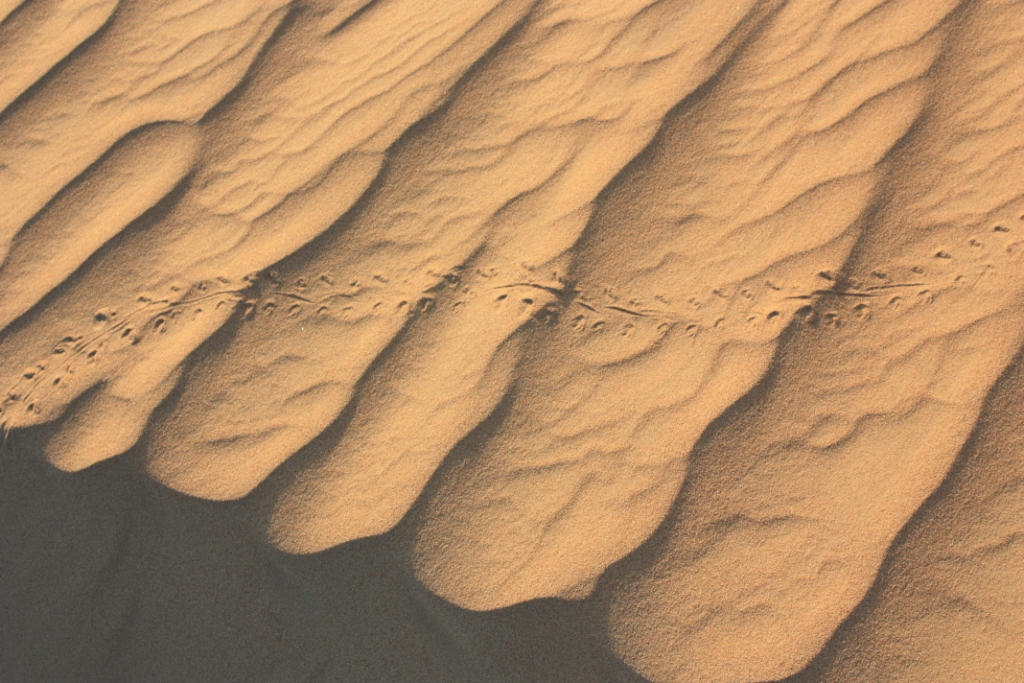
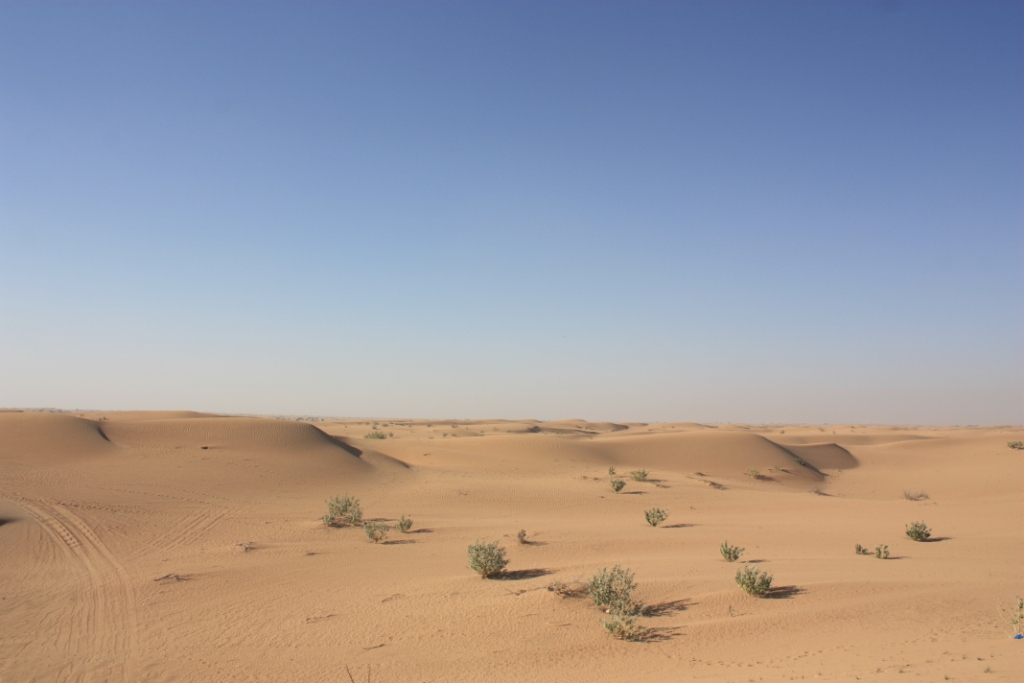
 Stand in the desert... Near them, on the sand,
   Half sunk, a shattered visage lies, whose frown,
 And wrinkled lip, and sneer of cold command,
   Tell that its sculptor well those passions read
 Which yet survive, stamped on these lifeless things,
   The hand that mocked them, and the heart that fed:
 And on the pedestal these words appear:
   "My name is Ozymandias, king of kings:
 Look on my works, ye Mighty, and despair!"
   Nothing beside remains. Round the decay
 Of that colossal wreck, boundless and bare
   The lone and level sands stretch far away.











 Tiger Riding for Beginners