


In moments of recognition of the world’s absurdity that suggest that any response other than amusement or bemusement is purely a waste of mental energy.
PROMPT: Most Happy
1

In moments of recognition of the world’s absurdity that suggest that any response other than amusement or bemusement is purely a waste of mental energy.
Mac-n-Cheese.
But seriously, I don’t think I’m acquainted with the experience.
List 30 things that make you happy.
1.) Movement; 2.) Learning; 3.) Chocolate Chip Cookies; 4.) Nature; 5.) Travel; 6.) Discovery; 7.) Spontaneity; 8.) Funny Comments; 9.) Music; 10.) Silence; 11.) Harmony; 12.) Freedom; 13.) Seeing Beauty; 14.) Flow; 15.) Transcendence; 16.) Tacos; 17.) Coffee; 18.) Quintessence; 19.) Paper Masala Dosa; 20.) Mushroom; 21.) Thwarting of Convention; 22.) Pad Thai; 23.) Novelty; 24.) Entrancement; 25.) The Unknown; 26.) Reading; 27.) Writing; 28.) Puzzling; 29.) Mango; 30.) Coming To The End Of Meaningless Lists.
What’s one small improvement you can make in your life?
Realize you have no control of what happens in the world, but complete control of your perception of it.
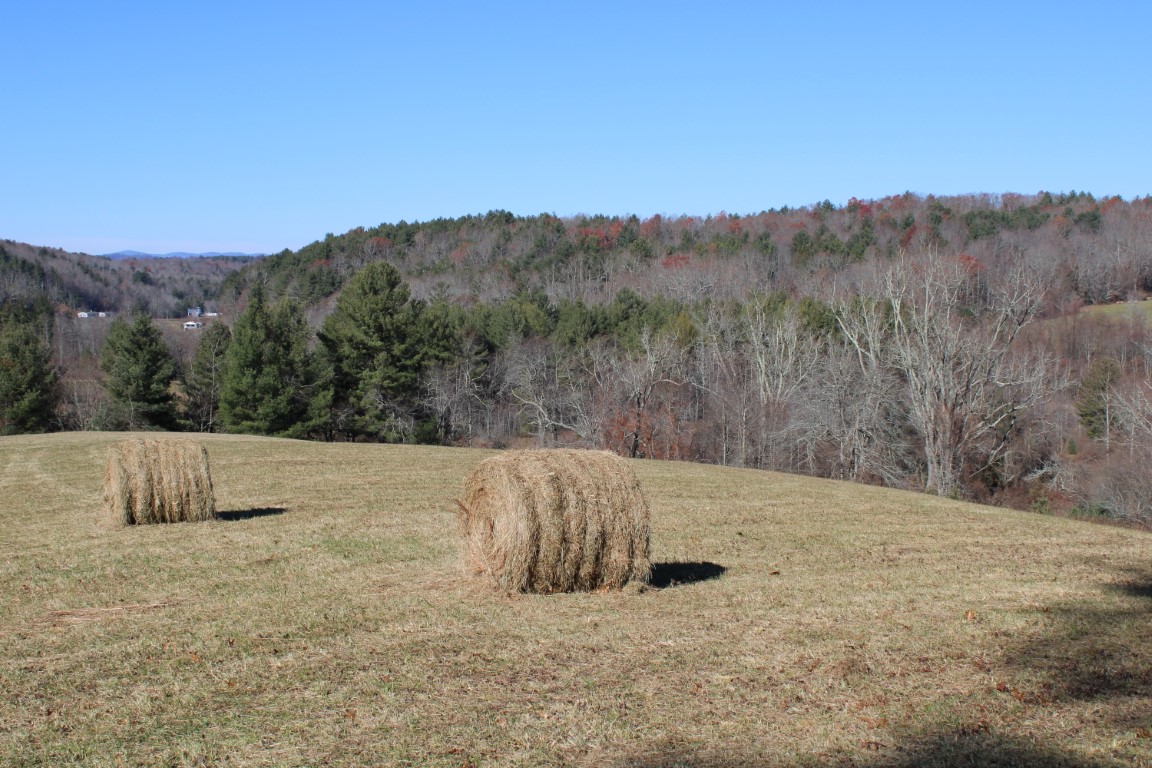
Happy the man, whose wish and care
   A few paternal acres bound,
 Content to breathe his native air,
                    In his own ground.

Whose herds with milk, whose fields with bread,
   Whose flocks supply him with attire,
 Whose trees in summer yield him shade,
                    In winter fire.

Blest, who can unconcernedly find
   Hours, days, and years slide soft away,
 In health of body, peace of mind,
                    Quiet by the day,

Sound sleep by night; study and ease,
   Together mixed; sweet recreation;
 And innocence, which most does please,
                    With meditation.

Thus let me live, unseen, unknown;
   Thus unlamented let me die;
 Steal from the world, and not a stone
                    Tell where I lie.
When are you most happy?
When I allow myself to be. Hope you weren’t looking for an answer like, “Wednesdays between 4 and 7 pm.”

Happy the man, and happy he alone,
 He who can call today his own:
 He who, secure within, can say,
 Tomorrow do thy worst, for I have lived today.
 Be fair or foul, or rain or shine
 The joys I have possessed, in spite of fate, are mine.
 Not Heaven itself, upon the past has power,
 But what has been, has been, and I have had my hour.

William James famously suggested that the path between emotion and expression wasn’t a one-way street. In other words, it’s not just that having an emotion causes us to express it through facial expressions and body language, but also that by assuming a given expressions we create the corresponding emotional state. James might have gone a little far in proposing the emotion can’t exist devoid of its expression, but he came by the belief that you could get to emotion through expression honestly enough.
I read about how James, suffering a bad cases of the blues, asked himself what would happen if he behaved as though he was in a happier state of mind. He decided to carry out this experiment, and he soon found himself in a much better mental state. This got me thinking about what else one might pretend that would yield positive results.
It should be noted, that there’s been a lot of research on this topic, and it’s been dubbed the “as if principle,” though colloquially people talk about it as “faking it till you make it.” Some of you may be familiar with this idea from the study showing that adopting a Wonder Woman stance made subjects feel more confident. If not, Amy Cuddy’s TED Talk can be viewed here.
So, here are five ideas–true or not–that are worth believing:
[Note: You’ve got to pretend as if you were a five-year old. Don’t bring those pathetic and puny adult imaginations.]
5.) I’m happy: Starting with the self-ruse most widely known and which James brought to our attention. You may have heard the following advice: if you’re ever feeling down, stand up and pump your fists in the air at an upward angle such that one’s body forms a “Y” (or an “X if you want to keep your feet wide.) This is a hardwired victory behavior written into our evolutionary coding, and it’s hard to be depressed while doing it.
4. Oneness / Unity: Try pretending that you’re connected to everything in the universe. The experience isn’t uncommon with mystics and meditators, as well as those in the Flow. This is an attempt to work it around from the other direction.
Now, some mystic-scientist out there is going to say that this isn’t an untruth because there’s evidence that we are connected to everything, citing quantum entanglement and such like. Maybe so, but as there’s no reason to believe we have a sensitivity to happenings at that quantum state, the pretending is still necessary. (i.e. Even if such entanglement exists, we can no more sense it than we could recognize if a force of 1-trillionth of a gram touched our skin.) Evolution doesn’t grant us capabilities beyond what are needed to survive to procreate, and so I’m doubtful that we have some untapped power to sense quantum entanglement lurking within us.) The oneness we feel has to do with the part of the brain that tracks the “I v.) not-I” divide fading out of operation–rather than an awareness of some web of subatomic entanglement.
This self-subterfuge is a way to simultaneously put one’s worries in perspective while not becoming demoralized about being an insignificant speck in a vast universe. One is an infinitesimal speck in an infinite universe, but one is tied into the universe such that one is simultaneously an infinite universe.
3.) Chi / Prana: I don’t think there’s any reason to believe that the immaterial energies of Eastern traditions (Taoism and Yoga, respectively) exist. However, I wouldn’t argue that there’s no benefit from imagining them to exist. There seems to be little doubt that visualizing the flow of these energies can have benefits–regardless of whether they’re the traditionally advertised benefits or not. Even if you don’t succeed in pulling energy into one’s body directly, sans the middlemen of food and oxygen (so one can live off the dew on a single ginko leaf–ala “Kung Fu Panda”), visualization is good for the brain and the invigorated feeling one creates in pretending chi exists can’t hurt.

2.) “There is no spoon:” This, of course, comes from the movie “The Matrix” in which a young sage / savant attempts to teach the protagonist, Neo, how he can bend a spoon with his mind. The upshot is that one doesn’t try to bend the spoon, one realizes that the spoon is a figment of the imagination.
The idea that we are part of a simulation may turn out to be less far-fetched than it seems. I cite, for example, the TED Talk by physics Nobel Laureate George Smoot.
At any rate, the virtue of the thought exercise of pretending this is true is two-fold. First, one can ask whether one would lead the same life and give events the same weight if one was to discover that one was living out a simulation designed to advance the understanding of some entity (e.g. an alien race, a colossal supercomputer, etc.) Second–and more importantly–one may become more attuned to the fact that one’s own mental / emotional world is full of dream-like simulations. One’s brain is designed to anticipate worst-case scenarios, and it’s exceedingly good at fabricating scenarios that taint our perception of the world with anticipated negative possibilities–most of which will never come to fruition. There are many variants, attributed to various speakers, of the following Mark Twain quote:
1.) There is no I: A core tenet of Buddhism is that there is no self. Depending what a self has to be to exist as an independent entity, science may yet converge on a similar conclusion. The self seems, at best, to be an emergent property. In the Anil Ananthaswamy book I recently reviewed, it’s compared to a center of gravity. There’s no molecule that can be called the center of gravity, it’s a property that moves around as the body does. It’s definable, but not in terms of a specific location or physical existence.
Pretending there is no self may help put many worries into perspective. Like #4, it may also help one feel more connected to a larger world. But most importantly, it may help one to turn off those parts of one’s mind that are prone to self-loathing, self-denigration, or just self-consciousness.
Happy pretending.

 The Geography of Bliss: One Grump’s Search for the Happiest Places in the World by Eric Weiner
My rating: 5 of 5 stars
This book combines travel writing with pop science discussion of what makes people happy (or unhappy.) Weiner travels to ten countries in pursuit of happiness, and reflects upon the cultural components of bliss.
Some of the countries, like Switzerland and Iceland, rank among the world’s happiest in international surveys. Some of the countries, such as Qatar and America, have every reason to be happy, but aren’t necessarily as blissful as the rest of the world would expect. Some of them, like India and Thailand, have good reason to be unhappy, and yet they manage to be global exemplars of happiness [at least within certain domains.]
Then there are a few nations that have unique relationships to happiness. Bhutan has a national policy on happiness [plus it’s a Buddhist country, and Buddhism probably offers the most skillful explanation of what it takes to be happy of any world religion.] Moldova provides a counterweight as it’s one of the least happy countries in the world. Weiner visits the Netherlands in part because one of the biggest academic centers studying happiness is located in Rotterdam, but it also offers an opportunity to study whether the country’s unbridled hedonism (drugs and prostitution are legal) correlates to happiness. That leaves Great Britain, a country known for wearing the same happy face as its sad, terrified, and enraged faces.
I’ve been to half of the countries on Weiner’s itinerary, and—of the others—I’ve been to countries that share some—though not all—of the cultural constituents of happiness. (e.g. I haven’t been to Qatar, but I’ve been to the UAE. I haven’t been to Moldova, but I’ve seen somewhat less grim Eastern European states. I haven’t been to Switzerland or Iceland but I’ve been to cold countries in Western Europe. I haven’t been to Bhutan, but I’ve been in areas where Tibetan Buddhism was the dominant cultural feature.) This allowed me to compare my experiences with the author’s, as well as to learn about some of the cultural proclivities that I didn’t understand during my travels. And I did find a lot of common ground with the author, as well as learned a lot.
I found this book to be interesting, readable, and funny. Weiner has a wacky sense of humor that contributes to the light-hearted tone of the book—perfect for the subject. That said, some people may be offended because the author doesn’t pull punches in the effort to build a punchline, and this sometimes comes off as mocking cultures. However, in all cases—even that of Moldova—Weiner does try to show the silver lining within each culture.
The paperback edition I read had no graphics or ancillary matter. There are no citations or referred works (except in text), and the chapters are presented as journalistic essays. The chapters largely stand alone, and so one could read just particular countries of interest. He does refer back to events that happened in earlier chapter or research that related to another country’s cultural proclivities, but not often. The first chapter, on the Netherlands, would be a good one to read first because he describes many of the scientific findings on happiness in that one.
I would recommend this book for anyone interested in what makes some places happier (or sadder) than others.

It’s 4:45 in the morning and I’ve been sitting on my cushion at the Dhamma Setu Vipassana Meditation Center in Chennai, India for a quarter-hour. It’s day one, and I’m observing my breath as it comes in and out through my nostrils—at least for seconds to minutes at a time before I have to coral my mind back from some random tangent. This breath exercise (ānāpāna-sati), I will soon learn, is a preparatory exercise used to reign in the mind enough so that actual Vipassana meditation can be introduced on the middle of the fourth day. In eleven days, I’ll be in the closing session of the course.
There are several approaches to Vipassana meditation taught throughout the balance of the course, but the gist is the same for all of them. One rotates one’s awareness throughout the body systematically observing sensations. As one does this, one works toward equanimity, a calm and quiet state of mind in which one neither covets pleasurable sensations nor shuns unpleasant sensations. The idea is to train the deepest level of the mind to not habitually lunge one toward pleasure or away from displeasure. (FYI: displeasure = pain. At least for a novice, such as myself, there is a fair amount of pain involved in sitting still for such long periods. It’s generally referred to a solidified gross sensation to differentiate it from the uniform and subtle sensations that one may feel in the parts of the body that aren’t in agony. I joke about it here, but there’s good reason to train oneself to not think in terms of pain, and the negative connotation the word evokes.)
At that course’s beginning, I knew a little about Vipassana from research, including reading the book “Equanimous Mind,” one man’s account of his experience in the course. For example, I knew that most people who quit, leave either on day two or day six. At the time, I didn’t know why, but would learn soon enough. It’s nothing about those two days, but rather the days that precede them. Day 1 seems to last forever, and it’s easy enough to discern why it might give students trouble. When one gets through day 1, an optimist says “yeah, I can do this because I’m through the first day” but a pessimist says, “I just barely made it, I can’t do this.” Day 5 is when the strong commitment (adhiţţhāna) is added, which means that one has three one hour sessions during which one is to commit to not changing one’s posture for the whole session. No opening eyes, but—more challengingly—no unfolding /refolding one’s legs. This commitment to not changing posture steps up the difficulty of the course to another level.
It should be noted that one can opt to sit in a chair. However, that introduces an entirely new challenge—drowsiness. During the long sessions, when I’d get up to walk the lymphatic fluid out of my legs, there were usually two people in a straight-spined meditative position and six to eight who looked to be sound asleep. (Drowsiness was one reason that I didn’t sit in a chair. I’m prone to get sleepy enough during meditation, especially in a complete absence of caffeine. The other reason was that I’ve not found chairs to be more comfortable for long-sits of meditation. Once your bony parts start pressing into the chair, one begins to wish one was cross-legged on a cushion. One can make the chair more comfortable by placing padding wherever it’s uncomfortable, but eventually one has a virtual La-Z-boy and the drowsiness factor becomes all the more problematic.)
With respect to these strong commitment (adhiţţhāna) sessions, I didn’t make it the full hour without moving on the fifth day–or any day until day 10, in fact. However, I don’t count this as a failure, because I did give it my all. I say that based on the endorphin-induced euphoria, simple hallucinations, and a proprioceptive form of Alice-in-Wonderland Syndrome that I experienced from toughing it out past mere discomfort. I’ll get to what that all means, but for now suffice it to say these happenings were symptomatic of sitting still through the period in which the pain came, grew, and then started to numb out.
In fact, these trippy experiences may, sadly, have been one reason why it never occurred to me to want to leave around day six. While I tried not to get caught up in them, these experiences were fascinating. I could see why day 2 presents a challenge to so many, but day 6 was a hoot, relatively speaking. The second most challenging day for me was day 8, because I’d reached a plateau but I didn’t yet feel myself in the homestretch. But by day 8, who’s going to leave? You’ve gutted it out that long, and are almost done. For those concerned about whether they can make it to the end, I can honestly say that I never seriously considered quitting. It’s not that hard to get through the 10 days, as long as one isn’t too addicted to comfort and communication. That said, I wouldn’t offer a wholesale recommendation of the course as many do, but rather recommend it on a case-by-case basis. If you’ve done no meditation whatsoever, this is the meditative equivalent of going from couch-sitting to training for an ultra-marathon overnight. If you think you can’t get through nine days of silence–without no phones or books, maybe you can’t, and you should probably reevaluate your life.
I mentioned some of the unusual experiences that I witnessed during the course, and I’ll get into that a bit more. I should preface this by saying that one shouldn’t get caught up in these trippy happenings for reasons I’ll elaborate upon below, but they may happen so it’s worth being ready for them. Here’s a list of the unusual events I experienced:
-Extreme relaxation / lethargy: a little off topic, but between sessions on day 1, I noticed that I couldn’t be bothered to shoo away a fly that kept buzzing around my head with random touch downs. I don’t know how long I walked with the fly buzzing over me before it struck me that this was unusual. This was before Vipassana proper had been introduced, so it didn’t yet seem apropos.
-Olfactory hallucination / vivid scents: on day 2 I witnessed a distinct smell from my elementary school days (i.e. a mix of cleaning solution and milk cartons?) that theoretically could have originated at the Dhamma Setu, but which was quite probably an olfactory hallucination. It was short-lived and I never smelt it again. I did later experience an intense smell of flowers inside the meditation hall. This may well have been an actual scent as there were many blooming flowers there. These vivid scents were also short-lived.
-Endorphin-Induced Euphoria: on days 4 and 5, I experienced this as an almost intoxicated feeling. [Endorphins are the body’s indigenous pain-killers.] As drunks find unfunny things funny, so did I—including the pain in my legs and back. I wondered if anyone would be distracted by my occasional giggle-fits, but I think they were much more subdued than I suspected from my vantage point. Just like I’ve thought I was talking in my sleep in the past, only to be told that it sounded more like faint and indistinct whimpering. On day 6, I experienced a more sophisticated (not drunk-like) form of euphoria that expressed itself as a feeling of “oneness.” I’ve read about feelings of oneness being attributed to a form of transient hypo-frontality—i.e. a shutting down of the parts of the prefrontal cortex (PFC) that track the self / other distinction. There may have been more happening than endorphins (and other neurotransmitters) involved in that happening.
-Lifting sensation: This was the single most awe-inspiring experience that I was party to. For those unfamiliar with seated meditation, one of one’s chief enemies in long meditation sessions is a proclivity to slump. Slumping translates into agonizing back pain and labored breathing. So whenever one catches oneself slumping, one has to straighten one’s back. [If you wonder why a meditator would pretzel up his or her legs in full lotus (padmasana), the alignment of one’s legs helps one maintain a straight spine.] At any rate, on day 6 I experienced the feeling that I was being lifted up straight and it became effortless to maintain a straight back for the rest of that session—as if an outside force were doing the work. This lifting sensation wasn’t like being lifted by a person, but rather like the action of a “tractor beam” from the world of sci-fi. While I have some inkling of the causes of much of what I experienced based on the science of the human body, explanation of this “lift” is harder to come by. I did read an account in Oliver Sacks’ “Hallucinations” by a woman who suffered from migraine-induced hallucinations and Alice-in-Wonderland Syndrome that was a spot-on description of what I experienced as well.
-“Visual” [closed-eye] simple hallucinations: I didn’t experience anything even close to the what people usually think of as a hallucination—that is, there was nothing that could be confused with reality. I wouldn’t have even known to call these images hallucinations if I hadn’t been reading the aforementioned Oliver Sacks’ book. Mine were quite close to what are described as hypnogogic (falling asleep) hallucinations in the Sacks’ book. This makes sense. While I wasn’t drowsy at the time, my brain was probably in a pretty similar state of relaxation. Mostly, these were moving shapes that formed and dissipated in a field of black-fringed purple. On day 7, there were more complete visuals—mostly of partial faces, usually with mouths wide open. I took this as my subconscious mind’s comment on the noble silence. (On the noble silence: from about 6pm on day 0 [orientation afternoon] until the morning of day 10, one isn’t allowed to talk or in any way interact with / acknowledge anyone except to direct questions to the teacher or staff. Whether one has questions or not, one will speak at least a few words to the teacher every day or two when he / she reviews one’s progress. For some, this may be the single biggest challenge of the course, but I’m a hardcore introvert and could do ten days of silence standing on my head.)
-Tactile Alice-in-Wonderland Syndrome: Alice in Wonderland Syndrome usually refers to a visual form of hallucination in which things appear a great deal taller, smaller, closer, or farther than they actually are. What I experienced was a great deal less whacky and traumatic than that. With eyes closed, I felt a distortion of the size and shape of my arms. Sometimes my arms felt like they were six-foot long from deltoid to fingertips, and sometimes the same points seemed to lie a foot and a half apart. Needless to say, those are both distortions of the actual length of my arms.
-Inexplicable Beatles’ Music: On day 8 my mind bombarded me with music from the Beatles for a little while. In particular I heard “Sgt Pepper’s Lonely Hearts Club Band”, “Lucy in the Sky with Diamonds”, and “All You Need is Love,” or parts thereof, in high fidelity. Now, while this is fine music, it’s not music that I’ve listened to recently nor have I listened to that album a great deal. When I was growing up, there was a copy of “Sgt Pepper’s…” at home, but I’ve only periodically heard these songs on the radio since. The experience was monotonous because only the parts that I knew the words to (i.e. the choruses) replayed on a loop, but the music and voices were crystal clear as if I were listening to the album. Given the lack of personal relevance, I can only imagine that my subconscious thought this is the kind of music a person meditating would like to hear.
As I said, by about day 8 I’d hit a plateau. The aforementioned odd experiences were petering out, particularly when I did as I was supposed to do and gently returned my mind to the task at hand. Yet, the practice wasn’t getting any easier or smoother. I still had the same dead spots—areas that I could observe for extended periods without even the subtlest of sensations—and I still had growing pain zones in my back and legs—i.e. starting from isolated pains, the pain would become increasingly diffuse and of ill-defined boundaries—but often no less painful.
Now I’ll explain my comment about not allowing oneself to become captivated by the trippy experiences. If one seeks after these experiences, not only is one missing out on the value of the practice, one is actually moving in the wrong direction by coveting an experience while impulsive craving is what one is training oneself away from through Vipassana meditation. Beyond this, seeking out such experiences is likely to be frustrating because they are products of the subconscious mind and physiological processes that are beyond conscious control. They happen when they happen, on your body’s schedule. (Note: Some people think of these as spiritual phenomena. I don’t, but—for those who do—they still won’t happen on your schedule. Ostensibly, they’ll happen on some deity’s—presumably rather tight–schedule. And—divine as they may be—they are still a distraction from the objective of the practice—and that’s not my opinion, but according to the teachers of the tradition, starting with Gautama Buddha and through to S.N. Goenka.)
So when one experiences such phenomena, one should do the same as one always does in meditation, quietly and non-judgementally return one’s mind to the object of awareness—in this case, systematically witnessing the sensations on one’s body. I won’t say that this isn’t a challenge. It is, because your mind is presenting you with something fascinating and new, and you’re asking it to return to a task that has become rather mundane over hours and days of practice. It should be noted, I would broadly categorize the phenomena that I experienced into two slots, one of which is things the brain does to cope with a lack of external stimulation. (The other being, things the body does to cope with unrelenting pain.) So it takes some discipline, but one should remind oneself—as one is frequently reminded during the discourses—that you are there to give the Vipassana approach a fair trial, and as fascinating as these sideshows are they are a distraction from the practice.
That said, these things will happen and their unusual nature may make them points of concern or confusion, and so I’ll discuss them a bit more. I have a theory about the cause of the euphoric experiences, but it requires a little clarification and background. What makes Vipassana challenging for a new practitioner—at least for me— is that in systematically rotating one’s awareness to observe sensations, one has to ignore areas that are screaming with pain while carefully running one’s attention through areas that seem completely devoid of sensation. This requires quieting the mind and especially not feeding the anxiety about one’s pain and discomfort—hence, developing equanimity (steadiness of mind.) Sitting still for an hour at a time, lymphatic fluid piles up in your lower extremities (no pump in the lymphatic system but the one of movement), over time blood circulation may be inhibited, and this lack of circulation has ramifications for the cells not being adequately nourished. So your body notices this fluid build-up (a relatively minor concern, easily rectifiable, and which will take a while to be a serious problem for most people) and sends you some pain sensations to spur you to get up and move about. When you don’t get up and walk, it turns up the discomfort disproportionate to what’s happening with your body. You still ignore it. Eventually, your body starts to think maybe a boulder fell on your legs and you’re in shock (the conscious and unconscious minds don’t talk as much as you might think, and—even if they do—let’s face it, at least the conscious mind is a big, fat liar.) It’s at this point that your body starts to emit some feel-good chemicals. (I refer to “endorphin-induced euphoria,” but it’s more extensive than natural painkillers. In reading up on the subject, I noted references to serotonin and even melatonin (yes, the skin color chemical) in addition to beta-endorphins. I wouldn’t be surprised if there was some dopamine—a reward / feel good chemical—in the mix as well. Hence, the euphoria.
I don’t think it’s necessary to get into the hallucinations and other effects that the mind creates in order to cope with the lack of sensory input. This is a well-studied area, and there’s been a lot written on how the mind hates the dark and the quiet over extended periods. I would recommend the aforementioned book by Oliver Sacks on hallucinations as a case in point.
Saving the most crucial question for last, was it worth it? In his discourses, S.N. Goenka offers three criteria by which one might evaluate whether Vipassana is worth practicing. While all three are sound criteria, I’ll focus on just one of these, which is really the bottom-line, and that’s whether it makes an improvement in one’s life. That is, does one start to be less prone to impulsively react to craving and aversion and become more equanimous of mind?
On this, I’ll have to say that the jury is still out. Many come out of the 10-day course calling it life-changing. I’d say that it was beneficial because I learned a meditative technique that has a sound internal logic (even if one doesn’t believe every aspect of the mechanism by which it is said to work by Buddhists—which I don’t), an established track record of benefit for many, and the feel that it’s benefiting one. However, I’m still evaluating the approach. I’ve been doing Vipassana meditation twice a day with morning and evening affirmations. Let’s face it, 10-days isn’t a long time to overhaul one’s deeply ingrained modes of operation—even sitting in meditation for 10 hours a day. I’m optimistic, and the practice sure doesn’t hurt—except for those solidified gross sensations, they hurt.


 Tiger Riding for Beginners