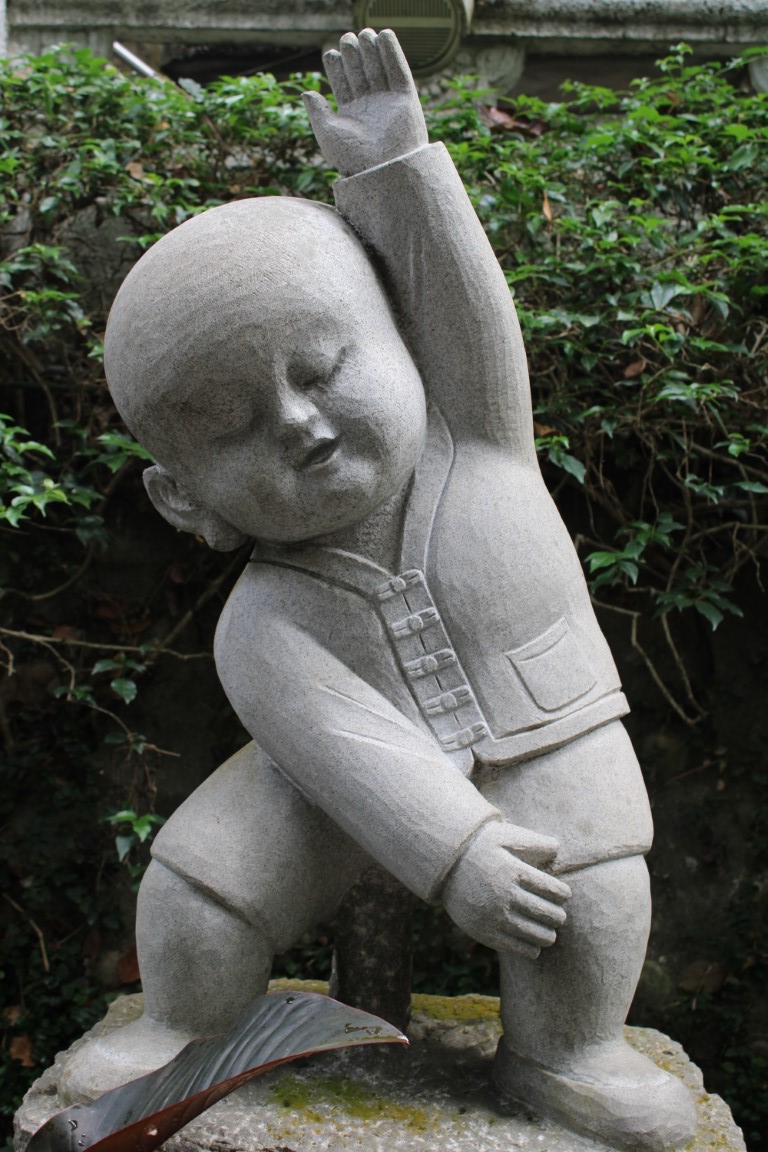
What force dances one
   into this lovely state?

Light & ecstatic,
 Blissful but calm.

Each breath a drug
   that sends delicate
   shimmers rippling
   through the universe.

What force, indeed?

What force dances one
into this lovely state?
Light & ecstatic,
Blissful but calm.
Each breath a drug
that sends delicate
shimmers rippling
through the universe.
What force, indeed?
 Jnana-Yoga–The Way of Knowledge by Ramakrishna Puligandla
I don't remember my dreams --
     not in the middle of the night
     and not in the morning.

But, sometimes, I catch a glimpse
     at a random instant:
          composing a poem,
          reflecting on a passage
               from a book,
          eating a cracker...

 But my dreams are like
     frightened animals,
          turning my attention
          directly upon them,
          makes them skitter off...,

     vanishing into the thicket.

My dreams vanish like they
     were never really there,
     and I am left wondering
          just what I saw.

The harder I try to remember,
     the more severely I scrub
          my mental hard drive,
     purging all shapes and motions,
          until my recollection is nothing
          but a vague residue of feeling.

I don't KNOW that it was a dream.

I couldn't swear to it.

All I know is that it's an image
     that I can't tie to my waking life,
          can't tie to any person, place,
          or thing I know to be real.

(And, often enough, it's an image
     that couldn't exist in the real world.)

I couldn't remember it as a dream,
     but - somehow - I intensely FEEL
          that it was a dream,

but the Dream is deep down in its hole,
     shaking like a critter that
          was almost snatched up by
     a monster too awful to
          contemplate....

and, somehow, I am that monster.
 The Romance of Reality: How the Universe Organizes Itself to Create Life, Consciousness, and Cosmic Complexity by Bobby Azarian
 Expanding Reality: The Emergence of Postmaterialist Science by Mario Beauregard
 Catching the Big Fish: Meditation, Consciousness, and Creativity by David Lynch
My rating: 4 of 5 stars
This book consists of a series of topical micro-essays – the shortest being a simple sentence and the longest being a few pages, with the average being about a page. Lynch is most well-known as the director who created such works as “Eraserhead,” “Mulholland Drive,” “Blue Velvet,” and “Twin Peaks.” As the subtitle suggests, the overarching theme of the book is the nexus of meditation and creativity. While many of the essays explicitly touch on how meditation influences consciousness, which in turn influences the creative process, not all of them do. Some of them are more biographical or about the filmmaking process – including discussion of technical considerations (what is the optimal type of camera and how high definition can be too much definition for its own good) and what a neophyte such as myself might call the managerial considerations of movie direction (how to best get one’s vision across through the actors.) Along the way, one glimpses how Lynch shifted from his first artistic love, painting, into the world of cinema.
Lynch is a long-time practitioner of Transcendental Meditation (TM,) which is a mantra-based meditation in which the meditator silently repeats a mantra given to him or her by a teacher. The central analogy posed by Lynch is that meditation expands the consciousness and this allows one to catch bigger fish (more profound and creative ideas) through one’s art. He’s not suggesting that the ideas come directly within the process of meditation, but rather that meditation facilitates one’s ability to deepen the pool and pull up bigger creative fish.
He does engage in a fallacious form of thinking that I’ve critiqued in other books, and so I figure I should mention it here as well – even though I found it a little less troubling because of his free flowing “artsy” approach to presenting ideas. But this fallacious bit of reasoning goes something like this: “See how science is talking about this confusing issue and admitting that no one fully understands it yet? And see here how these scriptures are describing this nebulous idea with a few kernels that sound vaguely similar to what the scientists are talking about? From this we can conclude that they are – in fact — talking about the same thing, and that the ancients actually understood this all in much greater detail than we do today.” He does this mostly with reference to the unified field theory (which still hasn’t unified gravity into its ranks, let alone establishing some kind of oneness of all things.) It’s what dear old Dr. Sherrill used to call the “firstest-is-bestest” fallacy, which is thinking that back in the day they knew everything any we are presently just stumbling around in the dark trying to get back on track. [One should note, there is an equally fallacious counterpart that he called the “outhouse fallacy,” which assumes that because people in the past didn’t have indoor plumbing that they were complete idiots.]
For cinephiles, the book provides a lot of interesting tidbits about Lynch’s filmography. [For non-cinephiles such as myself, some of this will make sense, and some of it won’t. I occasionally had to make a Google run while reading the book to figure out some obscure reference about one of his movies.] For those interested in meditation, there is a great deal of fascinating thought about how creativity happens and how it’s advanced by having a meditative practice.
The most notable ancillary matter is an appendix of interviews with Paul McCartney and Ringo Starr. Lynch has a foundation that works to bring meditation into the educational process and the two former-Beatles support its efforts enough to do an interview. The McCartney interview stays more on the topic of meditation — particularly the Beatles’ interaction with Maharishi Mahesh Yogi, the creator of TM and a guru who taught the band both during a visit to the United Kingdom and in his own home base of Rishikesh. The Ringo Starr interview is actually much more about the musical history of Starr and the band.
I enjoyed this book. It’s a quick read. It’s a little all-over-the-place, but not in a bad way. A lot of the writing has a stream of thought feel that seems appropriate to the subject matter. If you’re interested in the films of David Lynch the book definitely has some inside insight for you. If you are interested in the meditation and the mind, you’ll also receive some good food for thought. If you are just looking for a way to spur creativity, it’s also worth a read.
 This is the belated final posted of my 2019 project on altered states of consciousness. I was traveling during the latter half of December and, hence, my tardiness.
During 2019, each month I gave special attention to studying some state of consciousness that exists outside of the normal waking state. (Of course, the folly of believing that there is one “normal waking state of consciousness” is one of the major lessons learned from this exercise.) My investigations included: meditation, hypnosis, lucid dreaming, sensory deprivation, psilocybin consumption, and various others — a number of which were variations on inducing a Flow state.
In December, because I was traveling so much I was reading even more than usual, and it occurred to me that there is a kind of reading in which the mind behaves differently from the norm. I’m not talking about all reading, but — specifically — when one gets lost in story. There’s run-of-the-mill reading, and then there’s the reading in which a hundred pages seem to fly by in minutes, but you realize you’ve lost a lot more time than that. This topic might seem like a dull ending to this project. Being absorbed in story might not appear as enthralling or “sexy” as mushroom tripping or floating in sensory deprivation tank, but the experience can be just as profound.
As I was looking into this, I discovered that there is a term that addresses what I’m talking about, “narrative transportation.” Narrative transportation relates to absorption, which I learned is a factor in hypnosis. That is, how easily does one become completely mentally occupied with an object of contemplation such that one loses awareness of the passage of time and external stimuli. In this type of reading, one is mentally reconstructing the world and events of a story, and that process is demanding of one’s attention. Furthermore, there is an intense emotional experience that one is feeling simultaneous to this mental construction. This doesn’t leave much room for the mind to wander — if the story is intriguing enough to hold one’s attention.
As a reader, one facilitates narrative transportation largely by picking stories that are appealing to one, and by finding extended time periods to read without distraction. However, what’s really interesting is how a writer can facilitate this state through his or her style and method. The most commonly discussed aspects of this facilitation are: the story arc (i.e. arranging events to create and maintain excitement) and building lovable or loathsome characters (either way, just as long as they aren’t tedious or boring.)
But there is another aspect that I think of as readability. How easy does the storyteller make it for the reader to create their own mental story-world? In large part, this has to do with the art of finding the Goldilocks Zone of description. If one describes too little one creates “floating head syndrome” in which the reader (if they continue reading at all) may imagine floating heads conversing in a blank white room. On the other hand, if one spends twelve pages describing the drapes or the weather, one is unlikely to keep readers engaged. Coincidentally, one of the books that I read in December that was educational (though not transportational) was Milan Kundera’s “The Art of the Novel.” In it, Kundera bemoans the tendency to over-describe characters such that one interferes in the reader’s imaginings. He points out that readers learn almost nothing about the physical description and background of some of the most important characters in literature.
And so concludes my year of altered states as I look forward to new adventures in 2020.
 Some people swear by the mind-altering properties [and other benefits] of chanting mantras. I’ve been reading a review copy of Kulreet Chaudhary’s “Sound Medicine,” a book whose play-on-words title says it all. It’s about the way sound is either shown or speculated to have health effects. (Full-disclosure: Some of the speculation gets a bit out there.) Chaudhary is both a medical doctor and an Ayurvedic practitioner, and has an outlook akin to that of Deepak Chopra.
Chanting has never been my thing. I’ve learned about it and done some in yoga training, but I can’t say it ever resonated [no pun intended] with me. However, in the spirit of investigation, this month I did a few one hour and half-hour sessions of chanting. I kept it very basic, chanting AUM as I was taught with equal parts of A – U – and – M.
While I can’t say that I’m sold that chanting is the ultimate practice that achieves outcomes unachievable through other means, I will say that after these sessions I do feel a sense of calm and clarity. I can certainly see why mantra chanting has appeal for so many people, even though I also believe that, sadly, it’s sometimes oversold as something supernatural and the discussions about it are needlessly complicated.
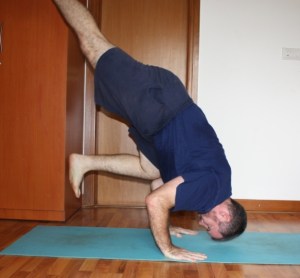 This is month ten in my year of studying altered states of consciousness, and this post will be on movement and the mind.
There are many downsides to being introverted, but one upside (at least in being a kinesthetic-oriented introvert) is that I can get out of my head and in touch with my body quickly and efficiently when I’m in motion. It can be a blissful state when the inner yakking pipes down and my awareness becomes attuned to sensation.
I would differentiate three types of movement that have very different effects on my state of consciousness. First, there are highly repetitive acts of movement such as running. Now, I do run because it’s great exercise, but it doesn’t tend to put me in the state of mind I’m talking about. Your results may vary. I know many people find “runner’s highs” or achieve a quieting of the mind when running. For me, running tends to produce a daydream-centric state of mind. I sometimes counter this by focusing my awareness on my breath, stride, or sensations, but — left to its own inertia — my mind goes into daydream mode.
Second, there are fixed sequence series of movements — preferably with a flow. The best example that I can think of — and which I currently practice — is taiji. I’ve been practicing Yang Style Taiji for a few years now, and find it’s conducive to this state of mind. However, the point that differentiates this type of movement from the next is that it takes some time to get to that point. One has to ingrain the sequence of movements into one’s body, then coordinate the breath, and then correct minute mistakes in the movement. It’s worth it, but it’s not an instant ride to altered consciousness. While you’re getting the fundamental movements down, the conscious mind is necessarily quite active and it’s hard to tune into the movement and the sensations.
Third, this is what I would call free movement. Some people think of it as a kind of dance, but not one with a fixed choreography, which would fit more in the second category. Free movement is just letting your body move (usually to music) with awareness to the body, but without conscious direction. While the feel created is much like that of the second type of movement, mentally it bears more resemblance to free writing, which I discussed last month. That is, one is trying not to direct the body consciously, but rather let the movement come about (perhaps mediated by the music.) Rather than trying to consciously direct the movement, the conscious mind is used to direct and maintain awareness of sensations. Sometimes, I keep my awareness on the soles of my feet, feeling how various movements — subtly or unsubtly — change the distribution of weight on the feet.
In doing this, I find that sensitivity to sensations — external and internal — dials up. While I’m focusing on internal sensation. I often notice tactile sensations that would usually not register. There’s also a more visceral experience of the effect of music, which is another subject in its own right. The blissful effect of music seems to be amplified by the body in motion.
In thinking about the difference between the second and third types of movement experience, I was reminded of the argument that a ritual is an essential element of plumbing the depths of the mind. As the argument goes, there’s something about inggraining a sequence of actions into one’s muscle memory and continually performing them that tunes one into something vaster than the self.
I’m still planning to do two more posts in this series, although I’m bouncing around alternative subjects for November and December, those joining this experience in progress and curious about previous posts can find them:
January – Psilocybin Mushroom
February – Sensory Deprivation / Float Tank
March – 30 Days of Meditation
April – Hypnosis
May – EGG Feedback
June – Breathwork
July – Lucid Dreaming
August – Sleep Deprivation
September – Free-writing / Poetry
 As I continue to look at variations in consciousness, it occurred to me that poetry writing (or at least pre-writing) often involves an altered state of consciousness. Often, I do an exercise akin to freewriting. Freewriting is an exercise that has been popular for a long time for beating writer’s block. You just write: fast, without judgement, and without concern that you’re taking a reader to any particular place. (It’s somewhat like “brainstorming” in process, but usually solitary and producing sentences or phrases and not bullet-point lists.) The point is to break the grip of self-consciousness and lay waste to the idea that every word has to be pure brilliance to be worthy of your time.
My process begins by quieting my conscious mind, typically with long exhalation breathwork (pranayama.) For those unfamiliar with yogic pranayama or other forms of breathwork, drawing out one’s exhalations (in conjunction with relaxing the body) slows the heart rate and otherwise activates the rest and digest functions of the body. (The curious or dubious can look up “cardiac sinus arrhythmia” or “respiratory sinus arrhythmia,” which is the same thing alternatively labeled by the cause [respiration adjusted] or the effect [heartbeat changes])
After my conscious mind is tranquil, I set pencil to paper and just start writing quickly — without looking back or forward, but just trying to be present with whatever my mind vomits forth. Usually, there is an understandable grammar, but no understandable meaning (at least not beyond the granularity of a phrase.) But building meaning isn’t the point, and I don’t care. Sometimes, I fall into a rhythmic sound quality, but other times I don’t. To give an idea of what the raw feed of this looks like, here’s an example from this morning:
Turn ten, run the nines. I found a fever down the line and could not bend the wall to weep, but heard the conveyor line… beep – beep – beep. Oh, so some fucking wisdom says let live the demons that I dread, but there’s a cold magnolia leaf on the ground and I can hear it skid at the break of dawn, but what sign is that to feel it out. I killed a monk and stole his doubt, but you’ll never blame away the triple frame…
So, it’s a collection of words and phrases that has no discernible meaning collectively. Once and a while, I go through some of these flows of verbiage and underline words, phrases, or ideas that have some spark or merit, and then — if I can — unshuffle and word-cobble until I have a poem.
However, my point in this post isn’t to describe how a poem gets its wings. Instead, it’s to discuss the process by which the consciousness “presents” us with something from out of nowhere. (The conscious mind would claim it “created” it, but I have my doubts. I’ve learned the conscious mind routinely takes credit for many things that are not its doing.)
It’s not like I have an idea (stolen or otherwise) and then I think it through, and then I order those thoughts into an outline. (The usual writing process.) On the contrary, I go to great lengths to make my conscious as quiet as possible as a precursor. I think about the term William James coined, “stream of consciousness” which became a prominent literary device. Is it streaming into consciousness, from consciousness, or through consciousness? Where does it come from?
You might say, “Why worry about where it comes from because it’s a garbage heap?”
But once in a while there are epiphanies and flashes of insight amidst the rubble and dung. Sure, maybe I grant detritus post-hoc gold status, but there’s something there I feel I have yet to understand.
In consciousness, we seem to have awareness of [something] and meta-awareness (i.e. we are aware of what we are aware of [something.]) Sometimes that meta-awareness is a grand and beneficial tool, but sometimes it’s just another word for self-consciousness. Sometimes having a one-track mind is a beautiful thing.
I said that my practice was “akin to freewriting,” and it might seem exactly freewriting, but the main difference is that it’s purposeless. Sure, once and a while I go back through and rag-pick, but mostly I do the practice just to revel in the experience of being completely with whatever words are streaming. The writing and being consciousness of what is surprising me on the page takes enough of my mental faculties that I have none left to be self-conscious.
Who knows where this journey will take me next month? There’s still a lot of territory left in the altered states of consciousness. Fasting, dance, shamanic drumming, tantric sex, psychonautics, etc. Who knows?


 Tiger Riding for Beginners