BOOKS: The Second Law by Stephen Wolfram

The Second Law: Resolving the Mystery of the Second Law of ThermodynamicsThe Second Law: Resolving the Mystery of the Second Law of Thermodynamics by Stephen Wolfram
My rating: 4 of 5 stars

Amazon.in Page

This book has an intriguing premise but a bizarre organizational scheme. The book offers insight into the Second Law of Thermodynamics couched as the author’s personal journey of discovery. Put simply, the Second Law says that entropy increases, or the coffee cup next to me can fall and break into many pieces but it can’t / won’t reassemble itself, alternatively, I can mix milk into the coffee in the cup, but not unmix the milk out of it. Of course, this simplification is — in fact — a massive oversimplification and there are a number of definitions of entropy and different ideas on the conditions under which its increase holds and why. This is part of what the book investigates.

Let’s start with the book’s intriguing premise. It is that: a.) the Second Law and its implications are not as well (or fully) understood as the scientific consensus suggests, and b.) the key to understanding entropy’s increase may be found in the concept of computational irreducibility. This all ties to Wolfram’s work with cellular automata and the finding that apparent randomness can come about from a simple set of rules that are non-random. In other words, cellular automata could produce a pattern that can only be determined by re-running said simple set of rules — i.e. there would be no way to compute it. As (apparent) randomness plays an important role in the Second Law, Wolfram proposes a connection that has ramifications for critical issues like reversibility. (Remember we can’t unmix the milk out of the coffee [without expending more energy and within the confines of an open system] or so it’s believed.)

When I say the book’s organization is strange, I do so with the assumption that the intended readership includes those who are scientifically literate but not expert in thermodynamics or physics. The first part of this strangeness is that the body of the book concludes with an overview of the development of the Second Law (arguably this is information a non-expert reader might benefit from having up front.) The second element of strangeness is that much of the latter part of the book is just connective tissue between excerpts of other people’s writing on the subject. This increases the page count tremendously and doesn’t serve readability well.

The book does have a good deal of interesting and informative graphics. It also has copies of scholarly papers and relevant chapters from Wolfram’s previous book, “A New Kind of Science” for those who are capable of, and interested in, taking a deeper dive into the science and mathematics under consideration.

I found this book to be thought-provoking if a bit tedious to read in places. If you’re interested in the Second Law, it’s worth reading and may shed new light on the topic.

View all my reviews

BOOKS: A Few Rules for Predicting the Future by Octavia Butler

A Few Rules for Predicting the Future: An EssayA Few Rules for Predicting the Future: An Essay by Octavia E. Butler
My rating: 5 of 5 stars

Amazon.in Page

Release Date: April 16, 2024

This brief essay by one of science fiction’s greats, Octavia Butler, discusses her thoughts about forecasting the future and why it’s worth doing even though it’s so difficult (at some level of precision– even impossible.) Butler tells a few stories about questions from fans, being prescribed medication, and growing up during the space race and Cold War, stories that cleverly present her thoughts on the challenging art of anticipating the future.

It should be pointed out that this is a very short work. Even the sixty-ish page count is deceptive as that is accomplished with lots of white space, with large fonts, and even with colorful blank pages (and / or artwork.) If you’re paying full book price for it, be forewarned that, as clever and quotable as it is, it’s essentially magazine article length (and not a long article at that.)

If you can get your hands on this essay for a price commensurate with its word count, I’d highly recommend reading it.

View all my reviews

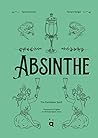
BOOKS: Absinthe by Tania Brasseur & Tamara Berger

Absinthe: The Forbidden Spirit: An Intoxicating History of the Green FairyAbsinthe: The Forbidden Spirit: An Intoxicating History of the Green Fairy by Tania Brasseur
My rating: 4 of 5 stars

Amazon.in Page

Release Date: February 27, 2024

The biography of a beverage might not seem exhilarating, but absinthe has no ordinary history. It rose from obscurity as a regional drink indigenous to parts of France and Switzerland to international celebrity by becoming popular with artistic geniuses of the era — e.g. Oscar Wilde. Some of whom credited the drink with more than just a pleasant tipsy sensation. Then it received its own prohibition while other alcoholic beverages remained perfectly legal. Of course, as with other prohibitions, Absinthe’s legend rose and taste for it didn’t disappear. Eventually, its prohibition ended, and absinthe was freed to have a second life.

This book is primarily a history of absinthe’s rollercoaster ride existence. However, it also discusses wormwood and other prominent ingredients, the distillation process, as well as the mythology that grew up around the beverage.

If you’re curious about the beverage and its mythos, I’d recommend you give this book a look.

View all my reviews

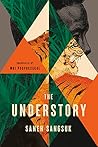
BOOKS: The Understory by Saneh Sangsuk

The UnderstoryThe Understory by Saneh Sangsuk
My rating: 5 of 5 stars

Amazon.in Page

An elderly monk tells stories from his life to the kids living in a small [and fictitious] Thai village. This is one of those works of literary fiction that you have to give a chance. The pacing, the subject matter, and the approach of the first part of the book is such that anyone without an intense interest in Thai village life or the thoughts of a Thai monk on the state of Buddhism in India (almost non-existent) will find it a bit of a slog. However, as the story shifts to the young man’s (pre-monk) life, adolescence through life as a newly married man expecting his first child, it becomes an intensely gripping story.

In the early parts, there’s a lot of violation of that old chestnut, “show, don’t tell” and — like much literary fiction — it’s not clear that there will be a story (versus exposition, character development, and description of events of a non-story like nature.) However, this transitions into the evocative story of how the narrator came to be a monk after a tragic farming householder experience. I can’t even give an accurate description of how far in I think the book makes this swing because my reading pace in the second part was so much quicker and more compelled than early on.

The book has hints of supernatural elements in it but can be read as realism in an environment of intense superstition.

I’d highly recommend this book for those who enjoy literature in translation. Give it a chance to win you over. It will, soon enough.

View all my reviews

BOOKS: MONKEY, Vol. 4: Music ed. by Ted Goossen & Motoyuki Shibata

MONKEY New Writing from Japan: Volume 4: MUSICMONKEY New Writing from Japan: Volume 4: MUSIC by Ted Goossen
My rating: 5 of 5 stars

Amazon.in Page

Release Date: November 14, 2023

This is the fourth volume in a series of translated Japanese short creative writing (mostly poems and short stories.) The series (and this edition, in particular) features some of the best-known Japanese authors (e.g. Haruki Murakami and Meiko Kawakami.) Beyond a few major pieces at the beginning, this edition has a theme of music that runs through it.

Among my favorite pieces were: the novel excerpt Yoshiwara Dreaming about a young girl who is sold into the redlight district and becomes a helper in a brothel; Transformer: Pianos which is a work of surrealist fiction; The Zombie is Haruki Murakami’s fresh take on the zombie story; I also enjoyed many of the inclusions in the section entitled Eight Modern Haiku Poets on Music.

It’s a varied collection of writings. Not only does it include all forms of creative writing — prose and poetic — but the broad selection of writers and translators ensure that there is a diversity of styles and genres. That said, there isn’t a great diversity in quality level. It’s all strong writing, though some works will appeal to any give reader more than others. There’s something for everyone.

I’d highly recommend this volume for readers of literature in translation.

View all my reviews

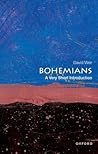
BOOKS: Bohemians: A Very Short Introduction by David Weir

Bohemians: A Very Short Introduction (VERY SHORT INTRODUCTIONS)Bohemians: A Very Short Introduction by David Weir
My rating: 5 of 5 stars

Amazon.in Page

This book examines the brief life of the Bohemian artistic lifestyle, exploring how it came about, what it looked like in its heyday, what led to its demise, and by what / whom it was replaced (e.g. the Beats.) It is an intriguing examination of the subject. I will say, there were points that I felt the book had become lost in the weeds, but at other points I found it fascinating. I concluded that my own calculus was to find it interesting when it discussed the lives and works of artists who are still deemed to have relevance and influence today (e.g. Baudelaire, Picasso, and Whitman,) and not so much when it was elaborating on artists and works that have fallen into obscurity among the general populace (e.g. Henry Murger’s Scenes of Bohemian Life.) So, that may be more a reflection on me than on the book.

The author touches upon the fictional influences that inspired Bohemianism, the places where the lifestyle thrived (e.g. Paris and New York,) the philosophy and – particularly – the political philosophy of the Bohemians (e.g. often Anarchists or – at least – anti-government.) One of the topics that most interested me is how the successor artistic communities differed from the Bohemians.

If you’re interested in who the Bohemians were and how they differ from other artistic communities (before and after,) this book is well worth the brief read required.

View all my reviews

BOOKS: How to Talk Dirty and Influence People by Lenny Bruce

How to Talk Dirty and influence peopleHow to Talk Dirty and influence people by Lenny Bruce
My rating: 5 of 5 stars

Amazon.in Page

This is the autobiography of the comedic legend, Lenny Bruce. The first half (or so) of the book discusses Bruce’s life before standup comedy. This includes time as a sailor (US Navy) during the Second World War, as a sailor in the merchant marine, as a farmhand, and brief stint as a grifter. The second half takes place while Bruce is a working comedian but focuses heavily on his legal troubles including multiple Obscenity trials and one for Narcotics.

Being the work of a comedian, it’s no surprise that this book is funny — frequently of the laugh-out-loud variety. However, it may come as more of a surprise how interesting it is as the account of a man’s life. Besides some interesting stories, such as: how Bruce got discharged from the Navy, how he acquired priest’s uniforms to conduct a con, his experiences getting high with a Turkish sailor as a merchant marine, and the ins and outs of his marriage to a stripper, one gains some insight into Bruce’s philosophy and why he insisted on being maximally edgy, even at the cost of blackballed by clubs. The book holds up surprisingly well, considering it was first published in the early / mid-1960’s.

If you’re interested in outlandish people, standup comedy, or free speech, this book is well worth reading, and will not disappoint. (If you liked “The Marvelous Mrs. Maisel,” it’ll definitely be up your alley.)

View all my reviews

The Anchor Book of Chinese Poetry ed. Tony Barnstone & Chou Ping

The Anchor Book of Chinese Poetry: From Ancient to Contemporary, The Full 3000-Year TraditionThe Anchor Book of Chinese Poetry: From Ancient to Contemporary, The Full 3000-Year Tradition by Tony Barnstone
My rating: 5 of 5 stars

Amazon.in Page

This poetry translation anthology presents examples from some of the earliest known Chinese poetry to authors who are still alive and composing. It’s arranged by dynastic period (up until the modern era,) and, within dynasties, by poet. Most of the poets merit only a poem or two, but some of the major poets are allotted many pages of poems. Of course, how much poetry per poet is included isn’t just a function of how prolific or popular the poet was, but also how much extant poetry remains — i.e. how much survived. Each dynastic section begins with an overview of the time and poetic trends, and there is bio blurb for each poet.

There is quite a bit of variation in the book beyond that of the changing nature of Chinese poetry. The translations are also by varied translators, including not only the book’s editors but also individuals from the past, such as Arthur Waley. I wouldn’t say there is any bad translation in the book, but some translators capture the feel, e.g. the relative sparseness, of Chinese better, and others show their English poetic educations more obviously.

All in all, I enjoyed this selection of poems immensely, and learned a lot about Chinese history as well as of the country’s changing poetic tradition. I gained new insight to some of my favorites (e.g. Li Bai, Han Shan, etc.) and gained new favorites I’d never heard of before. I’d highly recommend this book for readers of poetry in translation.

View all my reviews

BOOKS: The Crescent Moon by Rabindranath Tagore

The Crescent Moon : Poems and Stories [Paperback] [Jan 01, 2017] Rabindranath TagoreThe Crescent Moon : Poems and Stories [Paperback] [Jan 01, 2017] Rabindranath Tagore by Rabindranath Tagore
My rating: 5 of 5 stars

Available free at Project Gutenberg

Amazon.in Page

This is a collection of forty poems that are all connected by the theme of childhood. Many are in the voice of a child, but others are in a parent’s voice as he contemplates the nature of youth and how life has changed — or simply as he looks upon a sleeping infant. Some are brief stories or vignettes and others are scenes or philosophical reflections. Among the more well-known inclusions are: “Playthings,” “Paper Boats,” “The Gift,” and “My Song.”

This is Tagore at his most playful, but it retains his usual clever musing.

View all my reviews

BOOKS: The Batman Who Laughs by Scott Snyder

The Batman Who LaughsThe Batman Who Laughs by Scott Snyder
My rating: 5 of 5 stars

Amazon.in Page

This volume plays on the spookiness of buffoonery that has made the Joker not only one the most well-known and effective villains of Batman’s rogues’ gallery but in all of comic books. However, while the Joker does play a role in this book, he’s not the villain. Instead, the book employs the popular comic book scenario of having the villain be a version of the hero, a version without moral compunctions or constraints. In this case, the central villain is a demented and mutated version of Batman with Jokeresque qualities, assisted by a Batman who is a bit more malevolent and vengeful, one who goes by the moniker Grim Knight.

How are there multiple versions of Batman? The multiverse, of course. That makes this a sci-fi heavy Batman story. If you like your Batman of the Matt Reeves / Robert Pattinson variety — i.e. in a plausible world, with fully human enemies, and with no freaky supernatural happenings, then this one may not be for you. That said, I don’t think the sci-fi elements detracted from the story, and they did allow for some compelling story elements. Snyder, wisely, avoids a problem that can readily plague sci-fi intense Batman stories, which is reference to (or cameos of) the god-tier DC heroes. (An occurrence that always begs the question, why wouldn’t Superman use his god-like powers to fix this debacle before heading to lunch.)

I enjoyed this story. I especially enjoyed that it wrapped up the narrative arc in a tidy package. It is often the case that comic book volumes end with a speedbump on the way to the next volume. This story felt like the central issue was resolved, while still leaving potential for future stories. I should point out that, with flashbacks and multiple Batmen, it does require one’s full attention while reading, lest one get lost between backstory and the present.

I’d highly recommend this volume for comic book readers.

View all my reviews