BOOK REVIEW: Frankenstein by Mary Shelley

FrankensteinFrankenstein by Mary Shelley

My rating: 5 of 5 stars

Amazon page

Even if you haven’t read Mary Shelley’s masterwork, you’re probably familiar with the gist of the story. An ambitious, young scientist creates a creature grotesquely emulating the human form, and then abandons it in disgust. The creature, which doesn’t start off as a monster, eventually becomes one as it is subjected to brutal, inescapable loneliness.

The story has been spoofed by Mel Brooks and the Simpsons, and recently a movie came out that is based on a graphic novel that continues the story in the future as the immortal “monster”—played by Aaron Ekhart–roams the Earth. Of course, many of the pop culture references are based on the early Frankenstein movies. These movies made the creature much less nuanced, and told a story that was much less sophisticated. In the movies, Frankenstein’s monster is the villain, but in the novel one is as likely to see the doctor, Victor Frankenstein, as the true villain.

Besides being readable for early 19th century prose, the story is loaded with morality tales that don’t draw attention to themselves—those are the best kind. The first lesson is that joy is in the journey and not the destination. Victor Frankenstein wants nothing more than to create life—except perhaps to marry Elizabeth, a sister-like childhood playmate who is not blood related. As soon as he succeeds in creating life, he abandons his creation and will have nothing to do with the monster.

Second, Frankenstein’s lack of empathy for the wretched creature is the source of his own downfall. This lack of empathy is rooted in the notion that the creature is not human. While perhaps the creature isn’t human (that question itself is one of the great philosophical debates proffered by this book), when Frankenstein’s monster shows himself to have the same longings and frailties as a man, doctor Frankenstein still can’t empathize with it.

Third, decisions made out of fear often lead down a path to damnation. Dr. Frankenstein vacillates between agreeing to assist the monster he detests and refusal to help. After agreeing, he lets his fears drive a turnabout that ultimately damns the monster and himself.

The narrative approach taken is interesting. It’s a story being told within a story. The account is written by a ship’s Captain who rescues Dr. Frankenstein during the doctor’s pursuit of the monster. The explanation takes the form of a series of letters to the Captain’s sister. However, as it’s essentially a transcription of Dr. Frankenstein’s account to the Captain, that’s how most of it reads. We start and end in real-time aboard the ship in the icy north, but the bulk of the book is a retelling of events that occurred in Europe, starting with Dr. Frankenstein’s childhood and revolving around the creation of the monster and the events that ensued thereafter. Part of the story is actually told from the monster’s perspective as Frankenstein recounts what the monster told him.

The main weakness of the book is a slow beginning as Dr. Frankenstein feels the need to tell his life story in chronological order from his boyhood. It’s deceptive to say it “starts slow” because it opens with a great hook. If you knew nothing of the story—as Mary Shelley had to assume of her readers—you would really be curious about the Captain’s description of what the ship’s crew witnessed. It’s really when Frankenstein begins telling his tale that there is some needless exposition.

As one might imagine, there are many elements of the story that strain credulity. Frankenstein’s monster not only learns the language, but learns to speak it with the eloquence and erudition of a highly educated man in a relatively short time period. However, I don’t fault this because it raises the question of what faculties the monster receives from his component pieces. In other words, does Frankenstein really need to learn to read and speak from scratch or does he just need to remember what lays in the transplanted brain (and vocal chords) from which he was built. Of course, this further raises the question of whether he is human, humans, or something different altogether.

This is one of those books that everybody should read, and they should think about what they are reading. This is the kind of book that one can learn from. Mainly, one can learn a lot about how not to conduct oneself by the tragic story of Dr. Frankenstein.

Furthermore, for fans of science fiction, this is generally considered to be where the genre all began. While the movies have been heavily in the domain of horror, the novel revolves around the scientific and philosophical questions, which are much more front and center.

View all my reviews

BOOK REVIEW: The Miracle of Mindfulness by Thich Nhat Hanh

The Miracle of Mindfulness: An Introduction to the Practice of MeditationThe Miracle of Mindfulness: An Introduction to the Practice of Meditation by Thích Nhất Hạnh

My rating: 4 of 5 stars

Amazon page

This book by the renowned Vietnamese Buddhist monk, activist, and poet, Thich Nhat Hanh, offers pointers on how to live a life of mindfulness. Like most of Hanh’s works, this one is brief, concise, and the front and back matter account for about as much verbiage as the chapters themselves.

The seven chapters that make up the book proper examine mindfulness from various angles, with various approaches, and have a loose organization. The most readable of these chapters–owing to its narrative format–is the last, which retells a Tolstoy story about an Emperor who receives three questions and–unable to find suitable answers by offering a reward to his subjects–dons a disguise and visits a hermit sage. Needless to say, the sage (and life events) enlighten the Emperor, and the answers revolve around the theme of mindfulness. Among the most thought-provoking of the chapters is one that proposes that one take one day of the week to focus on mindfulness. Hanh offers advice on how to best select and structure such a day.

While the appended matter of some of Thich Hhat Hanh’s books can read like filler (intended to reach a page quota), that isn’t so much the case with this book. The most valuable of the appendices gives 32 exercises for building mindfulness. Many of these exercises are variations on a theme, and some are much more extensive than others, but it’s a crucial section and might even be called the heart of the book. Likewise, there are five sutra translations that will be appreciated by readers who are actually Buddhist. (Non-Buddhists may find the sutras to be a less colorful and more repetitive restatement of what Hahn has told them in the chapters. If one pays attention to the chapters and does the exercises, reading the sutra’s isn’t necessary for those who are not students of the religion.)

There is an odd postscript by one of Hanh’s students that is like those I’ve seen in other Hanh books. It’s an odd little testimonial. I put it in the filler category as anyone buying the book knows who Thich Nhat Hanh is and about the accolades he has received and, therefore, they don’t need a prologue telling them how awesome he is. It actually detracts from his persona as a wise man, because it makes one wonder who inspired the little ego trip. I suspect this is more a publisher desired addenda than an author inspired one, but, at any rate, it’s not useful. It can be interesting to hear about the war days, but there’s an outlet for that. Furthermore, I would think the place to tell us how awesome the author is would be at the beginning of the book–not the end. If one gets to the back matter, he must have done something to impress one.

I’d recommend this book for meditators, would-be meditators, and anyone who thinks that life is slipping through his or her fingers because of constant stress and a runaway mind.

View all my reviews

BOOK REVIEW: The Tao of Jeet Kune Do by Bruce Lee

Tao of Jeet Kune DoTao of Jeet Kune Do by Bruce Lee

My rating: 4 of 5 stars

Amazon page

Jeet Kune Dō (henceforth, JKD) is Bruce Lee’s “styleless style” of martial arts. Its literal meaning is “the way of the intercepting fist.” However, Lee cautions one against attaching too much significance to that name (or any name) in the book’s final chapter. Long before “Mixed Martial Arts” became a household word, Lee was constructing this fighting system that borrowed heavily from the Western traditions of boxing, fencing (conceptually speaking), and wrestling as well as from Kung-fu, Savate, and Judō/Jujutsu. While JKD employs techniques and concepts from these systems, Lee remained adamant that no good came of organized styles built on fixed forms. In fact, that might be said to be the central theme of the book. That is, each fighter should begin with sound fundamentals and build an approach that is ultimately his or her own.

The Tao of Jeet Kune Do is an outline of the martial art. In many ways, it looks like and reads like Lee’s personal notebook. It’s illustrated with crude (but effective) hand drawings of the type one would see in a personal journal, and they are annotated with hand-written notes. (My biggest criticism is that on the Kindle version the graphics are largely unreadable. I’d recommend you get the print edition if you can, which is large-format paperback as I recall.) The book combines a philosophy of martial arts with nitty-gritty discussion of the technical aspects of combat. The philosophical chapters bookend the technical ones.

As others have pointed out, there’s not much that is new in either the philosophical discussions or the technical ones. Lee’s value-added is in how he states these concepts, how he selects the concepts of value (informed largely by a love of simplicity and a hatred of dogma), and the weight lent to the lessons by Lee’s great success story—albeit in a life far too short. Lee was a man of charisma, and one who approached endeavors with gravitas.

Now, I can imagine some readers saying, “Why are you recommending a book on real fighting by a movie martial artist? Would you recommend a book on how to conduct gall bladder surgery from someone because they were on the first two seasons of ER? Would you take martial arts lessons from Keanu Reeves because his moves looked pretty nifty in The Matrix?”

I’ll admit that there is nothing about making kung-fu movies that makes one particularly competent to give advice on close-quarters combat. However, as I said, Lee seemed to devote himself entirely to everything he did. Consider the Bruce Lee physique, which seems so common place among actors today (no doubt in part chemical and in part owing to live-in Pilates coaches) was virtually unseen in the 70’s. Yeah, he probably had good genes, but he must have trained like a maniac as well. Lee’s constant mantra of “simplicity” lends him a great deal of credibility. (It should be noted that pragmatism is not a virtue in the movie-making industry.) Lee demonstrates that he’s given a lot of thought to the subject and done the training when he discusses technical concepts. For example, while he gives high praise to Western boxing and emulates boxing moves in some regards, he also notes that boxers are insufficiently cautious owing to the rules/equipment of their sport (a comment—it should be noted–that can be leveled against any sport martial art.)

The technical material is organized in four chapters. The chapter on “tools” deals with the techniques of striking, kicking, and grappling. A chapter on preparations explains Lee’s thoughts on faints, parries and manipulations. There is a chapter on mobility that discusses footwork and various types of evasions. The last technical chapter discusses the approaches to attack, focusing heavily on JKD’s five types of attack.

The Tao of Jeet Kune Do is undeniably repetitive, but that repetition has value in hammering home key concepts. It’s also consistent with the JKD philosophy of not getting into a great deal of complexity, but rather drilling home the basics. There’s an old martial arts adage that says, “One should not fear the man who knows 10,000 techniques as much as the one that has done one technique 10,000 times.” This seems apropos here. Besides, the concepts that are repeated are often worth memorizing. e.g. Simplify. Eliminate ego. Avoid fixed forms. Be natural. Don’t think about building up as much paring away.

I’d recommend this book for martial artists of any style. Non-martial artists may find the philosophical chapters interesting, but may not get much out of the list-intensive technical chapters.

View all my reviews

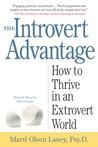
BOOK REVIEW: The Introvert Advantage by Marti Olsen Laney

The Introvert Advantage: How to Thrive in an Extrovert WorldThe Introvert Advantage: How to Thrive in an Extrovert World by Marti Olsen Laney

My rating: 4 of 5 stars

Amazon page

A number of books have come out about introversion in recent years. Most of these books seek to dispel common myths about being introverted, such as:

a.) Introverts can and should change teams to the extroverted
“light side” as soon as possible.

b.) There’s something psychologically wrong (re: neurotic or even psychotic) with being introverted.

c.) “Introverted” is synonymous with:

1.) Shy (i.e. having social anxiety disorder)
2.) Schizoid
3.) Anti-social
4.) Self-centered (in the pejorative sense–a more neutral meaning could be said to be true by definition.)

This isn’t to say that one can’t be both introverted and any of the above, but one can also be extroverted and any of the above (including, believe it or not, shy—i.e. it’s possible to be an extrovert with social anxiety disorder.)

Where Dr. Olsen Laney’s book tries to carve a niche is in teaching introverts how they can conduct their lives in an extrovert-centric world so as to maximize their effectiveness and minimize their exhaustion. One will note that her advice doesn’t advocate attempting to become extroverted. In fact, one of the most interesting and informative sections of the book is chapter 3, which explains the differences in brain chemistry that result in introversion or extroversion. While some of the conditions mistaken for introversion–such as shyness–can be overcome or trained away, introversion is hardwired into the brain.

The book’s ten chapters are organized into three parts. The first part explains just what defines an introvert, what traits commonly mistaken for introversion aren’t introversion, and the physiological roots of introversion. The second part consists of four chapters that delve into problems faced by introverts in four critical domains: relationships, parenting, socializing, and work. The final three chapters present the prescription for modifying one’s behavior to keep one’s energy up in the face of the demands of modern life. It’s really all about energy—how we use it and replenish it differently. The external world—most notably interaction with other people but also anything of a chaotic environment—drains the energy of introverts faster than that of extroverts.

As one reads through the book, there are many tips for mitigating the negative effects of common introvert characteristics seen as problematic in an extrovert’s world. It should be noted that some of these are genuine problems (i.e. how one metabolizes food) and others are a matter of perspective (i.e. lack of conviction v. open-mindedness.) These “problems” include: difficulty making quick decisions, difficulty with word retrieval, lack of investment in one’s own ideas (“wishy-washy” in extrovert lexicon, but arguably open-minded), tendency toward over-stimulation, lack of inclination to engage in [prolonged] eye contact, proclivity to metabolize food quickly with resultant blood sugar drops, proclivity towards sedentariness, and a tendency to fail to delegate work and reward job completion—if one happens to be the boss.

I found this book to be enlightening. There were many ideas I found myself agreeing with (e.g. using hobbies and activities as a means of controlled interaction.) There were only a few pieces of advice that I thought poor (i.e. picking a weekend day to lay in bed or on the couch all day—reading or otherwise.) While it may seem logical that movement would drain energy in contradiction of the goal of restoring energy, I find being sedentary beyond a certain number of hours to be a huge energy drainer and that periodic movement is necessary and restorative to keep my energy level robust. (And I’m about as introverted as one gets by the criteria established in the book, most of which apply to me.) Of course, there are variations among introverts–just as among extroverts—not only with respect to the degree of introversion but also with respect to specific characteristics experienced. (e.g. Some introverts may not find that all of the criteria in the preceding paragraph apply to them.)

I’d recommend this book not only for introverts, but for those who interact with introverts in key ways (e.g. familial relations, significant others, bosses, employees, etc.) Non-introverts may find some sections are more helpful and necessary than others, and may not find they need to read from cover to cover.

View all my reviews

BOOK REVIEW: Write the Fight Right by Alan Baxter

Write The Fight RightWrite The Fight Right by Alan Baxter

My rating: 3 of 5 stars

Amazon page

I was going to pan this for being the wrong book, but then I read through the blurb (and even the subtitle) and realized that it was largely my fault that I got the wrong book. Furthermore, I recognized that the information contained in this tiny e-book is good and that it’s packaged in a concise form. I, thus, concluded that this is the right book for someone—just not me nor many of you. I’ll, therefore, devote the bulk of this review to differentiating for whom the book will be beneficial and for whom it won’t. Because of the dearth of books on the topic I was interested in, I can imagine others erroneously purchasing this book and having (the albeit tiny) $2.50 worth of buyer’s remorse.

I purchased this book (and another one that returned on the search for “writing fight scenes”) because I’m rewriting a chapter in my novel in which fight scenes are prominent. I realized that there is a fine art to writing a good fight scene, and that I could use some help in being more effective at it. One needs fight scenes to have fast pacing and to be visceral. At the same time, one must avoid getting bogged down in detail even in the face of multiple attackers or unfamiliar and complex weaponry. This book won’t help you one iota in this regard, and, to be fair, it says in the blurb that the book will not help with one’s writing.

The book is about what it’s like to be in a fight and how to separate Hollywood myth and misconception from reality. As a long-time martial artist with both military and law enforcement training as well as an avid reader, there was nothing new or interesting in this book—though there wasn’t much I would disagree with either.

Three criteria for readership:
1.) You haven’t witnessed or experienced a fight (outside the choreography of the silver screen) since middle school. This book describes the experience and effects of fighting and what skilled fighters try to do in close-quarters combat. It aims to help writers purge theatrical nonsense from their fight scenes and inject some verisimilitude.

2.) Your fight scene is a standard 20th/21st century brawl. What is discussed is one-on-one fighting–unarmed or with weapons that one might see wielded today. One won’t gain insight useful in historical fiction, or anything that doesn’t echo today’s form of fighting.

3.) You don’t want to put a lot of time or effort into reading and / or researching the subject. The author does advise the reader to take martial arts or self-defense classes as a superior way to learn what he is trying to teach. What this book has going for it is that it’s only a 43 page (and a couple dollar) investment. If one is interested in getting a much deeper understanding of the topics covered, I would recommend a combination of Lt. Col. David Grossman’s On Killing in conjunction with any number of full-length martial arts books (I’m reading Bruce Lee’s Tao of Jeet Kune Do presently, and it’s certainly an excellent candidate.)

To summarize: this book is useful to teach one about realism in fight scenes, and not about structuring such scenes. There are only three examples (2 short and one long) in the book—none from what would be considered exemplary works. If you’ve taken a martial art or had military or law enforcement experience, there’s unlikely to be anything new or intriguing in this book. Even if you just watch MMA regularly and / or read about fighting or combat, there’s a good chance you won’t learn much.

However, if watch Crouching Tiger, Hidden Dragon or Rumble in the Bronx and say, “So that’s what a fight looks like,” you should definitely give this book a read.

View all my reviews

BOOK REVIEW: Vajramushti by Christopher Fernandes

Vajramushti; Martial Arts of IndiaVajramushti; Martial Arts of India by Christopher Fernandes

My rating: 3 of 5 stars

Amazon page

There aren’t many English language books on Indian martial arts, and most that do exist address a single style (most commonly Kalaripayattu.) Christopher Fernandes’s book, therefore, fills a void by providing an overview of martial arts on the subcontinent, and for the most part the book does an admirable job. I do have a couple of criticisms of the book that I’ll get into further down in the review.

The 350 pages of this book are arranged into 17 chapters, with the front and back matter of a scholarly work (i.e. in addition to an introduction and epilogue there are appendices and a bibliography.) The first few chapters set the historical background, and the last few chapters address topics that are related to—or interconnected with—the martial arts, e.g. pranayama (breathing), Ayurveda (traditional Indian medicine), dance, and games of martial relevance. Chapters 6 through 11 form the core of the book, and this is where one gets the book one expected. These core chapters are organized by region, and each gives an overview of one of India’s martial arts in great detail. The arts covered include: Thang ta (northeast), Gatka (author classifies as Central, but it’s commonly associated with the Sikhs [i.e. Punjab, in the Northwest]), Yudhkaushalya che Talim (Central), Silambam (south, Tamil Nadu), Kalaripayattu (south, Kerela), and Marma Adi (South). It’s not all-inclusive, but that might not be possible in a single volume. It does hit the major arts and covers a range of weapons and unarmed skills, and I suspect offers a fair representation of Indian martial arts past and present.

I have two major criticisms, and a third mild criticism. The first is purely technical and likely only applies to the Kindle edition (that’s the only edition I’ve seen), and you can probably guess my gripe. The formatting on the e-version of the book is poor. While this book isn’t as graphics-intensive as a typical martial arts book (i.e. there aren’t long sequences of technique photos) there are many graphics—and necessarily so. It would be hard to convey all the information in textual form for this type of book (e.g. consider the value of a picture of a complex weapon over a description.) What happens in Vajramusthi where the graphics are inserted is that the captions get kicked in among text. At least they italicized the captions so one can get used to this oddity, but it’s a bit hard on readability when one is reading along and there is a fractional caption randomly inserted mid-sentence. The photos also cause odd white space and very narrow columns here and there.

The second major criticism is that the book often forgets its theme. By that I mean that the author goes into far too much depth on topics that are tangential to the subject at hand and sometimes fails to indicate how the subject at hand is relevant. I’m not saying that historical background and discussions of breathing and Ayurveda shouldn’t be included, they are both quite pertinent, as are the other chapters that are more tangential. However, at one point the author provides a mini-herbal field guide that seems a bit too much information for those specific herbs, but, because it’s not an Ayurveda herbal field guide, he only covers a few. This creates a book that sometimes doesn’t seem to know what it wants to be or who its intended audience is. It’s most confusing in the early chapters that begin with the dawn of humanity. Obviously, the development of martial arts is inextricably tied into the rise of societies and states, but the author doesn’t consistently do a good job at connecting these dots so the book can maintain a consistent theme. I should point out that history buffs, dance enthusiasts, or physical education nerds may find the bonus material fascinating—and it is; it just belongs in different books. It does indicate that the author has done his research. While I’m a neophyte on the subjects covered, I believe that the quality of the information is quite good. (Although myth and fact are sometimes equated as with the discussion of Bodhidharma—a myth that many historians now believe false.)

The third criticism is classified minor both because it only comes into play in the epilogue and because if I was going to criticize every martial arts book author for this sin, I’d rarely have anything nice to say about a martial arts book. At the tail end of the book the author suggests that all the other martial arts of the world are just superficial competitive endeavors and only the Indian martial arts have depth that can lead to bettering oneself in a broad sense. This is a complete oversimplification, and especially odd for someone (like the author) who has apparently trained in other systems. (At one point there is a photo of Bruce Lee, captioned “Epitome of a Warrior,” and I can only assume from his commentary in the epilogue that the author is mocking the founder of Jeet Kune Do.) I do understand the passion that inflames the author’s sentiments, which is sadness that young Indians who study martial arts overwhelmingly look to the East—just as those in Europe and the Americas do. In Bangalore, where I live, there are two places that I know of that teach Indian arts (both Kalari) and at least eight places one can learn Muay Thai—not counting the fitness centers that have no one qualified to teach MT but do so anyway. Still, one need not take cheap shots at other martial arts in attempting to encourage people to study the indigenous arts.

While my review may come across as critical, there’s really not much wrong that a skilled editor and formatter couldn’t fix. (For example, one could get blitzed playing a drinking game whereby everyone takes a shot whenever they read the exact words “Vajramushti the classical Kshatriya Lion’s skill.”) The book’s virtues tend to outweigh its vices. If there were as many books out on the Indian martial arts as there are about those of China, Japan, or Korea, I don’t know that this one would get my recommendation in its present state, but there aren’t and so I do recommended it. It’s well-researched, contains useful graphics, and it provides insight into how the martial arts fit into the history, yogic science, and movement arts of India—if sometimes a bit too much insight.

View all my reviews

BOOK REVIEW: A Record of Cambodia by Zhou Daguan

A Record of Cambodia: The Land and Its PeopleA Record of Cambodia: The Land and Its People by Zhou Daguan

My rating: 4 of 5 stars

Amazon page

Traveling to an archaeological site as grand as Angkor, it’s natural to wonder what the city must have been like in its heyday. Angkor’s population was estimated to be as much as 1 million people, making it one of the world’s biggest urban centers in its day. One can get a feel for how vast and impressive Angkor was by way of the restorations, its artwork, and even the lay of its rubble fields. However, today’s Angkor is in large part a testament to the power of Mother Nature to swallow once proud temples and palaces with strangler figs and to shatter stout walls with white silk cotton trees. It’s hard to fathom what it was like when it was occupied by kings and concubines, slaves and shamans.

A Record of Cambodia offers a rare glimpse into life at Angkor at the tail end of the 13th century—near the city’s peak. It was written by Zhou Daguan, a Chinese diplomat sent by Yuan China [Mongolian era] as part of a delegation. Zhou spent almost a year at Angkor during 1296-1297. His report was translated into French during the 19th century, and all the English translations in existence had been based on the French not the original Chinese (i.e. twice translated.) This 2007 edition, however, was translated directly from Classical Chinese by Peter Harris.

The thin volume weighs in at only about 150 pages, but fewer than 40 pages are Zhou Daguan’s report. The other 110 pages include front matter, graphics, appendices, and notes. The Introduction, at 30 pages, is almost as long as Zhou’s document. However, this should not be taken as criticism. There’s a lot of useful expansion upon, and explication of, the information in Zhou’s report in both the Introduction and the end-notes. While it’s written by the translator, Peter Harris, it’s probably best to think of the Introduction as an Editor’s Introduction rather than a Translator’s Introduction–the latter creating an impression of a discussion of the minutiae of ancient grammars. (There is a little of that in a separate “Notes on the Translation.”) Harris’s introduction sets the background, elaborates on certain mistakes that Zhou seems to have made, and contrasts Zhou’s report with the accounts of other famous travelers such as Marco Polo, Ibn Buttata, and Xuanzang

Zhou’s report is divided into 40 chapters; though the word “chapter” seems more fitting for some than others, as many are no more than a single short paragraph. Each chapter is themed by some element of Khmeri life during the era. They include coverage of how people dressed, the nature of slavery at Angkor, what the buildings looked like in their glory days, sexual practices, agriculture, trade, local flora and fauna, and eating practices.

While short, Zhou’s book gives us a great deal of information that we wouldn’t have had otherwise. I learned a number of intriguing facts such as that fireworks displays were a regular event, runaway slaves had their faces tattooed blue, and the only ones not all allowed in Angkor Thom were those who were missing a toe(s) (removal of digits was a punishment back in the day.) Zhou has a great curiosity with the sexuality of the Khmeris, which was a great deal more liberal than that of China. Even the practice of toplessness among both men and women of all classes drew Zhou’s attention.

As when one reads the accounts of European explorers and adventurers, there’s a certain bigotry and conceit that comes across in Zhou’s writing—though it doesn’t come across as jarringly as in the works of, say, Francis Galton. Zhou does report on matters where the Khmeris looked down on Chinese practices as uncivilized (e.g. using human waste as fertilizer or using toilet paper / not reserving their right hand for sanitary endeavors.) On some cultural differences, Zhou comes across as mocking the Khmeri ways (e.g. communal bathing practices), and he goes as far as to refer to them as “Barbarians.”

If you’ve been to (or plan on going to) Angkor, I’d highly recommend giving this thin volume a read. It won’t take much time, and it’ll allow you to see the ruins in a new light.

View all my reviews

BOOK REVIEW: Regarding Ducks and Universes by Neve Maslakovic

Regarding Ducks and UniversesRegarding Ducks and Universes by Neve Maslakovic

My rating: 4 of 5 stars

Amazon page

As one might guess from the title, this is a lighthearted–dare I say whimsical–science fiction novel set around parallel universes. The light tone works to discourage one from being too much of a stickler about logical consistency and scientific validity. Parallel universes can raise almost as many troubling questions as time travel; but when the tone is comedic, it’s easy to set the these concerns aside and take it as a simple plot device. This isn’t to suggest that Maslakovic neglects the issues altogether. She is, after all, an engineer by training. Having the universes split a relatively short time in the past is likely an attempt to deal with the fact that the two universes are extremely similar, but recognizably different (a cliché among sci-fi parallel universes.) But she does avoid getting bogged down in the minutiae of consistency. There may be some happenings that leave one a bit befuddled, given there is obviously different decisions and behaviors occurring in the alternative universes, so events in one universe shouldn’t be a predictor of events in the other.

The backdrop is that a technical writer and aspiring novelist, Felix Sayers, finds out that he has an “alter.” In Sayer’s world, there are two San Franciscos. He is from what’s considered the original Universe, A, and there’s an alternative Universe B that one can cross over to if one is willing to follow a number of rules–mostly set in place to prohibit interacting with one’s alter. Everyone born before the schism of the two universes has an alternative version of themselves in the alternate universe unless that person has passed away. Like identical twins, “alters” look alike, but because of chains of different decisions and experiences, they may lead considerably different lives. Felix thought he was alter-less, but when he finds out about a discrepancy in his birthdate, he realizes he does.

Felix decides to go to Universe B, to spy on and possibly interrogate his alter—in contravention of the rules. Specifically, Felix of A wants to know if Felix B is working on a novel, and, if so, if the alter is ahead of him. He doesn’t want his to be relegated to writing the novel by “the other Felix Sayers.”

As the story progresses, the novel crosses genres again, adding a mystery component. When Felix crosses over, he draws much more attention than he wants or expects. This includes several failed (and sometimes comedic) attempts on his life. Felix immediately suspects one person, but it wouldn’t be much of a mystery if the initial suspect turned out to be the villain. Actually, it’s not much of a murder mystery because there are few characters who we can believe would be credibly wicked.

However, there’s still the mysterious question of whether Felix engaged in an activity that resulted in the split. Of course, there’s a scientist who creates the conditions in which the schism can happen, but Felix nonetheless worries whether he “caused” the split through some inadvertent act as an infant. This may not be so much a critique as it is insight into what makes the lead likable, if hapless. Incidentally, this is where the duck comes in.

If you like light sci-fi, this is a good read. It’s not side-splitting like Douglas Adams, but it’s laid back and has a dry sense of humor.

View all my reviews

BOOK REVIEW: The Novice by Thich Nhat Hanh

The Novice: A Story of True LoveThe Novice: A Story of True Love by Thích Nhất Hạnh

My rating: 5 of 5 stars

Amazon page

The Novice is the retelling of a Vietnamese folk tale about a young monk who is repeatedly wronged, but who always does the virtuous thing. As I read this book, I thought the story seemed familiar, and I realized that I read the same story as The Martyr by Ryūnosuke Akutagawa. Akutagawa does a much better job of story building. The Japanese writer doesn’t reveal to the reader that Lorenzo (his novice and the equivalent of Thich Nhat Hanh’s Kihn Tâm) is a female until the end—thus definitely resolving the claim that the young monk fathered a child out-of-wedlock and in contravention of vows f0r the reader at the same time as the characters in the story learn it.

Thich Nhat Hanh tells us that the novice is a female at the beginning, and he does so via backstory that serves both to give justification for why Kihn Tâm chooses to disguise herself and become a monk and to pile onto the injustice. We learn that Kihn Tâm’s female alter ego had been married, but the marriage ended with a false accusation of attempted murder of her husband. This backstory probably isn’t worth the drag for either of the aforementioned purposes—but the former is more justifiable than the latter.

What Thich Nhat Hanh lacks in gripping narrative structure, he gains in provoking thought. The Zen monk and poet gives the reader insight into how Kinh Tâm manages to be preternaturally virtuous. In The Martyr this is a black box affair. Hanh also encourages the reader to see Kihn Tâm’s accusers as the novice does, i.e. with compassion. Akutagawa does what any writer would do; he vilifies the accusers so as to make the story resonate with the average, petty, martyr-complex prone reader—as opposed to the enlightenment-aspiring reader. Hanh leaves the other monks in Kinh Tâm’s corner, i.e. when everyone else is condemning the novice, they still believe in her. In Akutagawa’s story, monastics are not inherently so perfect.

The book offers some interesting back matter. The most substantial of the appendices is an account by Sister Chan Khong of the works of Thich Nhat Hanh and his followers both during the war and afterword when they tried to establish a monastery in Communist Vietnam. The essay echoes the themes of loving-kindness and compassion that form the core of the novella, as does the essay by Hanh that brings the book to a conclusion. While this back matter is filler to make up for the fact that the story is not novel length, it nevertheless makes for interesting reading.

I’d recommend this book for those with an interested in Zen. If you’re looking for a good story, read Akutagawa’s The Martyr, but if you want to be inspired to compassion, read Thich Nhat Hanh.

View all my reviews

A Few Thoughts on Writing Book Reviews

UlyssesOne gets an entirely different perspective on reading and writing when one starts doing book reviews. One finds that many of works that have been capturing one’s attention are, in fact, crap in one or more dimensions.


I think about books along five dimensions. I’d like to claim that I synch these five dimensions to the five-star rating system that I inherited from GoodReads, but I don’t. How I rate the book is more subjective than that, though the five dimensions are roughly the basis of my scoring. One will note that most all of my ratings are three through five. This may make it seem like I’m a softy, but it’s because I review what I want to read. By passing the twin threshold of having been started and having been finished, the books I review have generally shown themselves to have some merit in my eyes. I’ve occasionally given a lower rating to a book that was intriguingly bad or deliciously bad—or because it seemed good until the ending was botched. Just know that if someone else were picking my books, my rating distribution would be much more bell-shaped.


So, back to the five dimensions:

1.)    Language: For a book to get a five-star score, it’s usually got to impress me with its use of language. Note that I didn’t say “dazzle” me. Authors that try to “dazzle” are as likely to get points deducted for lack of readability. Not that I don’t agree with what Neil Gaiman said, “…, if one is writing novels today, concentrating on the beauty of the prose is right up there with concentrating on your semi-colons, for wasted effort.”  Still, I like to find something that intrigues in the use of language. It’s as likely to be successful use of sparseness as it is colorfulness. And, if you’re going to thwart convention, do it artfully and thoughtfully. Incidentally, it’s not just fiction in which I’m looking for creative and intriguing use of language, but it’s more likely to be pursued in that domain.

2.)    Organization: In fiction this might be a narrative arc that builds and maintains tension. In nonfiction, it can be narrative, but more likely it’s just a logical arrangement so that the information is easily consumed.

3.)    Readability: This is related to the previous items, but it’s not identical to either of them. It’s also hard to define readability except to say that it’s as easy to read and comprehend as it can be and still get the message across. Obviously, some works have a more difficult message to get across, and some works have to be purposefully vague in places. I also grade on a curve or older literature which might be needlessly purple, but right for its time. However, writing is always and everywhere and act of communication and, therefore, the clearer one can be the better. If I can read through once and not have to go back to figure out what’s going on because of what seem like conflicts, I’m usually pleased.

4.)    Uniqueness: Sure, there’s nothing new under the sun, but if you’re the four millionth teenage vampire novel, good luck getting my attention. That’s not to say that any hackneyed-looking concept can’t be done up with new and interesting specifics. Unless you have a James Patterson-like sweatshop of writers in your basement, you’re not going to catch the latest fad while it’s still a fad so give it and think creatively. It’s like they say about taxi drivers and stock market advice. You know when to sell a stock when a taxi driver gives one a hot tip to buy it.

5.)    Thought-provocation: This is simply, does the book offer food for thought. This applies not only to nonfiction works that are trying to inform. A novel, too, is hard pressed to get a five-star rating unless it makes me go “huh” about something.


It’s worth pointing out that I use GoodReads as my platform for building reviews. I use it because it’s very simple. One drops the review into a box and, when one publishes it, the cover photo and hyperlinked title and author are right there without ever having to mess with finding a photo of the book jacket or deal with building links. They also have a quick-study guide to the html code one may need for font manipulation and so forth. I do write the reviews in Microsoft Word and paste them into the GoodReads form because I’ve been twice bitten with accidently pushing some random combination of buttons that irrevocably deletes my post—inevitably as I’m putting the final edits on it.