



Taken in April of 2017 in the Mawphlang Sacred Forest


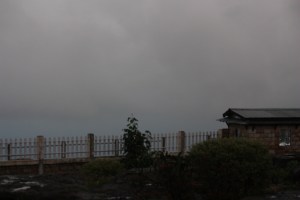
Land ends in a wall of fog.
If you were told it was the
end of the universe, you
could not prove otherwise.
It glides up to the cliffside.
Stealing sight. Silent theft.
Ears ring. Seeking sounds.
Mind searches sensation.
Senses wet cotton dulled.
Solitude sweeps over one.
What would happen if one
stuck one’s arm inside the
fog? Would it expand into
infinity? Or disintegrate
into a lawless zone free of
mathematical certainty?

Taken in the summer of 2015 in Kullu District of Himachal Pradesh

No matter what style of meditation you practice, you’ve probably heard the following refrain: “And if you find your mind wandering, non-judgmentally make a note of where your mind went, and let that thought drift away as you return your awareness to __________.”
I’ve certainly heard many takes on that teaching, and had plenty of opportunity to implement that advice. In the process, I’ve noted that the places my mind wanders can be classified into several categories.
5.) The Planner: Our conscious mind is first and foremost about answering the question, “What’s the worst that can happen, and how can I make that worst case less bad?” The mind wants to anticipate undesirable events and either make an end run around them or figure out a way to make them less troubling. The Planner wants to rehearse everything from making dinner to being interviewed for a job to having a dreaded conversation.
4.) The Entertainer: This is the mind that sticks songs in your head and replays clips of movies.
3.) The Walter Mitty / The Bolsterer: This is the daydream mind which cooks up scenarios in which you are the hero.
2.) The Subconscious Image Generator: In a relaxed state in which the conscious mind is quieted, one may find oneself seeing images that probably don’t make a lick of sense. The pictures may come and go in a way that make them hard to maintain even a glimpse of. This is the same kind of imagery that one experiences in the hypnagogic state–as one is drifting towards sleep.
1.) The Critic: Saving the most despicable for last; this is your inner critic. The one who thinks that you won’t succeed at any given task.
 Perv: The Sexual Deviant in All of Us by Jesse Bering
My rating: 4 of 5 stars
“Perv” is an examination of human sexuality outside the norm. As one might expect from the back blurb mention of a woman who was aroused by the Eiffel Tower, the book provides many a revelatory “things-that-make-one-go-HUH?” moment. The author’s humor–and willingness to offer cringe-worthy personal confessions–makes the book all the more readable. (e.g. As an example of the author’s humor: “As an adolescent male, you’re basically an ambulant sperm factory with an incompetent foreman…”) The book is in the vein of Mary Roach’s “Bonk” (something about sexuality triggers the urge to go monosyllabic), but Bering carves out his niche in deviant territory, while Roach’s book provides a more balanced look at the subject (although both books exploit anomalies to make for interesting reading.)
There are two ways in which this book wasn’t the one I expected, one of which is entirely my fault for reading too much into some words in the book blurb while ignoring others. I think the author and/or publisher must take some responsibility for the other as the subtitle itself leads one to expect a different emphasis in the book beyond the first chapter. First, I expected more insight into why people engage in these behaviors. Are there explanations rooted in our evolution? Does a given act result from some cross-wiring in the brain? There’s a cursory mention of science in the book’s description which led me to expect it to go much further beyond a cataloging of anomalous sexual behavior. To be fair, the author does back load an interesting discussion on the role of theory of the mind into the last chapter and there is some of this discussion throughout. However, the book spends much more time on history and semantics than I expected. Semantics sounds boring, but there are some fascinating insights into how words came to be used, and how usages have changed over time. (Also, the reader may be surprised at the huge vocabulary of “-philias” [objects of love / attraction] that’s not unlike the more well-known one for “-phobias” [fears.])
The second way this wasn’t the book I expected was that—owing to the subtitle “the sexual deviant in all of us”—I expected much more discussion of widespread but unconventional sexual proclivities (e.g. exhibitionism, voyeurism, dominance / submission, role-play.) Instead, Bering spends a lot of time discussing rare fetishes for materials, animals, objects, etc, and also extremely high-profile (but also rare) proclivities such as pedophilia and vovarephilia (cannibalistic arousal.) One can see the appeal from the book selling perspective. Said emphasis provides a lot of WTF and giggle-inducing moments to keep up the reader’s interest. However, if you’re expecting drilling down into [no double entendre intended] why people engage in these activities, mostly you’ll get playful variants on “the heart wants what the heart wants” and not so much insight into whether there are unseen Darwinian mechanisms at work or whether there’s some synaptic cross-wiring. I doubt this is a conscious attempt to avoid dealing with the un-PC ramifications of finding some deviant behaviors to be explicable in terms of brains that are operating within expected parameters while others may only be explained in terms of something not working as usual. I doubt this because Bering seems quite willing to take the book in uncomfortable directions. I’m not certain that there’s not an unconscious bias away from considering the “why” questions because it risks putting one in the cross-hairs even if one reports in an objective and non-judgmental way. (Perhaps there’s a lack of scientific findings to report for the same reason.)
Still, while I didn’t get the book that I expected, there were some surprising bonuses to weigh into the mix. Bering provides interesting food-for-thought on a few topics. One of these is what he calls the “naturalistic fallacy,” which is the idea that whether an activity can be considered acceptable depends upon whether one sees it elsewhere in nature (i.e. besides humanity.) This has been used over the years to divide acceptable from unacceptable “perversions”—often by people who had little to no idea what activities are or aren’t seen across the animal kingdom. (We do, after all, see monkeys literally throwing their poop.) Another challenging area of consideration is whether society’s extreme distaste for pedophilia leads us to write laws that actually exacerbate child abuse and exploitation (e.g. completely CGI [computer generated imagery] pornographic material is illegal, and—according to the author—there is reason to believe that–were it not—exploitation of children would decline.)
The book consists of seven chapters. An introductory chapter sets up the idea of sexual deviance and its changing definitions. Chapter 2 is about the many ways in which people manage to overcome their instincts toward disgust in order to engage in sexual activities. Chapter 3 looks at various forms of hypersexuality (e.g. nymphomania) and the changing definitions over time—and the biases contained therein (i.e. it was once thought to be a condition only females could experience.) Chapter 4 considers various paraphilias—i.e. unconventional sources of arousal. Chapter 5 deals with the subjective experience of many of these sexual behaviors and how that brushes up against societal norms. Chapter 6 delves into the topic of age and attraction discussing pedophilia, hebephilia, ephebophilia, teleiophilia, and gerontophilia. Of these, the vast majority of people are teleiophilics (attracted to full-grown adults) with hebephilic and ephebophilic tendencies not being uncommon (i.e. attraction to pubescent or post-pubescent youths.) Much of the discussion is about pedophilia and the legal entanglement of pedophilia and ephebophilia. Chapter 7 delves into the science and psychology in a way that I wished the rest of the book had.
There are no graphics in the book. It does have both chapter end-notes and bibliographic notes (the former being more foot-note like elaborations and the latter being mostly sources.)
I found this book interesting. It was more historical and semantic (dealing in the terminology of deviant sexuality and its changing nature over time) and less scientific and psychological than I expected, but it was still loaded with interesting information and insights. I’d recommend this book with the provisos mentioned, i.e. that it might not be the book you expect and may deal much more in rare proclivities than one expects.
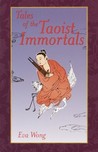 Tales of the Taoist Immortals by Eva Wong
My rating: 3 of 5 stars
This book tells of the key events in the lives of forty Taoist immortals. While the title (specifically the word “tales”) might lead one to think that this is a book of stories, it is only so in the most general sense of the word “story.” Satisfying stories show a character confronted by barriers to obtaining some desired goal. That isn’t the case in the overwhelming majority of the “tales” in this book, and the few in which the individual is confronted with a challenge she usually uses her superpowers to magic the problem away. (To be fair, Taoist sages aren’t known for being ambitious and thus have few goals to chase after. There are more examples of individuals turning down high offices in these character sketches than there are characters attempting to obtain some objective.)
If you are looking to learn more about key figures in Chinese history and mythology, this book will serve your purpose through brief (2-3 page) character sketches that hit the highlights. However, if you are looking for something like the “Book of Chuang Tzu” with clever morality tales, that’s not at all what you’ll find in this book. There are a couple of exceptions, but they are rare nuggets.
Each of the 40 chapters provides one character sketch of life events with a brief bio at the end. The 40 chapters are divided into five parts by the class of individual being mentioned (i.e. the eight immortals, sages, magicians, diviners, and alchemists.) There is a line drawing (reminiscent of block print) for each of the chapters that depicts the immortal in action. The only ancillary matter is a brief introduction.
As I suggested, if one is looking for information about the lives of Taoist immortals, one may find this to be a good source—particularly if one doesn’t want to get bogged down in minutiae. The entire book is less than 200 pages. On the other hand, if one is looking for stories or morality tales, one will likely find this book leaves one wanting.