
Taken in November of 2015 at Amer Fort, Jaipur

Taken in November of 2015 at Amer Fort, Jaipur

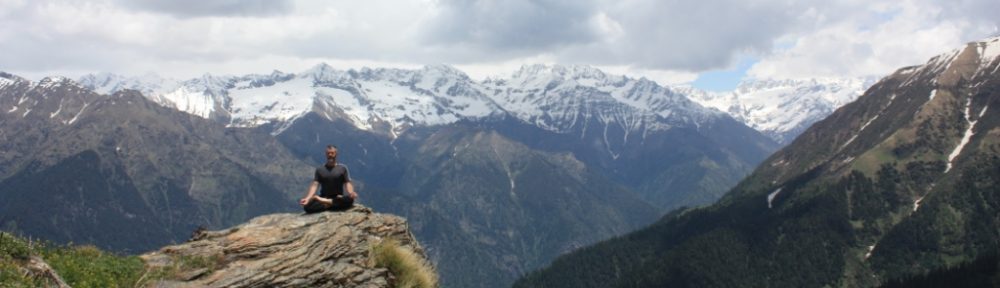
Taken in June of 2015 in Great Himalaya National Park
 Bonk: The Curious Coupling of Science and Sex by Mary Roach
My rating: 5 of 5 stars
Mary Roach specializes in nonfiction on quirky topics that offer plenty of opportunities for humor – if of an uncomfortable variety of humor. Few topics hit those marks better than sex, especially when it is juxtaposed with science. Sex has a long history of being on the fringes of scientific study because the value judgments society applies to the topic makes it hard to attract both scientists and subjects, and when neither are lacking there is the matter of convincing agencies and institutions to fund one’s work. On the other hand, there is both demand for better information about sex and a great deal of potential for earnings to be gained by making both the experience and result of sex better or more reliable (more or less fertility as is desired.) All this has led to sex and science becoming strange bedfellows — that have sometimes let in pseudo-science for an awkward threesome.
Roach presents a wide variety of studies from famous early scholars like Kinsey and Masters & Johnson to obscure present-day scientists like the Egyptian researcher who has to find prostitutes to have intercourse with inflated condoms in order to study nerve reflexes in the female nether regions. Sometimes, the research involves animals, as in the case of researchers trying to determine whether the female orgasm draws semen up further toward the Fallopian tubes by studying pigs, or studies of mating rituals of monkeys and how they compare and contrast to those of humans. Though most often the studies are human-centric and ask questions such as: why do a few women orgasm with excessive (and, unfortunately, embarrassing) ease, while too many others have difficulty achieving that result at all? And, why aren’t sex toys better designed to achieve their objective?
I give Roach bonus points on a couple of grounds. First, there is the plentiful combination of humor and fun facts that make the book extremely readable. Second, Roach takes some personal risk when, for example, taking part in an imaging study with her husband that involved intimacy in an MRI. That is not even to mention the many things she must have seen that she can never unsee on her global tour that took her to places like Taiwan and Egypt as well as to conventions and research parks across the US.
It should be pointed out that there are important and serious topics being addressed by the science in the book, issues like: erectile dysfunction, sexual dissatisfaction (and its adverse effects upon relationships), and fertility difficulties. So, it’s not all jokes and quirky facts. Solutions to problems (surgical, pharmaceutical, and even psychological) are discussed, though there is a lot of basic science to consider as well. (For the less scientifically oriented, basic science is that which doesn’t have a specific objective, but is rather to enhance understanding so that further down the road economically and practically viable solutions can be achieved. The lack of specific objective means this type of science can be particularly tricky to get funded. It also makes for some of the more amusing anecdotes because – unlike painful issues of persistent genital arousal disorder or erectile dysfunction – its easier to form jokes about penis cameras and romancing a sow.)
The book consists of fifteen chapters. As is common in Roach’s book, there’s not an obvious organizational schema – except the first chapter which is a bit more general and the last which answers the old question, “who has more fun, and why?” [except the answer isn’t “blondes or redheads” but rather heterosexual or homosexual couples.] That said, there is a grouping of male genitalia (ch. 6-8) versus female genitalia (ch. 9-12) studies. There are some photos (not particularly graphic) as well as endnotes and references.
I found this book to be fascinating and highly readable, and would recommend it for anyone with an interest in anatomy and physiology, or in sex for that matter.
 The Tempest by William Shakespeare
My rating: 5 of 5 stars
The storm (i.e. tempest) in question takes place off a remote, desolate, and magical island upon which lives the usurped and exiled Duke of Milan, Prospero, and his daughter, Miranda. The reader realizes that the storm’s timing is too great a coincidence when it’s revealed that among those on a ship caught in the tempest is Antonio, the usurping Duke of Milan. The learned Prospero has developed some magic abilities and gained control over some of the island’s airy spirits — most notably Ariel — as well as the deformed monster / slave named Caliban. Caliban was the son of a witch who was previously in charge of the island, Sycorax. Under Sycorax’s rule, Ariel and the other spirits were imprisoned, so Ariel and the others are now in indentured servitude to Prospero.
The brilliant mind of Prospero has hatched a plot that isn’t all vengeance, but also intends to get his daughter a worthy husband in the form of Ferdinand, the son of the King of Naples. Both father (Alonso) and son (Ferdinand) are washed ashore after the apparent capsize of the ship, but Prospero sees to it that they are separated. The separation not only allows Ferdinand and Miranda to get acquainted, but also allows Alonso to be put through some trials to hasten his willingness to agree to the intended marriage. As Prospero is using Ariel to carry out his plot, under promise that he will free her, Caliban has joined with some drunken sailors and is plotting to kill Prospero so that he can be free of his bookish master. Needless to say, the crude scheme by the trio of Caliban, Stephano, and Trinculo is easily thwarted by Prospero and his spirit minions.
In the song, “Won’t Get Fooled Again” by The Who, there’re lines that say: “meet the old boss / same as the new boss.” This play focuses heavily on ideas of hostile take over, the inevitable mixed effects, and how tensions are created that will play out. Ariel has at least the promise of being better off — when she works off her debt to Prospero, that is. Caliban is worse off because he is no longer in the power lineage. Caliban’s partners in plotting see a chance to go from being minions aboard a ship to kings of a tiny dynasty on the island. There is also the theme of relinquishing power, and the difficulty of doing so.
Some fun facts about “The Tempest.” First, it’s believed to be Shakespeare’s last play (although evidence is insufficient for certainty.) Second, while Shakespeare’s plays are typically readily divided into three categories: tragedies, comedies, and histories, scholars are a bit divided about which category this play belongs. It’s sometimes categorized as a “tragicomedy” because of its mixed features.
With the storm-washed, rocky island as setting, and the supernatural happenings on the island, this is one of Shakespeare’s eeriest and most mind-bending works.
 Psychotherapy: A Very Short Introduction by Tom Burns
My rating: 4 of 5 stars
The word “psychotherapy” conjures images of a patient on a burgundy recamier-style couch, a psychoanalyst in a matching stuffed armchair, neither one looking at the other as the analyst uses terse questions and monosyllabic acknowledgements to coax out the patient’s problems through interrogation about his or her childhood. While that approach, Freudian psychoanalysis, stubbornly maintains a following, there have blossomed many other varieties of therapy using talk as a tool to ease maladies of the mind. This “Very Short Introduction,” put out by Oxford University Press as part of a large and diverse series with the same subtitle, presents an overview of the various approaches to psychotherapy and its less formal cousin, counselling.
The book consists of eight chapters, and begins with a preface. The preface covers various and sundry topics useful for the reader, but most importantly it takes a step back from psychotherapy to situate this therapeutic approach in a context of psychology and psychiatry, which are subjects often confused in the popular mindset.
Chapter one continues with the basics by defining psychotherapy and offering a thumbnail of the various approaches that will be expanded upon throughout the book. The second chapter pays homage to Freud and his psychoanalytic approach. The authors maintain a diplomatic approach to psychoanalysis though it has fallen on hard times for a number of reasons, both practical (e.g. it’s a huge drain on time, often involving five hours a week for months or even years) and theoretical (e.g. it places a great deal of emphasis on the past, whereas many currently popular approaches favor the present as the relevant time.)
Chapter three explores a number of post-Freudian psychotherapists including Jung, Adler, and Erik Erikson. Chapter four moves on to what is called “Time-Limited Therapy.” As suggested in the preceding paragraph, psychoanalysis placed huge demands on a patient’s [and therapist’s] time and could go on and on with no end in sight. Time-limited therapies focused more on finding a present-day solution for the current problem, and not so much ceaselessly trolling one’s distant past for traumas.
Chapter five is about counselling, which is very much related to psychotherapy in that it involves getting a person to talk out his or her problems. The difference is that it needn’t necessarily involve a therapist with extensive training, but rather someone briefed and / or sensitive enough to know how not to become sidetracked into dangerous territory. Chapter six discusses cognitive behavioral therapy, its principles, and its variations (such as Mindfulness-Based Cognitive Therapy [MBCT], which combines elements of Buddhist mindfulness with the cognitive behavioral therapy approach to form a popular and successful therapeutic approach.) Cognitive behavioral therapy is rooted in the premise that distorted thoughts cause emotional and behavioral problems, and that one must address the thought to change the outcome. It also famously requires “homework” to be done between sessions rather than the work being contained within sessions.
Chapter seven moves away from the one-on-one therapy discussed so far, and investigates the various ways in which therapy can be carried out in groups. Groups can be beneficial because they allow the patient to see that they aren’t unique in their woes, which people often believe themselves to be. Family therapy is also discussed as it all allows family members to chip away at their problems as a familial unit. Also, there are numerous interactive forms of therapy in which patients might use various art forms to work out their problems.
The last chapter looks at where psychotherapy stands, and where it appears to be going. One of the important considerations discussed is the influence the advance of neuroscience is having on therapy. For few decades since the famous decade of the brain (i.e. the 90’s,) neuroscience has dominated the discussion of the realm of the mind. There has been less-and-less thinking in psychological terms and more and more in physiological terms. However, there still seems to be a widespread belief that solutions need to combine a recognition of both areas.
Like other books in the series, this one employs a variety of graphics (cartoon, photographic, and diagrammatic), and it also presents brief references and further reading sections to help the reader continue his or her study through other works.
This book offers a solid overview of the various approaches to psychotherapy. I would recommend it for neophytes who need to start with a concise outline of the field.

Taken in May of 2018 at the Tibetan Village near Pokhara

Taken in May of 2018 in Lalitpur (Patan)

faces glow in mythic moonlight
a world away from here
you may ask what makes it mythic?
the stories that one hears
a young son regales his mother,
who hangs on every word,
with a tale of lunchtime mayhem
and food covertly hurled
two lovers chat about a dream
that one of them just had
about a few stolen moments,
in an alien crash pad
and an old man tells a young one,
he’s not afraid to die
how he left his fear in a field
with a piece of his thigh
so many people share one moon
focal point of their stares
souls unload a bit of burden
from the heft of their cares

Taken in September of 2011 in Stone Mountain Park


