Unknown's avatar

About B Gourley

Bernie Gourley is a writer living in Bangalore, India. His poetry collection, Poems of the Introverted Yogi is now available on Amazon. He teaches yoga, with a specialization in pranayama, and holds a RYT500 certification. For most of his adult life, he practiced martial arts, including: Kobudo, Muay Thai, Kalaripayattu, and Taiji. He is a world traveler, having visited more than 40 countries around the globe.

Rhapsody on a Windy Night by T.S. Eliot [w/ Audio]

Twelve o'clock.
Along the reaches of the street
Held in a lunar synthesis,
Whispering lunar incantations
Dissolve the floors of memory
And all its clear relations,
Its divisions and precisions,
Every street lamp that I pass
Beats like a fatalistic drum,
And through the spaces of the dark
Midnight shakes the memory
As a madman shakes a dead geranium.

Half-past one,
The street lamp sputtered,
The street lamp muttered,
The street lamp said, 'Regard that woman
Who hesitates towards you in the light of the door
Which opens on her like a grin.
You see the border of her dress
Is torn and stained with sand,
And you see the corner of her eye
Twists like a crooked pin.'

The memory throws up high and dry
A crowd of twisted things;
A twisted branch upon the beach
Eaten smooth, and polished
As if the world gave up
The secret of its skeleton,
Stiff and white.
A broken spring in a factory yard,
Rust that clings to the form that the strength has left
Hard and curled and ready to snap.

Half-past two,
The street lamp said,
'Remark the cat which flattens itself in the gutter,
Slips out its tongue
And devours a morsel of rancid butter.'
So the hand of a child, automatic,
Slipped out and pocketed a toy that was running along the quay.
I could see nothing behind that child's eye.
I have seen eyes in the street
Trying to peer through lighted shutters,
And a crab one afternoon in a pool,
An old crab with barnacles on his back,
Gripped the end of a stick which I held him.

Half-past three,
The lamp sputtered,
The lamp muttered in the dark.
The lamp hummed:
'Regard the moon,
La lune ne garde aucune rancune,
She winks a feeble eye,
She smiles into corners.
She smoothes the hair of the grass.
The moon has lost her memory.
A washed-out smallpox cracks her face,
Her hand twists a paper rose,
That smells of dust and old Cologne,
She is alone
With all the old nocturnal smells
That cross and cross across her brain.'
The reminiscence comes
Of sunless dry geraniums
And dust in crevices,
Smells of chestnuts in the streets,
And female smells in shuttered rooms,
And cigarettes in corridors
And cocktail smells in bars.

The lamp said,
'Four o'clock,
Here is the number on the door.
Memory!
You have the key,
The little lamp spreads a ring on the stair;
Mount.
The bed is open; the tooth-brush hangs on the wall,
Put your shoes at the door, sleep, prepare for life.'

The last twist of the knife.

PROMPT: Wild Animals

Daily writing prompt
Do you ever see wild animals?

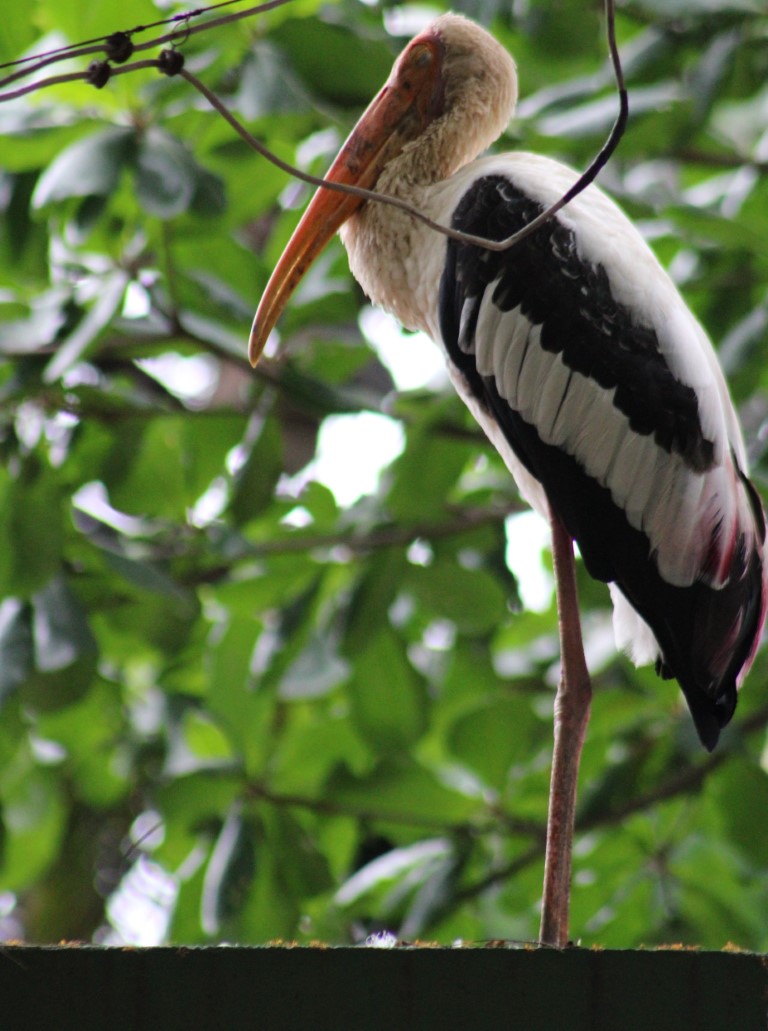
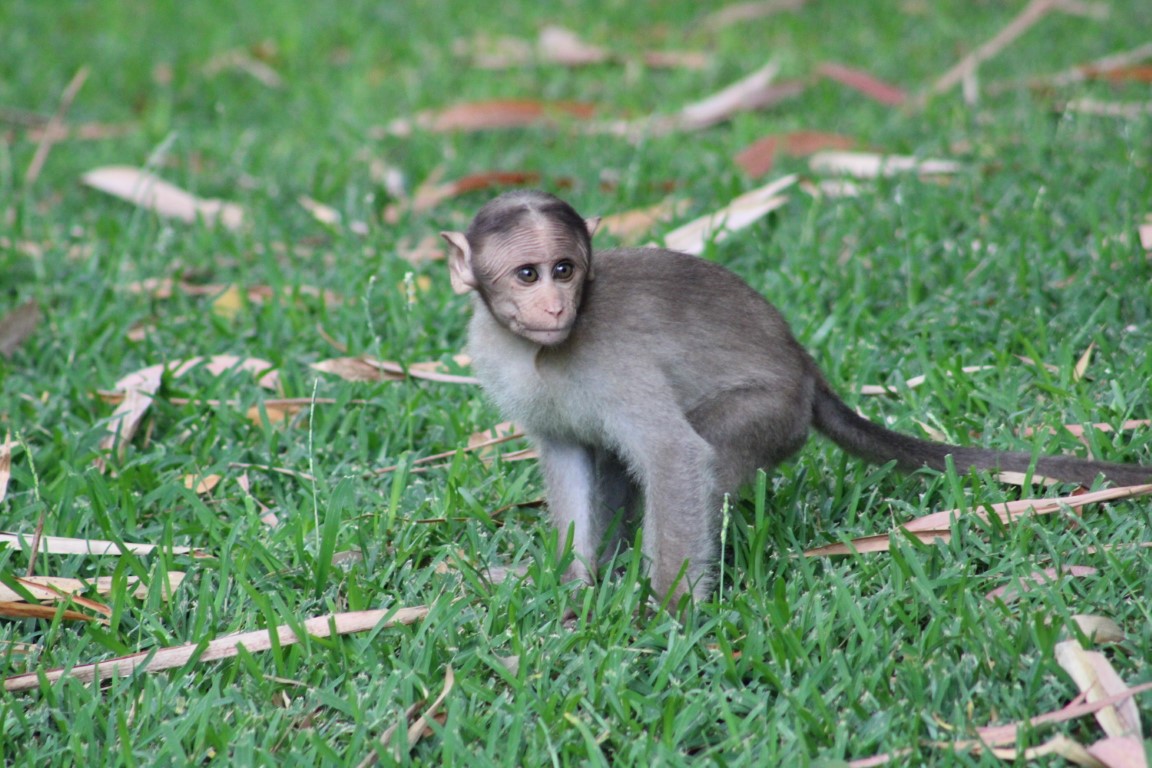
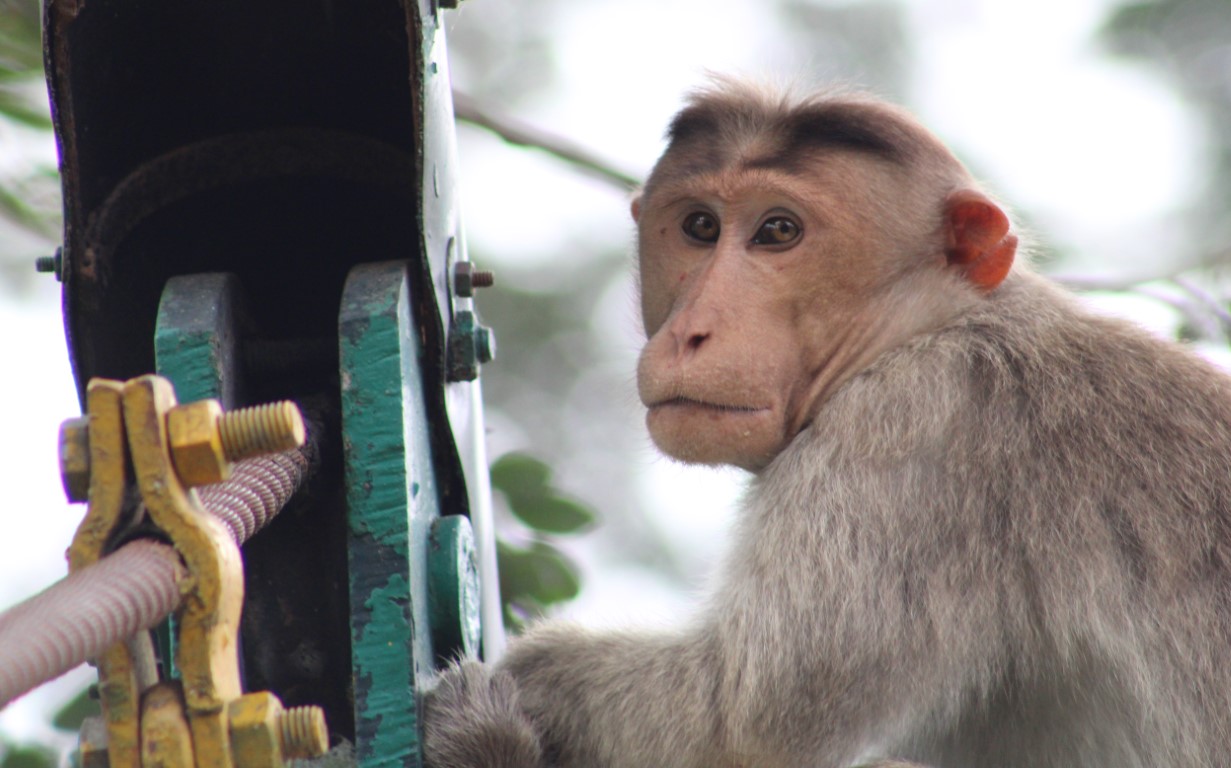
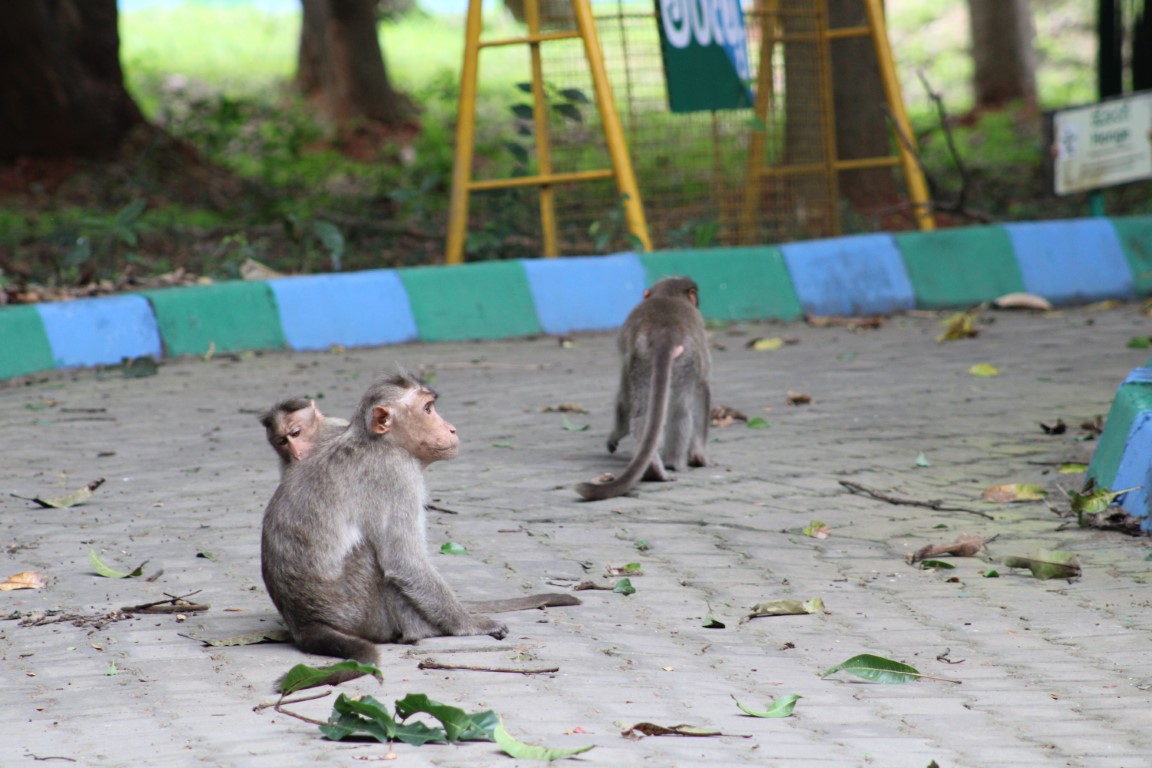
Yes, frequently. Even in the city where I live, Bangalore, I see black kites, herons, and egrets on a daily basis, as well as the occasional monkey (macaque.) [Notably, Bangalore — like Mumbai — has had issues with Leopards in the city, but I’ve never seen them.] But when I travel to wilderness areas, there’s lots of wildlife to be seen. A couple weeks ago I visited Ranganathittu Sanctuary and saw marsh crocodiles, macaques, pelicans, and painted storks. In India, I’ve seen rhino, wild elephant, mongoose, cobra, and many other creatures. In Africa, I’ve seen most of the big ones (lion, elephant, hippo, giraffe, zebra, cape buffalo, etc.)

I was just learning from the wildlife in the park this morning as I watched chipmunks scurry around in a circle of ravens, and that kind of surprised me that the chipmunks didn’t seem phased. I see ravens eating bigger rodents (city rats are about the size of housecats,) but they made no moves on the chipmunks. Maybe chipmunks have stronger kung fu, or maybe they just don’t have enough meat on the bones. I don’t know.

A bird… and if you look closely, you’ll see an elephant under it.

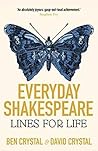
BOOKS: Everyday Shakespeare by Ben & David Crystal

Everyday Shakespeare: Lines for LifeEveryday Shakespeare: Lines for Life by Ben Crystal
My rating: 4 of 5 stars

Amazon.in Page

This is like a word-a-day calendar, but with a quotation from Shakespeare for each day (rather than a vocabulary word.) Also, each quote has accompanying text that explains what the quote is from, what it means, why the language says what it does, and the context in which an individual might use Shakespeare’s words today. [Note: while that last bit (i.e. how to employ the Bard’s words today) is a major theme of the book, I wouldn’t recommend it. It will make one look more like a pretentious nincompoop than like a clever wordsmith.] That said, the book still has great value for anyone interested in Shakespeare’s work, specifically, or the evolution of the English language, more generally. In dealing with many phrases that describe workaday activities that were common then as now, the book builds a niche different from books that deal in the grandiose phraseology of war and aristocratic life.

Many people struggle with Shakespeare, and this book helps make clear why some of the statements that were about mundane matters had the meaning they did. I would put people’s difficulties with Shakespeare into three buckets. First, poetic and non-colloquial language in which the reader knows all the words and their meanings, but the poetic / stylistic language and grammar throws them for a loop. This book shouldn’t really need to deal with this one, but it does a little bit. Second, evolutionary language drift, in this case the reader knows the words but is thrown off because they don’t mean what they once did. The book is quite helpful in clarifying these changes. Third, the revolutionary shifts, these involve words and phrases wholly unfamiliar to the reader because they deal in activities and perspectives not present in our daily lives. The book explains these changes, as well, but there aren’t a great deal of them because the selections are supposed to be applicable today.

The book draws from the entire Shakespeare canon, but more heavily from the plays than from the sonnets or long form poems. (Also, not surprisingly, it draws more heavily from the popular plays — i.e. many of the tragedies and the popular comedies — than it does from the more obscure plays (i.e. most histories and a few of the others.) This only makes sense, and I was happy to see references to sonnets, histories, and other Shakespearean poems at all.

All in all, this is an informative book and is recommended for those who are interested in getting into Shakespeare, or who are intrigued by the ever-shifting landscape of the English language.

View all my reviews

Painted Stork [Haiku]

a painted stork
stands so still on one leg,
passers think it fake.

PROMPT: Favorite Place

Daily writing prompt
Do you have a favorite place you have visited? Where is it?

No. I try to see wherever I’m at as being as good as any other place I’ve been. And, of course, it is — only my perceptions change and can drive value judgements. The places and the peoples are just different. If one starts ranking and rating places, one can kill the ability to see what is beautiful and spectacular about a particular place. If a place didn’t have redeeming features, people wouldn’t live there. And, by the way, if people don’t live there, that’s probably my favorite place on earth.

DAILY PHOTO: Macaques at Ranganathittu

Life by Paul Laurence Dunbar [w/ Audio]

A crust of bread and a corner to sleep in,
A minute to smile and an hour to weep in,
A pint of joy and a peck of trouble,
And never a laugh but the moans come double;
And that is life!

A crust and a corner that love makes precious,
With a smile to warm and the tears to refresh us;
And joy seems sweeter when cares come after,
And a moan is the finest of foils for laughter;
And that is life!

Gravitational Exploitation [Haiku]

the stream carries sand,
dropping it in a broad pool,
clueless of its work.

Crouching Tiger [Free Verse]

In a square hut -
beside a craggy pass -
lived a Crouching Tiger,
a man of spontaneity
who danced to no music,
staggered when sober,
rested in times of urgency,
& labored when there seemed
to be nothing in need of doing.

He was courted by Emperors,
but shunned them.
The only way the Emperor
could get him to visit was
to order his exile.

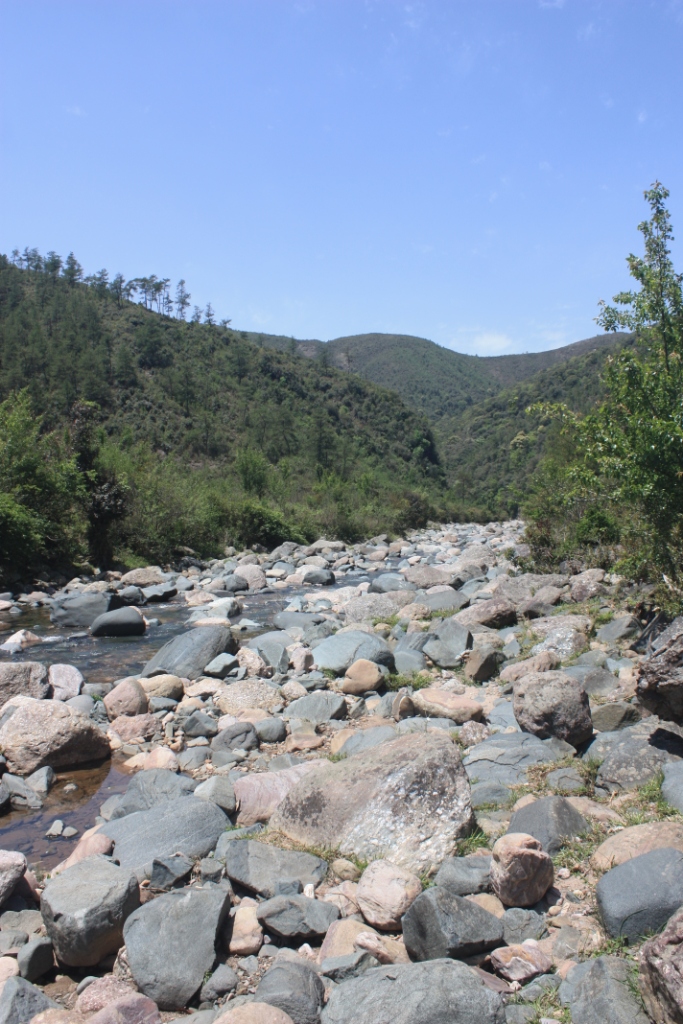
DAILY PHOTO: Rocky Riverbed, David Scott Trail

Image