When I heard the learn'd astronomer,
When the proofs, the figures, were ranged in columns before me,
When I was shown the charts and diagrams, to add, divide, and measure them,
When I sitting heard the astronomer where he lectured with much applause in the lecture-room,
How soon unaccountable I became tired and sick,
Till rising and gliding out I wander'd off by myself,
In the mystical moist night-air, and from time to time,
Look'd up in perfect silence at the stars.
Author Archives: B Gourley
Darkly Still [Haiku]
Dancing Through the Graveyard [Common Meter]
When you're dancing through the graveyard
you'll get some angry stares.
They'll call you "disrespectful cad"
for failing to show care.
To be carefree won't offend ghosts;
they'll wish they'd done the same.
But mourners act as if, for Death,
you are the one to blame.
Why should one hold the dance within,
when it longs to be out?
Why should expressing such pure glee
be cause to point and shout?
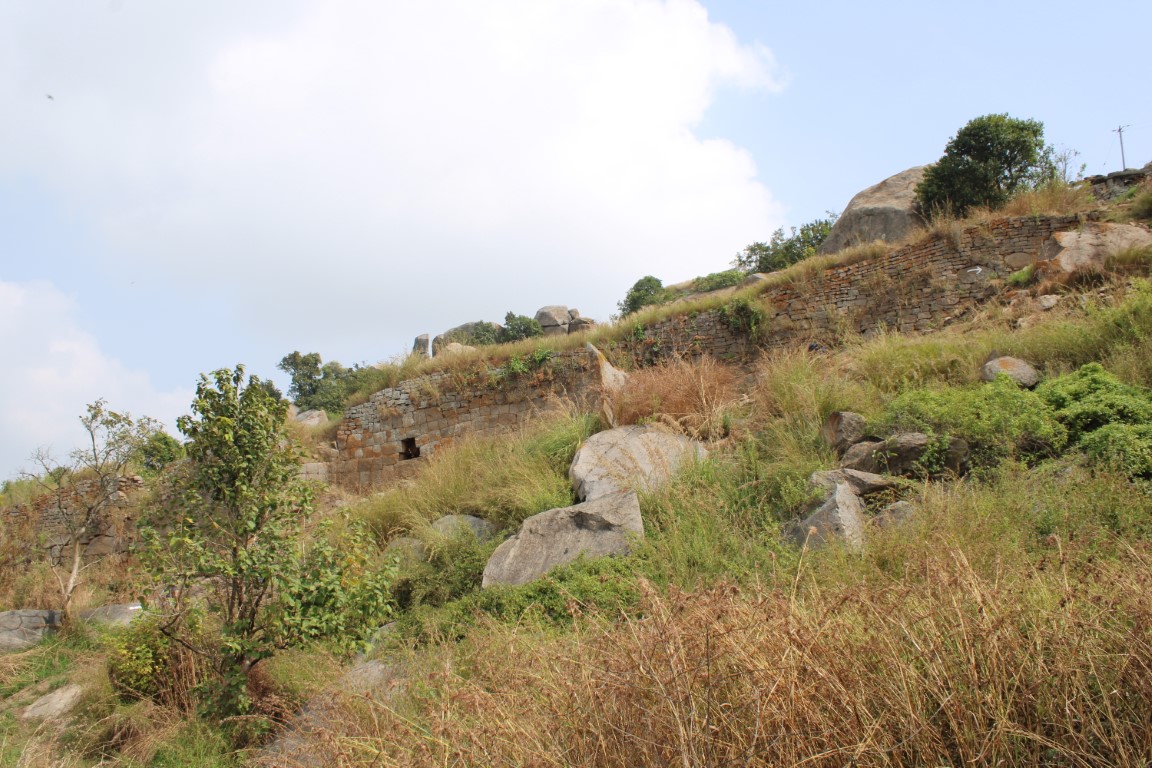
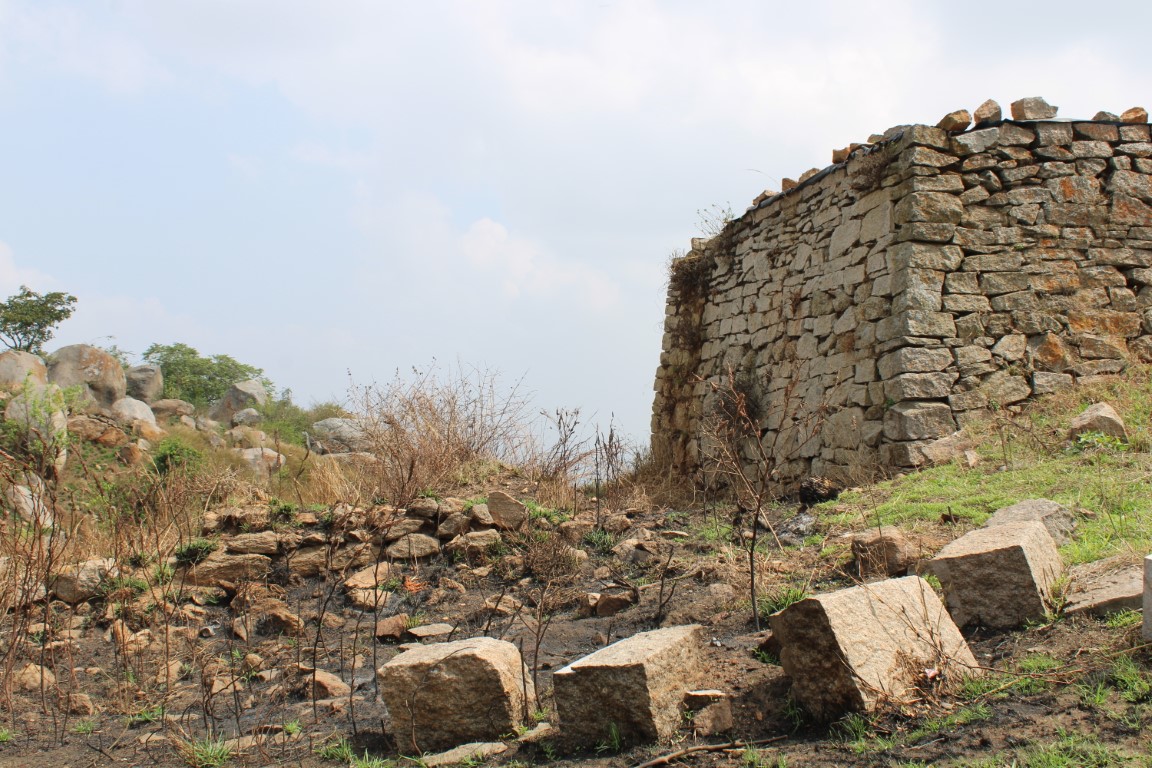
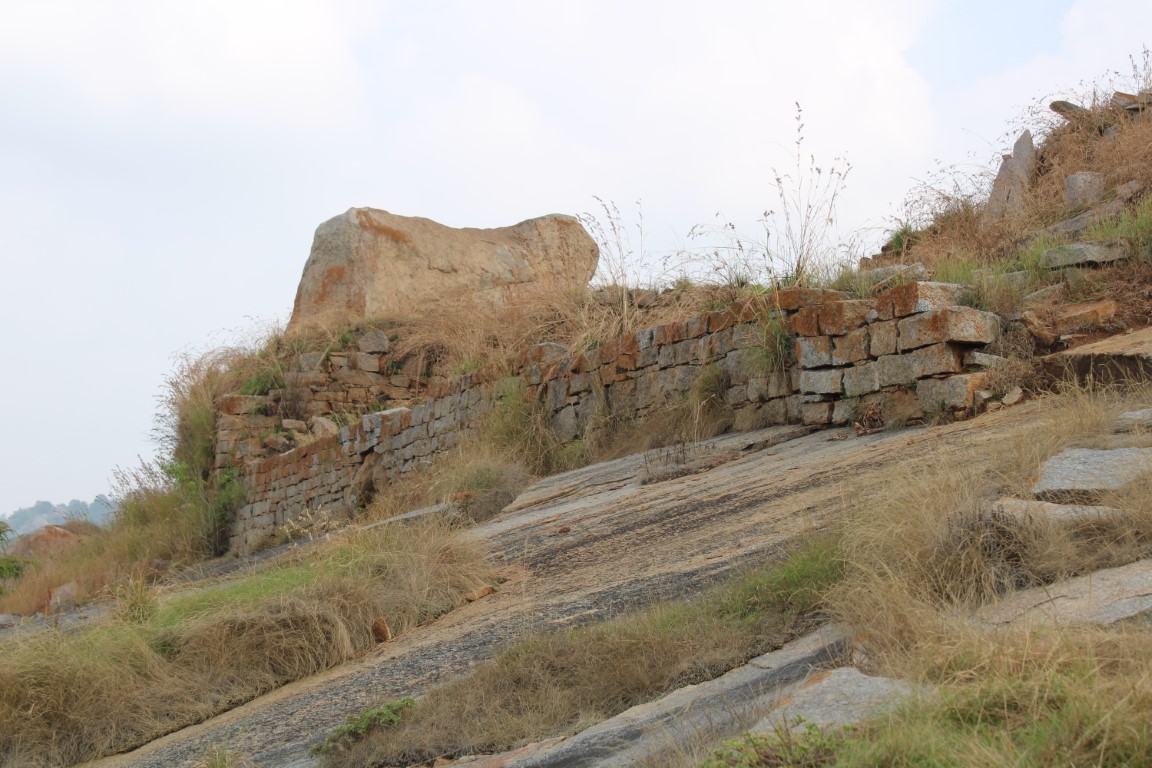
DAILY PHOTO: Hillside Fortifications, Minchukallu Betta
Five Wise Lines from In Praise of Shadows by Jun’ichirō Tanizaki
Have you never felt a sort of fear in the face of the ageless, a fear that in that room you might lose all consciousness of the passage of time, that untold years might pass and upon emerging you should find you had grown old and gray?
But our thoughts do not travel to what we cannot see. The unseen for us does not exist.
This was the genius of our ancestors, that by cutting off the light from this empty space they imparted to the world of shadows that formed there a quality of mystery and depth superior to that of any wall painting or ornament.
I wonder if my readers know the color of that ‘darkness seen by candlelight.’ It was different in quality from darkness on the road at night. It was a repletion, a pregnancy of tiny particles like fire ashes, each particle luminous as a rainbow.
Whenever I see the alcove of a tastefully built Japanese room, I marvel at our comprehension of the secrets of shadows, our sensitive use of light and shadow.
BOOKS: In Praise of Shadows by Jun’ichirō Tanizaki
In Praise of Shadows by Jun’ichirō TanizakiMy rating: 5 of 5 stars
Amazon.in Page
Tanizaki’s essay on Japanese aesthetics doesn’t just show the reader the simple, rustic, and weathered traits of Japanese beauty, it fully submerges them in an otherworldly place ruled by different principles of seeing. So enamored with this pre-modern Japanese aesthetic was Tanizaki that we are convinced he would give up all present-day conveniences to see the world this way (but, alas, he recognizes the impossibility of maintaining a household or business in today’s world that way.)
While the book is principally a tour of this Japanese shadow world, moving from architecture to toilets to lacquerware to Noh plays to skin tones to hotels (with other stops along the way,) it is also a critique of modernity, and particularly a modernity shaped by the West by virtue of Western countries building a lead in a number of key technologies. The most crucial of these technologies, and the one Tanizaki most decries, is electric lighting, which does away with the artistic beauty that derives from the interplay of varied toned shadows (and occasionally a little bit of light.) [I should say, he’s not bashing the Western technology or ways, but rather how poorly they work with maintaining Japanese aesthetic ways.]
I’d highly recommend this book for all readers. If you’re interested in aesthetics, art, architecture, culture, or “things Japanese,” then all the more so, but I can’t remember the last time description pulled me into a book as hard as this one. The essay can be a bit rambling and shifts from euphoria to rant and back, rapidly, but that is part of its magic.
View all my reviews
“Out beyond ideas of wrongdoing and rightdoing” by Rumi [w/ Audio]
Out beyond ideas of wrongdoing and rightdoing,
there is a field. I'll meet you there.
When the soul lies down in that grass,
the world is too full to talk about.
Ideas, language, even the phrase each other
doesn't make any sense.
NOTE: Translation from Persian by Coleman Barks & John Moyne in The Essential Rumi published by Harper Collins.
The Essential Rumi GoodReads PageBOOKS: The NEW Comedy Bible by Judy Carter
The NEW Comedy Bible: The Ultimate Guide to Writing and Performing Stand-Up Comedy by Judy CarterMy rating: 5 of 5 stars
Amazon.in Page
As the title suggests, this is a soup-to-nuts exploration of building a standup comedy act. While the bulk of the book discusses how to build jokes that work in a comedy club setting, it also gives helpful tips on relevant issues such as stage fright, hecklers, bombing and bomb recovery, set arrangement, and editing material. It offers many insights that may seem counterintuitive to a neophyte reader.
In writing, there is a common distinction made between “plotters” and “pantsers” (as in “by the seat of one’s pants.”) Plotters do a lot of research and outline everything thoroughly before beginning to write (as most people understand the writing process.) Pantsers like to get right into the typing and are willing to have a much messier process in exchange for greater feelings of spontaneity and surprise. A similar distinction seems to exist in standup comedy. Jerry Seinfeld might be the posterchild for the comedic plotter, writing and rewriting jokes on paper and having an already finely honed collection of jokes when he goes into the comedy club to revise through audience feedback. Other comedians seem to like to work by riffing and editing material on the fly. My point is: this book will definitely appeal most to plotters. That said, I think it has a lot of useful information that will save pantsers a great deal of trouble, but I suspect those with intense pantser proclivities will be skeptical of such a step-by-step approach.
The book is set up as a workbook woven into an instructional guide. That is, it has exercises throughout. It also presents a lot of jokes and partial bits by headlining comics to help the reader see how successful comics apply the principles in question.
I enjoyed reading this book and found it helpful. I thought that many of the exercises were quite helpful in triggering joke ideas. If you are looking for a book that deals in both joke writing and comedic delivery, I’d highly recommend this book.
View all my reviews