
Taken October 2012 in Phnom Penh.
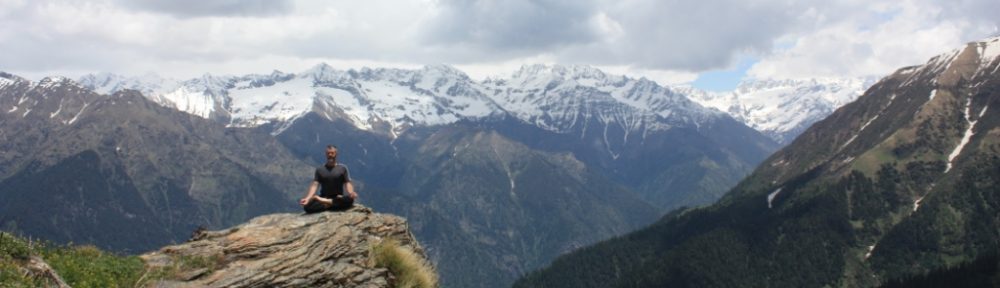

Taken October 2012 in Phnom Penh.

Taken in July 2010 in Cusco, Peru.
 Wise Blood by Flannery O’Connor
My rating: 5 of 5 stars
Wise Blood is a character-driven novel about a young veteran, Hazel Motes, who becomes a devout atheist. If that sounds like an oxymoron, let me explain. After becoming enamored with a preacher (and having the blood of a preacher man in his veins), Motes begins to preach the tenets of his newly formed Church Without Christ. In essence, Motes believes in religion without believing in God (the opposite condition of that which some of us find ourselves.)
This was Flannery O’Connor’s first novel, and it’s the first of her novels that I’ve read. I have, however, read some of her stories, and Wise Blood displays a dark humor similar to that found in O’Connor’s best know story “A Good Man is Hard to Find.”
Throughout the book, Motes struggles to convey the depths of his disbelief. He attacks false prophets. He follows through on an act of self-mutilation that he had earlier discovered the preacher, Asa Hawks, could not. Thus proving his lack of faith to be stronger than the preacher’s faith. Motes is wooed by both by the nymphomanical daughter of Hawks, Sabbath Lily, and later by his landlady, Ms. Flood. While Motes doesn’t necessarily remain chaste, he does maintain a kind of priestly detachment from the pleasures of the flesh.
An interesting part of the story details Motes’s interaction with a con-man named Hoover Shoats who co-opts Motes’ preaching sessions and starts his own Holy Church of Christ Without Christ–which passers-by find to be a source of amusement–as a bastardization of Motes’ message. Motes rejects Hoover, but sees his mission being usurped anyway. Motes shows deadly seriousness in his desire to be taken seriously in the word that he preaches.
This novel was apparently built from a series of stories, and a little bit of discontinuity can be sensed early on. However, that’s just part of the charm of a book that is sometimes thought-provoking, sometimes humorous, and sometimes both.
I would recommend book for anybody, excepting those hard-core pious who grow red-faced with rage in the face of atheism or other beliefs.

Taken in 1999 in Budapest, Hungary
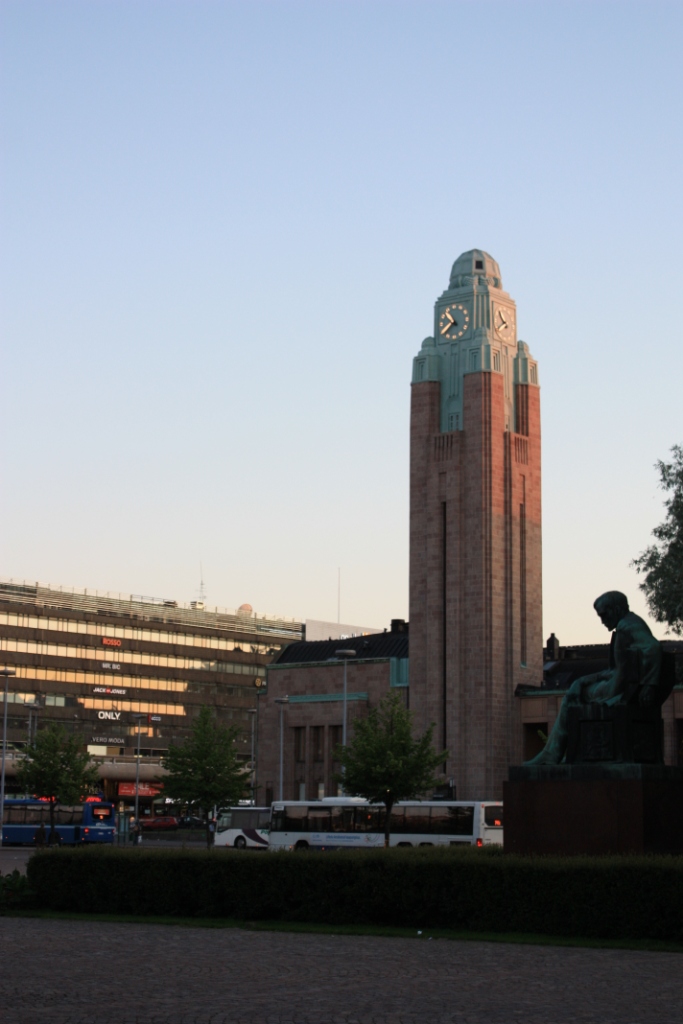
I could really get used to life in Helsinki from May through August. I’m not sure how anyone lives there in December though. I took this to record that it was after 2230 (10:30pm) when we finished dinner one evening. It’s not healthy to eat that late, but when it’s just hinting that it might get dark, it’s easy to lose track of time. This clock tower is on the side of the train station.
Taken in the Summer of 2011

Taken in July of 2008 in Beijing’s Military Museum

Taken on Caye Caulker in Belize
 Steal Like an Artist: 10 Things Nobody Told You About Being Creative by Austin Kleon
My rating: 3 of 5 stars
Kleon’s work began as a series of index cards and expanded into a short book. As the subtitle implies, the book is built around ten pieces of advice on creativity, each of which has short sub-chapters.
The ten chapters / advice offerings are:
-Steal like an artist.
-Don’t wait until you know who you are to get started.
-Write the book you want to read.
-Use your hands.
-Side projects and hobbies are important.
-The secret: do good work and share it with people.
-Geography is no longer our master.
-Be nice.
-Be boring.
-Creativity is subtraction.
Much of the advice offered in this book is common wisdom. This is exemplified by the title chapter, “Steal like an artist.” That chapter suggests that one must learn to borrow from past artists in a way that creates an end product uniquely one’s own. It’s good advice. Frequently, artists become paralyzed by a desire to create a work that is unlike any in the annals of humanity. At some level of granularity, this is an impossibility, and each artist has to come to grips with that. I once read a book entitled Write Like the Masters which offered this exact same advice in a less pithy form but which elaborated more on how to go about this process.
It’s possible to drill down much deeper into on the subject. Some art is much more thievable than others. I once wrote a short story set in a dystopian far future in which animals of several species had evolved intelligence and other adaptations and were challenging humanity. This was panned by a few on a critique group on the grounds that it was too much like Planet of the Apes. In truth, it did have some things in common with that story (though also much that was quite different.) However, I realized that where there is only one iconic storyline that’s similar, it’s much harder to avoid being compared than when there is a wide body of work. (As opposed to say the billions of vampire stories constantly coming out that usually escape comparison to Bram Stoker’s.)
However, Kleon’s book does offer some advice that isn’t as often addressed in creativity self-help guides. For example, the advice “Marry well” that forms a sub-chapter is critically important but is usually outside the scope of this type of book (and forms its own self-help genre.)This is certainly a good piece of advice not just for life, but specifically for creativity or other personal development. A bad relationship can kill personal growth faster than almost anything else, and a good relationship certainly facilitates one becoming a better person.
Besides being concise, where the book excels is putting advice on creativity in a modern context. This is most prominent in the chapter about the changing role of geography, but it’s also seen in discussions of how to share one’s work in the world of social media and blogging. There’s a lot of advice out there about how to deal with social media. Some will tell you to avoid it like the plague because it cripples productivity. Others will say that you can’t get far in this world without having mastered social media. This book addresses the balance, which is to say being able to use social media to one’s benefit while not letting it consume one’s time and energy.
Some of the advice conflicts, such as “validation is for parking” and “keep a praise file.”
One of the most interesting parts of the book is an appendix that consists of many index card notations–a number of which are clever and thought-provoking. These include one that says merely “quilting vs. weaving” and another that has a drawing of a pitcher and one of a skeleton that says “containers vs. skeletons.”
This book is highly readable, brief, and offers cleverness sprinkled throughout. It’s worth a read if you are interested in how to spur creativity. Don’t expect revelations, but rather inspiration.
For more on creativity, I highly recommend the following talk by Monty Python alum John Cleese:
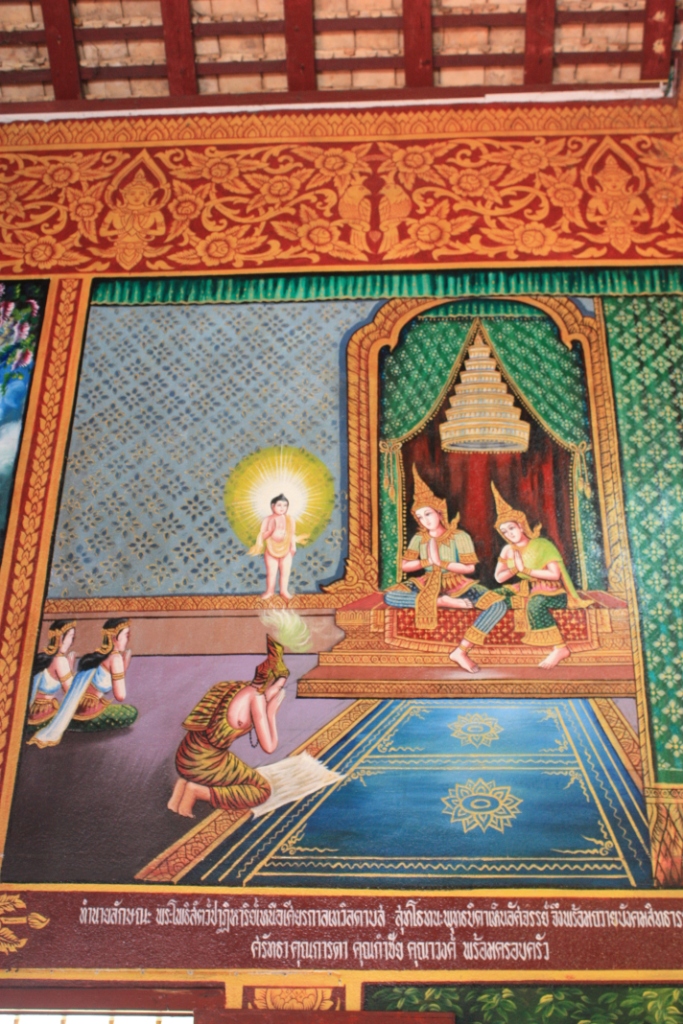
Taken October 2012 at Wat Chiang Man.

Taken in July of 2010


