Unknown's avatar

About B Gourley

Bernie Gourley is a writer living in Bangalore, India. His poetry collection, Poems of the Introverted Yogi is now available on Amazon. He teaches yoga, with a specialization in pranayama, and holds a RYT500 certification. For most of his adult life, he practiced martial arts, including: Kobudo, Muay Thai, Kalaripayattu, and Taiji. He is a world traveler, having visited more than 40 countries around the globe.

Vinyāsa: A Few Thoughts

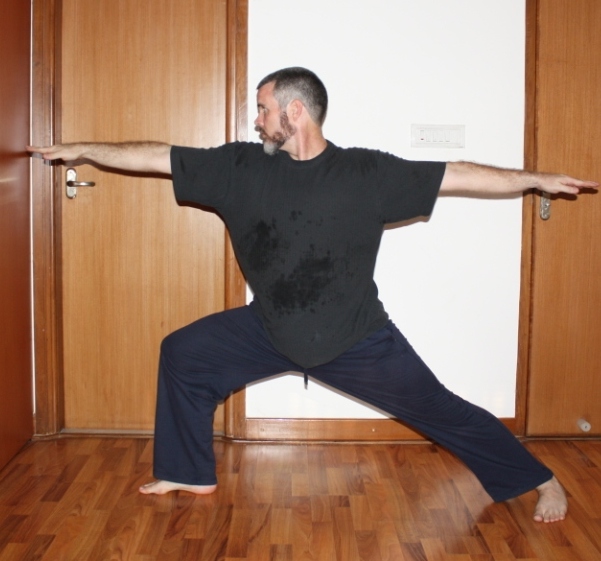
IMG_1254I attended a Vinyāsa Workshop this weekend at a1000Yoga in Bangalore. The workshop was taught by Bharath Shetty, who is the founder of the IndeaYoga Shala in Mysore, and who was a student of–among others–B.K.S. Iyengar.


The word vinyāsa has multiple meanings, but most commonly–and in this case–it refers to a style of yoga in which postures are linked together through transitional movements. (And, importantly, these transitioning movements establish a flow of breathing throughout the practice.)  Vinyāsa practices tend to be vigorous and challenging because one keeps moving when one isn’t holding a posture (i.e. there’s no down time), and the transitions require a lot of lifting oneself up, which necessitates a strong core and reasonably strong arms / shoulders.


Vinyāsa practices can have fixed-sequences (the same asana, or poses, are always done in the same order) or not have a fixed-sequence (the details of the practice will very from one session to the next.) There’s a great argument for the practice of a fixed-sequence. That is, one can get beyond focusing on crude alignment details and put one’s mind on fine details of breath, drishti (focal point), and keeping a slight tension in the perineum. Such facts can slip away when one is struggling to get the sequence and postural details down pat.


However, there’s a great counter-argument against fixed-sequence programs. The counter-argument goes like this, “If you get so bored out of your wits that you quit, you will also never get to the part where you focus on higher level details.” My advice would be “know thyself.” In other words, if you can keep to a fixed-sequence, you should. However, if your practice will peter out without constant fresh challenges, don’t force yourself into a fixed-sequence box. It’s better to take longer to get to a higher level of practice than to quit.


The most famous fixed-sequence vinyāsa style is the Ashtanga Vinyāsa system handed down by Sri K. Pattabhi Jois. (Note: some people call this system Ashtanga Yoga, and others don’t like that name because it implies that this system is heir apparent to Patanjali’s yoga as described in The Yoga Sutras.  [In other words, there’s an argument that that name was already taken.] Furthermore, Jois’s system isn’t really any more of an Ashtanga Yoga [in the Patanjalian sense] than any other Hatha yoga style because it focuses on only a few of the limbs (i.e. asana, pranayama, etc.) at least until one gets to very advanced stages of practice.


The most famous vinyāsa style without a fixed sequence is probably Power Yoga, although many people practice classic Hatha asana in a vinyāsa.  Power Yoga emphasizes core strength building, and was originally developed by Ashtanga vinyāsa practitioners to give one the workout of Ashtanga vinyāsa without its monotony.


This was my first experienced with a fix-sequence vinyāsa program other than Ashtanga Vinyāsa, so I didn’t know what to expect. This was the second workshop I’d attended by Bharath Shetty, so I knew that he was a skilled and knowledgeable teacher. However, I didn’t know what Indea Vinyasa, itself, would be like.


It turned out to be much like Ashtanga Vinyāsa. The general organization is identical. That is, there are two versions of Surya Namaskara, a standing sequence, a floor sequence, and a finishing sequence. Note: I’ve only been taught the first series of each of these systems, and so I can’t say how they vary at more advanced levels.


The Surya Namaskaras of Indea Vinyāsa mirror those of Ashtanga Vinyāsa, but they aren’t identical. The Indea Vinyāsa Surya Namaskara-A is slightly more involved, and includes an Utkatasana. The Indea Surya Namaskara-B, like Ashtanga Vinyāsa, features Warrior I, but doesn’t include Utkatasana (chair pose.)


The standing sequences of the two systems are identical. However, the floor sequence is very different. The Ashtanga Vinyāsa preliminary series (as mentioned above, both systems have multiple series) focuses heavily on forward bends, but the Indea Vinyāsa  preliminary series is more balanced between forward and back bends. The finishing sequence is also quite similar between the two styles.  The sarvangasana-halasana-karnapidasana-matsyasana sequence is the core of both finishing sequences.

VinyasaWorkshop

DAILY PHOTO: Vörösmarty tér Lepény Vendor

Taken in December of 2014 in Budapest

Taken in December of 2014 in Budapest

This is the finished product.

This is the finished product.

Lepény is a Hungarian street-food that some might call a folded over pizza and others might call a flat-bread sandwich. It’s bread (like pizza crust) topped with cheese and various vegetative and / or meaty toppings and cooked on a grill. (I just realized it could also be considered a fancy grilled cheese that starts from a ball of dough and not from pre-made bread.)


Anyway, there aren’t nearly as many lepény vendors as there are for say Kürtöskalács (the cylindrical sweet bread that is so very, very awesome), but the vendor at the Vörösmarty tér Christmas market always had a massive line. (We did discover that part of the long lines had to do with the temperamental nature of the wood-fired grills they used and the long time it took to cook one if they let the fire die down too much.) Still, people stayed in line, and that speaks somewhat to the tastiness of this treat.

DAILY PHOTO: Re-enactors at Work

Taken during the Summer of 2011 in Suomenlinna Sveaborg.

Taken during the Summer of 2011 in Suomenlinna 

Inside the fortifications at Suomenlinna, actors re-enact scenes from history past.

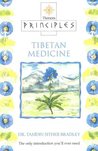
BOOK REVIEW: Principles of Tibetan Medicine by Dr. Tamdin Sither Bradley

Principles of Tibetan MedicinePrinciples of Tibetan Medicine by Tamdin Bradley

My rating: 3 of 5 stars

Amazon page

Full disclosure: let me first state that I’m a scientific-minded person and skeptic by nature, and if you’re expecting a review by a true believer, you may be disappointed.

A couple of questions may arise from the disclosure above. First, why do I feel I need to make such a commentary? Well, because this is a book about a system of medicine (i.e. gso-ba rig-pa) that developed within a country that was isolated for centuries and in which every aspect of knowledge was infused with and influenced by religious belief—both pre-Buddhist and Buddhist. Because of this, while some of the advice offered is surely sound, some of it is—from a skeptic’s point of view—bat-shit crazy. For example, there are herbal and dietary preparations to aid in digestion that may be completely sound and reasonable, and then there is the idea that Zombie spirits (one of 18 types of evil spirits) cause constant shivering.

The second question is, “If I’m not a believer, why read the book and review it?” For one thing, as I indicated above, I don’t think that just because the beliefs behind the “theory” of this system of medicine are baseless, it means that there is nothing in the book that is true or of value. The theory is that there are three kinds of energy (Loong, mKhris-pa, and Bad-Kan) and that excesses or deficiencies cause health problems. But it’s a 2500 year old system of healing; certainly they learned a thing or two in the process. It’s quite possible that they have learned things that scientific medicine has not. (Consider for example, Tibetan Buddhist monks have repeated and verifiably demonstrated capabilities—i.e. consciously controlling autonomic systems, that Western medicine would have thought impossible.)

The analogy that I always use is with kid’s Christmas presents. Parents hide the presents, and tell the kids that if there’s any tampering with them the kid won’t get anything but a lump of coal (you say that was just my parents?) Anyway, the kids find the packages, but are afraid to invasively tamper with them. Therefore, they feel the heft of them, they shake them, and they listen to said shakes. From that limited investigation, they develop a theory. The theory may be spot on, it may be completely wrong, or over several gifts it’s probably a combination of wrong and right. However, the question of whether the present does what it’s supposed to (i.e. bring joy) is not closely connected to the child’s theory, because it’s based on the parent’s observation of what the kid likes. That, my friends, is why systems of healing that are based on notions that are empirically wrong sometimes produce good results.

Second, while I’m a believer in science, I don’t always believe that Western medicine (rooted in science as it may be) consistently does a good job. Part of this is the fault of economists, policy types, as well as lazy patients who’ve created a system in which medicine only pays off if it can cut one open or give one an expensive medication. This leaves room for alternative systems of medicine that may not be so scientific, but that allow for the fact that changing patient behavior is often key to improving health.

I’ve taken a long time to get to the actual review, but I thought the reader should know from whence this reviewer was coming. The book is a little under 200 pages long. Its 11 chapters are logically oriented, and it’s easy to navigate the book. The author writes in a readable style, and jargon and foreign terminology aren’t a problem. It doesn’t have an index, but each chapter is broken up into many smaller subunits–so finding what one is after shouldn’t be hard.

The chapters cover the history of Tibetan Medicine, the nature of gso-ba rig-pa, the theory of Tibetan Medicine, causes of illness, human anatomy and physiology (not of the physical body as we know it), common diseases and illnesses, treatment techniques involving changing diet and behavior, medicinal treatment, representative case histories, and the nature of the Tibetan Medicine physician.

It’s not clear who the target audience for this book is. It’s not a self-help book as the implication is that the patient should see a doctor of Tibetan Medicine and not self-prescribe. Furthermore, while the book provides a good overview of Tibetan Medicine, it’s not an all-inclusive description by any means. The book seems to have been written primarily to make individuals aware of Tibetan Medicine and to give enough insight into the system that readers can differentiate it from Traditional Chinese Medicine or Indian Ayurvedic Medicine, both of which display similarities and differences.

I’d recommend this book if you’re interested in alternative approaches to healing, or if you’re interested in Tibetan culture in detail.

View all my reviews

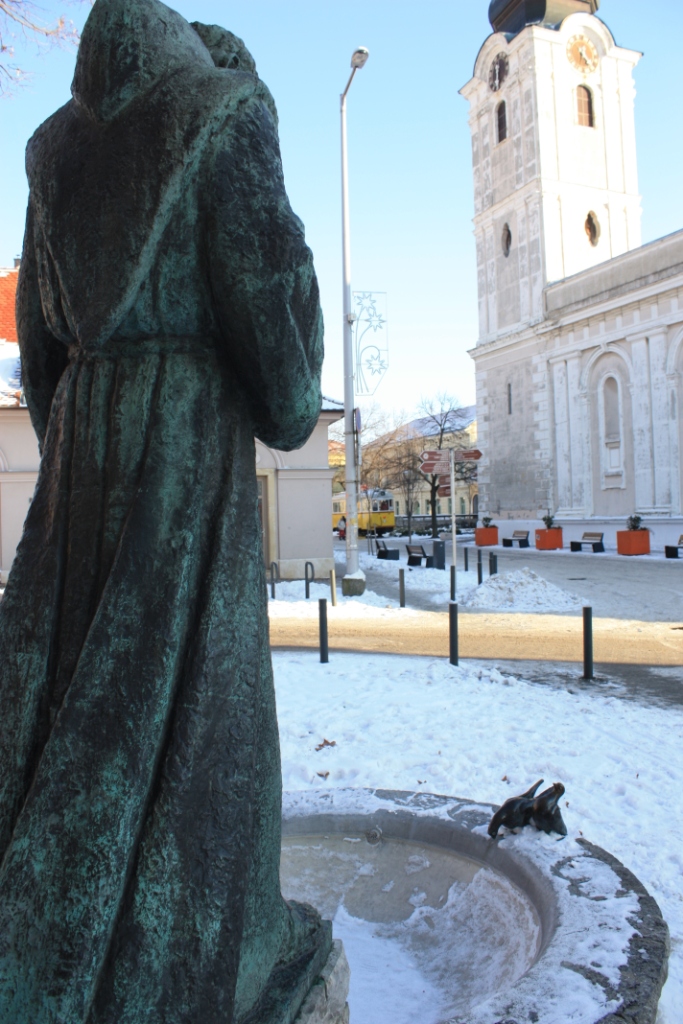
DAILY PHOTO: St. Francis of Assisi Bird Bath of Pécs: Two Views

IMG_3133

Taken in Pécs in December of 2014.

Taken in Pécs in December of 2014.

DAILY PHOTO: Sikh Temple Guard

Taken in Delhi in November of 2013.

Taken in Delhi in November of 2013

One doesn’t see many spear and sword wielding guards anymore. This was taken at the Sikh Temple on Chandni Chowk, i.e. the Gurdwara Sis Ganj Sahib.

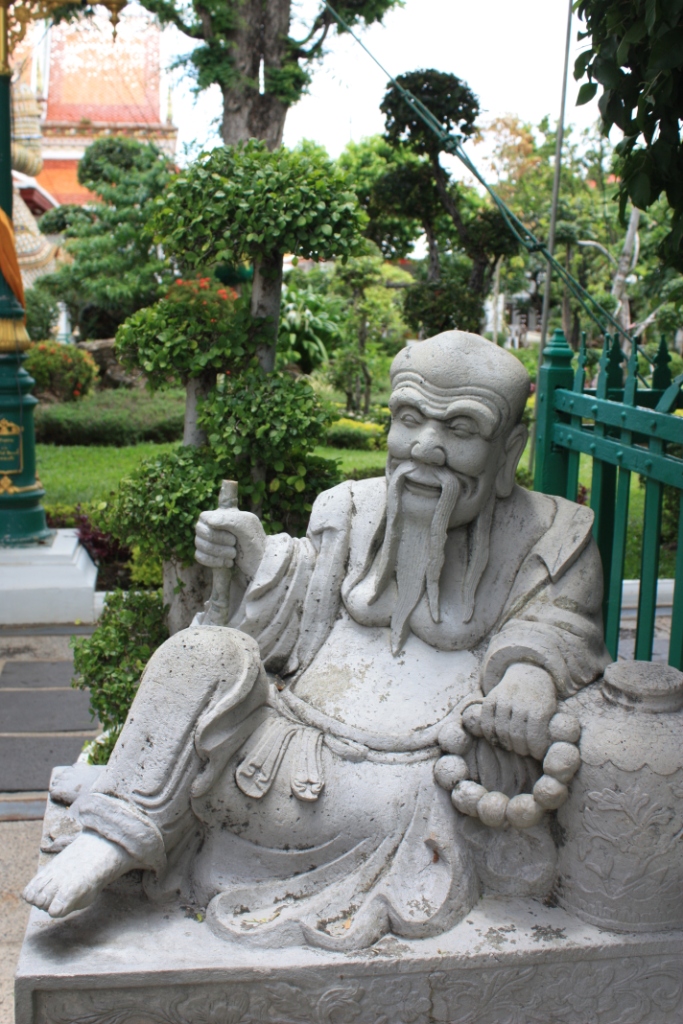
DAILY PHOTO: Chinese Sage at Wat Arun

Taken in September of 2014 at Wat Arun in Bangkok.

Taken in September of 2014 at Wat Arun in Bangkok.

While built in the Thai-Khmeri style, Wat Arun displays a great deal of Chinese influence. It was built at a time with trade with China was thriving.

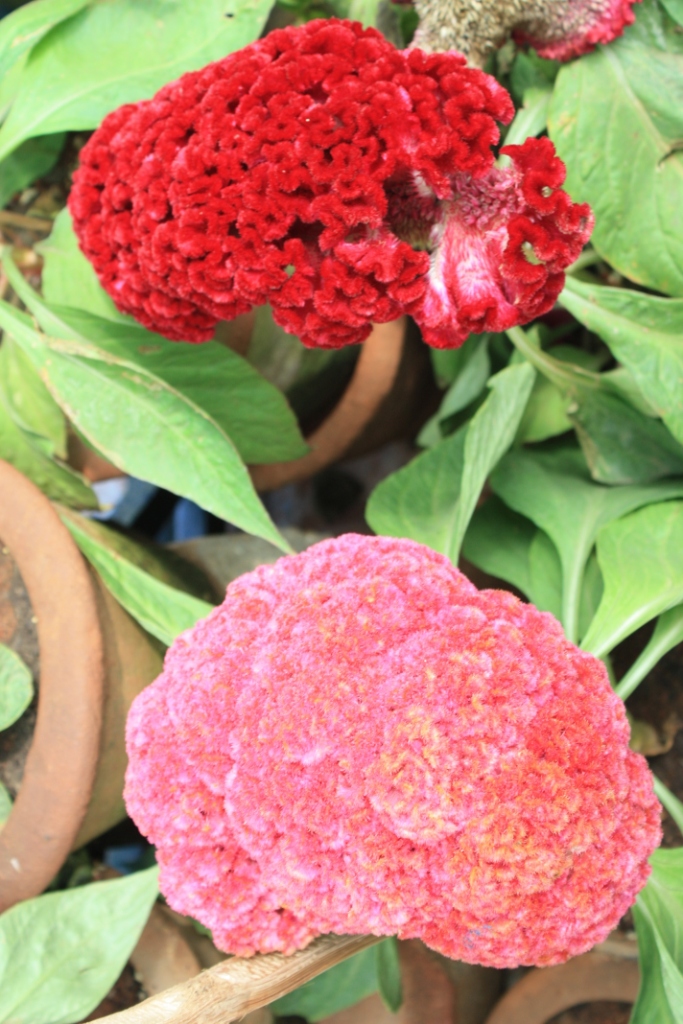
DAILY PHOTO: Coxcombs in Red and Pink

Taken in January of 2014 at the Republic Day Flower Show at LalBagh Gardens

Taken in January of 2014 at the Republic Day Flower Show at LalBagh Gardens

I probably won’t make it to this year’s Republic Day Flower Show at LalBagh Botanical Gardens, but I’ll post a couple of pics from last year’s show.

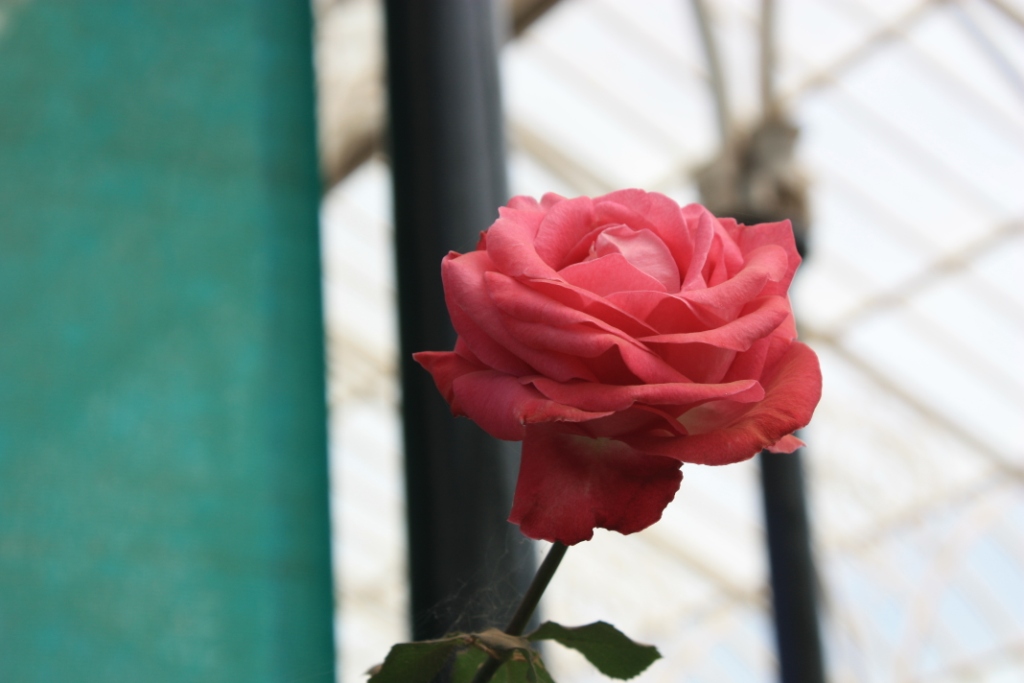
Bonus rose

Bonus rose

READING REPORT: January 23, 2015

If I were a kid today, I’d be diagnosed with ADD in a heartbeat. I rarely read one book straight through. However, I read a lot, and that means I switching from one book to the next–reading a chapter at a time. I do try to read no more than one book of a given type/genre at a time–often unsuccessfully, as you’ll see. With this in mind, I thought I’d experiment with a weekly post on what I’ve been reading that week.

Book-Review-The-Martian

Fiction: The novel that I’m currently reading is Andy Weir’s The Martian. This book is gripping. It’s considered to be one of the best–if not the best–science fiction works of 2014, although it was self-published in 2011. This is a great example of a book that couldn’t get published despite being spectacular, and which will now make a bazillion dollars. It also explains how a 2014 novel is set to have a big budget movie adaptation come out in late 2015. This book is like the movie Gravity set on Mars, except that it’s smarter.  It taps into that visceral fear of what it would be like to die alone in space–not in a flash but with time to know you are going to die. An unlikely, but plausible sounding, set of circumstances result in astronaut Mark Watney being left for dead on the surface of Mars. But, of course, he’s not dead. Watney has to be creative to figure out how to live for four years in hopes that the next manned Mars mission will go forward as planned. It’s a roller coaster ride between him thinking he will surely die and him coming up with clever solutions. If you are into science, it’s particularly intriguing. I’m about 20% of the way through.


Foreign Fiction: I’ve also continued to read a Hungarian novel called Quarantine in the Grand Hotel by Jenő Rejtő. This is a silly (in a good way) locked-door murder mystery. I picked it up in Hungary over the holidays, and will probably finish it in the next week or so. (I’m about 2/3rds of the way through, and it’s only a 160 page book.) It’s short, highly readable, and humorous.

I also read a chapter from The Mandala of Sherlock Holmes by Jamyang Norbu. A number of authors have picked up the mantle of Sherlock Holmes from Sir Arthur Conan Doyle.  (Not to mention TV shows and movies.) This book is published in India by a Tibetan author who imagines Sherlock Holmes traveled to India and Tibet after he was believed to have been killed (along with Professor Moriarty) in Switzerland. (Going over the falls as depicted in the second Sherlock Holmes movie featuring Robert Downey Jr.) There are three parts to the book: India, Tibet, and Beyond. I’m in the last couple chapters of the first part, most of which takes place in Bombay.


Short Stories: I’m about 85% of the way through 999: New Stories of Horror and Suspense. This is a collection of short fiction of horror / dark suspense. It features authors such as Joyce Carol Oates, Stephen King, Neil Gaiman, Eric Van Lustbader, and David Morrell.  All of the  works are short stories except for a novella/short novel by William Peter Batty. The novella is the last piece, and I’ve just started part II of it.

999_Horror&Suspense


Martial Arts: I just finished Dr. Anthony Catanese’s The Medical Care of the Judoka, but I posted a review yesterday so I won’t get into that book. My next martial arts book will be The Pyjama Game by Mark Law, but I haven’t yet begun it.


Yoga: I’ve been reading two books related to yoga this week. I just finished Chapter 2 of Coulter’s Anatomy of Hatha Yoga. This chapter dealt with the anatomy and physiology of breathing. This book is an excellent resource for yoga teachers, but it’s pretty dense–which may explain why I’m only on Chapter 3. Not only does the chapter give general information on respiration, it also provides information specific to various yogic breathing methods such as abdominal, yogic, thoracic, paradoxical, and diaphragmatic.

The second yoga book I’m reading is Singleton’s Yoga Body, which is a history of yoga postural practice (asana practice). This book presents a controversial thesis, which is that postural practice (asana) wasn’t really a part of mainstream yoga until quite recently, and that it’s as much a product of what happened in the Western world in the early 20th century as it is a result of Indian yogic traditions–if not more. Having finished the first three chapters (about 30% through), I’m not sure whether I buy his argument or not. He has some documentary evidence on his side, but I know there is also a proclivity to equate the current era in which everybody documents laundry day with the past in which many people were much more secretive. It’s also often not true that the most vocal are not the mainstream. He may be correct, but he has yet to wow me. (Part of his argument is people like Max Muller and HP Blavatsky found hatha yoga [the style which most emphasizes posture] to be the domain of conmen and beggars.)


AnatomyHathaYoga_CoulterYogaBody_Singleton


Miscellaneous Nonfiction: I’ve got about 70 more pages to finish in a book called How Pleasure Works by Paul Bloom. As the title implies, this book is about the science of why people get pleasure from various things from food to sex to freaky sex to art to music, etc. The primary thesis is that there are hidden essences that are the source of pleasure. The chapter I just finished talked about an interesting study in which violinist extraordinaire Joshua Bell went into a subway station and played his $3.5million violin, and barely netted $30–even though there were people passing him who’d paid $200 to hear him in his tuxedo at a concert hall later that evening. The chapter also talked about art forgeries, and how some art is valuable when it’s associated with a famous painter and worthless when it’s a forgery by a presumably equally skilled forger (I say equally skilled because these individuals have been able to pass their work off to experts as a painting by a famous artist. In some cases, they weren’t forgeries but rather originals in the style of the famous artist and submitted as an unknown work found in a basement somewhere.)

HowPleasureWorks


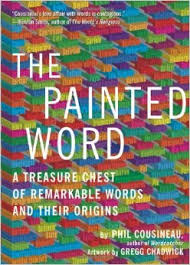
I also finished the letter “B” in the book The Painted Word  by Phil Cousineau. This book is organized like a dictionary, except that it only contains certain English language words that the author finds particularly intriguing, and it gives background on usage and how the meanings have migrated. If you love language, you’ll find this book much less painfully boring than I have made it sound.

Painted Word


That completes the books I’ve been reading over the past week. I did purchase two books this week, but they’re far down the queue to be read. One is the graphic novel The League of Extraordinary Gentleman by Alan Moore, and the other is Right Ho, Jeeves by P.G. Wodehouse.

DAILY PHOTO: Városháza by Night

Taken in December of 2014 in Pecs, Hungary

Taken in December of 2014 in Pecs, Hungary

The Városháza is a townhall building in the middle of Pécs.