
Taken in December of 2014 in Pecs, Hungary


Taken in December of 2014 in Pecs, Hungary
 The Medical Care of the Judoka: A Guide for Athletes, Coaches and Referees to Common Medical Problems in Judo by Anthony J. Catanese
My rating: 4 of 5 stars
I’d recommend this book for anyone who holds a position of responsibility in a dōjō or a combative sport gym, including: teachers, coaches, senior students, trainers, etc. It’s intended for those involved with sport judō, but because there aren’t a lot of sport or martial art-specific books of this nature this may be one of one’s best option to get this information. I haven’t stumbled upon other books like this, but performing a search did result in similar books either generic to martial arts or for other martial arts. However, all of the others that I saw were either old / out-of-date, only available in hardcopy (usually at great expense), or were not by physicians. This book is available on Kindle and is quite inexpensive.
While it’s geared toward sport judō, many of the injuries will be common across martial arts. This is truer of grappling-oriented martial arts, but things like mat infections, students with various chronic ailments, and participants being knocked unconscious. (The latter is covered extensively, but arguably being even more of a concern for strikers.)
The book is useful in two ways. First, it discusses first aid and treatment for common injuries in the martial arts. It’s not a first aid manual, and will not replace training. (In fact, the book assumes it’s talking to someone who’s in a position where they’ve had at least minimal training / experience.) However, it may provide useful information about what injuries one should make sure to be trained in when shopping first aid courses. It also gives one ideas about differences of opinion on certain approaches to treatment or the decision as to whether a given participant is safe to participate.
Second, the book discusses whether prospective students with common chronic ailments can safely participate, and under what circumstance. In many cases, this book goes about this by saying what the judō rulebook says. While this may not be a perfect guide for practitioners of other arts, it may give a reasonable idea about how serious one should take a given disease or infirmity.
The book consists of 20 chapters. Most of the chapters cover common injuries and ailments in judō, generally arranged by anatomical systems. However, there are also chapters covering nutrition/hydration, issues for athletes going abroad / older participants / and special needs athletes, drugs and doping considerations, injury rehabilitation issues, psychological challenges, and the traditional Japanese methods of resuscitation and first aid (kappo and katsu.)
In addition to the core chapters, there is some useful ancillary material. First, there are vignettes interspersed throughout the book that could be beneficial. These vignettes reflect the benefit of having an author who is a medical doctor, a long-time judōka, and an experienced match physician. The vignettes may be more likely to stick in one’s head than the blander presentation of information, and these sidebars often address unusual cases. Also, there are two glossaries—one that deals with martial art / sports terminology, and one for medical terminology.
While written by a physician, this book is not written exclusively for other doctors or medical experts. That is to say, it’s easily readable by a lay audience. Medical jargon, when used, is explained the first time in the text, so one doesn’t need to keep jumping to the glossary.
At least the Kindle version is graphics free. That would be problematic if it was a first aid manual, but that’s not this book’s purpose.
As I said in the beginning, if you have responsibilities for the well-being of martial arts students / athletes, you should read this book.

Taken in December of 2014 in Szentendre
Béla Czóbel is a Hungarian artist (Post-Impressionist painter), and this statue was made by another Hungarian artist (sculptor) Imre Varga. It sits in a nondescript location in Szentendre. I’m sure Czóbel wasn’t as angry as he appears in this sculpture. Actually, I’m not sure of that at all. He may have been.

Having lived in India–land of sages–for over a year now, one may wonder whether enlightenment has taken hold. Let me share some of the nuggets I’ve gleaned. This isn’t what I found chiseled on walls in Sanskrit. It’s what living and thinking in the modern world have wrought.
1.) Anger is just fear in a red dress.
It’s all just frustration / unease / discontent with one’s limited domain of control.
On a related note, I read a relevant quote from Irmgard Schloegl recently: “Look at getting mad from this perspective. If you had but five more minutes to live, and it would still be worth getting mad over, then by all means do so.”
2.) Secret paths to wisdom are bullshit–the theory is simple the practice is arduous.
It all boils down to living in the moment more, being aware of your mind, and exercising your will.
First, you start becoming aware that you were recently a jackass.
Next, you begin to realize you’re in the process of being a jackass.
Then realize that you’re about to be a jackass–but you can’t help yourself and end up with jackass’s remorse.
Finally, you begin to preempt your inner jackass.
The latter is wisdom, and it’s not for lazy people who like shortcuts.
3.) There’s no ratchet effect on wisdom–no one-way trip to enlightenment or nirvana.
Either you accept that life is a glorious lifelong struggle to be the best version of yourself, or you wallow in a sty of mediocrity.
4.) The words “just a…”–as Catholic nuns say of masturbation–result in immediate blindness.
There’s nothing that will blind you to the deepest beauty of a person, place, or animal faster than saying it’s “just a…”
5.) Stop thinking of the body as an “empty vessel.”
It results in your treating it like a rental car. You aren’t a bar of gold being hauled around in a manure spreader. You were endowed with a Rolls Royce with on-board access to a Cray super-computer, and you risk turning into a Yugo with an abacus when you fail to keep it tuned and quietly revel in its magnificence.
6.) If a teacher is happy that his students almost reach his level, he’s part of a dying tradition.
In a growth tradition, some students will surpass their teachers, and that’s only likely if the teacher wants it to be that way.
7.) Be a scalable hero.
Human beings are terrified by their smallness, impermanence, and ultimate insignificance. In geologic time, everybody is an inconsequential blip. You can’t get around this, but you can pick a scale of time and space in which you matter. That space is here, and that time is now. In the here and now, you can be a giant–figuratively, of course. Here and now you can’t be everybody’s hero, but you can be somebody’s.
8.) Start your pursuit of virtue by doing no harm.
Begin being virtuous by capturing the advantage in those quiet moments that need nothing but a lack of interference or insinuation. Then go on to active expressions of virtue.
9.) Vicarious living ain’t living.
Don’t sit around watching others live life.
10.) Don’t count yourself free if your impulses overwhelm your conscious mind.
People worry a lot about the control that external forces and authorities exercise over their ability to act, but often spend far too little time on whether they’re working towards liberating themselves from raw impulse, habit, and reactionary living. Epictetus used to piss high society types off by asking them whether they thought they were truly free.
If you’ve been following the science of free will, you’ll know that the current prevailing thought lands against the notion of free will. This is because brain imaging has made it possible to see how decisions are biochemically made before the mind consciously ruminates and “makes a decision.” However, the verdict is still out. The question isn’t whether we ever fail to exercise conscious free will. Of course, there are many times we fail to, maybe even most times. The whole point of emotions is to help us make decisions without adequate information to make rationally optimized decision. However, the question is whether we can learn to exercise free will. Scientist long ago verified that some yogis and monks can exercise conscious control over autonomic bodily functions (e.g. controlling heart rate from a static position.)
There it is: wisdom for the modern age stuffed in a nutshell of bullet points.
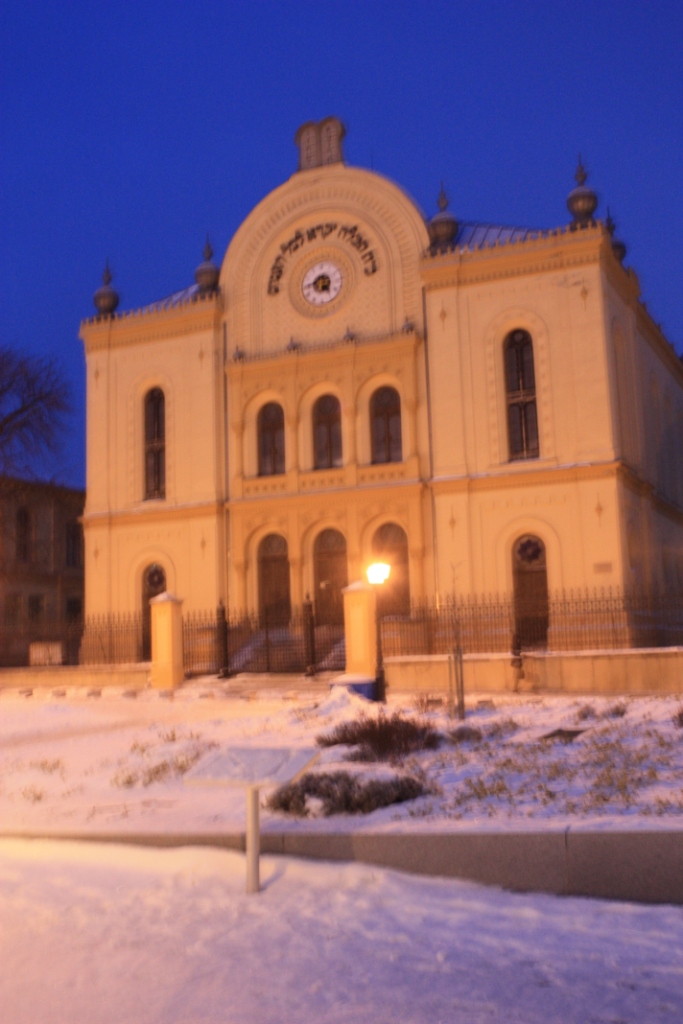
Taken in December of 2014 in Pécs
Kicked, I tip over the lip, and plummet down a well.
Falling, falling, screaming, and calling, toward the firelake of hell?
Thrashing and lashing, I hit the drink splashing, and sink to the inky deep.
Kicking and stroking, sputtering and choking, I claw at the well wall so steep.
Treading water, I curse the kicking rotter, who sentenced me too this fate.
Taking note, I consider what floats, and jettison my anger, fear, and hate.
They’ll just weigh me down, cause me to drown, and not on my side is the time.
There is no try, nothing but do or die, my only course is to climb.
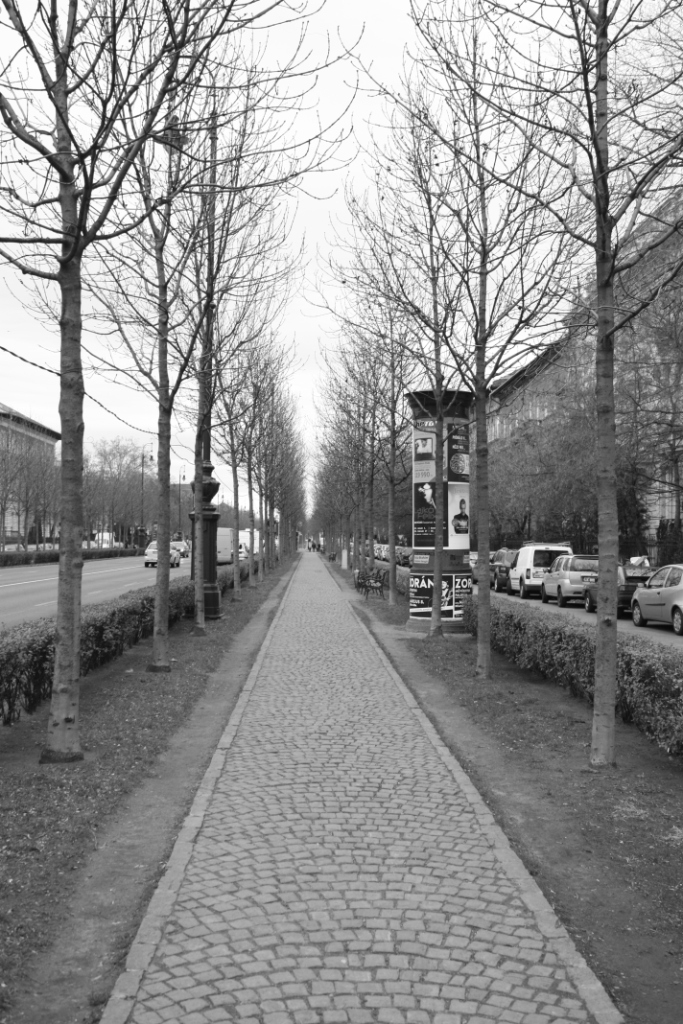
Taken in December of 2014 in Budapest
Andrássy út is a major boulevard in the Pest side of Budapest. It’s perhaps most well-known as the Embassy Row of Hungary. It’s delimited by Heroes’ Square (Hősök tere) on one end and Bajcsy–Zsilinszky út near Erzsébet tér on the other.
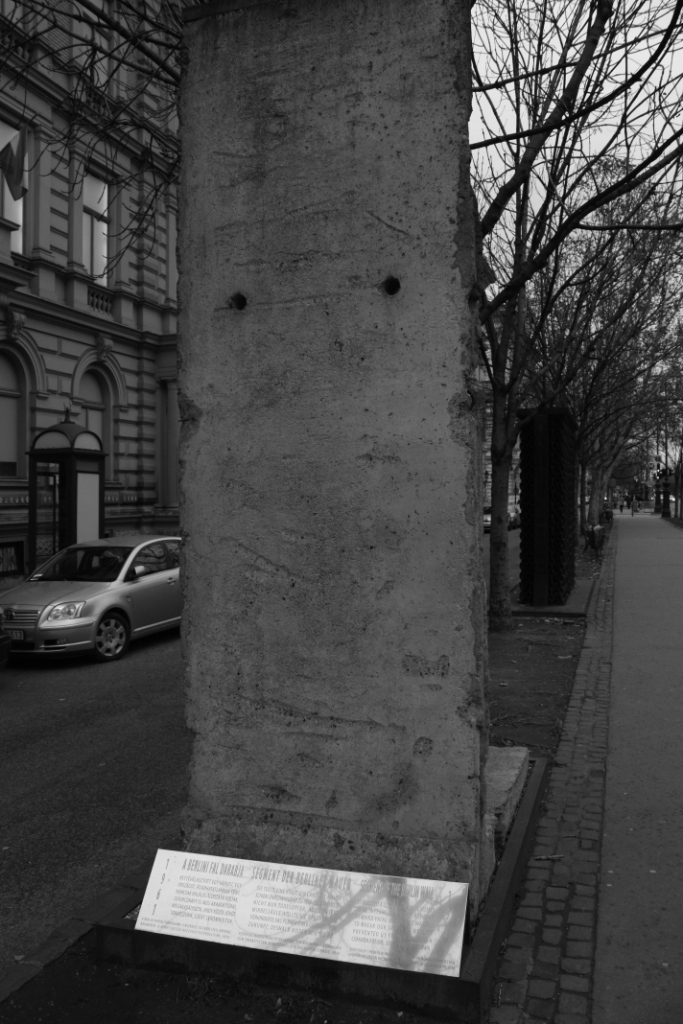
A section of Berlin Wall located outside the Terror House (Terror Haza) Museum
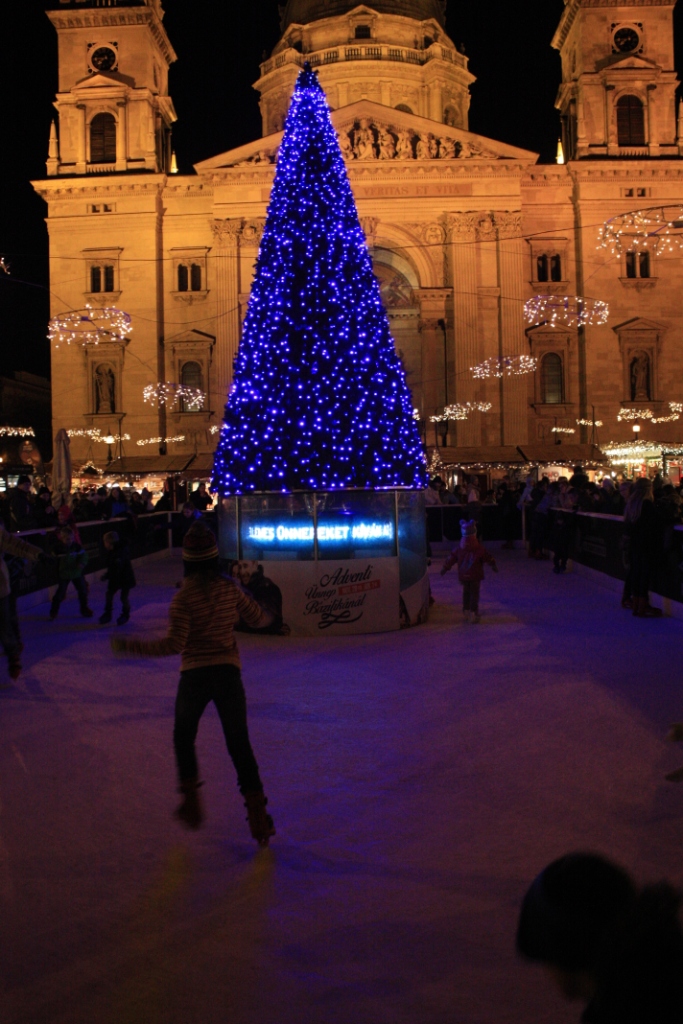
Taken in December of 2014 in Budapest.
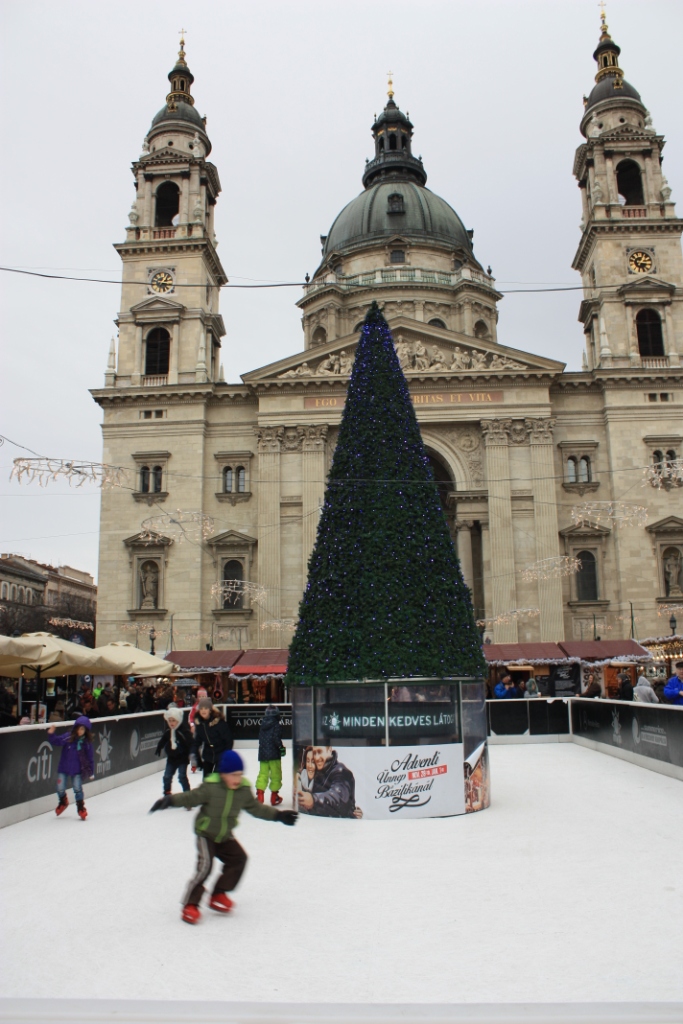 This is the same little kid’s rink in front of the Basilica in Budapest.

Taken in December 2014 in Pécs.

Love locks are padlocks that people hang in a public space as a sign of affection–often with a message written on them. Some are fancy; others are not. It reminds me of the Shinto prayer boards one sees in Japan. Love locks are a pretty common phenomena, particularly in Europe. The first ones I remember seeing were in Helsinki, but this wall is in Pécs, Hungary.

Taken in December 2014 in Vác
This sweets bakery (cukrászda) was painted in a festive lime green, but with the stark shadows of a winter’s afternoon writing on the wall, it still looked a bit creepy to me.
Plus, is it just me, or is that font a bit unsettling?


