Contrarian Tourism [Limerick]

A contrarian tourist traveling through Livingstone
missed Victoria Falls when all was said & done.
He'd thought it a trifle
to see tower Eiffel,
and, when in Paris, he made an end-run.

Limerick de Goa

There once was a sailor from Goa
who lived on his boat, just like Noah.
When his anchor line snapped
as he deeply napped,
he drifted halfway to Samoa.

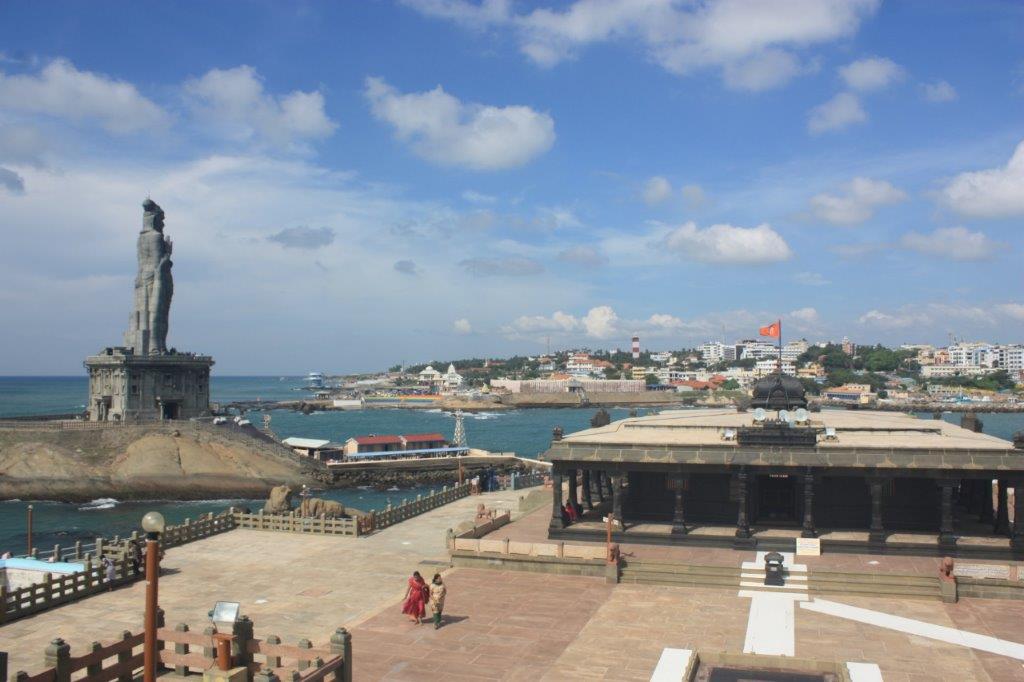
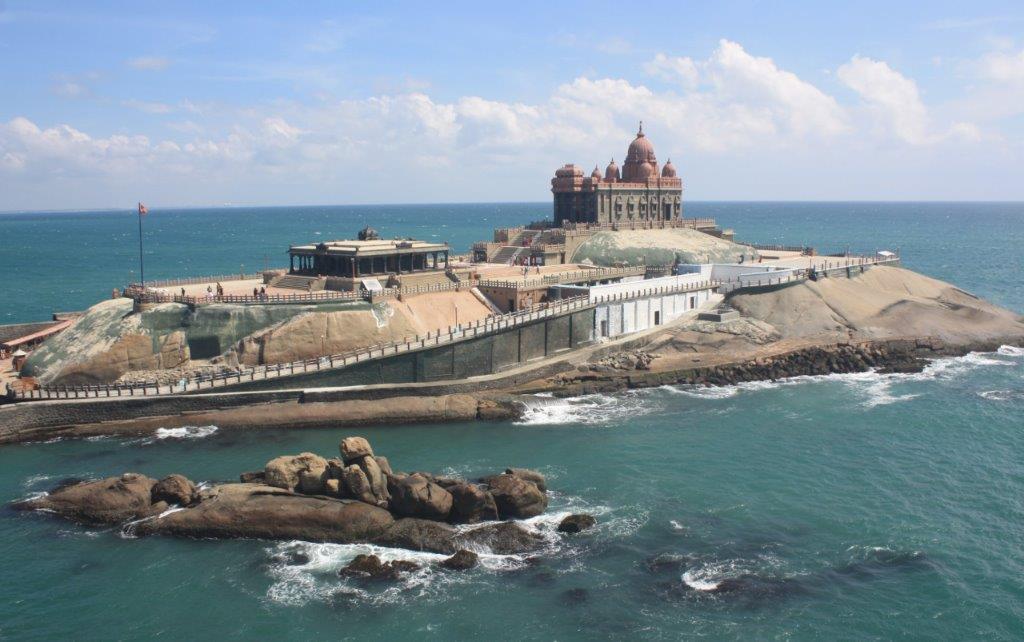
DAILY PHOTO: Kanyakumari from the Vivekananda Rock Memorial

Vivekananda Rock Memorial

In Praise of Now [Free Verse]

Fast-forward to the end!
 Turn to the last page.

People want to know
 how it all turns out?

What lies in the 
 great beyond,
and what makes
 it so great?

What will rise to the top 
 of one's soup of possibilities?

But some little animal,
 crying in the darkness,
  doesn't want to be jetted
   to the end --
just so that it can know 
 that it all turns out okay.

It wants to slip into the now
 and wear it like a snuggy.

Sleepy Dog [Haiku]

nodding, old man style,
 why struggle to stay awake?
  a sleepy dog.

BOOK REVIEW: A Beginner’s Guide to Japanese Haiku Translated by William Scott Wilson

A Beginner's Guide to Japanese Haiku: Major Works by Japan's Best-Loved Poets - From Basho and Issa to Ryokan and Santoka, with Works by Six Women Poets (Free Online Audio)A Beginner’s Guide to Japanese Haiku: Major Works by Japan’s Best-Loved Poets – From Basho and Issa to Ryokan and Santoka, with Works by Six Women Poets by William Scott Wilson
My rating: 5 of 5 stars

Amazon.in Page

Release Date: March 28, 2023

This is a delightful, nicely arranged, and well-translated anthology of haiku. A couple things should be clarified off the bat, given the book’s title (particularly for haiku neophytes.) First of all, “Japanese Haiku” may sound redundant, but the point is that this collection is entirely haiku translated from the work of Japanese poets – historic and modern. There’s been a huge international production of haiku for quite a while, and even national sub-styles such as American Haiku, but this anthology includes none of that.

Secondly, one needn’t put too much stock in the “beginner’s” wording of the title. I understand their point. If you’ve done a lot of haiku reading, you will see quite a few familiar poems, and there are none of the related forms (e.g. tanka, kyoka, renga, haibun, etc.) However, with respect to the first point, the beauty of good poetry is that one can re-read it and get something new out of it each time, and this is especially true if it’s a different translation, which allows one to both take in something of the translator’s perspective as one applies one’s own. Furthermore, this book has many fine features that will particular benefit experienced and analytical haiku readers. For one, it has the original poem both in Japanese characters as well as Romanized phonetic Japanese. (The latter makes it easy to see how the poet worked sound and syllabic arrangement.) There’re also brief biographies for all the poets, which is both useful for knowing what informed their craft, but also interesting in that a surprising number of these haiku poets lived colorful lives.

There are three sections to the book that work in the direction of increasing levels of obscurity. It begins with the big four of haiku (Bashō, Shiki, Buson, and Issa.) Then there’s a section with a large number of notable, but not Bashō-level poets. Finally, there are lesser-known poets, many of whom were quite prolific and had unique takes on the form. The latter two sections include poets that span from the contemporaries of Bashō to twentieth century poets.

If you enjoy haiku, I’d highly recommend this collection. I learned more about suspensive form in haiku and the varying styles of free verse haiku poets in Japan just through careful reading.


View all my reviews

DAILY PHOTO: Solah Khamba Mosque, Bidar

Image

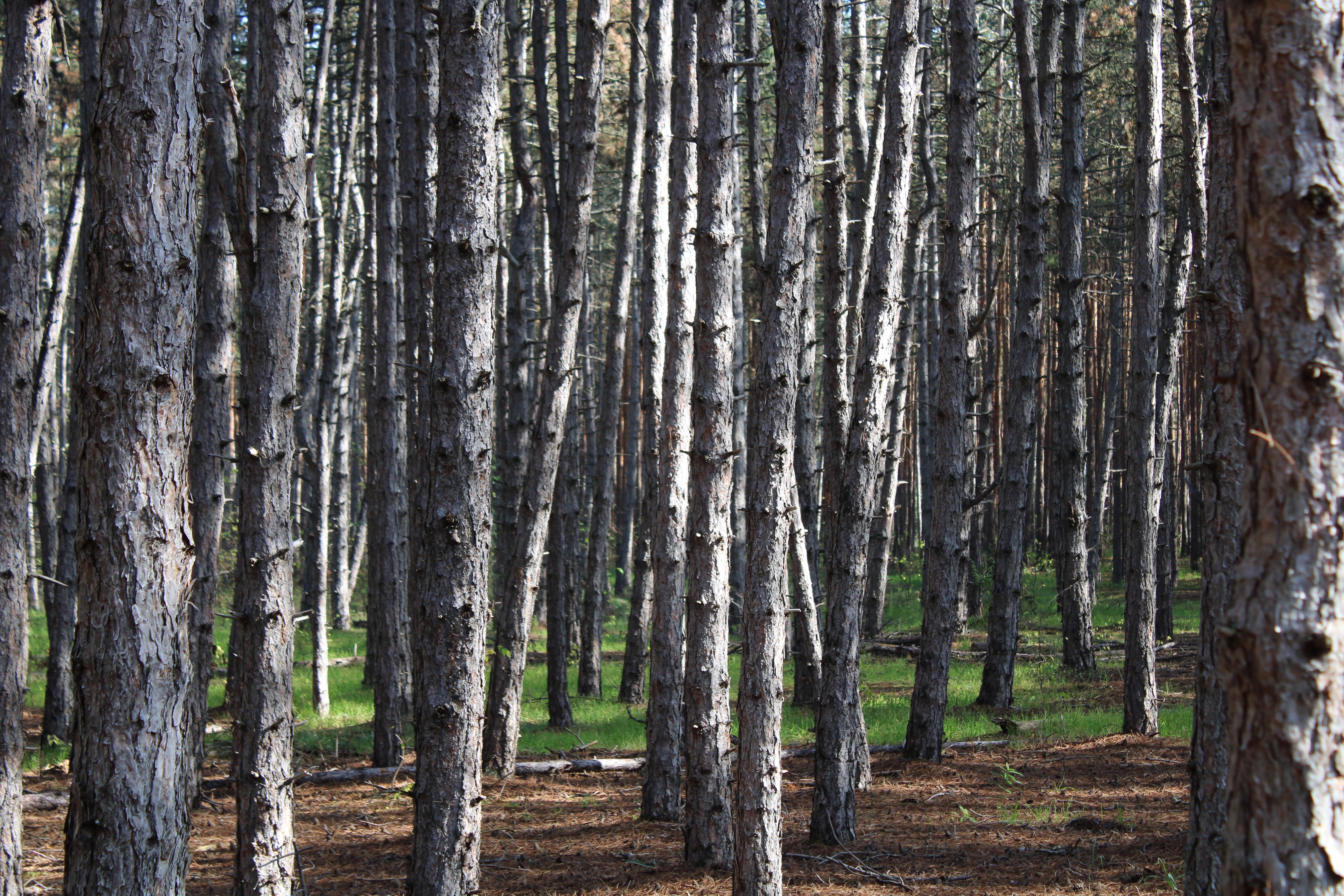
Lonely Forest [Haiku]

despite all the trees
in this densely packed forest,
it feels lonely.

BOOK REVIEW: Crabwalk by Günter Grass

CrabwalkCrabwalk by Günter Grass
My rating: 5 of 5 stars

Amazon.in Page

This story is narrated by its lead character, Paul Pokriefke, a journalist who was on the ill-fated ship, the Wilhelm Gustloff, being born on a rescue ship immediately after his pregnant mother was among the small proportion of survivors to escape that most deadly maritime disaster in history. The sinking of the Gustloff is the book’s center of gravity, it’s around that event – and the events that led to it and that sprang from it – that the story swirls.

The strange title, “crabwalk,” can be taken in a number of ways. For example, the author uses the term when he advances the story by moving in some direction that isn’t chronologically forward. However, the central crabwalk is the failure of a segment of the German population to move forward in the aftermath of the Second World War. This is shown through the narrator’s son, Konrad Pokriefke, a neo-Nazi of sorts who has an obsession with the sinking of the Wilhelm Gustloff and the incident by which that huge ship got its name (Gustloff being a Swiss Nazi who was assassinated by a Jewish student named David Frankfurter.) For much of this story, Konrad’s obsession plays out on the internet, in chatrooms and on websites that Paul covertly monitors – Paul being estranged from his son, a misfortune that he often blames on his own fatherless upbringing.

One confounding element of the story is the apparent cold rationality of Konrad Pokriefke. To clarify, the young man doesn’t exhibit sound reasoning, but he has this rationale in his mind (nutty as it may be) and he is dispassionate about doing what he believes he needs to do. Konrad isn’t the red-faced, spittle-flying Neo-Nazi. At first, it felt implausible for Konrad to have such a set of views and to be so coolheaded about them. That said, I suspect the author wrote it that way intentionally, and eventually it came to feel true – if horrifying [i.e. the idea that this cold version of hatred might be more sustainable than the intensely angry variety and that it might also retain more hatred in the face of interaction with “the enemy” (it being harder to maintain generic hatred of people with which one has an up close and personal interaction.)]

I found this book, which mixes factual events with fictional characters, to be compelling and thought-provoking. It did have a slow burn at the start, but it makes up for it with greater intensity as the story climaxes.


View all my reviews