BOOK REVIEW: A Farewell to Arms by Ernest Hemingway

A Farewell to ArmsA Farewell to Arms by Ernest Hemingway
My rating: 5 of 5 stars

Amazon.in Page

This novel is set in Italy during World War I. The protagonist, Frederic Henry (like Hemingway, himself) volunteered to drive an ambulance in Italy during the war. The story is informed by, if not based upon, Hemingway’s personal experiences. Central to the story is a romance between Henry and a British nurse named Catherine Barkley. Their tentative flirtations deepen when Henry is wounded and spends a considerable amount of time at the hospital while recuperating. Barkley becomes pregnant with Henry’s child in the middle of the war. Henry returns to service for only a short time before he finds himself in the midst of a chaotic retreat from the swift advance of the Austrians and Germans. This retreat continues to go sour for Henry, leading to a flight for his life as he attempts to get back to Catherine so that he can get them both (plus the unborn child) to safety.

There’s a [variously-attributed] quote about war being: “long periods of interminable boredom punctuated by sheer terror.” This book captures that feel, but even during the moments of quiet from the opening through Henry’s rehab to the weeks hiding out in the Swiss mountains, Hemingway keeps the story engaging by shining a light into the protagonist’s psychology – and, occasionally, through wit. Then there are the thrilling moments like the shelling that wounds Henry or his various narrow escapes.

I found this book to be highly engaging. It has some beautiful language, exemplified by the famously well-composed opening paragraph, mixed with the taut suspense of life in a war zone. If you’re interested in war stories or classic American literature, it’s a must-read.

View all my reviews

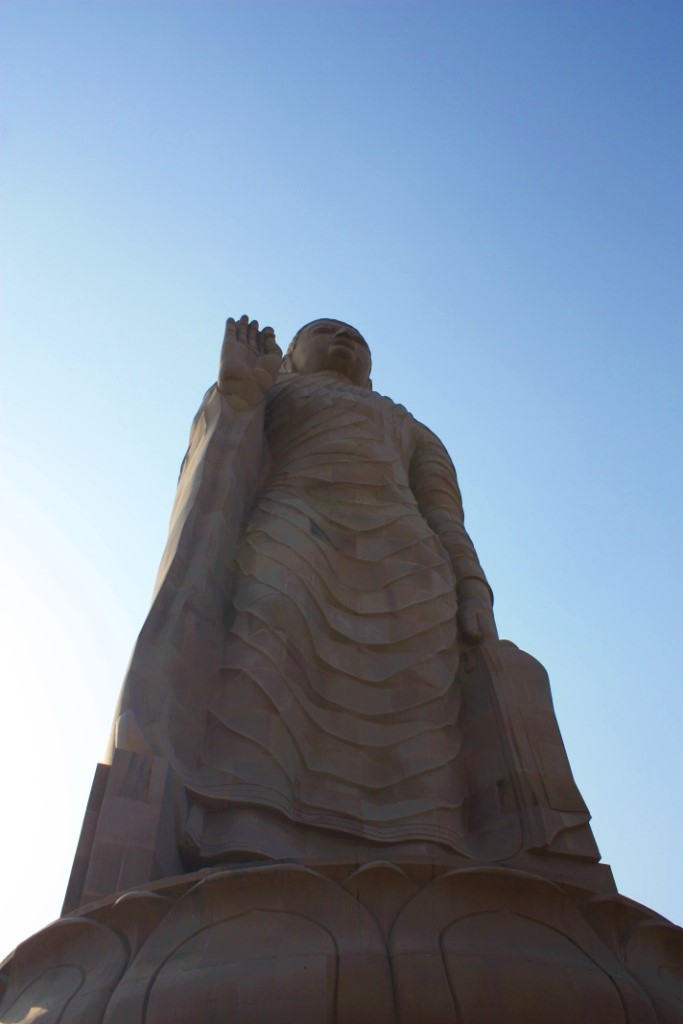
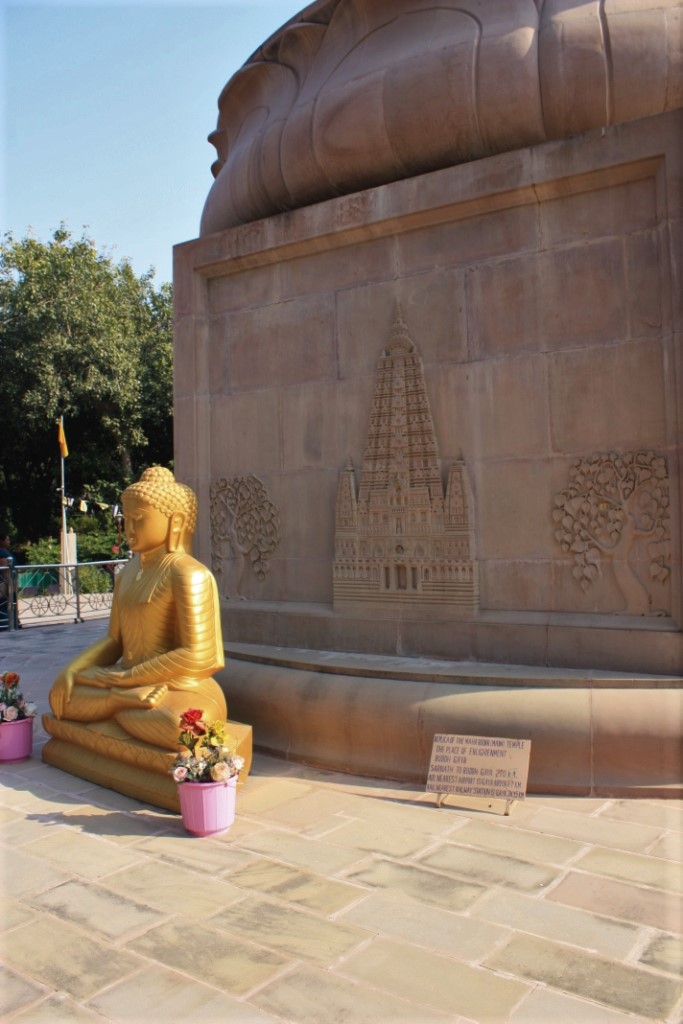
DAILY PHOTO: At the Buddha’s Feet, Wat Thai Sarnath

Taken in October of 2015 in Sarnath, India

BOOK REVIEW: Introducing Plato: A Graphic Guide by Dave Robinson

Introducing Plato: A Graphic Guide (Introducing...)Introducing Plato: A Graphic Guide by Dave Robinson
My rating: 4 of 5 stars

Amazon.in Page

This is a concise guide to the philosophy of Plato. Its numerous short (page-length) sections are logically arranged: beginning with background context – e.g. life in ancient Athens and the ways of Plato’s teacher, Socrates — and ending with discussion of the post-Platonic world of Aristotle and later philosophers influenced by Plato’s work. Through the heart of this book, it explores the various dimensions of Plato’s philosophy: his epistemology, his take on virtue ethics, his political philosophy, his form-based conception of metaphysics, his thoughts on rhetoric, and his surprising rejection of art and poetry. Along the way, the book discusses about ten of the Socratic dialogues, specifically (others are mentioned in passing as they relate to topics under consideration,) as well as many of the well-known ideas that came from these works (e.g. Plato’s Cave from “Republic.”)

The book uses graphics to help convey ideas, mostly drawings that emphasize key points. There is also a “Further Reading” that lists some works that elaborate on Plato’s philosophy and life from various perspectives, as well as listing a number of the Socratic dialogues and whether they fall into the early, middle, or late phases of Plato’s career. (Note: There isn’t complete agreement on how many Socratic Dialogues were written by Plato – 35 is a disputed number, but one often cited. The importance of the period is that Plato appears to increasingly present his own ideas, rather than those of Socrates, who continues to serve as the central character in Plato’s writings.)

This book is highly readable, but skims the surface. Whether it will serve one’s purpose depends upon what one knows about Plato and his canon to begin with. I would recommend it for a neophyte who doesn’t want to get bogged down in a lot of obscure ideas or complex explanations.

View all my reviews
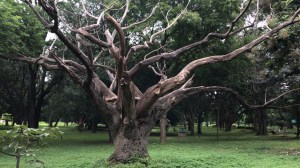
Unbridled Movement [Haiku]

even the branches
of a brawny Kapok Tree
sway in the wind

Nowhere Station [Haibun]

The tawny landscape was tinged with the green that landlubbers take on in rolling seas or flatlanders show on a high mountain pass. The world looked like it was being viewed through shooter's glasses -- except for the azure infinity overhead that was unafflicted by sickly hues. Railroad tracks arced the length of the valley and it was a long valley - so long the tracks almost looked line like. The lack of other signs of humanity might have led one to believe it was the train to nowhere, but there was a solitary station in the middle of the valley and there can't be a station in the middle of nowhere on the way to nowhere. Or, can there be? Maybe, nowhere is like infinity, existing in larger and smaller degrees.


a single building
and a long covered platform,
but just i, waiting

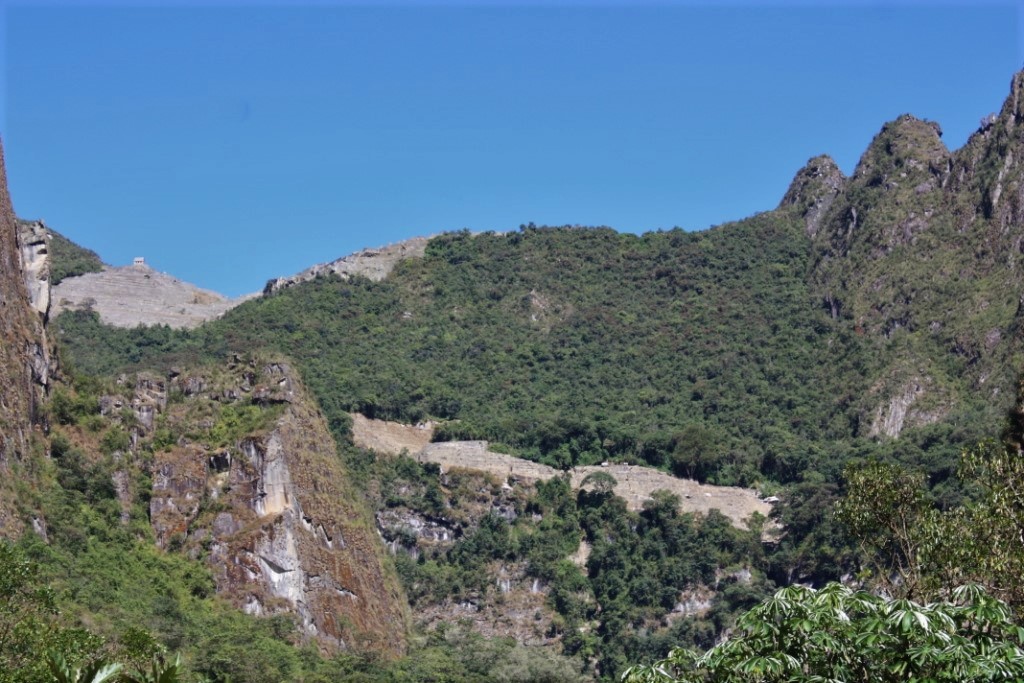
DAILY PHOTO: Machu Picchu in the Distance

Taken from the Salkantay Trail

Cuzco Limerick

The Conquistador who "founded" Cuzco
apparently, did not get the memo.
"My lips to your ear,
it's already there.
It's been a city since Moors ruled Toledo."

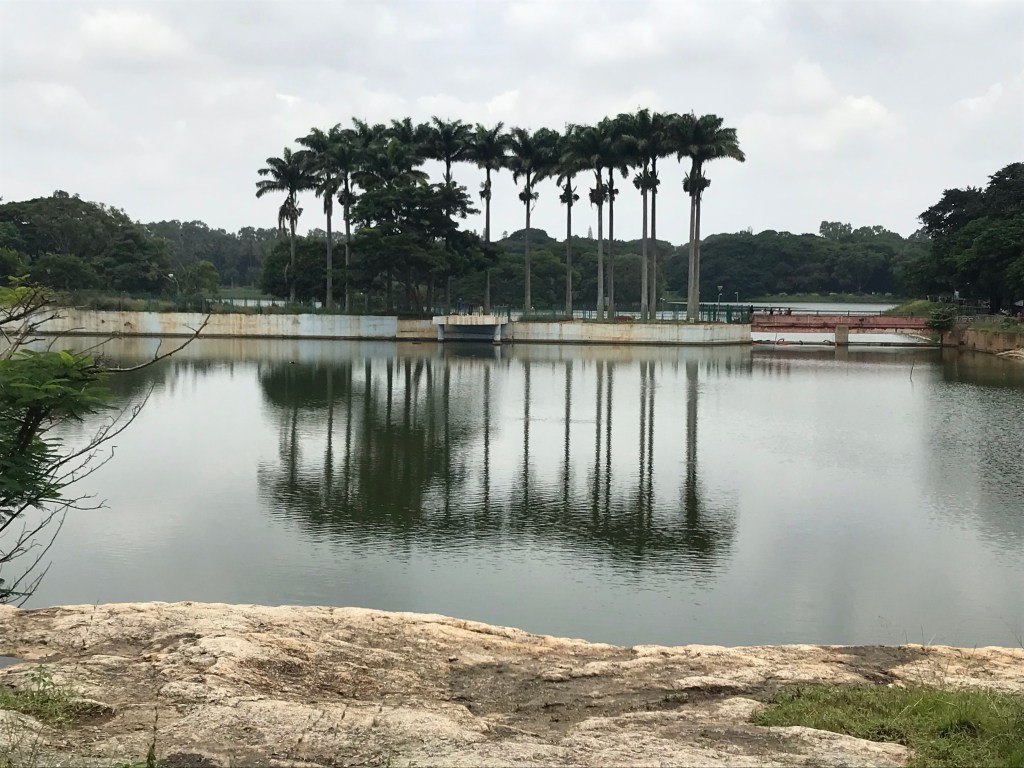
DAILY PHOTO: Line of Reflected Palms, Lalbagh

Taken on August 21, 2021 in Bangalore