PROMPT: Guaranteed

What’s something you would attempt if you were guaranteed not to fail.

Cast a magic spell? Everything I know of in this world comes with no such guarantee — at least anything worth one’s time. It’d be better to spend one’s time learning to thrive under uncertainty.

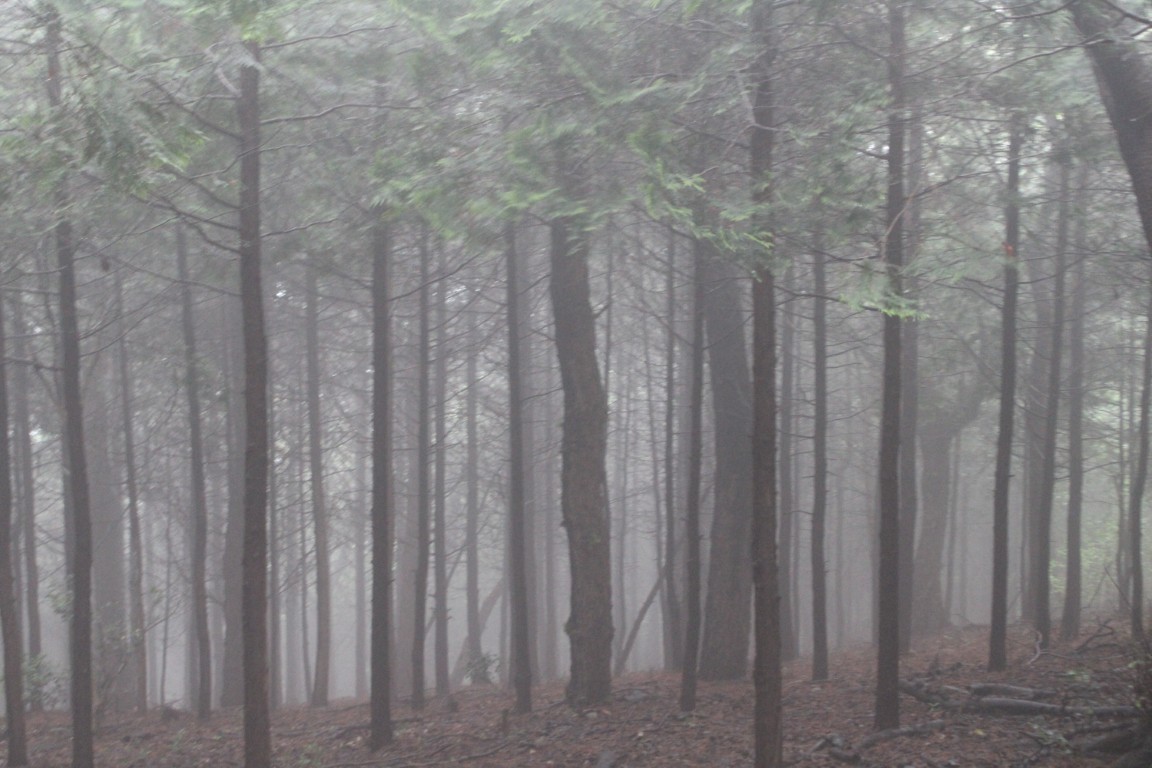
Lost in a Fog [Free Verse]

Lost
in a foggy wood.

all the trees alike,
no long view,
no hint of the sun's position...
(or existence.)

just the vertical stripes of
straight pinetree trunks --
like the bars
of the cell
of a giant --
laid against a fluffy white
backdrop.

I can scurry between
the bars, like a mouse,
but am still lost
and still caged.

Crisis Arises [Free Verse]

Crisis arises
From the depths
Of intended perfection --
"Intended" because all
We can ever do is
Aim & release.
It is more an act of luck
To hit the bullseye
Than to miss.
Bullseyes don't occur because
Of a lack of adverse forces
At work.
They occur because of some
Fortuitous balancing
Of adverse forces.

BOOKS: “Live Like a Philosopher” by Massimo Pigliucci, Gregory Lopez, and Meredith Alexander Kunz

Live Like A Philosopher: What the Ancient Greeks and Romans Can Teach Us About Living a Happy LifeLive Like A Philosopher: What the Ancient Greeks and Romans Can Teach Us About Living a Happy Life by Gregory Lopez
My rating: 4 of 5 stars

Publisher Site — Hachette / Headline Press

This book is for a person in the market for a philosophy of life, but who only knows that they want a system rooted in Ancient Greece. While the coauthors are all Stoics, the book explores twelve additional philosophies and gives each roughly equal consideration. In addition to the expected systems, such as Epicureanism, Stoicism, Platonism, and Skepticism, there are also several lesser known or defunct philosophies such as Cyrenaic hedonism, Cynicism, Pyrrhonism, and Megarianism.

The book is organized into four parts. The first examines schools that value pleasure (Cyrenaicism and Epicureanism,) the next investigates schools that focus on virtue and character (Aristotelian Peripatetics, Stoicism, Cynicism, and Political Platonism,) the penultimate focuses on systems encouraging doubt or caution in knowledge (Socratic philosophy, Academic Skepticism, Sophism, and Pyrrhonism,) and the last set are posed as questionable candidates for a life philosophy (i.e. those of the Pythagoreans, Megarians, and Neoplatonists.) The last three schools are questioned on various grounds, including: is enough known about what its practitioners believed, did they live their philosophy or just ruminate on it, and could the system be considered a full-fledged philosophy (as opposed to a stance on a specific issue or issues.)

The book is presented in self-help fashion, with each chapter ending in a set of exercises designed to help the reader build practical understanding of each school. The goal of these exercises (as comes together in an appendix) is to help the reader determine which philosophy is best suited to their disposition and inclinations.

I enjoyed this book. The authors use stories to convey ideas and the book’s readability is kept inviting to general readers. If you’re interested in better understanding Greek schools of philosophy, I’d recommend the book as quick and easy way to get a better grasp.

View all my reviews

Scarecrow [Free Verse]

Scarecrow, n. - that which exists 
                         solely to evoke fear.

There are so many scarecrows:
   global - the end of the world
                    as we know it.
   societal - the end of the tribe
                    as we know it.
   individual - scarecrows of the soul.

Scarecrows lead us into the worst
        versions of ourselves: 
 The one who's stressed, and mean
        because of it.
 The one who imagines conspiracy
        around every corner.
 The one who sees threat in every
        change & in every difference.
 The one who wants an orderly world
        of people just like themselves -
        familiar, cozy, and lacking surprises.

Scarecrows even march us off to war,
        and war should be the scariest state
              imaginable --
        death doled out on a random basis.
 
War should be the scariest, but terrible certainties
         spur less fear than any old uncertainty.

POEM: Thinking

I think,
but without Descartes’ insistence that I am.

In fact, the more I think, the less confident I am about knowing what “being” means.

I think — without knowing,
and recognize the hazard of that condition.
It’s what got Socrates killed.

A smart person who claims to know may raise hackles,
but is dismissed as arrogant.

It’s the smart person who admits he doesn’t know…
[let’s hope I’m not wrongly classed among them]
… that’s the one who arouses murderous intent.

For what hope exists for priests, professors, or politicians —
or any of the many oracles of our age —
when the most astute confess that uncertainty is inescapable?

What airy sands are our castles built upon?

And, yet, I think.