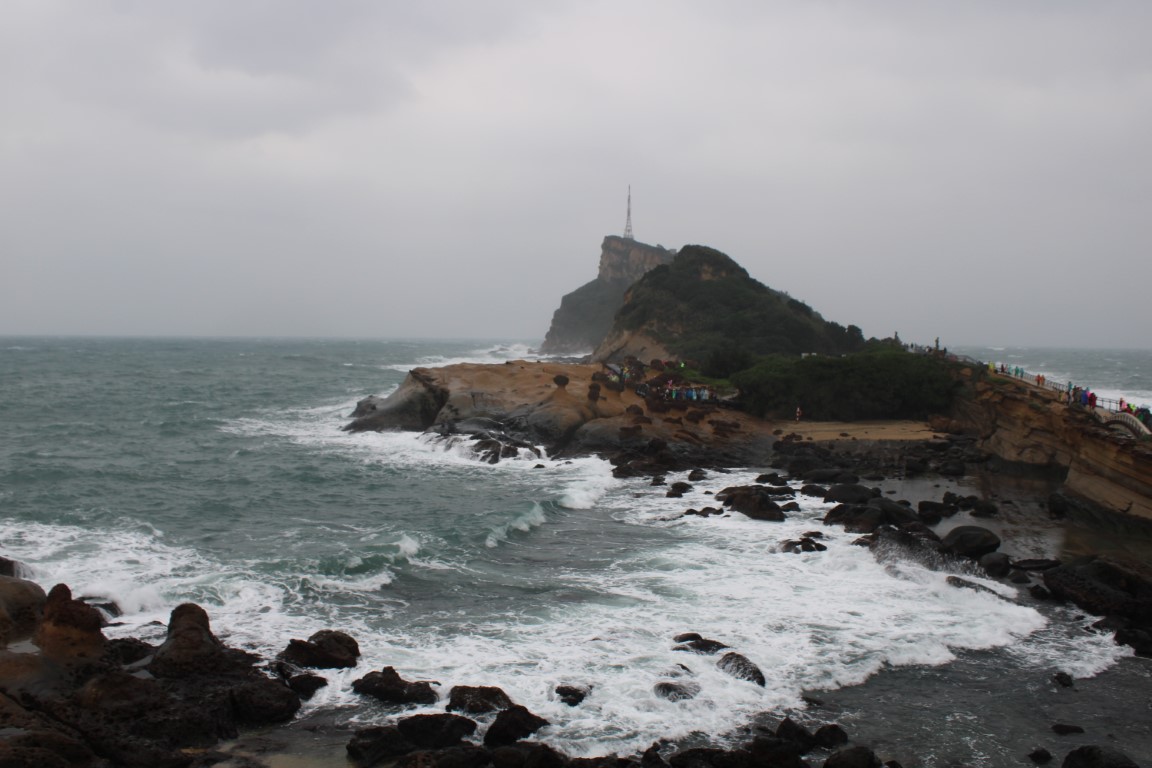
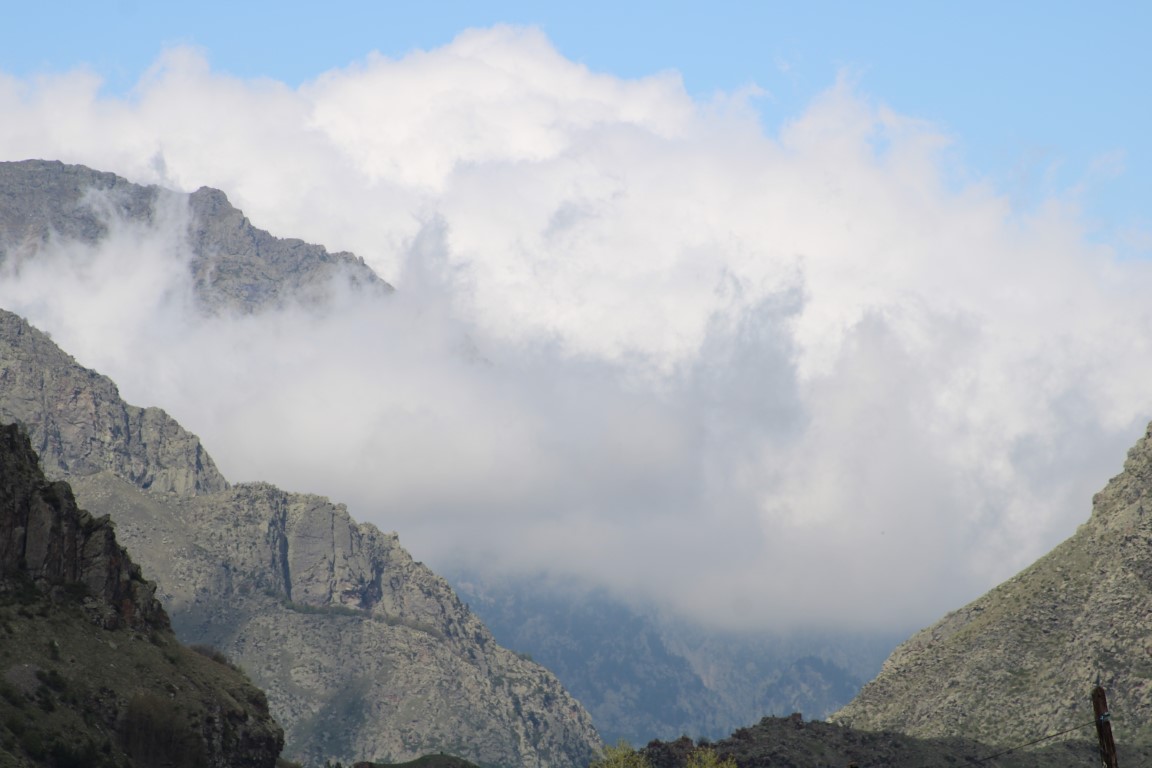
“Ascending Happiness Plateau” by Li Shangyin [w/ Audio]

At day's end, feeling ill-at-ease,
Riding a cart to the plateau.
The setting sun fires glorious skies,
But a yellow dusk is coming.

“Form” [Poetry Style #20] by Sikong Tu [w/ Audio]

Quit seeking to firm up the soul;
Return to the unadorned truth.
One can seek the shape of water;
One can write of a pleasant spring.
Winds shift the shapes of clouds,
Flowers stand tall, and flowers droop.
The great waves of a sprawling sea,
The mountain's craggy ruggedness...
They all emulate the Great Way.
Every wonderful thing is dust.
Find semblance beyond shape or form.
In this person, the multitudes.

NOTE: The late Tang Dynasty poet, Sikong Tu (a.k.a. Ssŭ-k‘ung T‘u,) wrote an ars poetica entitled Twenty-Four Styles of Poetry. It presents twenty-four poems that are each in a different tone, reflecting varied concepts from Taoist philosophy and aesthetics. Above is a translation of the twentieth of the twenty-four poems. Translated titles vary. This one has been titled “Descriptive” and “Form and Feature” by varied translators.

“Hand in Hand” by Su Shi [w/ Audio]

Hand in hand.
Plum petals floated to her skirt.
-- Love unbound --
Now, lost souls mill about:
Thier loved ones long unseen.
Old songs are heard once more,
Recalling Tower and Temple.

On ordinary days,
I'd write a thousand lines.
Now, I brush away dust,
And think of us, together.
The moon reflects in the lake.
Willows droop beside water.
A dragon-head cloud drifts on air.

Note: Translated titles vary. e.g. Xu Yuanchong entitles his translation “Song of Incense.”

“Real” [Poetry Style #18] by Sikong Tu [w/ Audio]

Plain and simple words are chosen,
Even to express tangled thoughts.
Then one comes upon a hermit,
And one glimpses the heart of Dao.
The clear stream burbles its soft song
Amid the shady ancient pine grove.
A woodsman passes with his cordwood;
A stranger listens to a lute song.
A strong feeling takes one over,
Bringing with it bliss and wonder,
And one's easy link with heaven
Is tender as the sound of water.

NOTE: The late Tang Dynasty poet, Sikong Tu (a.k.a. Ssŭ-k‘ung T‘u,) wrote an ars poetica entitled Twenty-Four Styles of Poetry. It presents twenty-four poems that are each in a different tone, reflecting varied concepts from Taoist philosophy and aesthetics. Above is a translation of the eighteenth of the twenty-four poems. Translated titles vary — e.g. Herbert A. Giles titled this translation “Actualities.”

“Fascinated” [Poetry Style #16] by Sikong Tu [w/ Audio]

The scent: copper-carpeted pine forest;
A stream rushes through: swirling, burbling;
Blue sky and snowcaps peek through the treetops.
In the distance, fishermen are trawling.
A young lady with flowing hair and gown
Passes gracefully through the thick woodlands.
Eyes move when she moves and stop when she stops,
Following her transit down the valley.
The mind shows not its usual chaos,
But is effortlessly anchored to her.
As if to a huge rising moon.
As if to blazing autumn hues.

NOTE: The late Tang Dynasty poet, Sikong Tu (a.k.a. Ssŭ-k‘ung T‘u,) wrote an ars poetica entitled Twenty-Four Styles of Poetry. It presents twenty-four poems that are each in a different tone, reflecting varied concepts from Taoist philosophy and aesthetics. Above is a translation of the sixteenth of the twenty-four poems.

“Lost in Fog” by Qin Guan [w/ Audio]

The tower has vanished in the fog;
The boat is hidden in moon-shadow;
The perfect peach field cannot be found.
I'm shut in by the cold rain of Spring.
I hear the cuckoo's call at sunset.

Apricot blossoms sent by my friends
In letters received through the post
Cause an assault by countless memories.
A lonely river rounds the mountain,
But why should it flow toward my lost world?

BOOKS: “Best Literary Translations 2024” ed. by Jane Hirschfield, et. al.

Best Literary Translations 2024Best Literary Translations 2024 by Jane Hirshfield
My rating: 5 of 5 stars

Publisher Site

This “best of” annual celebrates the unsung translator. Many of the original works are recent but some are old or even ancient; it is these translations to English that are in all cases recent. Spanish and Arabic translations are well-represented, but with respect to the twenty or so languages included, almost all are the sole representative for that particular source language. Poetry makes up the bulk of the collection (including prose poems,) but there are several pieces of short fiction and a piece of creative nonfiction or two.

Among my favorites were: “Grazing Land” (Greek,) “The Snail’s Spiral” (Spanish,) “The Lion” (Kurdish,) “Deterioration” (Persian,) “Graceless” (Chinese,) “Our Village” (Tigrinya,) and “The Sea Krait” (Tagalog.) But, as one would expect of a carefully curated “best of” collection, there were no stinkers in the batch.

If you enjoy literature in translation, this book is well worth investigating.

View all my reviews

“Finely Woven” [Poetry Style #14] by Sikong Tu [w/ Audio]

The building blocks of everything --
Too fine to feel or see or smell --
Dance their way into hardened shapes
Via forces, invisible.
And so water flows, flowers bud,
But - also - dew evaporates.
This expansive path stretches on --
It's slow-going through dark lands.
It can't be spoken of smartly.
It can't be pondered fruitfully.
It's Early Spring green in sunlight,
Or like the snow seen by moonlight.

NOTE: The late Tang Dynasty poet, Sikong Tu (a.k.a. Ssŭ-k‘ung T‘u,) wrote an ars poetica entitled Twenty-Four Styles of Poetry. It presents twenty-four poems that are each in a different tone, reflecting varied concepts from Taoist philosophy and aesthetics. Above is a translation of the fourteenth of the twenty-four poems. Translated titles vary: Giles calls it “Close Woven” and others have titled it, “Fine.”

“Tacit” [Poetry Style #12] by Sikong Tu [w/ Audio]

Without a word,
The gist is grasped.
With no wails or soft sobs,
Sadness spreads heart-to-heart.
There is an enigmatic Prime Mover
With whom each of us either sinks or floats.
Dregs of rustic wine in a fine strainer.
Buds on the cusp of bloom turned back by cold.
Dust motes spreading by Brownian motion.
Sea spume floating and tumbling onto shore.
Shallow, deep, cohering, or scattering.
Of ten thousand, any sample will do.

NOTE: The late Tang Dynasty poet, Sikong Tu (a.k.a. Ssŭ-k‘ung T‘u,) wrote an ars poetica entitled Twenty-Four Styles of Poetry. It presents twenty-four poems that are each in a different tone, reflecting varied concepts from Taoist philosophy and aesthetics. Above is a translation of the twelfth of the twenty-four poems. Translated titles vary: Herbert Giles entitled this one “Conservation,” whereas Tony Barnstone and Chou Ping called it “The Implicit Style.”

BOOKS: “Gothic Tales” by Marquis de Sade [Trans. by Margaret Crossland]

Gothic TalesGothic Tales by Marquis de Sade
My rating: 5 of 5 stars

Amazon.in Page

Release Date: September 3, 2024

This collection of short fiction is an excellent entry point for the reader wishing to be introduced to the philosophy and literary stylings of the Marquis de Sade. It is less visceral and explicitly violent than the works for which Sade is most famous (i.e. Justine, 120 Days of Sodom, and Philosophy in the Boudoir.) While it does deal in libidinal issues throughout and has a few stories that are explicitly erotica (notably the last couple pieces,) it never ventures up to or over whatever thin line separates erotica from pornography.

While all the pieces share Sade’s signature philosophy and interests, it is in other ways a quite diverse collection of writings. The first piece, “Eugenie De Franval,” is a novella that takes up about half the book, and it is followed by a piece that, in today’s parlance, might be called flash fiction, “The Horse-Chestnut Flower.” Pieces such as “Eugenie De Franval” and “Florville and Courval” are tragedies while the comedies include: “Emilie De Tourville,”[granted with grim elements] “The Husband Who Played Priest,” “Room for Two,” and “The Self-Made Cuckold.” Those last three – as well as “The Horse-Chestnut Flower”– are comedic in a modern sense, not just the literary sense.

I can’t say how much of the difference in tone and intensity of these pieces from Sade’s other stories is owed to the selected source material and how much is owed to translation and editorial decisions, but it makes for a read that is more intriguing in story and less shocking and disturbing than many other translations of Sade’s work.

I enjoyed these stories. They had many clever twists and turns that I don’t recall experiencing in Sade’s novels. Several stories rely on a great deal of deus ex machina coincidences, but I think that works just fine — particularly in the more humorous stories. I’d highly recommend this for readers looking to ease into the work of the Marquis de Sade.

View all my reviews