
A man who sold marital aids door to door
  heard from a husband in an uproar.
   "An 'aid' for whom?
   It can't be the groom.
 Your product has three speeds, so I now need four."

A man who sold marital aids door to door heard from a husband in an uproar. "An 'aid' for whom? It can't be the groom. Your product has three speeds, so I now need four."
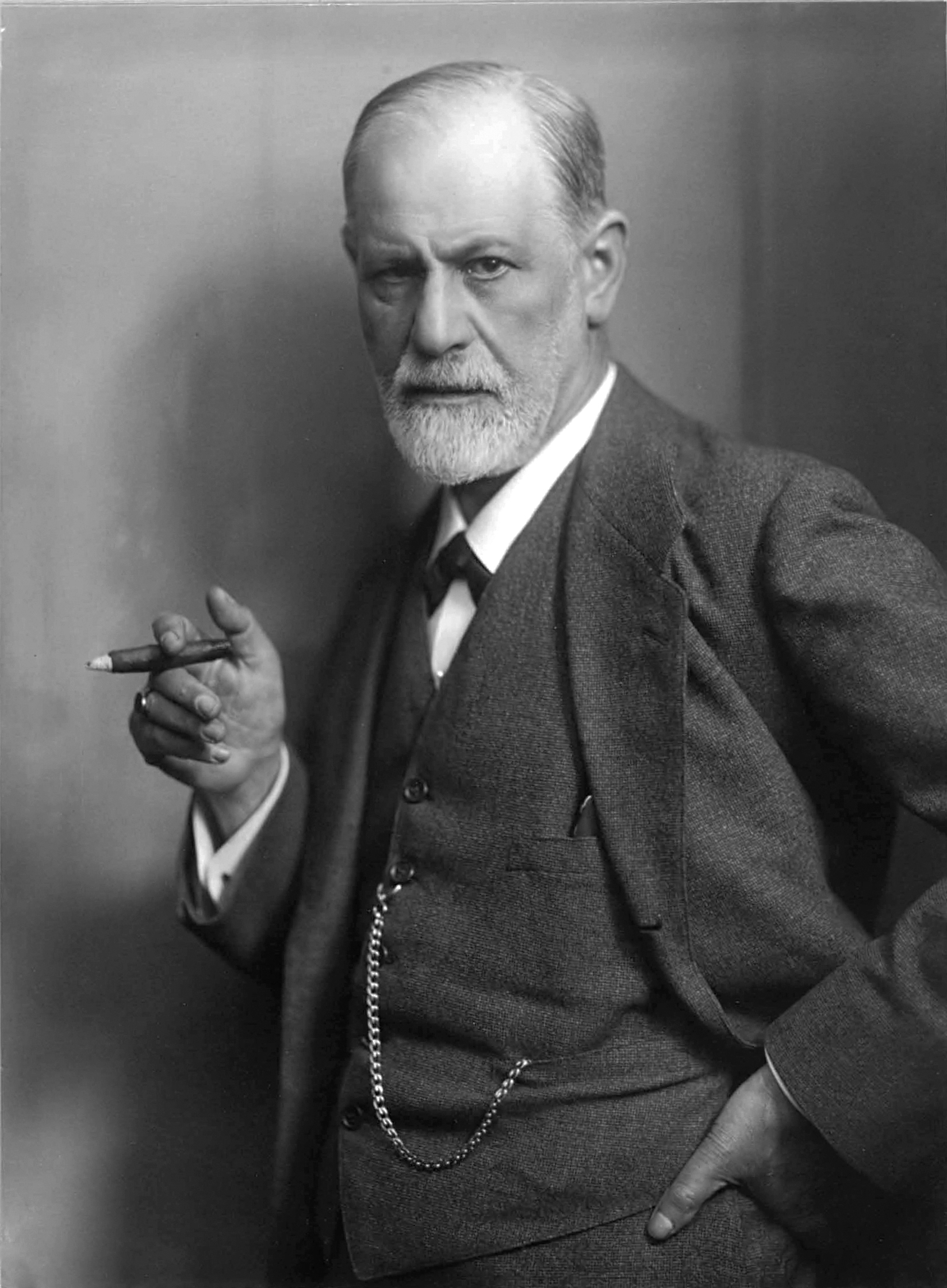
There once was a psychiatrist named Freud
 who thought all were obsessed with filling a void...
   a void in the pants!
   Though some looked askance,
 and those whose cigars weren't cigars were annoyed.
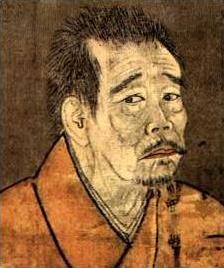
There was a Zen master named Ikkyū
   who was thought by many to be cuckoo.
 He'd allow a toot
  on his very own flute.
 Which was unbecoming of flutists (& monks, too.)
 Goa Travels: Being the Accounts of Travellers from the 16th to the 21st Century by Manohar Shetty
 Philosophy in the Boudoir by Marquis de Sade
A girl got herself an intrepid beau,
but she'd long owned a vibrating dildo.
"That thing has three speeds
to exceed her base needs
I'll need four, none too quick nor too slow."

There once was a monogamous Geometer
who could angle in inches or kilometers.
"I do love triangles,
except love triangles,"
At orgies he was a nervous vomiter.

I've thought about the ideal horn.
Should it be straight or curved?
Or by a spectacular rack
would one be better served?

Maybe one would be better off
being a unicorn.
With just way too many options,
I confess I am torn.

A huge rack would most certainly
wreak hell upon the spine,
but a unicorn must get foes
to form a single line.

I once saw a wandering oryx;
its horns were a stumper.
They seemed optimized to stabbing
off course para-jumpers.
 Money Shot, Vol. 1 by Tim Seeley
My rating: 5 of 5 stars
This graphic novel weds a serious look at a serious problem with a raunchy romp into extraterrestrial porn. [Warning: If the latter part of that statement didn’t clue you in, this book is sexually graphic both pictorially and in terms of dialogue. While I don’t think there is anything in it that your average adult can’t handle, I wouldn’t recommend it for the puritanically-inclined or as a gift for one’s eight-year-old nephew – i.e. “because it’s a comic book.”]
At the center of the story is Dr. Christine Ocampos, the inventor of a Star Gate-like faster than light travel portal, a brilliant technology that is far too expensive to operate to get grant funding, money she needs to finance a multi-disciplinary team of researchers. The title, “Money Shot,” is used in two senses in the book. First, the portal was marketed as “Star Shot,” but because it is so expensive to run, it earned its “money shot” nickname, implying it was a good way to shoot a mass of cash into the dark void of space. The second sense of the word is as it’s used in the porn industry, the highly-visible climactic moment of a sex scene.
Ocampos, tired of spending her life writing enormous grant proposals that ultimately get rejected on the grounds of cost, stumbles upon an idea for an alternative approach while “decompressing” with pornography. The harried lab director realizes that people seem to be disproportionately interested in outlandish fetish porn, presumably because they are bored with the usual “meat-and-potato” varieties of sexual activity. Ocampos concludes that there can’t be anything wilder and more outlandish to catch the attention of the porn-viewing world than sex with extraterrestrials. She pitches her plan to the other four members of her research team, and –fortunately for her – they are all photogenic / attractive and surprisingly sexually liberated. [Meaning it’s not particularly difficult to convince them all to participate.]
I won’t go into the story in great detail, except in as much as to say there is one and it’s entertaining. The story uses a common science fiction idea of being drawn into the center of a dysfunctional alien society’s troubles. The five scientists / porn stars find themselves on an environmentally-depleted planet run by an authoritarian warlord who uses the ‘bread and circuses’ approach to keeping the population in check, thus resulting in gladiatorial battles and a groundswell of revolutionary sentiment.
While the book takes a light tone, it does convey a couple serious messages in the process. The most obvious of these messages is that science is expensive and, perhaps, the mainstream funding approach (applying to large government-run grant agencies) curtails some good science. A secondary message is that less sexual repression and shame could be a good thing for the world, overall.
The art is well-drawn and clear. The scenes are depicted in a clean and easy to follow fashion. Color palette changes are used to make it easy to follow between flashback and the present moment. While I made a comment about the team all being attractive, I suspect there was a conscious effort to include a range of body types – within some bounds at least. While Ocampos is the perfectly-proportioned Disney princess-type — on the whole, the team displays a mix of size and shape.
While this is unquestionably a bizarre premise for a comic book, I found it to be readable and compelling. If you like sci-fi comics, and aren’t put off by graphic sexuality, you’ll probably enjoy this book.
 Kink: Stories by R.O. Kwon
My rating: 4 of 5 stars
Out: February 9, 2021
This is a collection of fourteen erotic short stories with a common theme of asymmetric power dynamics. [That’s an excessively syllabic way of saying Dominant / submissive, top / bottom, or Sadist / masochist relationships.] As is common with anthologies, a meaningful overall rating isn’t really possible. I found a couple of the included stories to be highly evocative or engaging, many were good, while others were just okay – plagued by the usual suspects that impair erotica such as characters without depth / intrigue or thin story. That said, none of the stories were poorly written.
To be fair, a broadly appealing erotica collection is a tall order. For one thing, erotica is the most idiosyncratic of genres. Like Horror, if it’s too tame for one’s tastes, it’s boring; if it’s too wild, it grosses one out — or otherwise become unreadable. [I suspect few (if any) readers will have the latter problem with this collection; some might have the former. (That is, given the likely readership demographic.) If you are picking up a book on kinky erotica, you are unlikely to be triggered or otherwise shocked or offended by anything contained herein.] In addition to the varied levels of intensity readers look for in erotica, there is the question of whether varied sexual orientations and identities are of interest to a given reader. This book covers a lot of ground in this regard, including heterosexual, homosexual, bisexual, and transgender characters.
Because the anthology is so qualitatively and topically varied, I’ll say a little about each story.
1.) “The Cure” by Melissa Febos: I found this to be a strange choice for the collection and – particularly – for opening the collection. It’s about a lesbian who decides to have sex with straight men because she’s having trouble in her customary dating pool, but since she likes sex, she decides to pursue it in the form least laden with complication. So far, it could be fine, but it devolves into a laundry list of what she finds disgusting about intimacy with men. Now, one would expect a lesbian to find having sex with a man unappealing; just as anyone might when having sex outside their preferred orientation. However, it does raise the question: Why am I supposed to enjoy reading about this in a book of erotica? I think it’s fair to say that reading about people enjoying having sex is more erotic than hearing about people who aren’t enjoying their experience.
2.) “Best Friendster Date Ever” by Alexander Chee: This is a story about a hookup between two gay men who meet via a dating site, and who find themselves in a mutually appealing top / bottom sexual experience. While it’s not a story with a great deal of depth, it would have made a better opening because at least if features two people who are having intercourse because they like having sex with each other [as opposed to because there’s nothing on Netflix and each is the best the other can do on short notice.]
3.) “Trust” by Larissa Pham: As the name suggests, this story revolves around the issue of trust and the challenges that subject presents in a relationship of dominance and submission. When the couple goes on a getaway, the story mirrors the experience of trust-building in sexual encounters with the non-sexual circumstance of the male (dominant) driving off for the day without telling the female (submissive) that he’s leaving — or when / if he’ll be back. There’s some interesting insight into submissive psychology to be seen in this story.
4.) “Safeword” by R.O. Kwon: In this story, we see an issue that was touched upon in the previous on (and which later recurs,) which is what happens when one member of an intimate relationship is more into the kinky aspect than is the other. In this case, it’s a sadomasochistic relationship in which the female masochist is more desirous of the sadomasochistic aspect of the relation than is her male partner. The couple goes to a dominatrix so that the masochist can get what she desires and the man can learn to better pleasure [i.e. pain-ify?] his partner.
5.) “Canada” by Callum Angus: This atmospheric piece describes a girl’s relationship with a female to male transgender. It’s one of the shorter pieces, and – as the title suggests – it plays heavily on the setting, Canada, to create ambiance.
6.) “Oh, Youth” by Brandon Taylor: The story centers on an attractive young man named Grisha, and the appeal he has for some middle-aged people – particularly the infatuation that develops between the husband in a married couple that he is staying with temporarily during a college break.
7.) “Impact Play” by Peter Mountford: A recently divorced man enters into a serious relationship with the woman he was having an affair with when his marriage ended. He and this woman share an interest in kink and fetish sexuality that his previous wife apparently did not. We don’t learn much about his ex-wife, but we do learn quite a bit about his cousin, Betsy, whom he treats as a confidant and with whom he has a special relationship.
8.) “Mirror, Mirror” by Vanessa Clark: Diary entry of a well-endowed transgender escort. The story explores the fetishized nature of the main character’s occupation.
9.) “Reach” by Roxane Gay: A man and wife enjoy the former tormenting the latter with a steady stream of indignities as a fetish in their romantic life. It’s one of the more sensual pieces of writing in the anthology.
10.) “Gospodar” by Garth Greenwell: I would rate this as one of the two strongest entries in terms of story. It’s not the typical erotica in which the character comes out the other side of the story completely unchanged except for being momentarily spent. A submissive gay man meets up with a dominant in Romania that he learned about through the internet. The interaction starts off swimmingly, but it takes a hard turn south. The story is quite visceral, but provokes thought on the nature of consent where power dynamics are in play.
11.) “Scissors” by Kim Fu: This story is set amid a stage show in which sharp objects are used to undress a performer in motion. Attendees aren’t just after the prurient appeal of the striptease, but the vicarious visceral fear.
12.) “The Lost Performance of the High Priestess of the Temple of Horror” by Carman Maria Machado: This story has some superficial commonalities with the previous one – i.e. it largely takes place in a theater in which frightening shows are put on that feature a damsel-esque central character. However, it’s also quite distinct from the previous story. It’s the longest story and is the other entry that I consider strongest in terms of narrative qualities. The central character is a young girl [called “Bess” though that isn’t her real name] who becomes the protégé of the main character of the aforementioned horror show. The story is all about the changing nature of their relationship as the protégé grows from girl to woman.
13.) “Retouch / Switch” by Cara Hoffman: This ethereal piece is about fluctuation in sexuality and identity. It’s one of the shorter pieces, and features a dreamlike quality.
14.) “Emotional Technologies” by Chris Kraus: This piece frames the dominant / submissive relationship in artistic and philosophical terms. It’s erudite and among the most thought-provoking pieces in the collection. In particular, it discusses the role of an acting “technology” (most people would call it a “method”) that uses somewhat cruel and savage tactics to achieve the desired outcome. Because I’m a nerd who likes thinking about things that are “out there,” I really enjoyed this story. Others may find that the erotic adventure is undone by the philosophizing.
If you’re intrigued by what you’ve read so far, you should definitely give this one a read. While it won’t be everyone’s cup of tea, it’s well-written and has broad appeal. It takes chances in some ways, but stays inside the lines of most readers.


 Tiger Riding for Beginners