BOOK REVIEW: Marvel 1602 by Neil Gaiman (Art: Andy Kubert)

Marvel 1602Marvel 1602 by Neil Gaiman

My rating: 5 of 5 stars

Amazon page

This is anachronism done right by Neil Gaiman. The title gives one the jist of this graphic novel’s theme. It’s the Marvel Universe circa 1602. There’s a big cast of Marvel characters in this collection of eight comics. However, those who don’t follow comics might not recognize some of the characters because they are decidedly less comic-esque in this take. The characters mostly go by their given names rather than their superhero nom de guerre and not one of them wears spandex—and even capes are fairly few and far between. While the cast is large, there’re just a few main players and some major Marvel superheroes play only minor or unheroic roles.

The principal heroes in this book are Nicholas Fury (as head of the Queen’s Intelligence Service), Carlos Xavier (principal of a school for mutants), Virginia Dare (the first girl born in the Roanoke Colony), Rojhaz (the–decidedly Caucasian but–Native American protector of Dare), Stephen Strange (close to his modern-day namesake), Matthew Murdoch (think Daredevil), and a smattering of other X-men, Avengers, and Fantastic 4 members.

The principal villains are King James I (as himself), Count Otto Von Doom (similar to the modern character), The Inquisitor Enrique (a Magneto-esque character), David Banner (advisor to James I and–it would appear–the gray Hulk), and Natasha (think Black Widow). Before one bemoans the fact that the slate of heroes seems much stronger than the slate of villains, it should be noted that there is a threat that far exceeds the likes of Von Doom.

The world of Marvel 1602 is quite similar to Earth 1602, but there are differences such as the existence of pterodactyls and dinosaurs in some locales. The plot includes political intrigue in the form King James I of Scotland’s desire to nudge an ailing–but beloved—Queen Elizabeth I out-of-the-way. We soon find out that three assassins have been dispatched to target Fury, the Queen, and Virginia Dare, but finding out who hired them and why takes up a fair piece of story line. There’s a substory that features Matthew Murdoch and Natasha on a mission to retrieve what can only be described as a McGuffin (a highly sought after artifact whose value and purpose remain completely unknown until a big reveal, but for which characters are none-the-less willing to lay their lives on the line on pure faith) that offers its own intrigue. There is also the matter of strange weather that increasingly comes to be considered a harbinger of doom (not Von Doom the character, but actual doom.) Ultimately, this is a bigger threat than is presented by any of the human villains, and it can only be overcome through a combination of Richard Reed’s brilliance, Nicholas Fury’s courage, and Rojhaz’s sacrifice of what matters most to him.

I enjoyed this graphic novel. First, having a top-rate writer like Gaiman was certainly a help. There was none of the juvenile / poorly written dialogue that usually plagues comic writing. Gaiman is his usual clever, witty self. Second, while the anachronisms often border on silly (e.g. 1602 Reed’s noodling out Einstein’s discovery of 300+ years later), they are intriguing and recognize real science. Third, the last being said, there’s a lot of effort put into making the comic appropriate for the era in which it’s set. It’s not just putting frilly shirts on modern-day characters. The blending of fact into the fiction is thought-provoking.

If you read graphic novels–even sparsely–this is one that you should definitely check out.

View all my reviews

2014 Science Fiction Movies

Here’s the 2014 slate of sci-fi films. I didn’t include superhero films (because I did a post on them yesterday) nor did I include those that might be best classified in other speculative fiction genres (e.g. horror, supernatural, or fantasy.)

WELCOME TO YESTERDAY; February 21st

If you don’t think teenagers are safe to drive cars, imagine the chaos they’d create in a time machine.

DIVERGENT; March 21st

This is based on one of the popular dystopian Young Adult (YA) novels of late. I’m not saying that it’s just like the Hunger Games trilogy or Maze Runner–both of which also have movies coming out in 2014–but it’s clearly the subgenre du jour. In this YA dystopia, people are divided into five classes by testing, but some are divergent–defying classification.

UNDER THE SKIN; April 4th (US, previously released elsewhere)

An alien seductress lures hitchhikers into her van with nefarious purpose (and maybe lollipops.) Moral: if Scarlett Johansson tries to pick you up in a serial killeresque van, think twice; and then get in because it’s Scarlett-freakin’ Johansson.

EARTH TO ECHO; April 25th

Kids discover an alien. It sounds a lot like ET.

THE SCRIBBLER; May 1st
Katie-cassidy-picture-1219918070
Supposedly based upon the graphic novel of the same name, which would make this about a girl with multiple personality disorder who partakes in an experimental treatment called the “Siamese Burn.”

GODZILLA; May 16th

The latest attempt to revive Godzilla–using CGI to make him bigger and uglier than previously imaginable.

EDGE OF TOMORROW; June 6th

Like Groundhog Day but with guns and explosions.

THE PURGE 2; June 20th

Sequel to the movie about a dystopian future in which all laws are set aside for a short period once a year.

DAWN OF THE PLANET OF THE APES; July 11th

This one takes place after the escape shown in the last PotA movie (w/ James Franco) and a pandemic and war that followed, but before humanity is completely enslaved by the damn, dirty apes.

JUPITER ASCENDING; July 25th

A nobody Earthling, played by Mila Kunis, turns out to be the most important woman in the Universe. Naturally, lots of people want her dead.

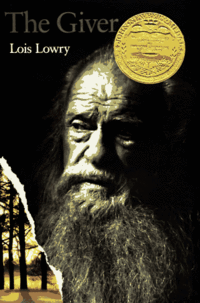
THE GIVER; August 15th
200px-The_Giver_Cover
Based on the popular YA novel. One person’s utopia is another person’s hell.

RESIDENT EVIL 6; September 12th
Resident_Evil_6_box_artwork
Wow! They’ve made six of these? Way to milk it. Just kidding. I’m sure it will be novel and interesting.

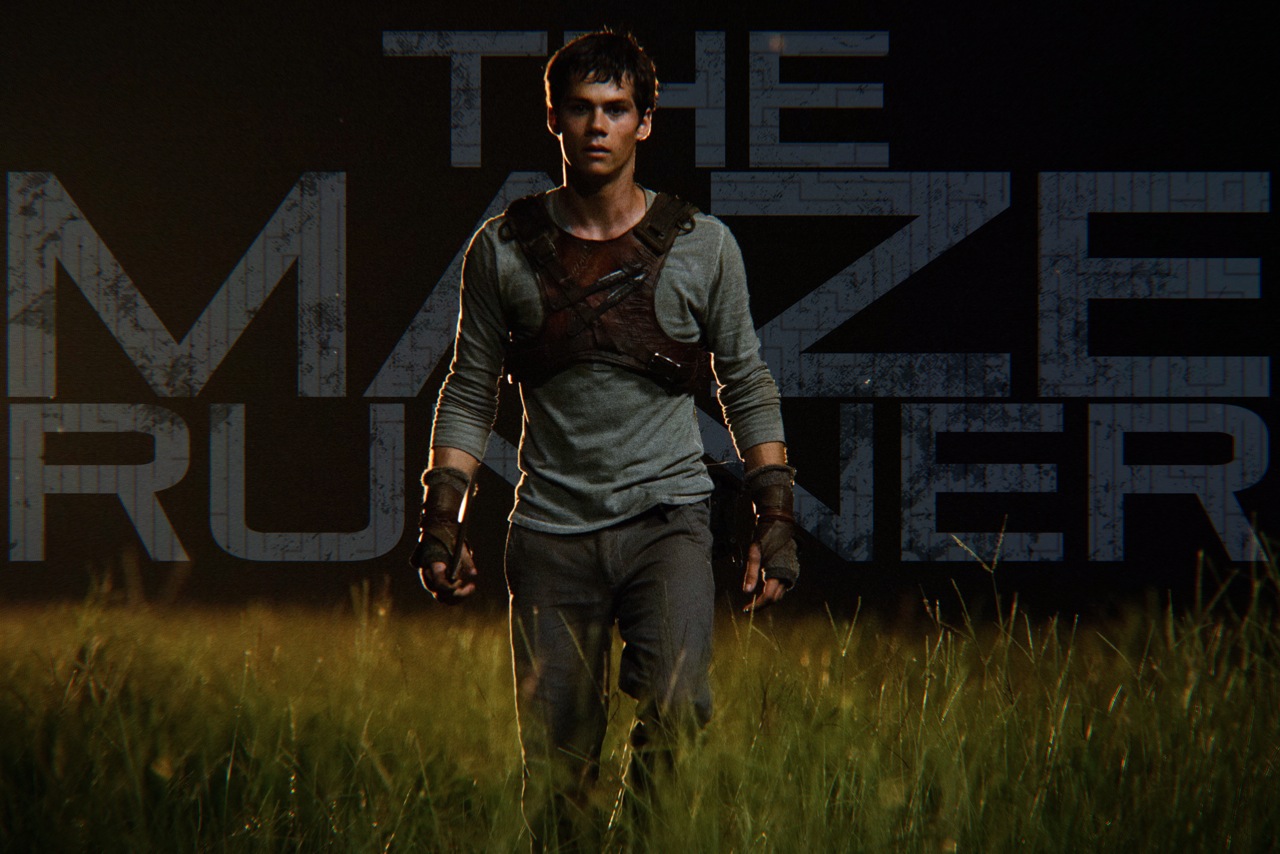
MAZE RUNNER; September 19th
mazerunner
Another YA dystopian adventure. Lord of the Flies meets Hunger Games?

INTERSTELLAR; November 7th

A huge Christopher Nolan film about interstellar travel.

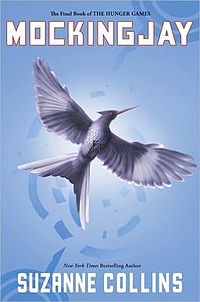
MOCKINGJAY, Pt. I; November 21st
Mockingjay
The first part of the third book in this trilogy, because why make three movies based on three, thin YA novels when you can make four movies based on three, thin YA novels.

HOME; November 26th
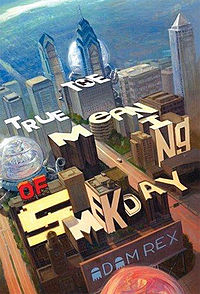
200px-The_True_Meaning_of_Smekday_cover
This film is supposedly based on the above book. It’s about an 11 year old who must survive on her own after her mother is abducted by aliens.

Other potential sci-fi releases of unknown date and quality:


THE ZERO THEOREM; no US release date set; the UK release is supposed to be in March

It’s about a man trying to solve a theorem, but with all sorts of craziness in the mix.


MAX STEEL; based on a line of toys (promising.)
SPACE STATION 76; that 70’s sci-fi movie.
GLIMMER; more teen time travel [shudders]

POEM: Human Farm of Underachieving Aliens

IMG_2485

What if the world that we know

is just a two-bit reality show

or some high-def video game?

Wouldn’t it be terrible lame,

if we were the toys of an alien race

of underachievers from deep outer space?

What if our planet currently resided

on a beat-up, old card-table–lopsided,

in the basement of a strung-out dude

who sat around in a cloud in the nude?

What if all of the wonder and foreboding

is just the result of some skillful encoding?

BOOK REVIEW: Ender’s Game by Orson Scott Card

Ender's Game (Ender's Saga, #1)Ender’s Game by Orson Scott Card

My rating: 4 of 5 stars

Amazon page

Ender’s Game is the story of a boy, Ender Wiggin, whose intelligence and capacity for ruthlessness lead the military establishment to believe that he’s the last hope for mankind. The book is set in a future after the Earth has been invaded twice by an alien species called the buggers, and now the Earth is planning its own “preemptive” invasion to end the bugger threat once and for all.

The novel follows Ender’s life from his short home life as a “third”—a rare third child for which special permission must be granted—through his post-war life. (This entire timeline transpires before adulthood.) The bulk of the novel takes place in Battle School, where Ender receives his training in military tactics and strategy and spends much of his time in zero gravity war games. He rises up through the ranks quickly, as expected, but not without stirring some animus in the process. He learns strategy both through war games and through the mind-field of real world animosity by others who are jealous or feel insulted by his brilliance.

As Commander material, Ender is considered to be in the Goldilocks zone. His older brother, Peter, is too cruel; his sister, Valentine, is just too kind. (All three Wiggin children are geniuses.) Ender has the right mix to fight the buggers. His problem is that the world forces him to be ruthless and his compassionate side makes it hard to cope.
While Ender leaves home young and early in the novel, there is a subplot involving the older Wiggin children that is revealed over the course of the book—showing the reader more of the tormenting brother and the loving sister who shaped his worldview. Ender does interact with Valentine in person on a couple of occasions, but his only interaction with Peter is a brief mention of correspondence at the end of the book.

Ender is an intriguing character. He is always the outsider, by birth as a third and then through isolation in Battle School that is facilitated by the conflicted head of the Battle School, Col. Graff.

I won’t get into the ending except to say that there is a twist at the novel’s climax. I will say that the reveal of this twist felt a little anti-climactic to me. However, as the real story isn’t about fighting the buggers, but Ender’s internal struggle, this isn’t as dismaying as it might otherwise be.

One can tell that this is a series book because it climaxes and resolves relatively early, leaving a fair amount of space to set up the next book. This actually helps the twist offer some surprise because the reader sees that there are so many pages left for the novel to resolve itself.

Card does an interesting thing in making the central character stronger than everyone around him–at least until he’s introduced to his new guru, Mazer Rackham–the Commander who won the key battle of the second bugger invasion and who is alive by virtue of a relativistic trip. Ender’s superiority seems like a recipe for boredom, but it works because what we don’t know is whether Ender is stronger than everyone else pitted against him combined, and, moreover, we don’t know whether he is strong enough inside to withstand all the horridness to which he is subjected. A lot of the tension of the novel is really internal to Ender. Unlike Peter, who would revel in ruthlessness, Ender is tormented by all of the violence he must perpetrate.

I’d recommend this novel. It has its flaws, but it is quite readable and Ender’s character is intriguing from start to finish.

The movie version is coming out tomorrow. I haven’t seen it, but here is the trailer.

View all my reviews

BOOK REVIEW: American Gods by Neil Gaiman

American Gods (American Gods, #1)American Gods by Neil Gaiman

My rating: 5 of 5 stars

Amazon page

American Gods is the story of a hapless and gentle brute who goes by the nickname “Shadow.” We meet Shadow as he is being released from prison a few days early because the wife that he loved dearly has passed away. While the description of Shadow’s imposing size and criminal activity might lead us to believe he’s an unsavory character, we find him sympathetic from the outset–though we don’t learn that it was virtue more than vice that landed him in prison until late in the book.

Given that the name of the book is American Gods others who’ve read it may wonder why I say it’s about Shadow instead of being about a war between America’s old gods and its new ones (e.g. technology and mass media.)The latter statement is more likely what one will read on the dust jacket. However, for me it was the character of Shadow that kept me reading. As with any great novel’s main character, Shadow is put in predicament after predicament, and one must see how he’ll handle them. Eventually, we suspect that enough will be enough and he will have to choose to act in his own best interest rather than in the moral manner.

The importance of character in this novel doesn’t mean that it’s lacking a plot. Early on we are given a great hook when Shadow is introduced to the character of “Wednesday.” The hook is that Wednesday seems to know things about Shadow that no one could, and he makes a proposal to Shadow. The reader is thus drawn in and wants to know how Wednesday knows the impossible and whether Shadow will agree to the vague offer. While we don’t know what agreeing will mean for Shadow, we suspect that it’s tailor-made to land him back in hot water.

While Shadow seems to be always ending up with the short end of the stick, what makes things interesting is that he’s not dumb. He doesn’t stumble into these traps unwittingly. Rather, Shadow defies convention and, by some measures, is really quite a sharp man. Often, he sees the folly of his decisions but is compelled by virtue to act in ways that put him at risk.

Shadow is on a journey of self-discovery throughout the book, and what he ultimately discovers about himself is spectacular.

In a way American Gods is Neil Gaiman’s commentary on America, and Shadow represents America at its most virtuous. We see plenty of America’s faults and failings in the process, its vainglory and hunger for power. But in Shadow we see a character who is honor bound to do what he thinks is the right thing–even when it comes at great personal cost and even when he knows he is being manipulated.

I found this novel to be highly readable and would recommend it. It has Gaiman’s characteristic humor, darkness, and dark humor.

View all my reviews

BOOK REVIEW: Mostly Harmless by Douglas Adams

Mostly Harmless (Hitchhiker's Guide, #5)Mostly Harmless by Douglas Adams

My rating: 3 of 5 stars

Amazon page

[NOTE: If you would like to read my reviews of the first four books, you can do so by following the hyperlinked title: 1.) The Hitchhiker’s Guide to the Galaxy 2.) The Restaurant at the End of the Universe  3.) Life, the Universe, and Everything 4.) So Long, and Thanks for All the Fish]

This is the fifth and final installment in The Hitchhiker’s Guide to the Galaxy series (not including Eoin Colfer’s And Another Thing, which I don’t.) Fans of the series will recognize “Mostly Harmless” as the sum total of the Earth’s entry in The Hitchhiker’s Guide to the Galaxy.

The story focuses on a trio of characters from the original book’s cast: Arthur Dent (of course), Tricia McMillan (a.k.a. Trillian), and Ford Prefect–with the Random addition a new fourth feature character. As the series had already begun trending, this story is more human-centric than the earliest installments. The central story could be divorced from the sci-fi genre with relatively minor modifications. However, as Restaurant at the End of the Universe uses time travel as a sci-fi plot device, this book uses the concept of a parallel universe.

The story begins with our main characters separated from one another. Arthur Dent is making sandwiches of Perfectly Normal Beast (an Orwellian turn-of-phrase as one might expect) on the planet where he crash landed. Trillian, or one of them, is reduced to doing an interview with an astrologer. Ford Prefect is breaking into his place of employment to avoid the accountants in his usual manner of hijinks.

Adams throws each of these characters a monkey wrench. Dent finds out he has a daughter, Random Dent, and that her mother–Trillian–is dropping her on his doorstep. Ford discovers that the Guide is under new and nefarious management, and that they have created an edition with dire ramifications. Trillian, or one of them, gets her big break being picked up by a Grebulon ship only to discover they want her to advise them on astrology.

The notion that no one escapes the feeling of being without a home is a central theme in the book.

This isn’t Adams’ best work. The story has grown stale. It lacks the creative brilliance derived from plot devices like the Infinite Improbability Drive, and–while there may be something to be said for a story with more humanity– it leaves one missing idiosyncratic characters like Zaphod and Marvin. That being said, even at his worst Adams is amusing and thought-provoking. If you enjoyed his earlier books, you could certainly do worse than to finish the series. In the unlikely event that Adams isn’t your cup of tea, this final installment probably won’t revise your assessment.

View all my reviews

Are Action Movies Dazzling Us Stupid?

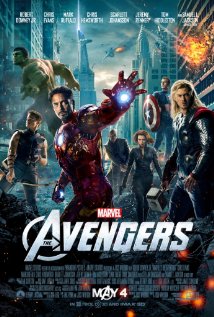
AvengersJust like everyone else, when I first watched The Avengers, I was awed. As I digested the experience, however, I realized how appallingly flawed the story was. Can a film that is visually impressive enough dance over the hard parts of story?

Alright, it’s not just being visually impressive. If it were, then the Transformers movies (I’m thinking particularly of the second one) wouldn’t be so sucktacular. No. Filmmakers also need clever quips. This feeds an inexplicable urge of young people to repeat the witty remarks of movie characters ad infinitum. (Confession: I’ve always longed for an excuse to say, “I’m your Huckleberry,” as per Doc Holliday’s words to Johnny Ringo in Tombstone.) It’s not just that the Hulk bashes a marble floor to dust using Loki’s lanky frame, but that he delivers that witty, two-word rejoinder. Together the CGI and the quip seal the scene in one’s mind.

[Spoilers ahead] If one looks up deus ex machina in the dictionary, one learns that it means: “someone or something that solves a situation that seemed impossible to solve in a sudden and unlikely way, especially in a book, play, movie, etc.” If one’s dictionary is online, one would then probably be treated to a video clip of the scene in which Professor Selvig is knocked on the head, becomes unenslaved, and consciously realizes that his subconscious built a backdoor that will allow him to shut down the portal that were previously told can’t be shut. The clip could then continue through the end of the movie (minus the post-credit shawarma scene.)  The following are key incidents of deus ex machina in this film:

-a bump on the noggin releases one from the mind-control of a god (A “puny god,” indeed.)
-a conscious mind (in a waking and non-meditative state) knows in great detail what happened in the subconscious
-an attack on the mothership disables all troops on the ground, Independence Day style (worst command and control ever.)

One may be thinking that I’m just one of those douches who picks nits, but I’m really not. These flaws are fundamental to how the story is resolved. They are cheats that make everything that happened leading up to the climax irrelevant. Think about it; if the Professor had gotten knocked on the head 20 minutes earlier, the massive Avengers battle through Manhattan would never have been necessary. They could have called the movie “Professor Selvig’s Magical Mind” and left the Avengers out of it all together.

I’m willing to sustain disbelief about the small things. There are plenty of critics who get into the minutiae of continuity gaffes and the like. A couple of my favorites are below.

Lest one think that I’m picking on The Avengers, that’s only because it’s the third highest grossing film ever and first in the superhero genre. If you’re spending hundreds of millions on a film, you’d think you could throw some chump change into good story-building.  I realize that filmmakers have a jaded audience to contend with, and that they have to ramp up the peril to impossible heights to impress. Maybe they are forced to then throw away the resolution of story. Those who read my recent review of The Wolverine, will know that my criticism isn’t restricted to The Avengers.

Well, I’ve got nits to pick.

DAILY PHOTO: Horses in a Parade (if you’re baked)

Taken at the 2011 Dragoncon Parade in Atlanta, GA

Taken at the 2011 DragonCon Parade in Atlanta, GA

BOOK REVIEW: Ubik by Philip K. Dick

UbikUbik by Philip K. Dick

My rating: 4 of 5 stars

Amazon page

Philip K. Dick was one of the most imaginative writers and skilled storytellers of the 20th century. There’s a reason that so many of his stories and novels have been made into movies (e.g. Minority Report, Total Recall, Scanner Darkly, and–most famously–Do Androids Dream of Electric Sheep? [which was adapted into a less quirky and darker film called Blade Runner.])Dick’s works lend themselves to the screen because they lay out novel plots in engaging stories.

Ubik isn’t among the Dick works that have been made into movies, but it’s not for lack of trying. Dick wrote his own screenplay for a film adaptation of the novel, but the project fell through. Over the years, a few directors have talked of Ubik: the Movie, so don’t be surprised if you see it someday.

Ubik deals with the afterlife. It’s set in 1992 (Dick’s future–our past.) (You can’t blame a man who lived from 1928 to 1982 for over anticipating the futuristicness of the 90’s. In the year of his birth Amelia Earhart was making the first solo transatlantic flight by a woman–only a year after Lindbergh became the first ever to do it. The year Ubik was published (1969) the Concorde was making its first supersonic transatlantic flight.)

In the world of Ubik, the moon is being developed for human use, and there are many people with psychic abilities. The protagonist, Glen Runciter, runs a business offering services blocking psychic activity to prevent industrial espionage. He is working for a company that’s building a moon base.

Runciter’s wife is deceased; however, he often consults with her as the dividing line between life and death isn’t so clear in Runciter’s world as our own. There exists a state of “half-life” between life and being fully dead.

The inciting incident is a nefarious explosion on the moon base of which Runciter and his team are victims. At first it appears that Runciter is dead and that his team is alive and trying to rush him back to Earth to get him into a state of half-life (just like his wife.)However, as the novel goes on it becomes less clear who is alive and who is dead. All that is clear is that Runciter exists in a different world from his team members. As the story proceeds there are clues–most notably coins with faces on them that aren’t dead Presidents. Joe Chip (a team member) sees coins with Runciter’s face on them, and later Runciter sees coins with Chip’s face on them.

Ubik is a product that Chip and the others begin to see advertised in their world–which they have come to believe is the afterlife. (Some versions of the book have a spray can on the cover that represents this mysterious product that comes in many forms.) They begin to believe that Ubik is their only hope. There has been a great deal of discussion about the symbolism of Ubik. Its name comes from the word for “everywhere”– as in “ubiquitous”– but what (or who)it’s supposed to be is never clearly revealed. Some have said that Ubik is meant to be God. If so, Dick made an interesting statement because the product is always marketed like some cheesy consumer good.

One test for whether you’ll like this book is whether you enjoy ambiguity in endings. Some readers really enjoy the thought-provocation of an ambiguous ending and the process of thinking out their own conclusions. (I am among this type of reader.) However, there are other readers who feel ripped off if the writer doesn’t tie all the answers up with a neat little ribbon at the end of the book. If you are this type of reader, you will likely hate this book. In other words, if you felt good leaving the theater when you saw Inception you’ll like this book, but if you left shaking your head and saying, “WTF, Chris Nolan?” then don’t bother.

View all my reviews

BOOK REVIEW: Solaris by Stanislaw Lem

SolarisSolaris by Stanisław Lem

My rating: 4 of 5 stars

Solaris is the  best known work of the Polish sci-fi writer Stanislaw Lem. It’s the story of the planet Solaris’s super-intelligent ocean and the humans that are observing it from an orbiting space station. Scientists discover that the ocean is intelligent because the planet orbits two stars, and the ocean must redistribute itself as ballast to keep Solaris from flying off out of its star systems.

Having had no luck in learning about this ocean, the scientists begin more invasive operations–bombarding the ocean with electromagnetic radiation. The ocean then begins to project human beings into the space station, using blueprints in the minds of the scientists. Each of the scientists begins to see, and eventually interact with, someone from his past. Each “guest” is physically indistinguishable from the person in the respective scientist’s past, but the simulacra are “off.”  These simulacra stir up bad memories.

The most extensive interaction we see between a crew member and one of these manifestations is that of the protagonist, Dr. Kris Kelvin, and his ex-wife. Dr. Kelvin is a psychologist and is the most recent crew edition. (The novel actually starts with him as a new arrival, we learn of the earlier incidents as he does.) His “visitor” is the spitting image of his wife, a woman who committed suicide after the couple broke up.

The novel plays with an intriguing question. What if a person you loved and lost came back from the dead, but you would only be able to experience them as they existed in your mind? In some sense, they’d be more real to you than the actual person. But you’d know they were just a fabrication, and you could never learn anything new about them. At first Kelvin rejects, even banishes, his wife’s doppelgänger, but when she inexplicably returns he finds it hard to maintain his distance.

I enjoyed this book. The translation seemed skilled to me (though I don’t read Polish, and hence didn’t read the original.) I’d recommend it.

View all my reviews

There have been three film adaptations of this novel. I haven’t seen any of the movies, but this is the trailer for the most recent one. The trailer emphasizes the love relationship more and the sentient ocean less than the novel (though the interaction of the protagonist with his imagined wife is central to the work.)