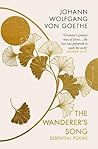
BOOK: “The Wanderer’s Song” by Johann Wolfgang von Goethe [trans. by John Kent]

The Wanderer's Song: Essential Poems (Pushkin Press Classics)The Wanderer’s Song: Essential Poems by Johann Wolfgang von Goethe
My rating: 4 of 5 stars

Publisher Site — Pushkin Press Classics

This is a new translation of select poems of Johann Wolfgang von Goethe. It’s a clever and varied set of poems by one of German literature’s all-time greats, a polymath of the 18th and early 19th centuries.

It can be a challenge for a general poetry reader to relate to this work. Over two hundred years since most of these poems were composed, the collection reflects a worldview quite different from that which one finds today. That said, the translations are readable and pleasant and don’t feel strained or clunky, and the collection has instances of sublimity. Having no background in German Literature, I can’t say how true the translations are to source material, but they stood solidly as poems in their own right. The book does offer a substantial introduction by the translator for individuals who are particularly interested in the German literature, translation decisions, or the life of Goethe.

I would recommend this for poetry readers, even though casual readers may find it a bit archaic. If you like the Romantic poets, and haven’t given Goethe a try, it’s well worth the time investment.

View all my reviews

“Thou Strainest Through the Mountain Fern” (A Fragment) by William Wordsworth [w/ Audio]

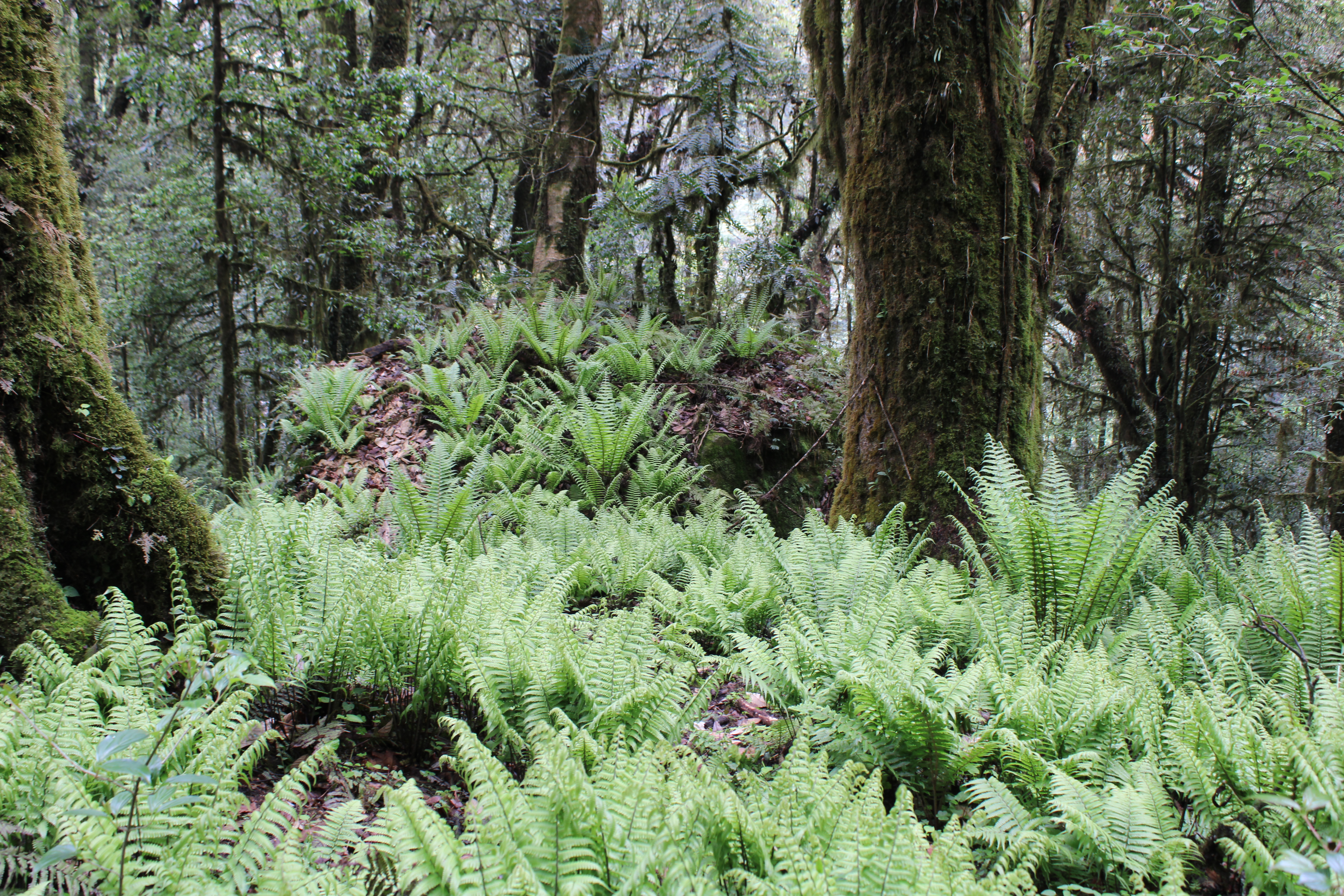
Thou strainest through the mountain fern,
A most exiguously thin
Burn.
For all thy foam, for all thy din,
Thee shall the pallid lake inurn,
With well-a-day for Mr. Swin-
Burne!
Take then this quarto in thy fin
And, O thou stoker huge and stern,
The whole affair, outside and in,
Burn!
But save the true poetic kin,
The works of Mr. Robert Burn'
And William Wordsworth upon Tin-
Tern!

Song – “My silks and fine array” by William Blake [w/ Audio]

My silks and fine array,
My smiles and languish'd air,
By love are driv'n away;
And mournful lean Despair
Brings me yew to deck my grave:
Such end true lovers have.

His face is fair as heav'n,
When springing buds unfold;
O why to him was't giv'n,
Whose heart is wintry cold?
His breast is love's all worship'd tomb,
Where all love's pilgrims come.

Bring me an axe and spade,
Bring me a winding sheet;
When I my grave have made,
Let winds and tempests beat:
Then down I'll lie, as cold as clay.
True love doth pass away!

“I fear’d the fury of my wind” by William Blake [w/ Audio]

I fear’d the fury of my wind
Would blight all blossoms fair & true,
And my sun it shin’d & shin’d,
And my wind it never blew.

But a blossom fair or true
Was not found on any tree;
For all blossoms grew & grew
Fruitless, false, tho’ fair to see.

“I Asked a Thief To Steal Me a Peach” by William Blake [w/ Audio]

I asked a thief to steal me a peach:
He turn'd up his eyes.
I ask'd a lithe lady to lie her down:
Holy and meek she cries.

As soon as I went an angel came:
He wink'd at the thief
And smil'd at the dame,
And without one word spoke
Had a peach from the tree,
And 'twixt earnest and joke
Enjoy'd the Lady.

“Mad Song” by William Blake [w/ Audio]

The wild winds weep, 
And the night is a-cold;
Come hither, Sleep,
And my griefs infold:
But lo! the morning peeps
Over the eastern steeps,
And the rustling birds of dawn
The earth do scorn.

Lo! to the vault
Of paved heaven,
With sorrow fraught
My notes are driven:
They strike the ear of night,
Make weep the eyes of day;
They make mad the roaring winds,
And with tempests play.

Like a fiend in a cloud
With howling woe,
After night I do croud,
And with night will go;
I turn my back to the east,
From whence comforts have increas'd;
For light doth seize my brain
With frantic pain.

“The Human Abstract” by William Blake [w/ Audio]

Pity would be no more
If we did not make somebody Poor;
And Mercy no more could be
If all were happy as we.

And mutual fear brings peace,
Till the selfish loves increase;
Then Cruelty knits a snare,
And spreads his baits with care.

He sits down with holy fears,
And waters the ground with tears;
Then Humility takes its root
Underneath his foot.

Soon spreads the dismal shade
Of Mystery over his head;
And the Catterpiller and Fly
Feed on the Mystery.

And it bears the fruit of Deceit,
Ruddy and sweet to eat;
And the Raven his nest has made
In its thickest shade.

The Gods of the earth and sea
Sought thro' Nature to find this Tree;
But their search was all in vain:
There grows one in the Human Brain.

“Laughing Song” by William Blake [w/ Audio]

When the green woods laugh with the voice of joy,
And the dimpling stream runs laughing by;
When the air does laugh with our merry wit,
And the green hill laughs with the noise of it;

When the meadows laugh with lively green,
And the grasshopper laughs in the merry scene,
When Mary and Susan and Emily
With their sweet round mouths sing 'Ha, Ha, He!'

When the painted birds laugh in the shade,
Where our table with cherries and nuts is spread,
Come live & be merry, and join with me,
To sing the sweet chorus of 'Ha, Ha, He!'

“The Blossom” by William Blake [w/ Audio]

Merry, Merry Sparrow!
Under leaves so green
A happy Blossom
Sees you swift as arrow
Seek your cradle narrow
Near my Bosom.

Pretty, Pretty Robin!
Under leaves so green
A happy Blossom
Hears you sobbing, sobbing,
Pretty, Pretty Robin,
Near my bosom.

“To the Muse” by William Blake [w/ Audio]

Whether on Ida's shady brow,
Or in the chambers of the East,
The chambers of the sun, that now
From antient melody have ceas'd;

Whether in Heav'n ye wander fair,
Or the green corners of the earth,
Or the blue regions of the air,
Where the melodious winds have birth;

Whether on chrystal rocks ye rove,
Beneath the bosom of the sea
Wand'ring in many a coral grove,
Fair Nine, forsaking Poetry!

How have you left the antient love
That bards of old enjoy'd in you!
The languid strings do scarely move!
The sound is forc'd, the notes are few!