You’re So Evolved: Love Poem to a Hominid

Baby, I dig your bipedal ways
You could chase down wounded game for days
And walking around on just two feet
You can forage in the mid-day heat
When it’s too hot for those big ole cats
Who bully their way through our habitat


My dearest, it simply makes me drool
When I see you working with a tool
Thumbs opposable, and shoulders free
I’m awed when you throw stones at me
Just imagine how I shed a tear
When I see you chuck a pointy spear


And that prefrontal cortex, oh my lord
You could plan the move of a nomadic horde
One day you’ll be able to add, and subtract
You’ll think–and paint–in the abstract
You just need vocal cords of greater dexterity
To express yourself with heightened clarity
[not in grunts and stone throwing]


True, you’re not the strongest of the apes
And while tigers race you barely traipse
Monkeys climb, swinging tree to tree
You lack arm strength and dexterity
Still, there’s something about you that I just can’t deny
Though you share sixty percent DNA with a fruit fly
You’re so evolved

DAILY PHOTO: House of Poetry

Taken in May in 2016 in Dubai's Old Town

Taken in May in 2016 in Dubai’s Old Town

IMG_0430

POEM: Conceit of Man

An elephant will never forget.
No car keys to misplace, I’ll bet.
A tiger is fearless, I will confess,
but it’ll never be audited by the IRS.

An owl may be wise; you can tell by the eyes.
But it’s never asked to comment on the size of a girl’s thighs.
Dolphins are smart ones, that much is true.
But, pray tell, who is in whom’s zoo?

In all domains humans think themselves the greatest.
And we are the very best of sadists.
You’ll never see a bonobo bureaucrat,
nor get tech support from a vampire bat.

At masochism, too, we’re none too shabby.
At the karaoke bar, ever see a tabby?
Ever seen a chimp with a nipple ring?
I’ll tell you now, that’s not a thing.

Our narcissism has grown beyond the pale.
One lifetime to the rocket from the sail
will give any species some cerebral swelling.
I’m not saying our’s isn’t a tale worth telling.
Let’s just make sure it doesn’t turn cautionary.
Basking in awesomeness, one forgets to be wary.
Next thing you know, super-smart apes are getting the itch,
or the Alpha Centaurians have made Earth their bitch.

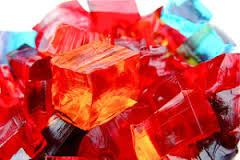
POEM: A Dark Note to Jello

jello

Hello, Jello, my wiggly friend

It’s time you meet your fateful end

Perhaps, someday you will come back

But, having been through my digestive tract,

No one will ever love you like I did

[At least, let’s hope–heaven forbid]

POEM: Size of the Future

Microbots may one day kill
From nano-pills you’ll get your fill
One day everything will be small
Except rayguns and the mall


Those two will be colossally large
Like a present-day garbage barge
Heaped into a humongous hill
Headed to a continental landfill


POEM: Dreams & Visions

Taken in Varanasi on the Ghats

Taken in Varanasi on the Ghats

Every night I go to sleep
From the dream-world not a peep
A timeless void a dreamless night
Waking before the morning’s light


I lie awake my mind is crawling
Through the flotsam gently trawling
Floating visions that sink below
When I turn on the mind that knows
Bashful visions fade from sight
When exposed to wakeful light

POEM: 3 Haiku Day

circling hawk glides
I’m glad it’s not a vulture
I must be alive


still lake reflecting
a mountainous lay of land
hiding fish below


hissing wind gusting
through narrow leaves of bamboo
calling to no one

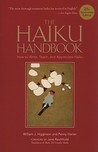
BOOK REVIEW: The Haiku Handbook by William J. Higginson

The Haiku Handbook: How to Write, Teach, and Appreciate HaikuThe Haiku Handbook: How to Write, Teach, and Appreciate Haiku by William J. Higginson
My rating: 5 of 5 stars

Amazon page

Many people think that a haiku is any poem of three lines consisting of 5, 7, and 5 syllables, respectively. Those who’ve gotten beyond a high school literature class introduction to the form may also know that these poems are usually observations of the nature world, and, specifically, the seasons. If the preceding sentences sum up haiku for you, but you’re interested in learning more, Higginson’s book will revolutionize your understanding of the art.

As it happens, the most fundamental notions about what makes up a haiku are actually more contentious than one might believe. Take the 17-syllable format. Japanese syllables are—on average—much shorter than English syllables. (e.g. Consider that “squirreled” is one syllable, whereas a long Japanese syllable would be “shi.”) For this reason, many have argued that to have the same sparse sound quality of Japanese haiku, English language haiku should follow a format that is less than 17 syllables. Also, while many people know that haiku are poems about nature, they might not make the connection to the purely descriptive (non-analytical / non-judgmental) approach or the art form. There’s a definite connection between haiku and the Zen mode of thought. The fact that the poems are sensate descriptions doesn’t mean they shouldn’t evoke emotion; on the contrary, they should be evocative on a primal level.

Be the preceding paragraph as it may, Higginson sketches out the evolution of haiku from the traditional greats (e.g. Bashō, Buson, Issa, and Shiki) to modern haiku poets both from Japan and from the rest of the world. The many examples provided offer the reader insight into how various poets have bent and broken the rules of haiku to achieve their own ends. There are, of course, some who wish to keep the form as true to the tradition as possible. Such individuals would like those who want to get unconventional to avoid using the term haiku (or terms for related traditional forms, e.g. “tanka.”) Others, want the freedom to take the art in new and unconventional directions.

The book consists of 16 chapters divided into four parts. The first part charts the evolution of haiku from the early masters to the modern age. The second part gets into the nitty-gritty of composing haiku, and it’s where one will learn about the various thoughts on the form and content of these poems. (Those wanting to learn the craft of writing haiku are directed specifically to chapters 8 and 9, which address the key elements nicely.) The third part is about teaching haiku, and specifically how to introduce it to children in a way that is much more effective than the usual teaching method (i.e. “Hey, kids, a haiku is a poem with 17 syllables arranged in three lines of 5 – 7 – 5 syllables.”) The fourth and final part puts haiku into a context of lesser known, but related, forms of Japanese poetry such at renga, tanka, and senryu. In other words, it reflects on the forms that predated or sprung from haiku. The book also has front and post matter that readers may find useful, including explanations of Japanese pronunciation (the Japanese poems usually feature the Romanized spelling out of the Japanese words as well as an English translation), a list of season words, a glossary, and bibliographic references.

I’d recommend this book for readers and / or writers of haiku who want to learn more about the craft and its progression as an art form. There’s scarcely a page in the book that doesn’t offer example haiku to help make the author’s points more clearly. One needn’t worry that this will be dull exposition that can only help to kill one’s love of haiku. I found the book to be readable and the examples to be well-chosen.

View all my reviews

POEMS: Dreary Day Haiku

IMG_2123Clouds chugged landward
Smothering a festive town
In a dense, gray cloak


Dreary days have come
Reminding me of Britain,
the long nightless nights


Drizzle piddles down
Dimpling the sidewalk sheen
With random ripples


POEM: I Stand Before the Sea

I am a string of MEs

Strung out through eternity

But each eternity will die

Leaving in place another I


An I, a me, standing before the sea

Forget what I said about eternity

I am a finite speck of sand

Pushed and dragged by an unseen hand


Crack the speck, the TARDIS of Who

I’m every creature in the zoo

Every beast with limb and lung

Residing in every land far-flung


You think you know me? You know me not

I’ve not known me since I was just a tot

So I’ll thank you not to spoil my investigation

By classifying me by creed or nation