BOOK REVIEW: The Best of Poetry: Thoughts that Breathe and Words That Burn ed. by Rudolph Amsel & Teresa Keyne

The Best of Poetry: Thoughts that Breathe and Words that Burn (In Two Hundred Poems)The Best of Poetry: Thoughts that Breathe and Words that Burn by Rudolph Amsel
My rating: 4 of 5 stars

Amazon page

This is a collection that gathers 14 poems for each of 14 different themes. If you’re a math whiz, you know that means it’s a collection of 196 poems, but they round it out with four bonus poems to make a clean 200. If you’re a poetry reader, many of these poems will be familiar. They’re classic works from master poets from the 18th, 19th, and early 20th centuries (a few earlier.) Still, they are worth revisiting, the collection is inexpensive, and the organization, itself, is thought-provoking.

The fourteen themes that create the organizational schema for the book are: 1.) rapture: words that burn, 2.) a door opens; a door closes, 3.) love, 4.) humor & curiosities, 5.) memory, 6.) nature, 7.) tales & songs, 8.) solitude, 9.) contemplation, 10.) mystery & enigma, 11.) parting & sorrow, 12.) animals, 13.) inspiration, and 14.) cities. Then there are a couple bonus poems each attached to both the introduction and the epilogue.

As mentioned, the poets are mostly household names of English-language poetry, including: Emily Dickenson, Walt Whitman, Alfred, Lord Tennyson, William Blake, Percy Bysshe Shelley, John Keats, W.B. Yeats, Edna St. Vincent Millay, Thomas Hardy, Ralph Waldo Emerson, Carl Sandburg, T.S. Eliot, Wallace Stevens, Shakespeare, Lord Byron, Ben Johnson, Lewis Carroll, Oliver Wendell Holmes, William Wordsworth, A. E. Housman, Edgar Allen Poe, Samuel Taylor Coleridge, and Robert Frost. There are some names that are less than household names, but none that are obscure to poetry aficionados.

Again, many of the poems are well-known. Some of them are fragments of long poems, but most are stand-alone works. Examples of some of the standards include: “Chicago” by Sandburg, “If” by Kipling, “The Road Not Taken” by Frost, “Let My Country Awake” by Tagore, “The Tiger” by Blake, “The Raven” by Poe, “Kubla Khan” by Coleridge, “The Daffodils” by Wordsworth, “The Jabberwocky” by Carroll, “She Walks in Beauty” by Byron, and “There Is No Frigate Like a Book” by Dickinson.


I should point out that this is the first volume in a multi-volume set. There is also a second volume out, but I don’t know what the plans are beyond that.
I enjoyed this collection. I’d read most of these poems before, but the vast majority deserve re-reading and re-reading again. I’d recommend it for poetry lovers.

View all my reviews

BOOK REVIEW: William Blake: Selected Poems ed. Paul Butter

Selected PoemsSelected Poems by William Blake
My rating: 4 of 5 stars

Amazon doesn’t carry this edition.

So, e-Bay

Blake’s “The Tyger” is one of my favorite poems, and one of the few that I’ve bothered to memorize. Even if the words made no sense, they sound beautiful together, but not only do they make sense they forge powerful imagery. Blake wrote many poems that managed to be both pleasing to the ear and meaningful.

This collection consists of about 80 poems and fragments (of longer poems) that are pulled from Blake’s collections. Much of Blake’s work is about nature, though the worlds of man and the divine also feature prominently. With respect to the human world, poems about children are particularly common. Most of the poems and partials fit on a single page or two, but some are as short as a four-line stanza and others are as long as a dozen pages.

The compiler of the poems, Peter Butter, doesn’t feel the need to pile in rambling prologues and introductions—a plus in my opinion. The only ancillary matter consists of two timelines: one of Blake’s life, and one of with key events that happened over the course of his life. I will say that these two timelines are confusingly arranged in the edition that I read. They are two pages each, with the pages of each facing each other. So, as one flips, one reads a page of life history, one of world history, one of Blake’s history, and one of world history. Either rearrangement of pages or formatting changes would fix this right up.

This is a great little collection with which to get a taste for Blake. I’d recommend it for those who want some of his classics and some others, but without the need to wade through unabridged collection—in case he turns out to not be your cup of tea.

I’ll leave you with one of my favorite lines from the collection: “Wisdom is sold in the desolate market where none come to buy,”

View all my reviews

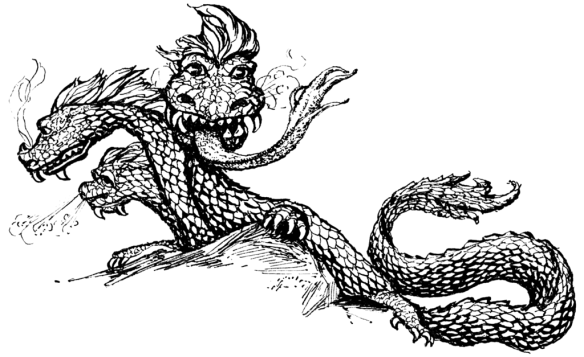
POEM: Thar Be Dragons

Source: Wikipedia (Public Domain)

Source: Wikipedia (Public Domain)


Where dunes are whisked in wisps down the valleys

Quiet as midnight in pitch black alleys

Thar be dragons

Where boxes tumble into churning seas

Submerging with the ease of a sea breeze

Thar be dragons

When you twitch into the deeps of sleep

Amid the bleating of counted sheep

Thar be dragons

POEM: Memories in the Midnight Deeps

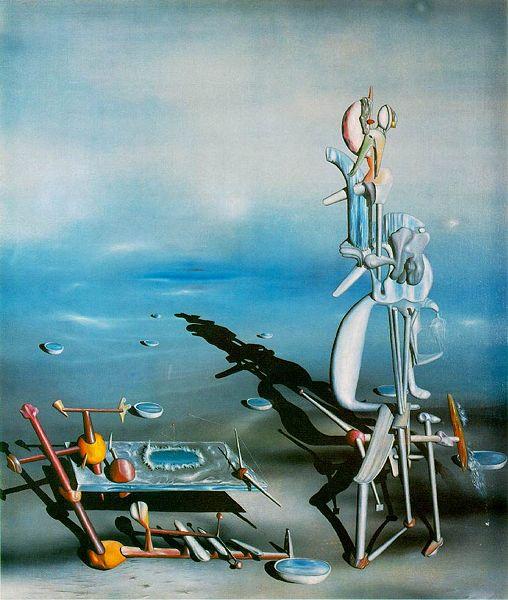
"Indefinite Divisibility" (1942) by Yves Tanguy

“Indefinite Divisibility” (1942) by Yves Tanguy


T.S. Eliot said,

Midnight shakes the memory

As a madman shakes a dead geranium


I know–exactly–what he means

Tragedy lurks in the midnight deeps

It hides, free from consciousness

It hides, outside memory

A catastrophic tick that has no echo

Fleeting images and emotional residue

all amble home in the morning


BOOK REVIEW: The Country With No Post Office by Agha Shahid Ali

The Country Without a Post OfficeThe Country Without a Post Office by Agha Shahid Ali
My rating: 5 of 5 stars

Amazon page

This is a collection of 27 poems about life in conflict-riddled Kashmir. Kashmir is a territory in the Himalayas that’s governed by India, but claimed by both India and Pakistan—and, it should be noted, has a significant population of residents that want to be part of neither country. In other words, there are some who’d like to see an independent Kashmir. However, at the moment Kashmir is one portion of one of India’s 29 states, Jammu and Kashmir—a state which is, itself, tripartite (Hindu Jammu, Muslim Kashmir, and Buddhist Ladakh.)

It’s a telling quote from Tacitus with which the author begins the collection. Solitudinum faciunt et pacem appellant. I won’t claim that I didn’t have to look this up, but it means: “They make a desert, and call it peace.” The first poem echoes variations on that quote.

There are a range of poetry styles within this collection, including: rhyming verse, free verse, poetic prose, and ghazal. A ghazal is a Middle Eastern style of lyric poem which has a pattern of rhyme and is metered to be set to music; there are several in this collection. Some of the poems are sparse and some are wordy, and variety is the order of the day.

The 27 poems of this collection are divided among five parts. The book is brief (under 100 pages), and it contains only a prologue and notes (some of which are interesting) with respect to ancillary matter.

This collection paints a portrait of war and life in a war-torn locale. It’s as much the latter as the former. The title poem, “The Country With No Post Office,” suggests the sapping nature of life where the institutions of governance and civil society have broken down.

I’d recommend this collection for those who enjoy poetry, but also for those interested in the conflict in Kashmir.

View all my reviews

BOOK REVIEW: Love Alone by Paul Monette

Love Alone: Eighteen Elegies for RogLove Alone: Eighteen Elegies for Rog by Paul Monette
My rating: 4 of 5 stars

Amazon page

This is a collection of modern verse offering the poet’s experience of the death of his partner and the years leading up to it. Said partner, Roger Horwitz, succumbed to AIDS during the late 80’s. It’s a tale of scouring and worrying—scouring because any infection could be fatal and worrying for the same reason. It tells of melancholy holidays, exhausting doctor’s office visits, and then the mourning. If I make it sound like Monette just jotted off about the mundane aspects of life, it’s this approach that captures the grind of the disease. This approach both creates a narrative and shows how life looks in the shadow of a terminal disease.

As the subtitle suggests, there are 18 poems in this collection. They are divided into three parts, though most are in the first part.

I found the collection to be evocative and the language to be clever.

This is a brief review because it’s a brief work—as one might expect of a poetry collection. It’s less than 70 pages inclusive of front matter and a biography of the author.

View all my reviews

POEM: To BE… Or Not

Copy of IMG_1580“What do you want to BE when you grow up?”

They ask you when you’re just a little pup.

So, what part of what I must BE,

is different from the me you see?

Dad thought, “the part that they’ll pay you for.”

Like an allowance for finishing a chore?

“Yes, young man, but you can safely assume, 

no one else will pay you to clean your room.”


Kids don’t think of being gainfully employed.


Which seems to make grownups quite annoyed.

At five, I wanted to be a cowboy.

“Son, there’s no jobs in that line of employ.”

That’s OK, then I’ll be an Indian.

“You’d have to be born that way, my friend.”

I wasn’t born a doctor, but you said that’s OK.

“That’s not the same, son, what can I say?”

I know what then, Dad, I’ll be the Batman!

“Come on, son, that’s not a feasible plan.”

You’re thinking Superman, Batman has no powers.

“Bruce Wayne by day, Batman at night, where’s the sleeping hours.”

You have a point there, you’ve got me stumped.

Thinking myself prematurely defunct.

POEM: Kung Fu Calumny

Source: cliparts.co

                                                              Source: cliparts.co


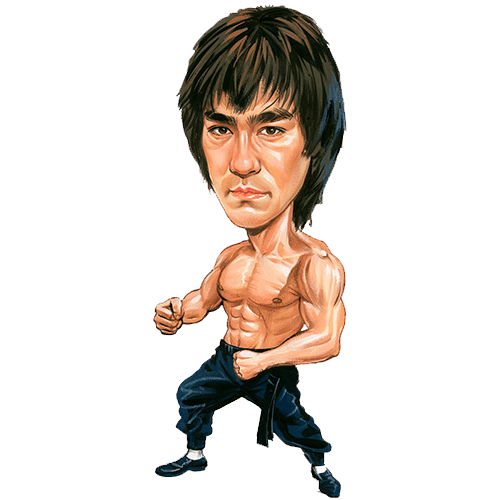
I have a particular set of skills.

No, not ones that pay the bills.

While Liam Neeson may kick some ass,

my skills are more in the realm of sass.

My course won’t teach you a spinning kick,

or how to head-butt to a brick.

No, nothing so stoic or taciturn,

for mine is the art of the kung fu burn.


If you wish to unleash the power of derision,

tell them their kung fu lacks vigor and precision.

If that has not the effect desired,

tell them their kung fu is sloppy and uninspired.

If you haven’t yet gotten their goat,

tell them their moves makes vomit rise to your throat.


That’s just a sampler; wisdom ain’t free.

But you can learn more for a nominal fee.


[Disclosure]

Just one thing, whatever you do.

Don’t use against anyone who knows kung fu.

(Even the old ladies who do Tai Chi in the park,

may rip you apart like a school of bull sharks.)

POEM: Memory is a Fickle Cow

brainmemory, she’s a fickle cow

you can never have one in the now


and why are the memories best of those who need them least

should not as your age grows great your memory too increase


an eight year old has no need of keys but he can tell you where they are

for me the point is quite moot cause I’ve forgotten where’s the car


more and more I’m less and less certain of what memories were dreams

I clearly remember posting that bill cause I passed a yeti eating ice-cream


a woman watching 60 Minutes was robbed, but cops called her a loony

you see the old girl was quite sure she’d been burgled by Andy Rooney


now it’s time for me to bring this poem to a close

I had a much better bit but have forgotten how it goes

POEM: Truth From Unlikely Places?

matrix_620

I passed a man on the street,

in the brutal noonday heat.

Blending in, but for his Tee.

It read, “Nothing is as it seems.”

I said, “Ain’t that the truth, brother.”

He walked on, like all the others.


A message sent on the sly?

From some watcher in the sky?

How’d he know it’d draw my eye?

And not be taken for a lie?

Maybe my will is not so free,

and what I “know” isn’t reality.


[Later that day…]


Rev. screamed, “We’re living in a simulation!”

“Friends, this ain’t no pre-apocalyptic nation.”

“Aliens watch us on their reality-TV station.”

“All I can offer is a bargain spaceship vacation.”

I distrust those who shout from a box,

and distrust more the joining of flocks.


But the kook’s words rattled in my mind.

Maybe lunatics get things right sometime.

What if the world is just a simulated grind,

and passersby just figments of my mind?

If this world is fake, should I abstain?

Or try much harder to entertain?