BOOKS: “The Flowers of Evil” by Charles Baudelaire

Les Fleurs du MalLes Fleurs du Mal by Charles Baudelaire
My rating: 5 of 5 stars

Amazon.in Page

I read the 1909 Cyril Scott translation of Baudelaire’s poetry collection. It consists of 54 poems, including “Condemned Women” but not including others of the six poems that were banned in early editions and which only came to be included in later editions. (I did look up and read a couple translations each for the six poems — because censorship can’t be allowed to prevail. Not surprisingly, they are calm by today’s standards. It should be noted that Baudelaire played in symbolism, and so his poems – while ahead of their time in subject matter – didn’t tend toward explicit vulgarity in the first place.)

The Scott translation is all in rhymed verse, the largest share of it presented as sonnets — though there are some longer pieces (longer, but not long. It’s a quick read.) “The Broken Bell” and “Spleen” were highlights for me, but the whole collection is intriguing, evocative, and readable.

I enjoyed this collection tremendously, even with such an old translation. The hedonism, eroticism, and macabre of Baudelaire’s work creates an intense tone.

I’d highly recommend this collection for all poetry readers.


View all my reviews

“Gitanjali 35” by Rabindranath Tagore [w/ Audio]

Where the mind is without fear and the head is held high;
Where knowledge is free;
Where the world has not been broken up into fragments by narrow domestic walls;
Where words come out from the depth of truth;
Where tireless striving stretches its arms towards perfection;
Where the clear stream of reason has not lost its way into the dreary desert sand of dead habit;
Where the mind is led forward by thee into ever-widening thought and action
Into that heave of freedom, my Father, let my country awake.

NOTE: This poem is often entitled “Let My Country Awake,” particularly when it is anthologized independently of the larger Gitanjali poem.

Holdout [Tanka]

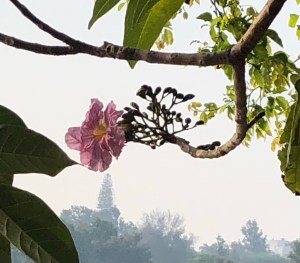
a tree’s last blossom
seems to wait til no one
is looking to drop.
what a thing it must be
to see a holdout yield.

“Seeking a Hermit-Sage in Vain” by Jia Dao [w/ Audio]

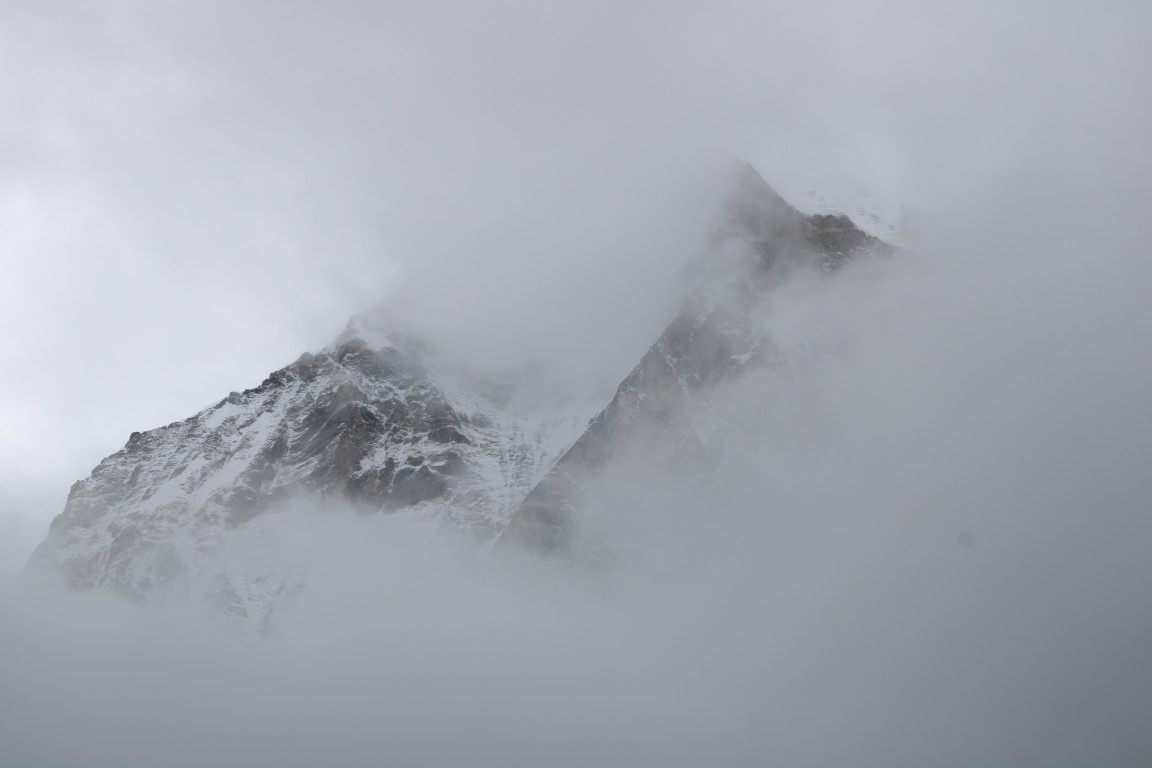
I question a local boy under a pine.
He says, "Teacher is gathering herbs
right here on the mountain...
But who can say where?
The mountain is thick with clouds."

Faint Day Moon [Haiku]

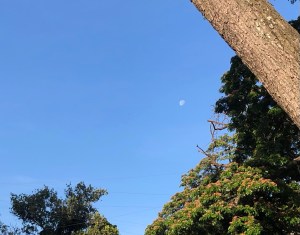
a daytime half moon,
feeble compared to at night,
yet I stop to look.

Diabolical [Free Verse]

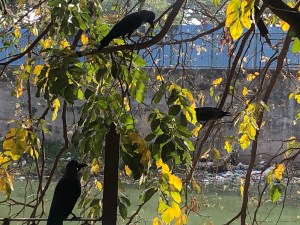
I don’t mind one crow,
on a rail or curb,
by its lonesome.

Nor am I troubled by
a large number of the birds.
(The group designation “murder,”
notwithstanding.)

But where two or three
are gathered, facing
each other…

That’s when I get the
heebie-jeebies.

BOOKS: “Imagination: A Very Short Introduction” by Jennifer Anna Gosetti-Ferencei

Imagination: A Very Short Introduction (Very Short Introductions)Imagination: A Very Short Introduction by Jennifer Anna Gosetti-Ferencei
My rating: 5 of 5 stars

Amazon.in Page

This is a concise guide to the subject of imagination, the capacity to conceptualize that which does not exist in reality. Philosophy is the primary dimension through which the subject is investigated, though the insights of poets (particularly Romantics,) authors, and artists are frequently presented — in several cases, in detail. Also, the author does discuss ideas from other disciplines as relevant (e.g. psychology, anthropology, science.) This is notable, for example, in Chapter 2, which looks at early signs of imagination in the human record and the evolution of this capacity.

Philosophical views on imagination have varied to the greatest possible extent, from Plato’s belief that imagination represents untruths and is therefore dangerous to various views suggesting that imagination is a good thing, is fundamental to what it means to be human (e.g. to empathy,) and is inescapable for humans. This Plato against the world dispute is revisited in several places throughout the book. Besides those of Plato, the views of Kant, Nietzsche, Wittgenstein, and Sartre are particularly extensively examined.

Creative types will find the final chapter (Ch.6 “Creativity from invention to wonder”) the most engaging part of the book as it deals with what makes for creativity. The chapter discusses topics such as whether constraints help or hinder creativity? Take, for example, poetry: does free verse poetry produce more imaginative material, or — on the contrary — is rhymed and metered verse more innovative and novel. If you think you know the answer, you might be surprised by the arguments that have been put forth.

I enjoyed reading this book and found it thought-provoking and worthy of the time.

View all my reviews

Four Seasonal Haiku of Sōgi [w/ Audio]

SPRING

Despite the storm,
Spring's herald makes it through:
Scent of plum blossom.

SUMMER

Abundant fireflies
This year, but this morning
None are to be seen.

AUTUMN

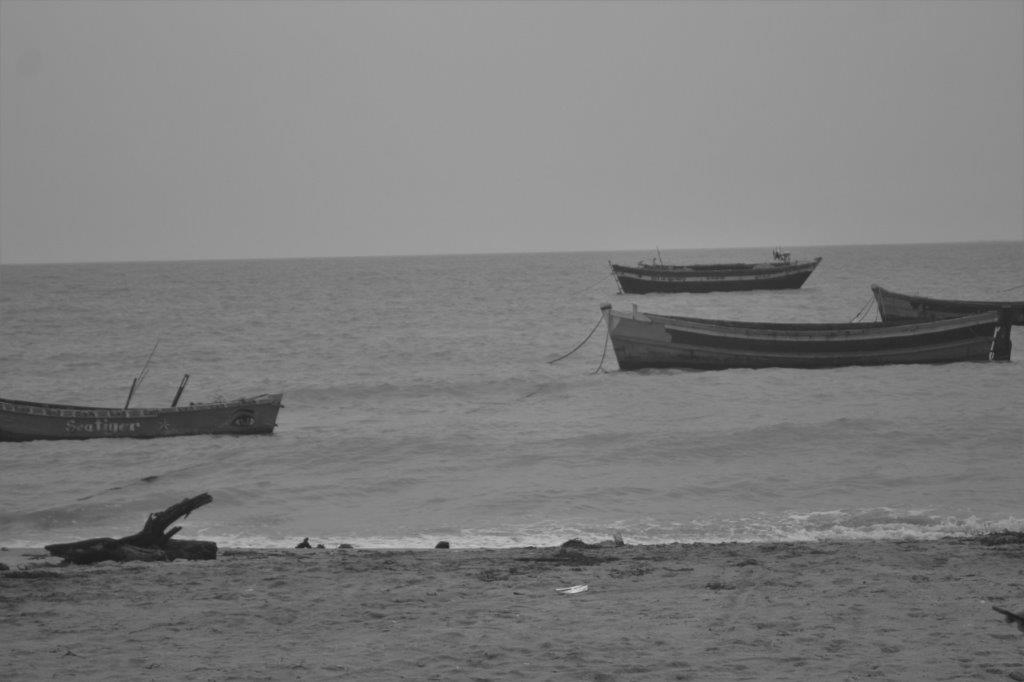
Autumn sea:
A boat moves, leaf-like,
In the floating world.

WINTER

Winter rains
Cross the mountains
On rising clouds.

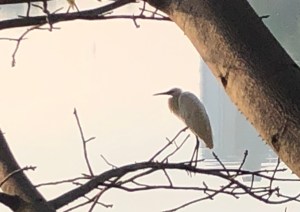
Egret Eye [Haiku]

an egret peers
into the lake, past
surface reflections?

“Suicide in the Trenches” by Siegfried Sassoon [w/ Audio]

Photo by Ernest Brooks (Imperial War Museum)
I knew a simple soldier boy
Who grinned at life in empty joy,
Slept soundly through the lonesome dark,
And whistled early with the lark.

In winter trenches, cowed and glum,
With crumps and lice and lack of rum,
He put a bullet through his brain.
No one spoke of him again.

You smug-faced crowds with kindling eye
Who cheer when soldier lads march by,
Sneak home and pray you'll never know
The hell where youth and laughter go.