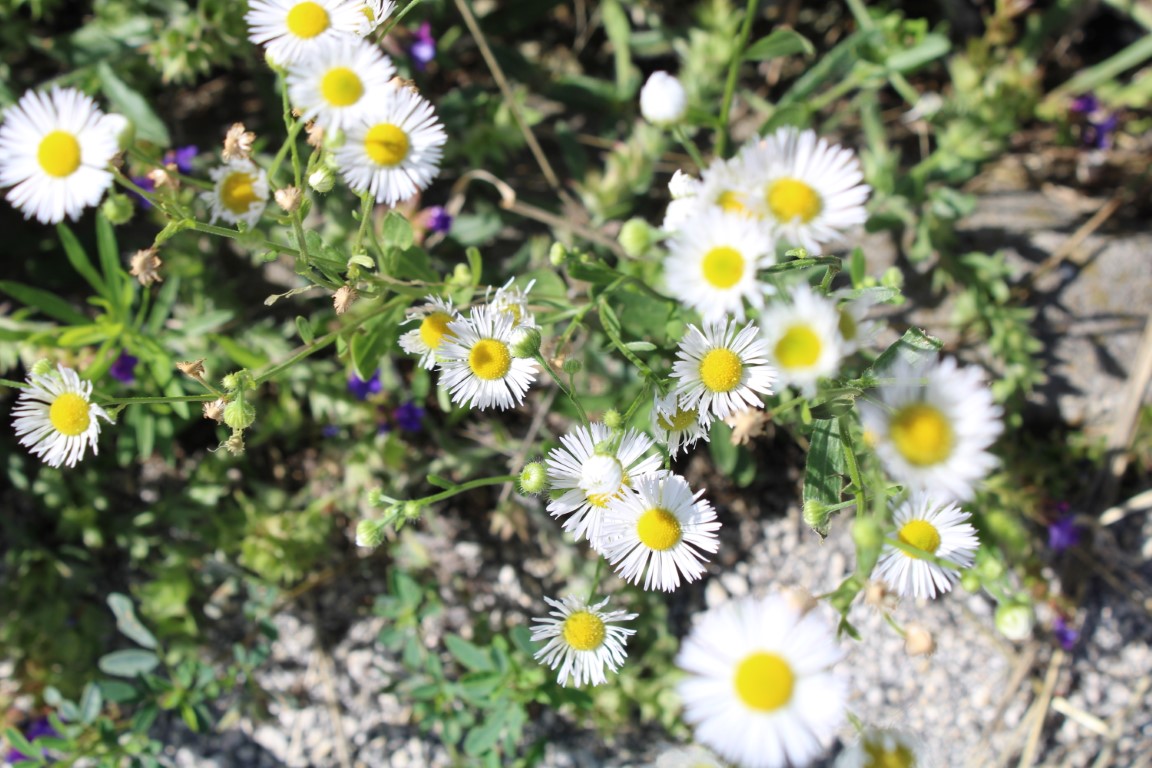
In this short Life that only lasts an hour
   How much - how little - is within our power

In this short Life that only lasts an hour
How much - how little - is within our power
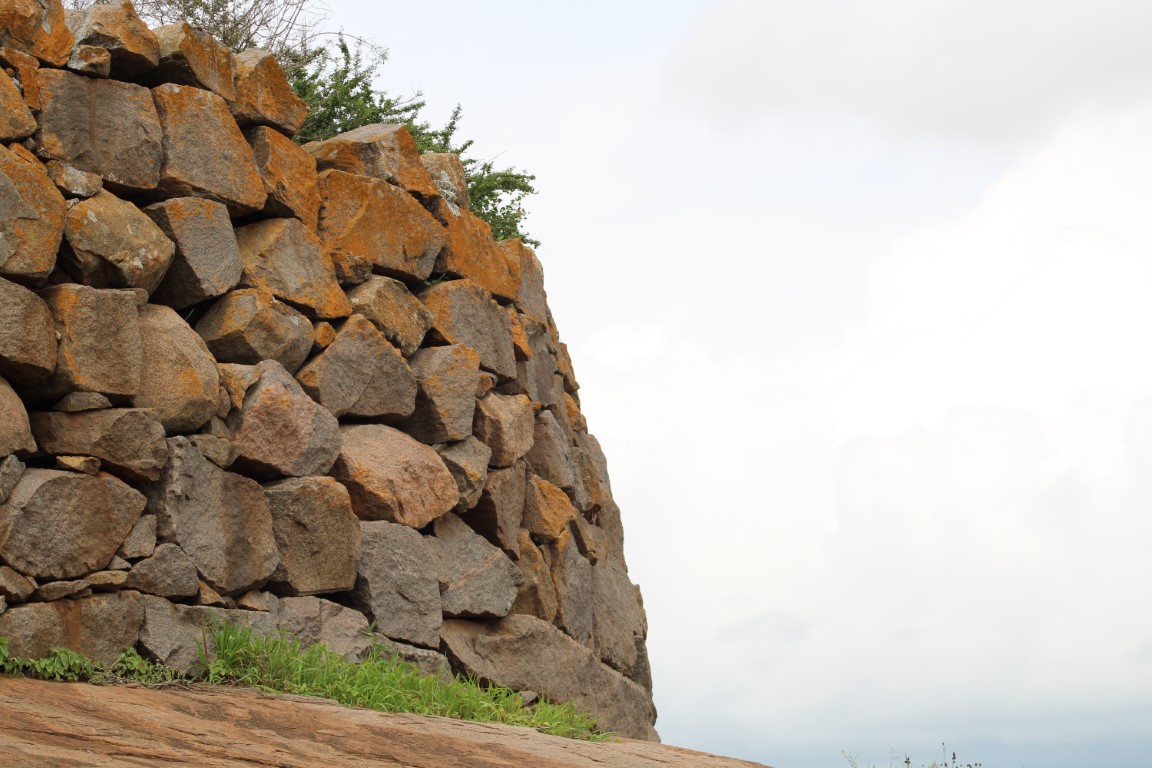
Something there is that doesn't love a wall,
  That sends the frozen-ground-swell under it,
  And spills the upper boulders in the sun;
  And makes gaps even two can pass abreast.
The work of hunters is another thing:
  I have come after them and made repair
  Where they have left not one stone on a stone,
  But they would have the rabbit out of hiding,
  To please the yelping dogs. The gaps I mean,
  No one has seen them made or heard them made,
  But at spring mending-time we find them there.
 I let my neighbor know beyond the hill;
  And on a day we meet to walk the line
  And set the wall between us once again.
 We keep the wall between us as we go.
 To each the boulders that have fallen to each.
 And some are loaves and some so nearly balls
  We have to use a spell to make them balance:
  'Stay where you are until our backs are turned!'
  We wear our fingers rough with handling them.
 Oh, just another kind of out-door game,
  One on a side. It comes to little more:
  There where it is we do not need the wall:
  He is all pine and I am apple orchard.
 My apple trees will never get across
  And eat the cones under his pines, I tell him.
 He only says, 'Good fences make good neighbors.'
 Spring is the mischief in me, and I wonder
  If I could put a notion in his head:
  'Why do they make good neighbors? Isn't it
  Where there are cows? But here there are no cows.
 Before I built a wall I'd ask to know
  What I was walling in or walling out,
  And to whom I was like to give offense.
 Something there is that doesn't love a wall,
  That wants it down.' I could say 'Elves' to him,
  But it's not elves exactly, and I'd rather
  He said it for himself. I see him there
  Bringing a stone grasped firmly by the top
  In each hand, like an old-stone savage armed.
 He moves in darkness as it seems to me,
  Not of woods only and the shade of trees.
 He will not go behind his father's saying,
  And he likes having thought of it so well
  He says again, 'Good fences make good neighbors.'
A psychology teacher taught us about what he called “the gestalt of expectations.” It’s when one builds an alternative reality in one’s mind (typically a worst-case scenario) and then one acts as though it is a reality, when – in fact – it is not. (Though sometimes it creates a self-fulfilling prophecy situation, which — of course — triggers selection bias in people of the unexamined life.)
It was my introduction to what I would come to know as the most fundamental insight of human existence — i.e. that one’s experience of the world is not the world itself, and while one has minimal influence over the latter, one can have tremendous influence over the former. One can even train oneself to perceive difficulties and sorrows as learning and growth opportunities.
Daily practice of feeling gratitude. (As opposed to being grateful that one November day a year and wallowing in how horrible everything is the other three-sixty-four.)
To pick nits, I think the defining characteristic of a job is that one earns money for one’s time and effort. Otherwise, it’s volunteering or a hobby — both of which are fine activities in which I’ve participated over the years — but they’re not “jobs.” In the case of a hobby, one should do it because one loves it and / or gains from it. In the case of volunteering, if you’re doing the work only because you love the activity, you’ve probably missed the point of the undertaking.
That’s a tough one because while I see value in communities, I’m also concerned that there is a rising trend toward tribalism and nationalism that will not be good for anyone — not to mention a shift toward virtual communities where anonymity and disconnect lead to people to act as though they were raised by hyenas. (I do know that, in reality, that’s an insult to the marvelous hyena, but I think it makes a sort of point for the non-hyena expert.)
I’ve been amazed at how India manages to have an intense sense of community in such a vastly super-tribal environment. (I’m using “supertribe” in Desmond Morris’s sense — i.e. a community which is too big for everyone to know everyone else, and which has a group dynamic that reflects that fact.) But it’s not as though there isn’t a dark side to this intensity of community — patriarchy, sectarian conflict, disempowered societal segments, etc.
America, by comparison seems to be experiencing a dearth of true community, which is driving people toward virtual “communities,” and in virtual communities people seem to fall into the shittiest versions of themselves. Not to mention the lack of community’s contribution to what I’ve heard called a “mental health crisis.”
I guess my preferences would be that community be: 1.) real and not virtual. 2.) that it exploit the advantages of diverse membership instead of wallowing in homogeneity and group think. 3.) that it doesn’t create overclasses and underclasses. And that, 4.) Community norms minimally negate individual freedoms.
That said, I’m not at all sure that the above criteria can be reconciled. Maybe the tradeoffs are too strong. Maybe – in our super-tribal world – the closest-knit society will always be the most xenophobic [fearful / disliking of outsiders,] and maybe tolerance and egalitarianism will always be accompanied by societal degradation. I have observed a strong inclination for people to think of compassion as a zero-sum game.
As I said, a tough one.

Have you ever noticed that anybody driving slower than you is an idiot,
and anyone going faster than you is a maniac?
Isn’t making a smoking section in a restaurant
like making a peeing section in a swimming pool?
I don’t believe there’s any problem in this country,
no matter how tough it is,
that Americans,
when they roll up their sleeves,
can’t completely ignore.
Here’s all you have to know about men and women;
women are crazy,
men are stupid.
And the main reason that women are crazy
is that men are stupid.
I like it when a flower or a little tuft of grass grows through a crack in the concrete.
It’s so fuckin’ heroic.
 Be Funny or Die: How Comedy Works and Why It Matters by Joel Morris
I’d say my first full-time martial arts teacher, because I was young enough to have considerable open domain in which said teacher could be influential and because the lessons were so diverse — from kinesthetics to ethics to culture to psychology.
By “most influential” I think one means having had either the broadest or most profound influence. (I favor the importance of the latter, the lessons that stick with one and which inform one’s philosophy of life.) This definition favors earlier teachers, but as I don’t remember any specific lesson taught by a specific elementary school teacher, they’re out (though I learned useful things from them and they ranged from competent to quite skilled as teachers go.) The earliest profound lesson I received through scholastic education, one that became a core tenet in my philosophy of life rather than just a skill, was in high school — and in my junior or senior year at that.
As with books, if I can take away one profound lesson from a teacher, I consider my experience well worth the time and energy. And most influential isn’t necessarily the prime criterion for a teacher — and certainly doesn’t necessarily mean best or most skilled or most in command of a diverse array of knowledge.
Have epiphanies. They are quite hard come by.


