BOOK REVIEW: Philosophy for Gardeners by Kate Collyns

Philosophy for Gardeners: Ideas and paradoxes to ponder in the gardenPhilosophy for Gardeners: Ideas and paradoxes to ponder in the garden by Kate Collyns
My rating: 5 of 5 stars

Amazon.in Page

Out: March 1, 2022

This book can benefit not only gardeners interested in philosophy, but also philosophers interested in gardening. [If you’re in the intersect of people expert in both philosophy and gardening, the book probably won’t hold a great deal of intrigue as it’s written for a more general audience.] The gist is examples and analogies from gardening applied to elucidating philosophical concepts. In a few cases, these examples feel a bit forced. In most cases, they work just fine. But in a few other cases, the gardening analogies offer a powerful and unique insight that one would be unlikely to take away from a single-axis philosophy guide. For example, I found the relating of utilitarianism to the gardener’s dilemma of whether to start with a wildly overgrown bed or a relatively clean one offered a fresh perspective on the topic.

The book’s twenty chapters are divided into four parts. The parts are labeled “Soil,” “Growth,” “Harvest,” and “Cycles;” which I took to apply to fundamentals, change, outcomes, and the cycle of life and death. Part I, “Soil,” investigates topics in metaphysics, governance, and taxonomy. The second part, “Growth,” explores evolutionary adaptation, altruism / cooperation, the blank slate (and its critique,) and Zeno’s paradoxes. The penultimate section, “Harvest,” delves into topics such as forms, aesthetics, the reliability of senses, epistemology, and economic philosophy. Finally, “Cycles” discusses identity, logic and linguistic limitations, ethics, and pragmatism.

The book uses retro illustrations that look like the plates one might see in a book from the 19th century. There’s a brief bibliography, primarily of philosophical classics.

I’m always on the lookout for books that consider the perspective that humans exist within nature and our ways can’t be understood divorced from our place in the natural world. In that sense, I believe the book has much to offer.

View all my reviews

Bright Heights [Haiku]

sun-warmed rooftop,
clouds down in the valley --
i breathe in bright heights

DAILY PHOTO: Kangchenjunga, Two Views

Taken in December of 2021 from Darjeeling
Taken from the Batasia Loop, Darjeeling

Wind-Swept Hero [Rubāʿī]

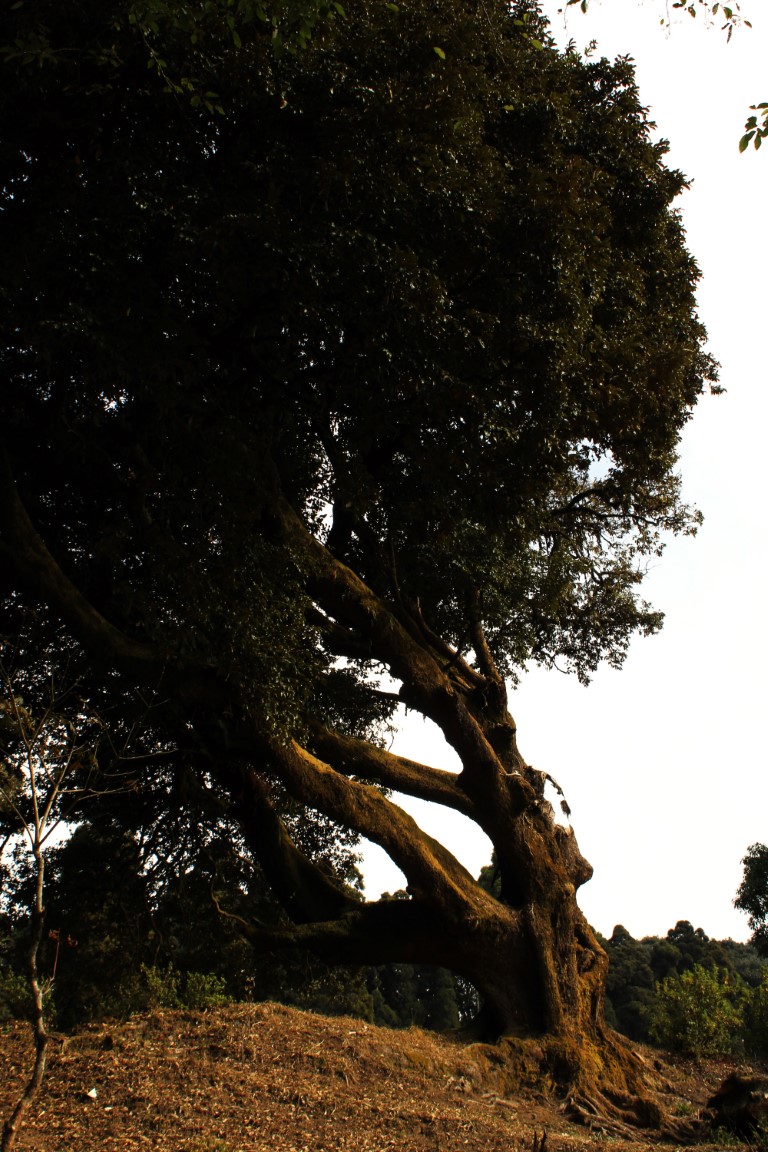
Beyond the house stood half a tree -
cleaved in twain, robbed of symmetry;
leaning like a wind-swept hero,
it could still shade a reverie.

Himalayan Nettle [Villanelle]

The hardy Himalayan nettle stings.
It felt like punching piles of jellyfish. 
The slightest brush feels like a snapped bowstring.

But the balm of time bowstrings quickly bring.
The nettle's cure proved far more standoffish.
The hardy Himalayan nettle stings. 

Two days on, the nettle still sent its ping.
My hand numb like I'd fondled Fugu fish.
That slightest brush felt like a snapped bowstring.

I put my useless limb in a web sling. 
Not really, but it did hurt fiercely-ish.
That hardy Himalayan nettle stings.

Oh! of such agony Divas do sing.
Not really, but it was unpleasant-ish.
The slightest brush felt like a snapped bowstring.

Stabbed by roadside nettle in Darjeeling
is a fate upon no one I would wish.
The hardy Himalayan nettle stings.
The slightest brush feels like a snapped bowstring.

The Forest [Free Verse]

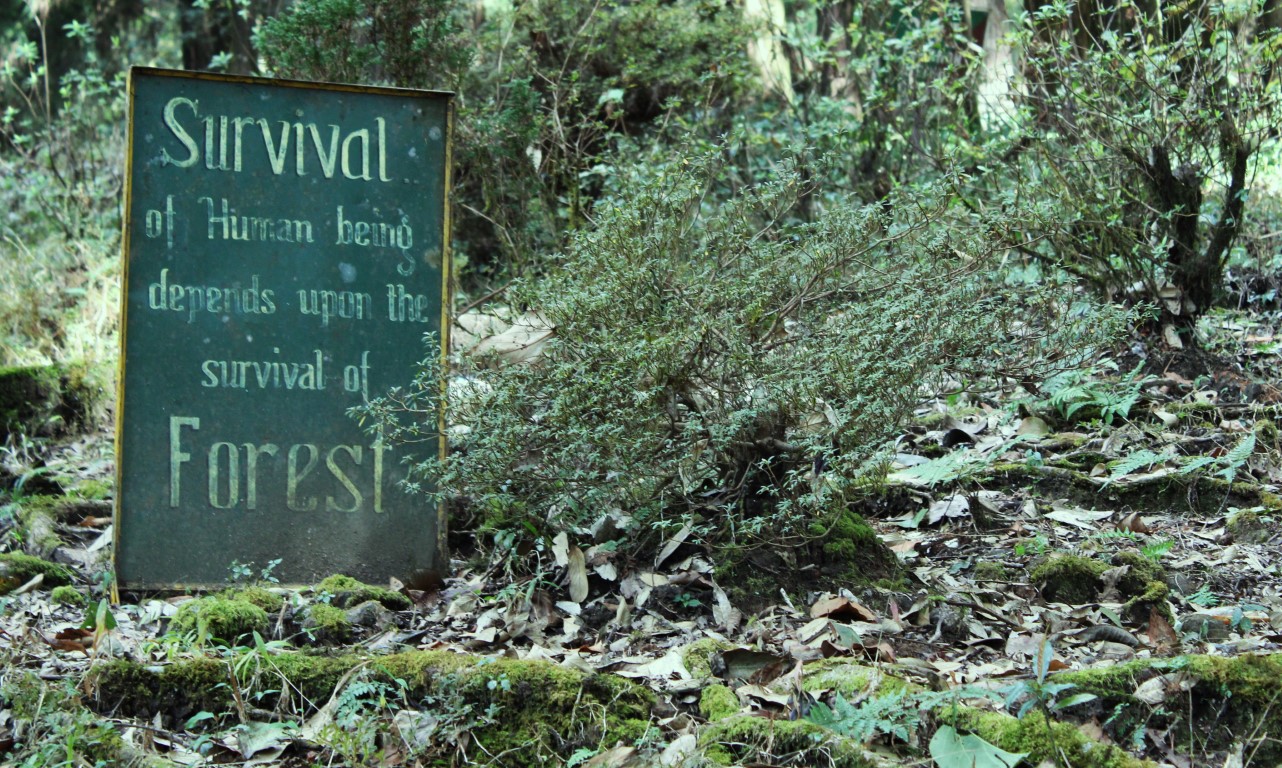
A sprout sprouts from the dirt.

Above, dead leaves keep 
the tender leaf cool & moist.

Below, worms churn the soil --
churn and aerate. 

Fungi decompose the lowest leaf layer,
turning it into nutrients for the sprout.

I'm tapped into all that magic
from afar:

-creation & destruction,
feeding into each other

-energy becoming life,
life becoming matter,
matter that - 
in turn - 
becomes energy.

If there's a forest,
I am the forest.
I'm life and energy
&
 death and decomposition...

all in due time.

BOOK REVIEW: Nature is Never Silent by Madlen Ziege

Nature Is Never Silent: how animals and plants communicate with each otherNature Is Never Silent: how animals and plants communicate with each other by Madlen Ziege
My rating: 4 of 5 stars

Amazon.in Page

Out: Hardcover out February 8, 2021 [e-book is out now]

The central premise of this book is that humans miss the tremendous amount of communication that is going on among and between other species. We miss it because we think of communication in an extremely limited way that revolves around visual and auditory expressions of human style languages. It doesn’t occur to us that different senses (e.g. smell) or other activities (e.g. stinging or passing gases,) could be used to convey messages as overt as, “Don’t touch me!” to as complex as, “There are good flowers to the southeast, roughly four-hundred meters along this line” or “Watch out! Some beetles have started chewing on my bark.”

While one might still dismiss all this communication as extremely simple compared to the infinitely complicated endeavor humans have made communicating, it’s not all just warning signaling. Many species engage in a form of communication that most people would probably attribute to humanity alone, specifically, deception. There are female fireflies who cannot only send a mating signal to males of her species to engage in reproduction, but can send counterfeit signals of other species to attract a male of another species of which she can make a snack.

It’s also important to note that it’s not just the species most similar to us who communicate. There are chapters devoted to both unicellular creatures and plants, species that one might be surprised to learn are quite active communicators.

I found this to be a highly thought-provoking book for the nature-lover, and I’d recommend it for anyone who wants to expand his or her horizons with respect to what is being transmitted in the natural world on those cold and quiet days when it seems like not a creature is stirring, and yet there’s always something.

View all my reviews
Preening Egret [Haiku]

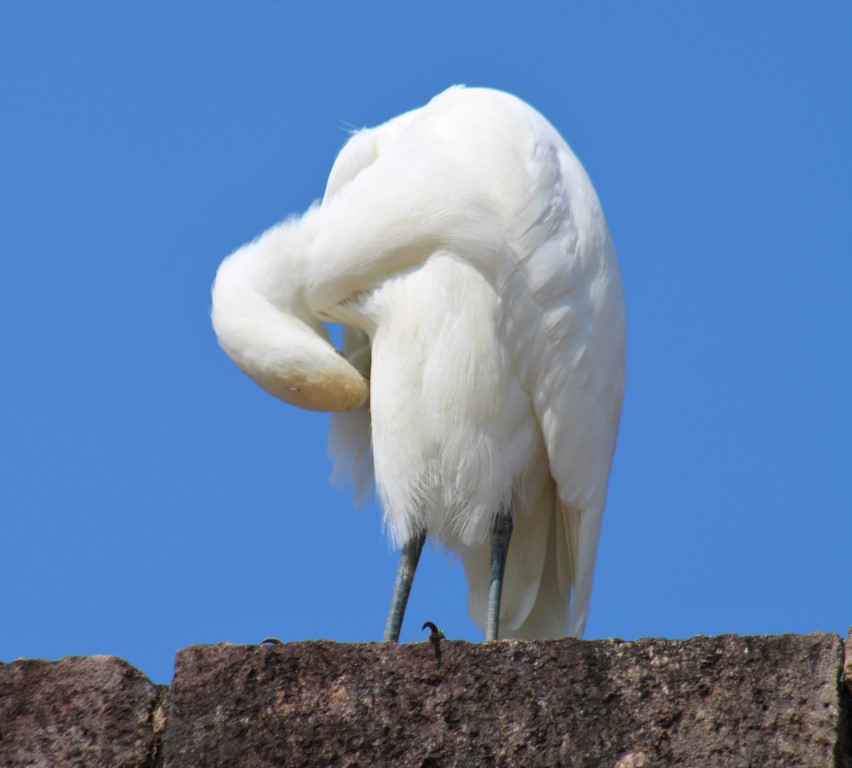
the preening egret
twists its head under wing;
its birdness wanes

Two Pigeons [Haiku]

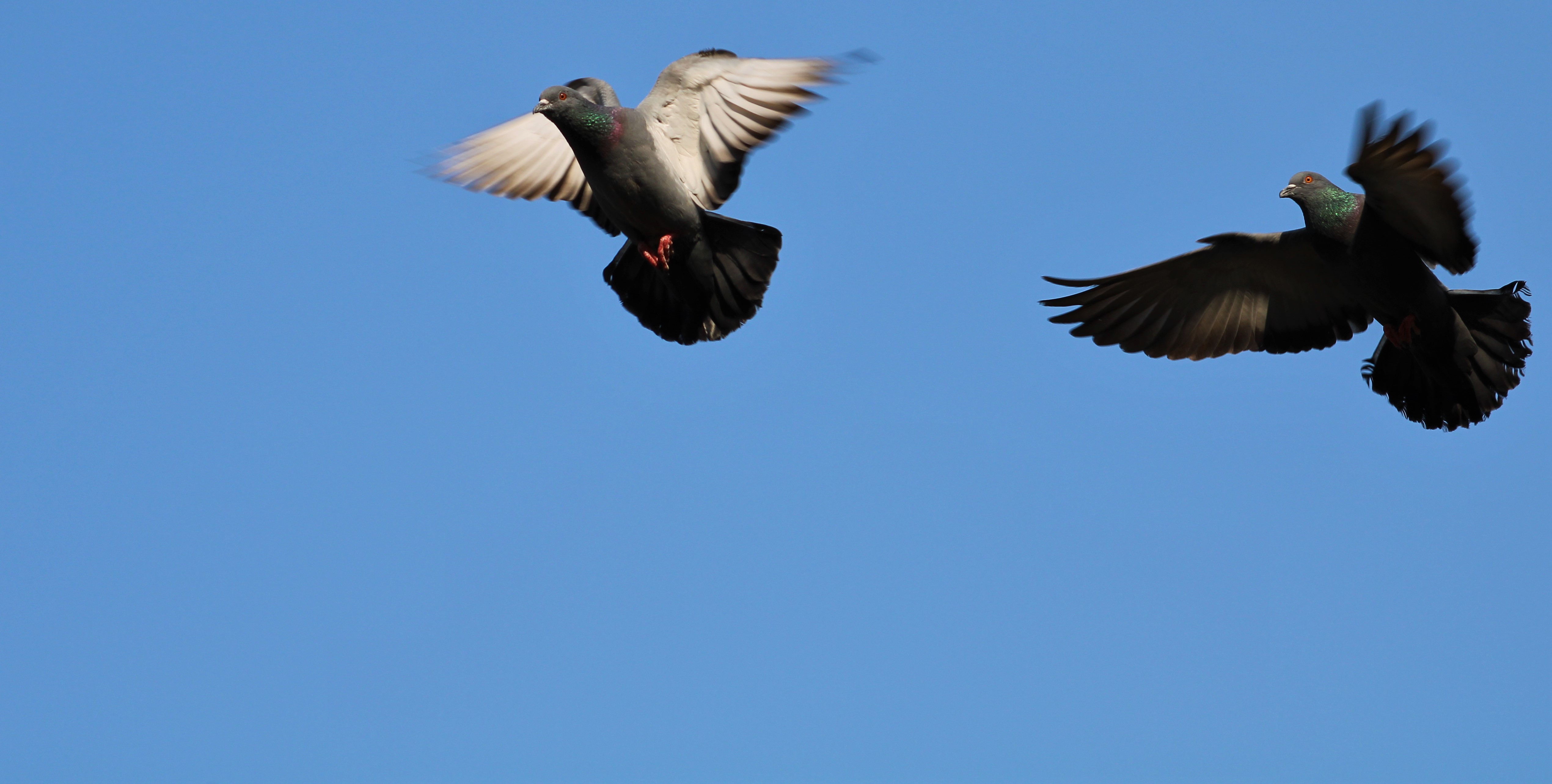
two pigeons,
flapping out of synch --
yet in unison