Someplace inexpensive, with beaches and hikeable hilly / mountainous terrain within a reasonable distance, and where beer prices are not disproportionately high vis-a-vis the general cost of living. FYI — I call the latter the “stick-up-the-bum” index because if beer prices are relatively high, it usually means they are heavily sin-taxed (it’s not an expensive product to make,) and so disproportionately high beer prices suggest the society is trying to micromanage personal behavior. I may or may not want a beer (I’ll want one,) but I prefer to live in a society with a live-and-let-live mentality. Candidates exist in Southeast Asia, Latin America, and the Central Asia / Caucus region.
If you could live anywhere in the world, where would it be?
First of all, I’d say that I probably could live most places in the world, and the few I couldn’t (e.g. North Korea) have no appeal to me as a place of residence. Having lived several places in the US, a couple years in England, and now over ten years in India, I’m under no illusions that there is a Shangri-la out there, a perfect utopia. Most places are fine places to live if one is flexible-minded and can adapt to that place’s rhythms and peculiarities. There may be a honeymoon period during which some place seems better than the rest, but even the most seemingly idyllic place will lose its luster in time.
That’s why I recommend travel. Everyplace offers beauty and life lessons when taken in bite-size pieces.
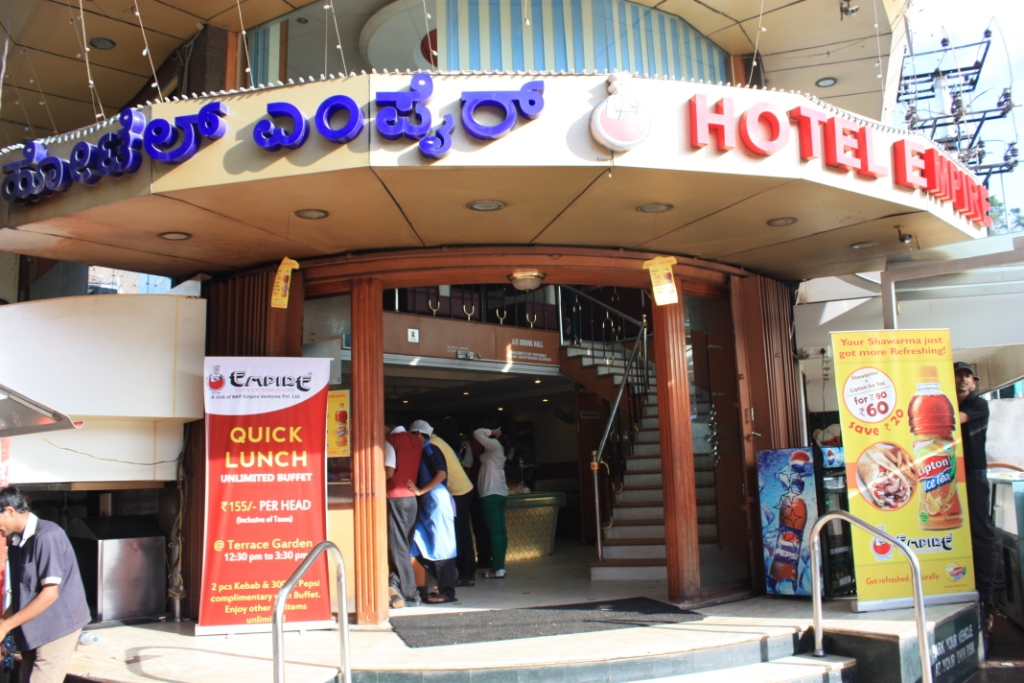
1.) Vegetarian restaurants: While I’m not of the vegetarian persuasion, my wife is. This can make finding a mutually acceptable restaurant a pain. However, it’s vastly easier to pick a restaurant in India. Except for the very rare American-style steak house, she can eat anywhere and the menu will be at least half vegetarian.
In Atlanta, I’d estimate that she could eat healthily and well in about one in five restaurants. American Southern cooking doesn’t offer one a side of green beans without a ham bone in it. I’d say we’ve cut our restaurant selection time to about a quarter of the time it took in the US.
2.) Cheap books: While English is secondary to Kannada as the spoken language here, it’s not second in the bookstores by any means. Bookstores are common and offer some new options. I’ve spent a lot of time in bookstores, so I usually don’t see a lot that’s new, but there are books printed by Indian publishers here that don’t usually appear on the shelves of Barnes & Noble.
And, unlike in Cambodia where books are cheap by means of photocopying, the books here aren’t cheap by virtue of stiffing the writer.
3.) Amazon: On a related note, I can still buy Kindle books just as easily as I did in the states. There are some websites that don’t work here, such as Hulu and Netflix, but Amazon operates just fine.
4.) Walk-centric life: Bangalore is not an easy city to walk in because the traffic is horrendous, there is no system for traffic lights, and sidewalks are about as dangerous as walking in the street. (If your eye isn’t constantly on the sidewalk, you might just plunge into a sewer.) However, being in the heart of the city, there’s nothing I need that I can’t get via a short walk.
5.) Servants: I haven’t mowed lawn, swept a walk, done laundry, or washed a dish since I left the US, and yet it’s always done. After a brief period of feeling awkward, it’s beginning to grow on me. The hardest part will be going home, once I’ve become accustomed to a certain level of service.
6.) Climate: There’s been a pleasant breeze coming through my window pretty much all day. I haven’t had to use the AC since we’ve been here. And it’s starting to not rain every night. Of course, this one is not so much about India as Bangalore specifically. On the whole, India’s climate is not so pretty.
7.) Loan words: I suspect it’s harder for the locals to talk about foreigners behind their backs here than most countries because there are so many English loan words. They’ll be a couple of locals talking in Kannada, and you’ll here: “Waa-wah-waa-wah-waa-wah-super convenient-waa-wah-waa.” So it’s like having a rudimentary grasp of a language, you can kind of get a feel for the general drift of what is being talked about-even if you don’t know any specifics. At least this makes bad-mouthing foreigners a mental exercise.
As my wife and I prepare for our move to Bangalore, we are doing research to help us avoid inadvertent insult and blasphemy . We’ve learned such useful facts as: a.) don’t tug on a Sikh man’s beard, and b.) don’t buy a statue of the goddess Durga to use as a hat rack.
Durga Source: Dipankan001 (via Wikipedia)
These are just the kind of faux pas a well-meaning but uninformed American couple might make. (Oh, you say, not really?)
Every culture has its little proclivities that seem insane from the outside, but which are so deeply ingrained as to be invisible from the inside. (In fact, I had trouble thinking up such American cultural proclivities, but I believe they exist. Our norms are just so ingrained as to be hard to see. Of course, we are also a diverse society, a young nation, and tend toward the irreverent in the social domain– all of which may make our cultural idiosyncrasies look a bit different from those of more traditional societies.)
We’ve been reading books like Culture Shock! India, which is one of a series of books that explain the various cultural idiosyncrasies of different countries. (I was first introduced to the series through Culture Shock! Cambodia, though I have read other such books about China and Japan.) Such guides are extremely useful for explaining do’s and don’ts. However, they don’t necessarily prepare one for the corporate culture of India, which is a mix of Indian, Western, and multinational business cultures. For insight into the corporate culture we turned to:
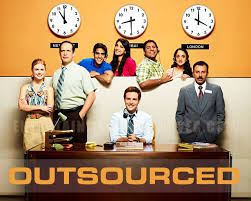
For those of you unfamiliar, Outsourced was a sitcom that ran for one season (2010-2011) on NBC. The premise of the show was that the manager of a novelty company call center is moved from the US to Mumbai. He becomes acquainted with Indian culture as he must teach his staff enough about American culture so that they can communicate with the customers they are on the phone with all day. Some of the humor comes from the exposure of a very conservative workforce to products that include dildos and slutty Halloween costumes, but much of it is just cultural tension more broadly. The show was popular with critics and Americans familiar with India. Unfortunately, that was not enough to keep it on the air, particularly when Americans who buy tacky crap and couldn’t find India on a map were the butt of the joke at least as much as were Indians. (Americans who buy tacky crap and are geographically illiterate are a large demographic within the television viewing public.) At any rate, the show was clever and well-acted.
One may scoff at the use of a sitcom as reference material, but the show seemed to be well-researched. For example, I know that its discussion of the famous Indian head bobble matched the description in the cultural guide quite well. The bobble is a non answer that can mean virtually anything. The video below gives a more detailed explanation, but the visual is not so good. From what I’ve seen, most people tend to do this action more with the top of the head staying relatively stationary while the jawline swings side-to-side.
This left us wondering whether other elements of the show will ring true. The show introduced me to a new term, “holiduping.” This is when one’s employees convince a manager that a day is a holiday, when in reality it isn’t. To get the joke, you must know that Indians have enough work holidays to make US Federal employees say, “Damn, that’s a lot of holidays!” Furthermore, not all the holidays are national. There may be days taken off in Karnataka that are not in Gujarat, and vice versa. This can make it a challenge for new comers to keep track.
I’m curious as to the views of people in-the-know about how accurate Outsourced was. Most of the cast were Americans of Indian origin, but it doesn’t look like the same was true of the lead writers.







 Tiger Riding for Beginners