BOOK: “The Pocket Rumi” ed. / trans. by Kabir Helminski

The Pocket Rumi (Shambhala Pocket Library)The Pocket Rumi by Jalal ad-Din Muhammad ar-Rumi
My rating: 4 of 5 stars

Publisher Site – Shambhala

This is a selection of writings (mostly poetry) of Rumi (formal name: Jalāl al-Dīn Muḥammad Rūmī.) Rumi was a mystic of Sufi Islam, and so the poems tend toward the devotional — though with more reference to the experience of intoxication than one might expect from a 13th century Islamic poet.

This selection consists of three sections organized by poetic form, each section progressively longer than the preceding one. The first section is ruba’i, the second is ghazals, and the last is from Rumi’s Mathnawi.

The “Pocket” of the book’s title and series is figurative as the paperback is too big of both format and thickness for any pocket I own, personally, but the point is that it’s a quick read at only about 200 pages of (mostly) poetry [meaning white space abounds.]

I enjoyed reading this selection. I can’t say how true to message the translations are as I have no knowledge of Persian. I can point out that the translators opted to abandon form in favor of free verse. Hopefully, this gave them the freedom of movement to approach the message and tone of the originals.

If you are interested in a short, readable English translation of Rumi’s poetry, this book offers a fine place to start.

View all my reviews

“Disillusionment of Ten O’Clock” by Wallace Stevens [w/ Audio]

The houses are haunted   
By white night-gowns.
None are green,
Or purple with green rings,
Or green with yellow rings,
Or yellow with blue rings.
None of them are strange,
With socks of lace
And beaded ceintures.
People are not going
To dream of baboons and periwinkles.
Only, here and there, an old sailor,
Drunk and asleep in his boots,
Catches tigers
In red weather.

BOOK: “Kim Jiyoung, Born 1982” by Cho Nam-Joo

Kim Jiyoung, Born 1982Kim Jiyoung, Born 1982 by Cho Nam-Joo
My rating: 4 of 5 stars

Publisher Site – Simon & Schuster / Scribner

This fictitious biography explores the tribulations of being a woman in modern-day South Korea. It tells the tale of the titular lead from birth through a middle-aged motherhood. It discusses issues ranging from disappointment at having girl children to feelings of anxiety in a world laden with horny boys to the subtle sexism of the modern workplace.


The book blurb calls this book “riveting, original, and uncompromising.” I’ll give it “uncompromising,” and I have insufficient experience with the book’s “peers” to challenge the “original” claim, but I do have to call BS on the “riveting” bit. In fairness, the point of the book seems to be to offer a brutally typical life experience — not the novel-shaped extremes of a rollercoaster existence. The fact that the book is not riveting doesn’t make it unimportant or unworthy of reading. However, this is not the book one should pick up expecting to read on the edge of one’s seat. It’s well-crafted literary fiction with an important message, but “compelling” is not an appropriate descriptor. The book suffers from a progressive increase in drag as one reads onward.

Still, I’d recommend it for readers of literary fiction interested in varied cultural experiences. It’s a quick read with fine character development.

View all my reviews
“I fear’d the fury of my wind” by William Blake [w/ Audio]

I fear’d the fury of my wind
Would blight all blossoms fair & true,
And my sun it shin’d & shin’d,
And my wind it never blew.

But a blossom fair or true
Was not found on any tree;
For all blossoms grew & grew
Fruitless, false, tho’ fair to see.

“I Asked a Thief To Steal Me a Peach” by William Blake [w/ Audio]

I asked a thief to steal me a peach:
He turn'd up his eyes.
I ask'd a lithe lady to lie her down:
Holy and meek she cries.

As soon as I went an angel came:
He wink'd at the thief
And smil'd at the dame,
And without one word spoke
Had a peach from the tree,
And 'twixt earnest and joke
Enjoy'd the Lady.

“The Props assist the House” (729) by Emily Dickinson [w/ Audio]

The Props assist the House
Until the House is built
And then the Props withdraw
And adequate, erect,
The House support itself
And cease to recollect
The Augur and the Carpenter –
Just such a retrospect
Hath the perfected Life –
A Past of Plank and Nail
And slowness – then the scaffolds drop
Affirming it a Soul –

Lament 4 [感遇四] by Zhang Jiuling [张九龄] [w/ Audio]

South of Yangtze, stands of red tangerine
Can endure winter while remaining green.
Is it that the weather there is so warm?
No. Their nature 's to bear a winter storm.
What might well serve the joyful traveler
Will be loathsome peril to passengers.
Fate factors in chance and situation --
Not playing around in cyclic rotation.
You may cultivate crops however you please,
But should heed shade thrown by mountains & trees.

This is the fourth poem in 300 Tang Poems [唐诗三百首] and the final poem of a quartet that opens that collection. The original in Simplified Chinese is:

江南有丹橘, 经冬犹绿林;
岂伊地气暖? 自有岁寒心。
可以荐嘉客, 奈何阻重深!
运命惟所遇, 循环不可寻。
徒言树桃李, 此木岂无阴?

“Romance” by Edgar Allan Poe [w/ Audio]

Romance, who loves to nod and sing,
With drowsy head and folded wing,
Among the green leaves as they shake
Far down within some shadowy lake,
To me a painted paroquet
Hath been—a most familiar bird—
Taught me my alphabet to say—
To lisp my very earliest word
While in the wild wood I did lie,
A child—with a most knowing eye.
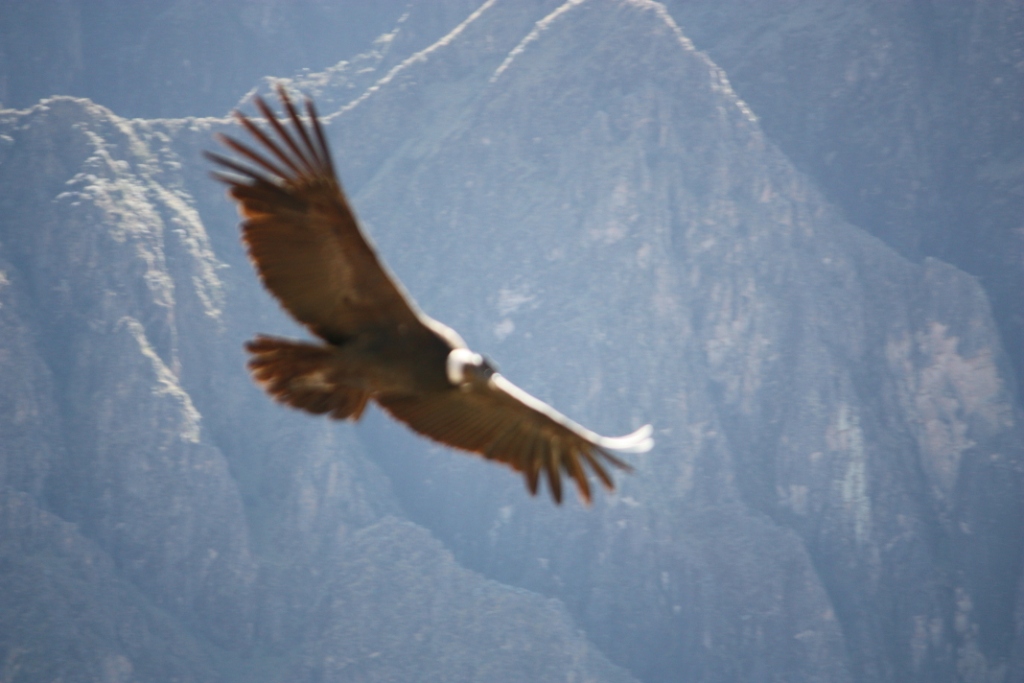
Of late, eternal Condor years
So shake the very Heaven on high
With tumult as they thunder by,
I have no time for idle cares
Through gazing on the unquiet sky.
And when an hour with calmer wings
Its down upon my spirit flings—
That little time with lyre and rhyme
To while away—forbidden things!
My heart would feel to be a crime
Unless it trembled with the strings.

“Down By the Salley Gardens” by William Butler Yeats [w/ Audio]

Down by the salley gardens
my love and I did meet;
She passed the salley gardens
with little snow-white feet.
She bid me take love easy,
as the leaves grow on the tree;
But I, being young and foolish,
with her would not agree.

In a field by the river
my love and I did stand,
And on my leaning shoulder
she laid her snow-white hand.
She bid me take life easy,
as the grass grows on the weirs;
But I was young and foolish,
and now am full of tears.

Wen Fu 9 [文赋九] “The Whip” by Lu Ji [陆机] [w/ Audio]

Language can be complex, reason may sprawl,
And words don't always seem to point the way.
Extremes aren't always clear and distinct.
Overhauls are not always an upgrade.
The gist may dwell in a key phrase or two --
Those words the whip that make it race or stay.
Though multitudinous words are in place
They must do more than roar, hiss, or bray.
Overuse of the whip exhausts the horse --
Keep the impulse to whip too much at bay.

The original lines in Simplified Chinese are:

或文繁理富,    而意不指适。
极无两致, 尽不可益。
立片言而居要,乃一篇之警策。
虽众辞之有条,必待兹而效绩。
亮功多而累寡,故取足而不易。