ESSAY: This I Believe [Including My Views on Unicorns]

Occasionally, I’m asked whether I BELIEVE some idea or BELIEVE in X [i.e. fill in the person, place, thing, or concept.]

If I were to answer these questions honestly, that answer would almost invariably be, “No.”

But, because that can seem overly contrarian — not to mention insane — I often try to guess the sense in which the questioner is using the words “BELIEVE” and “BELIEF,” and then answer accordingly.

Like many words, BELIEVE is one whose meaning meanders, and shadows fall across it in different ways, creating different hues [and impressions thereof,] depending upon one’s vantage point.

Often, people seem to use the phrase, “I BELIEVE X ” synonymously with “I understand X to be true.” “I BELIEVE it” can mean: I behave as though X is true, [but am not necessarily commenting on the degree to which X is supported by evidence or reason.] I, on the other hand, try to use BELIEVE in the sense of: “I accept the truth of X and behave accordingly, but I don’t really have any solid basis on which to rest this conclusion.” I like to draw as few such conclusions as possible, though sometimes it’s hard not to. For example, like most people, I live my life as if we are living in base reality — as opposed to being in some “Matrix”-like computer simulated world, but — if pressed — I’d have to admit that I can’t really support this belief convincingly.

If I were to be asked whether I BELIEVE there is a force that inexorably pulls me toward the Earth’s center, using my own interpretation of the word “BELIEVE,” I would reply in the negative. Before you ask how I can be so anti-gravity [pun not intended, but acknowledged,] let me say that I firmly understand there to be such a force as gravity. This is not to say that I fully understand the mechanism by which gravity works — which I certainly do not — but rather to say that I recognize the truth of such a force’s existence. I can experience gravity in my pathetic vertical leap, and even note it in the very impressive vertical leap of skilled athletes. I see it in the red leaf, twirling as it falls to the ground. I feel it upon takeoff as an airplane’s seat raises against my butt. Furthermore, I recognize that there are many scientists who’ve come to understand a great deal more about gravity than I, but also that none of what they’ve learned through their vast number of controlled observations contradicts my basic idea that I’m being pulled toward the planet (and it toward me.)

At the Jaipur Jantar Mantar, I was once asked whether I BELIEVED in astronomy and astrology? The questioner clearly thought this was a closed-ended, yes or no, question — as if the two fields dealt in identical content. Of course, from my perspective, it was a question similar to: “Do you BELIEVE in Zebras and Magical Unicorns?” — which is to say, not at all a straightforward and closed-ended yes or no question. [Incidentally, the reason I used the modifier “magical” is because I do “believe” in unicorns. I just call them “Indian Rhinoceroses” [Latin name: Rhinoceros Unicornis.]]

A Unicorn — i.e. the Indian Rhinoceros, or Rhinoceros Unicornis

The long and short of the matter is this: I strive to BELIEVE as little as I can, and to hold even those BELIEFs only so tightly that they might fall away in the face of learning. Otherwise, what’s learning for [or is it even possible?]

BOOK REVIEW: The Art of Impossible by Steven Kotler

The Art of Impossible: A Peak Performance PrimerThe Art of Impossible: A Peak Performance Primer by Steven Kotler
My rating: 5 of 5 stars

Amazon.in page

Out: January 19, 2021


Steven Kotler’s new book, “The Art of Impossible,” shares territory with two of his previous books [“The Rise of Superman” and “Stealing Fire” (the latter co-authored with Jamie Wheal,)] but it also takes a step back to reveal a broader landscape than those previous books. Whereas the earlier books focused on how to achieve a high-performance state of mind called “flow” (or “peak performance,”) this one looks at the bigger picture of how to achieve success with daunting projects. So, while the fourth / final section of the book presents information that will be familiar to past readers, the first three sections – on motivation, learning, and creativity, respectively – are not addressed in the earlier works. [It’s worth pointing out that even section four (Ch. 19 – 23) presents some new information and organizational schemes because this is a fast-moving research domain of late.]

The book’s first six chapters (i.e. Part I) are about achieving and maintaining motivation. This starts from the logical bedrock of finding an “impossible” task for which one is likely to have sufficient passion and interest to follow through. The reader learns how to formulate goals that are challenging enough and clear enough to facilitate sustained interest, effort, and productivity. The importance of autonomy is discussed at length, and the reader learns what companies like Google, 3M, and Patagonia have done to make gains via employees energized by increased autonomy. The kind of motivation that allows one to knuckle-down under adversity, grit, is given its own chapter, and the author discusses six variations that are important to success.

Part II (Ch. 7 – 14) is about the learning process and how one can organize one’s pursuits to get the most learning per effort. Chapter ten is the heart of this section, offering a detailed approach to organizing one’s learning activities. Chapter fourteen offers yet another critique of the 10,000-hour rule that was popularized by (and oversimplified in) the Malcolm Gladwell book, “Outliers.” [This “rule,” developed by Swedish psychologist Anders Ericsson, has come under intense criticism in large part because every time the explanation shifted downstream it became less of an approximate rule of thumb that was applicable to some specific domains and more of an iron-clad rule deemed applicable to every activity that benefits from practice, resulting in insane behavior such as parents who pick their child’s sport in the womb so that the kid can get the requisite number of practice hours before the college recruiters come to see him or her play.]

The third part (Ch. 15 – 18) is about fostering creativity. Here, Kotler takes the reader on a tour of changing thought about creativity, ranging from the ancient stories of muses to today’s state-of-the-art neuroscience. Like the section on Flow, there is an elaboration of where the neuroscientific understanding of creativity sits at the moment. Having read a range of books discussing such descriptions, this approach is falling out of favor with me. First, whenever I’ve read a book by an actual neuroscientist, I’ve learned that these simple attributions of activities to certain brain regions are either vastly oversimplified, more tentatively agreed upon than suggested, or both of the above. Second, I have realized that learning a name like Anterior Cingulate Cortex (ACC) and an oversimplified explanation of what it does doesn’t really help me. That said, I understand there is interest in these descriptions that drive their inclusion in such books. (I, too, have been interested in reading about it, but less and less so.)

The final part is about Flow, and this is where readers of “Rise of Superman” will be well-primed for the information that is covered. Chapter 21, which elucidates the twenty-two “Flow Triggers,” is the heart of this section. As I mentioned, Kotler has changed the way he organizes this discussion since his earlier book, but the material is still largely from Mihaly Csikszentmihalyi’s work on the subject. In addition to explanation of what it means to get into the state of Flow and of how to improve one’s chances of getting there, there is a discussion of “Flow Blockers” – four mind states that hinder Flow. The last chapter lays out a plan consisting of daily and weekly activities, and – as such – it serves as both a summary and an outline for moving forward.

Writers may find this book particularly beneficial because Kotler relies heavily on anecdotes from his own work to clarify and explain the points under discussion. By contrast, “Rise of Superman” relied almost exclusively on stories from extreme sports athletes, and “Stealing Fire” drew on silicone valley and the special forces heavily for examples. I actually enjoyed that Kotler spoke from his own experience. As someone who has read a fair number of books on peak performance, I’ve seen a lot of the same stories repeated within popular books. That said, readers who haven’t read much on the topic may wish the book had a broader set of narrative examples and less definitional / conceptual discussion. The author may be aware that many of his readers will have fatigue from reading the same stories and examples. When Kotler does mention such widely-discussed examples (e.g. Steve Jobs putting bathrooms in the Pixar building in a central location that created cross-pollination of people on different projects) he does so briefly and without preaching to the choir.

I found this book to be an interesting overview of how to approach a large-scale life mission. It’s well-organized and readable (though it might benefit from less vocabulary-based neuroscience discussion.) If you are feeling a bit rudderless, this is a good book to look into.

View all my reviews

BOOK REVIEW: Wired to Grow by Britt Andreatta

Wired to GrowWired to Grow by Britt Andreatta
My rating: 3 of 5 stars

Amazon page


This is one of those books that is hard to rate and review. It does a thing well, and if one is looking for a book of its strengths, it’ll serve one well. That thing it does well is to concisely and clearly summarize research in neuroscience relevant to learning new skills. If that is something one is interested in, and one hasn’t done much reading on the subject yet, this book will get one up to speed in just over 100 pages while offering insight into where to go to flesh out what one has learned.

That said, if one has read up on pop-sci neuroscience and /or self-help books applying said research, one is likely to find that this book offers little value-added while lacking the depth and narrative approach of competing works. The latter is particularly intriguing as this is a book about effective learning, and it seems clear that humans like learning through stories. However, Andreatta does little story telling beyond brief mentions of approaches she’s used in her seminars and occasional recaps of the stories of the researchers whose work she’s drawn upon. Some may find this isn’t so bad because it keeps the book compact. Story telling is page intensive. On the other hand, a lack of story-telling means that the material is a bit less prone to stick than it might otherwise be.

The author’s approach to making the material stick is to hang it on a three-phase model (learn-remember-do) and to keep it brief. Many of the chapters consist largely of bullet points, and in places the book feels like a PowerPoint handout. (I’ll let the reader decide whether that’s a good thing or not.)

The book is organized into twenty chapters arranged in five parts. (That tells one a lot about the brevity of chapters, given the book is 102 pp.) The five parts consist of: I.) an overview of neuroscientific fundamentals; II.) a description of research related to the “learn” phase of Andreatta’s model; III.) the same for the “remember” phase; IV.) coverage of the “do” phase; and V.) a section called “design” that helps the reader to apply what they’ve learned in the earlier parts to build approaches to teaching and learning.

There is some useful ancillary material. First, there are many graphics of a variety of types (pictures, line drawings, tables, and graphs) that are nicely drawn and effective. Second, there are “Your Learning Journey” sections interspersed throughout the book. These are one page or less exercises that are designed to help one put one’s learning to use. Thirdly, there is a bibliography that includes crucial reference materials divided by type: i.e. journal / scholarly research, books, journalistic / media accounts, and cited scholars. Finally, there are apparently additional resources accessible online, e.g. downloadable pdf files, but I didn’t investigate these features.

I would recommend this book for those looking for a concise summary of recent developments in neuroscience as they apply to education and learning. If you’re well-read on the subject, however, you might not find that this book delivers much extra. It should be noted that the author is speaking from an educator’s perspective (i.e. not a scientist or psychologist) and readers may find that a plus or not.

View all my reviews

LSNED: The Many Faces of Gypsy Dance

20141115_191914

FYI: LSNED = Learn Something New EveryDay

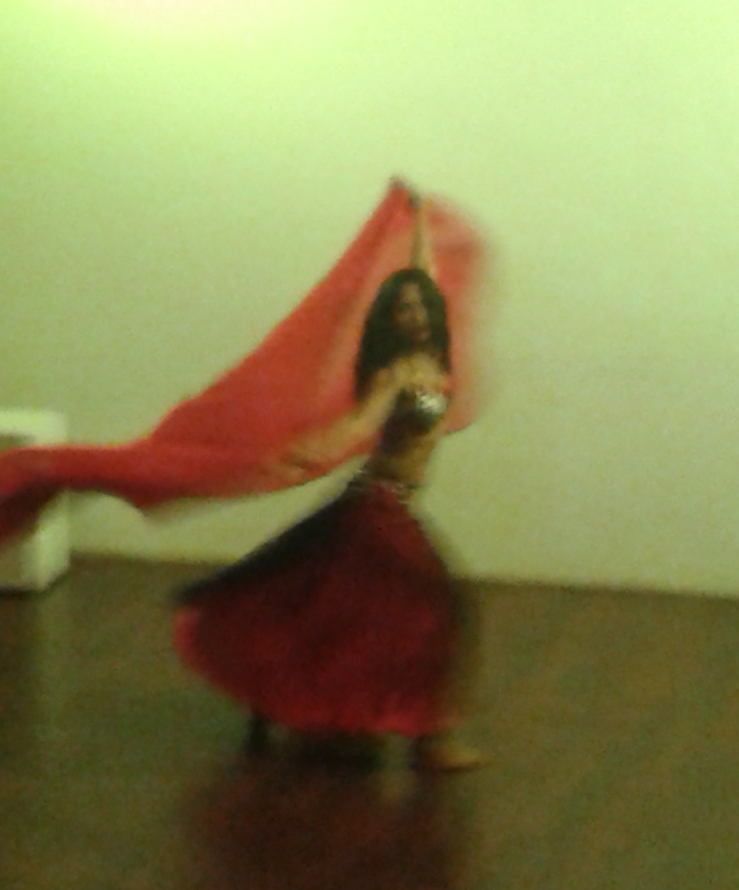
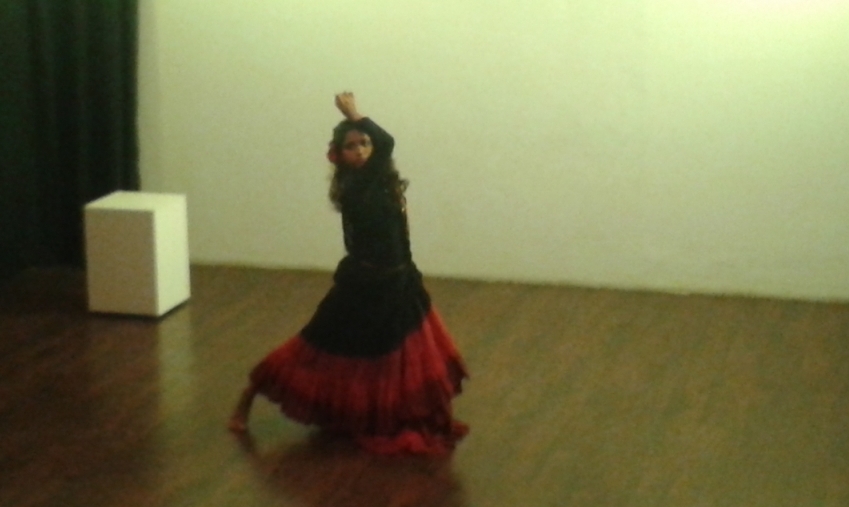
My wife, some friends, and I went to a dance performance at the KalaRasa Art House in Jayanagar last night. The dance was performed by a duo (made trio for the evening) called The SaraLuna Project, who demonstrated three dance forms with Gypsy roots: Kalbeliya Dance of Rajasthan, Egypt’s Belly Dance, and the Spanish Flamenco. I had no idea that these dance forms were connected (hence the Learn-Something-New-EveryDay [LSNED] segment,) and that they are but three styles along the long trail of Gypsy migration–though I have seen other Gypsy dance forms in Hungary.

This promises to be the first installment of a series that will cover other dance forms in this long and rich cultural heritage. The dance was sensational and it was a learning experience (complete with slides and graphics) as well as an entertaining evening. So if you’re in Bangalore and enjoy dance you should follow The SaraLuna Project.


20141115_193654


20141115_20095120141115_200149

20141115_194212

I’m Back From Thailand

My month-long hiatus from posting has come to an end. I’m back home in India after an educational month in Thailand. I’ve got a lot of posting to catch up on.

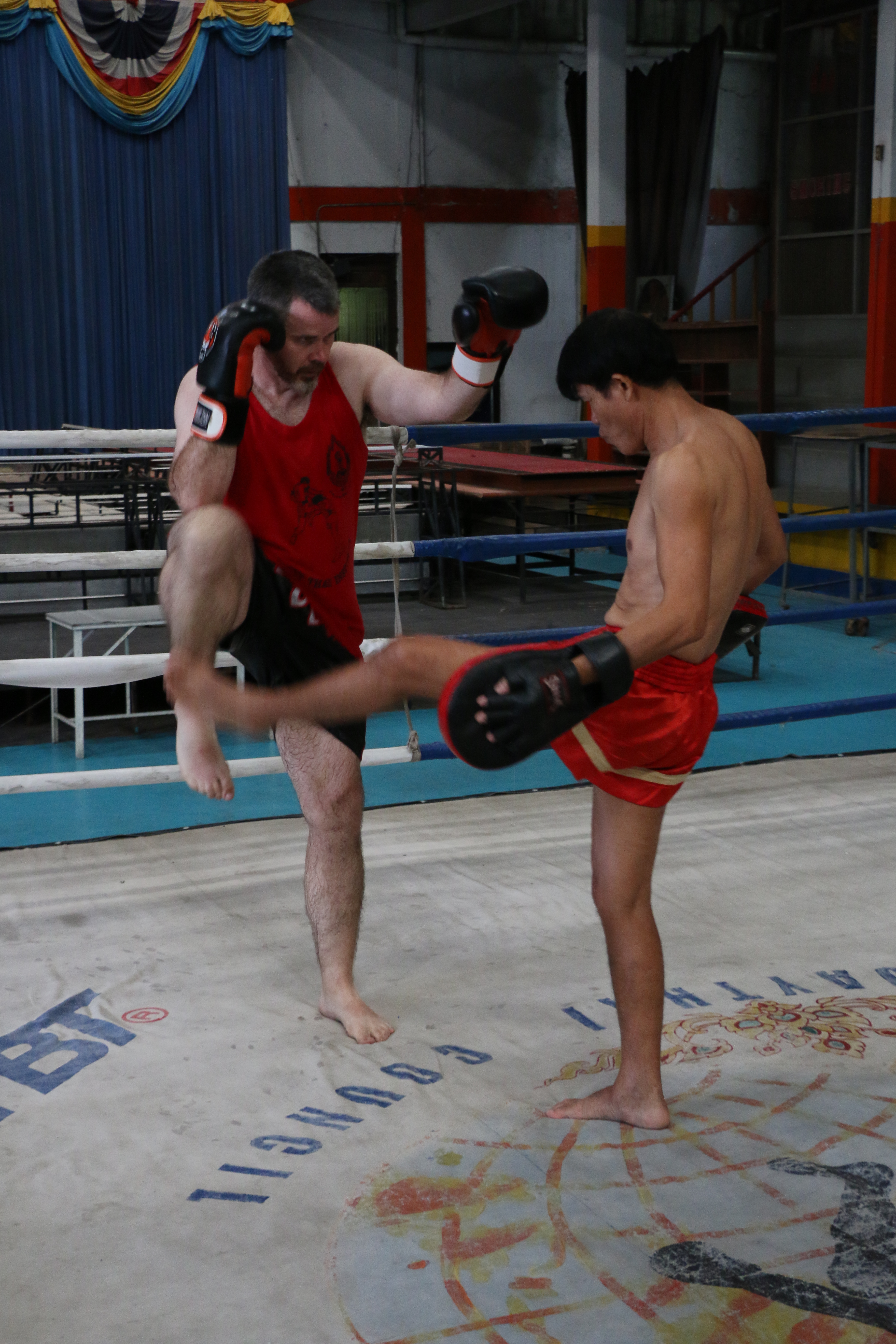
I’ll be writing about my two weeks training Muaythai at MTI-Rangsit:

IMG_4890


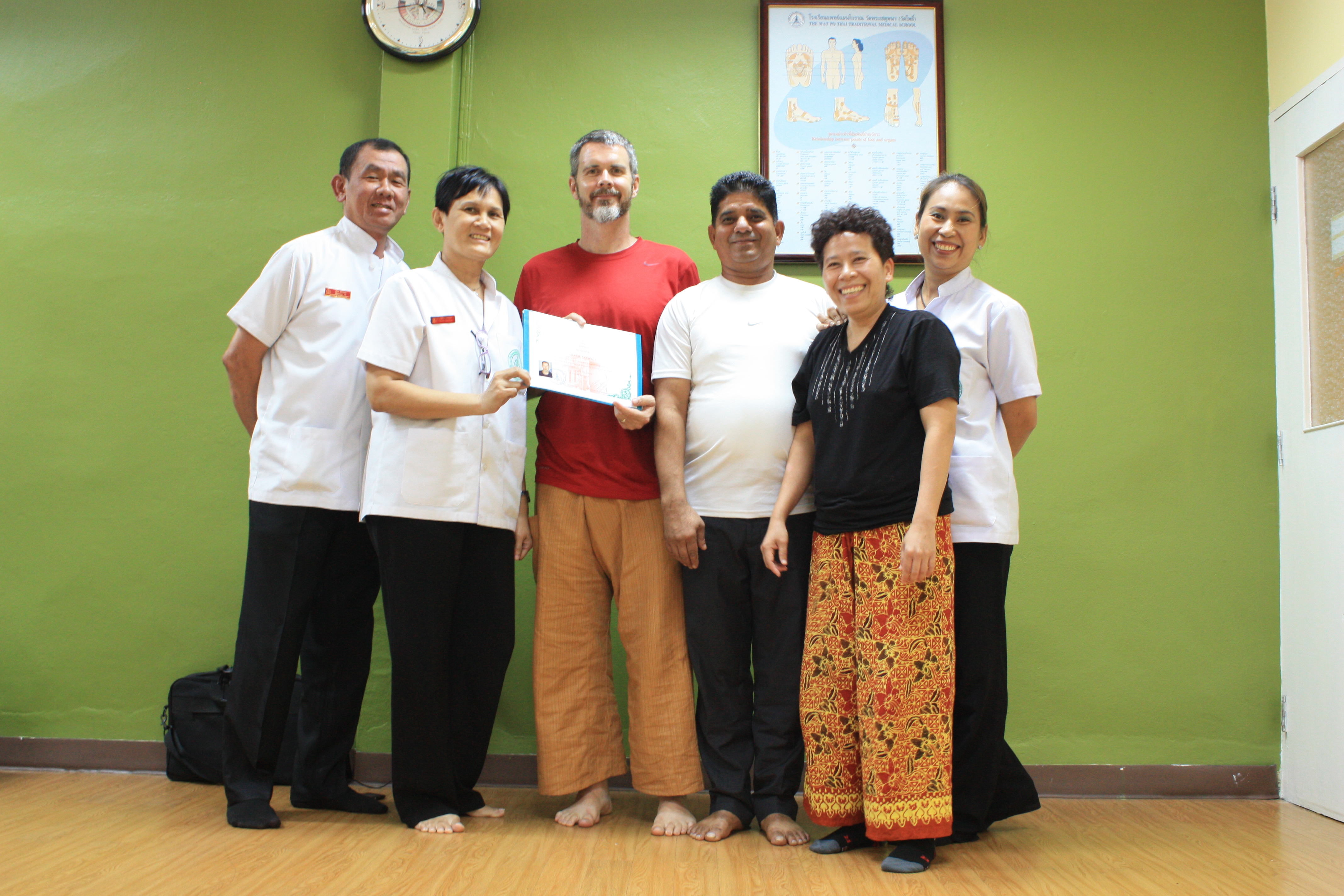
I’ll share my experiences of learning Thai Massage and Foot Massage at the Wat Po Thai Traditional Medicine and Massage School:

IMG_2055


Plus there’re a dozen books I finished off and need to review and–of course–I’ve got a ton of photos from in and around Bangkok:

20140906_073619


I learned some Thai Yoga (sometimes called Rusie Dutton Yoga) and had some other interesting experiences to write about.

So I’d best get crackin’.

Why I Study Thai Yoga Bodywork

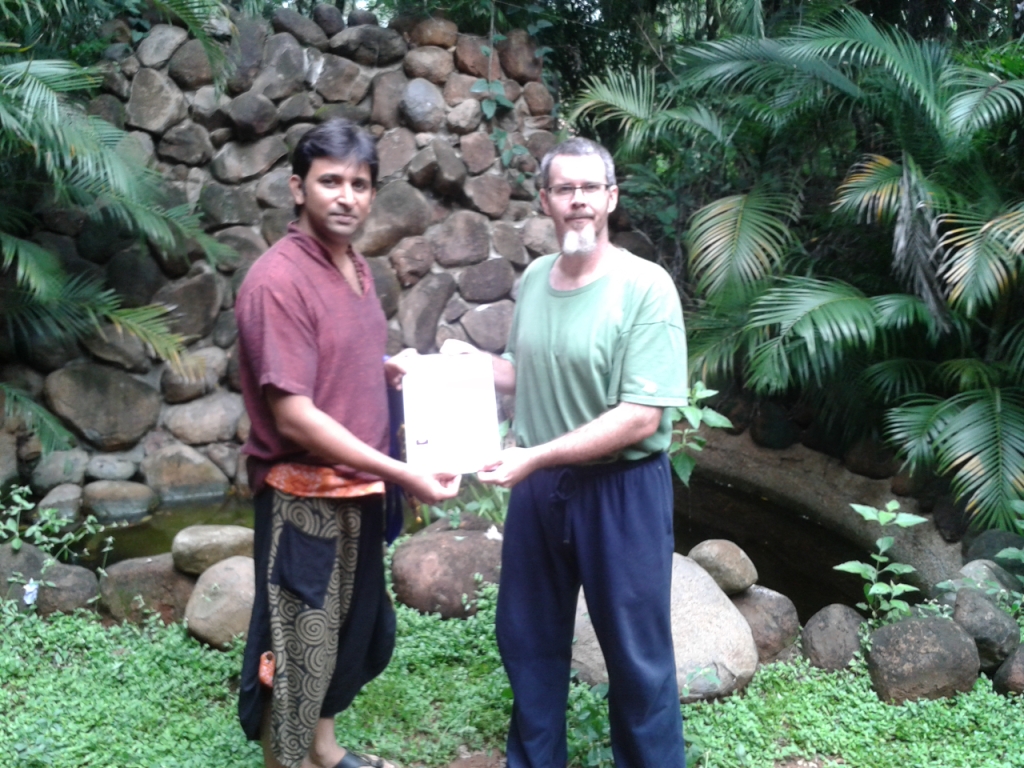
Receiving my 60 hour course certificate from the teacher.

Receiving my 60 hour course certificate from the teacher

Thai Yoga Bodywork (TYB), also called Nuad Boran (ancient bodywork) or Thai Massage, is a system that integrates assisted yoga-style stretching, reflexology, acupressure massage, and elements of Ayurvedic healing to stretch and massage the body. Its history is believed to date back 2,500 years to Northern India, where its roots lay with Jivaka Kumar Bhaccha–a physician in Buddha’s community. However, the art reached its perfection in Thailand, the nation with which it remains most closely associated.

I recently completed an introductory course in this system in Bangalore through the Inner Mountain School of Healing Arts.

Before I moved to India, I thought a lot about what I would like to learn while I was on the other side of the planet. There’s a great deal of expertise on subjects sparsely taught in the US, and it can often be had at a bargain in comparison to American prices.

Some of the skills I wanted to foster were to be expected. I wanted to learn more about meditation and the ways of living in the moment and with a quieter mind. I’ve played with such practice for a long time, and I came to believe that becoming a better martial artist  and person depended upon cultivating fudōshin— an immovable spirit. I’ve seen no route to that state that circumvents quieting the mind, and that requires observing and training the mind. One can only become more physically capable for a time, then growth depends upon the mind, on shedding petty impulses, on being incapable of manipulation, and on being unswayed my the vagaries of emotion. I’ve begun working on this objective through visits to meditation centers and by making my own practice more regular.

I also want to learn about other martial arts, besides the one I’ve been learning my entire adult life. It makes sense to learn something about the indigenous martial arts of the places I visit. I want to experience the similarities and differences of these arts, and to learn about the cultural elements that shape those differences and elements of uniqueness.

However, one of the biggest surprises has been my new-found interest in studying Thai Yoga Bodywork (TYB.) When I visited Thailand last fall I studied Muay Thai (Thai kickboxing) for a week and Thai cooking for a day, but it didn’t occur to me to take one of the many Thai Massage short courses until I was back home. My interest in TYB is reflective of a broader desire to learn more about the indigenous healing methods of Asia, and that goes back a few years.  I developed a vague feeling that I wanted to study such things a couple of years back when I realized my body was deteriorating too fast for comfort, and Western medical treatment consisted of advising me to stop doing a number of the activities that I love.  Still, I must admit that I didn’t really give  a lot of thought to this interest until I started this course.

Having now thought about it, my interest in studying TYB is closely linked to my interest in martial arts. This notion might seem hard to reconcile.  TYB is a healing art, and martial arts, while they should be grounded in a sound moral philosophy, are essentially about inflicting damage on a body. The  two disciplines seem to be at odds. Still, they have a great deal in common. In each, mindfulness is key. Control of the breath is a common element of both. In Japanese martial arts there is a word, taijutsu, which means body skills, but which implies efficient use of the body. This means favoring bigger muscle groups over smaller ones where possible and taking advantage of the body’s natural alignment (e.g. straight spine) and body weight. These concepts that I had long practiced in budō were also ubiquitous in TYB. Furthermore, a number of the points that I had learned to attack, were now targeted to heal.

Still, some of these same points could be said to be common to any system of movement done properly, be it dance or exercise. So why I was drawn to TYB in particular? The most direct reason is to learn how to fix the failings of my body, and those that I’ve witnessed in others. I experienced these methods as a recipient in Thailand, and could see their value at once.

There’s also a benefit from increased understanding of anatomy and bodily awareness. One learns about how the musculature works to move the body in a way that isn’t easily picked up from textbooks. One begins to read bodies like others read books. One gains insight into the bodily deficiencies that one has taken on without even being cognizant of them. A martial artist may, on average, be a hundred times more bodily aware than the average person, but that doesn’t mean there isn’t great room for growth. (It speaks to how sadly lacking in bodily awareness most people are as much as anything.)

Still, this isn’t the full story of why I wanted to learn this art. Another reason came to mind in the introductory session, before we even began learning the technique. The teacher was talking about how TYB teaches humility, and how one has to learn to touch a stranger’s feet with compassion and devotion to that person’s well-being–an act that doesn’t come naturally to most of us.  Admittedly, this isn’t a level of humility and compassion that I have developed in life to date. Though I am the son of a mother who–as a nurse as well as a mother–was probably more at ease with putting the well-being others above her own comfort than anyone else I’ve ever met, for me this is a struggle outside my comfort zone. The martial arts teach a kind of humility (a lesson that all too many practitioners find a way to make an end run around), but if one’s practice is separate from one’s career field it’s easy for the notion of service to be so abstract as to lose meaning.

This, of course, returns back to my earlier mention of the mind. One’s ego is the biggest barrier to personal growth. Ego makes one easily manipulated. Ego makes one subject to petty impulses. Ego makes one give into fear and anger.

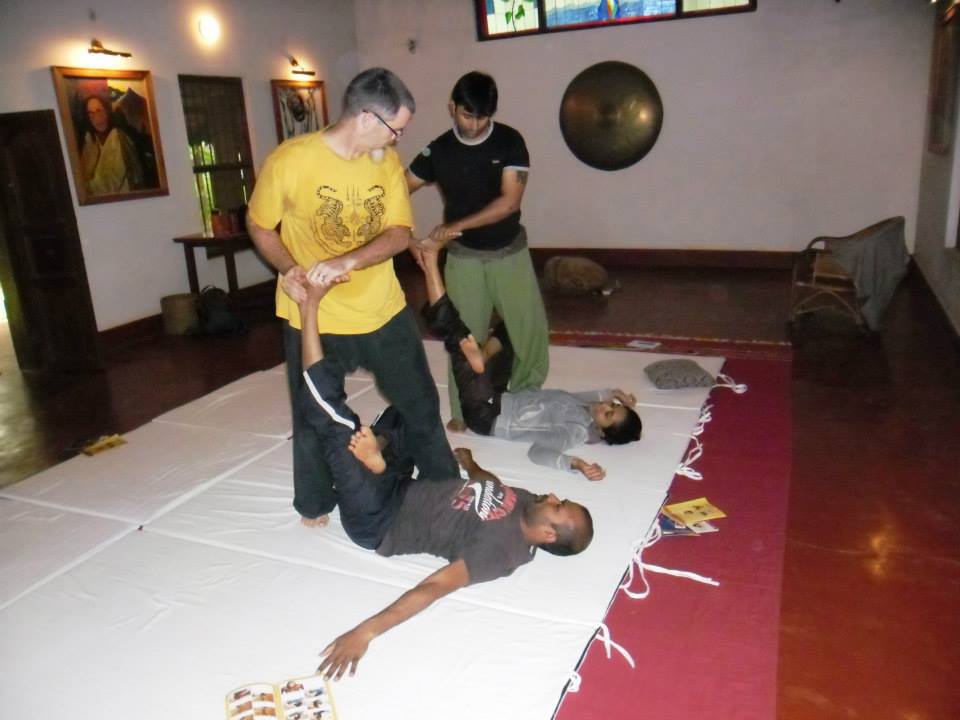
Learning a stretch

Learning a stretching technique

Transmigration of Blog

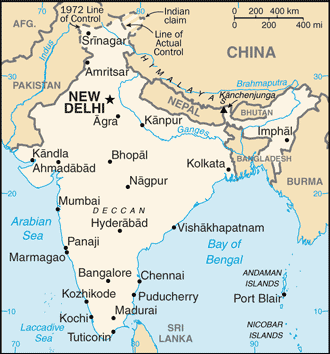
india_sm_2012We’re down to about a month until our move to India.

The house is largely in order with only a few odds and ends remaining.

Most of our worldly possessions are in storage, and I haven’t really missed any of it. (A lot of “moss” collects when your stone stops rolling for a few years.) The house now echoes. Movers will be coming to get the small amount of stuff we’ll ship to India in the next couple weeks. Then we’ll really be living minimalist.

We’ve got all our shots with the exception of the final doses for Hepatitis. We’ll get those in country. With respect to shots, when moving to India, one has to get… well,  all of them.

Visas are in the works though we’ve had some delay on that front. However, fortuitously, the local Indian Consulate is beginning to take applications, and so I won’t have to send my application off to another city and can eliminate the time and risk of postal transit.

My list of things to do consists of fewer large, all-consuming tasks and more quick and easy jobs.

All of this means that I’m getting back to writing.  This is a bit like getting a corroded junk-yard jalopy running again. It’s remarkable how much the creative juices curdle when one spends a few months focusing on home repairs, monitoring contractors, getting shots, and other mundane tasks of international relocation. I worked almost exclusively on drafting two novels for a period of a little over a year, and now–as I resume writing and revisions–I’m having to re-read just to figure out what they’re about. On the bright side, I sometime surprise myself with what I wrote. For me, there’s definitely economy of scale in long writing  projects. Writing eight hours a day yields a lot more than eight times writing for one hour a day. I lose voices, character idiosyncrasies, and plot detail so easily unless I’m immersed in them.

As for this blog, I think a rebirth is in order. Since I’m moving to India, I’ve invoked the concept of transmigration of soul. In Hinduism, some sects of Buddhism, as well as a few lesser known religions, there’s a belief in reincarnation in which the soul may be reborn into an altogether different type of container. For example, if you were good in your last life, you might come back as a lama or a lap cat. If you were bad in your last life, you might come back as a slug or a Congressman. So the question of the moment is what this blog will be reborn as when  it sputters up from out of the ashes.

I would like the site to remain (or, perhaps, become)  humorous, but I’d like the humor to be less curmudgeonly. This presents a challenge because I’m not sure that I know how to be funny without being a curmudgeon. In point of fact, I’m not sure I know how to not be a curmudgeon–funny or otherwise.

I want this site to be reflective of my new life. I’ll continue posting photos, though after the move they will be disproportionately from Bangalore, India, and a few adjacent countries to which I will be traveling. So it’ll remain part travel site. I’m sure I’ll have plenty of lessons learned about travel in India to share.

When I’m not writing or sleeping, I’ll be engaged in a quest of self-improvement. The development of mind and body have been raised to high art in India, and I hope to  find some of those individuals with that knowledge.

Expanding my abilities and understanding of martial arts is one of my goals for this period. It’ll be a challenge to keep from becoming rusty in the jissen kobudō (Japanese old school martial arts that emphasize pragmatic skills) that I have been studying my entire adult life. However, in addition to working on what I know, there are other activities that I think will help expand my understanding while keeping me suitable limber and conditioned. I would like to learn  a little about indigenous Indian martial arts such as kalaripayattu, silambam, and–if time permits–gatka. Furthermore, I would like find a place to train in Bangalore where I can do some training in what I’d call general jissen (practical fighting) skills.

However, my attempts to improve myself will not be limited to martial arts alone. India might be cursed with plagues of poverty, pollution, and–well–plague, but they have no shortage of gurus–whether I can find one that’s reputable and willing is another matter. The older I’ve gotten, the more I’ve realized that I don’t have a firm grasp of my mind. My mind runs and I don’t pay enough attention to what it is telling me; I don’t put enough effort into fixing what is broken. I read a quote recently about people who put great effort into studying the external world, but who remain ignorant of themselves.  This struck close to home, but it’s not just me–it’s widespread. People study psychology in school and learn about cognitive biases, but they don’t put the information to use in becoming more virtuous people. For example, a person might learn about the “self-serving bias” –whereby people claim responsibility for successes but place blame for failures on external factors–and say, “yeah, it’s funny that other people totally do that.”

Part of practicing martial arts is keeping one’s self healthy, against all odds. While I’ve never practiced yoga, I appreciate the belief that mind and body are inseparable. I would like to work on building a body that is less likely to be crippled by the practice of martial arts as I age. I intend to study Thai yoga massage, which incorporates stretching and pressure point massage. There’s an interesting connection between India and Thailand with respect to this form of bodywork. While it’s most closely associated with Thailand, some claim that its roots are in Northern India with a master called Guru Jivaka. While visiting Thailand, I developed an appreciation for the health benefits of this type of massage–particularly for one prone to have things out of whack. However, I didn’t have the time to study it during that visit. There is also the more distinctly indigenous holistic healing system of India, Ayurveda, and I would like to learn more about it as well.

In short, I intend to have a pretty full agenda while living in India, and I hope readers will find my posts about these experiences interesting and worthwhile.