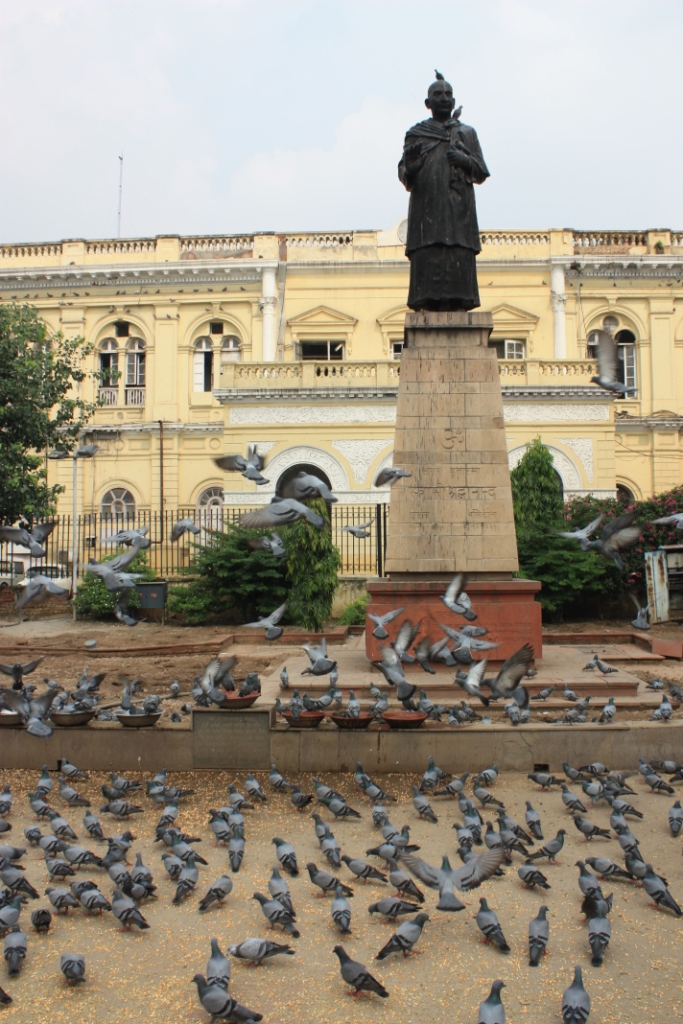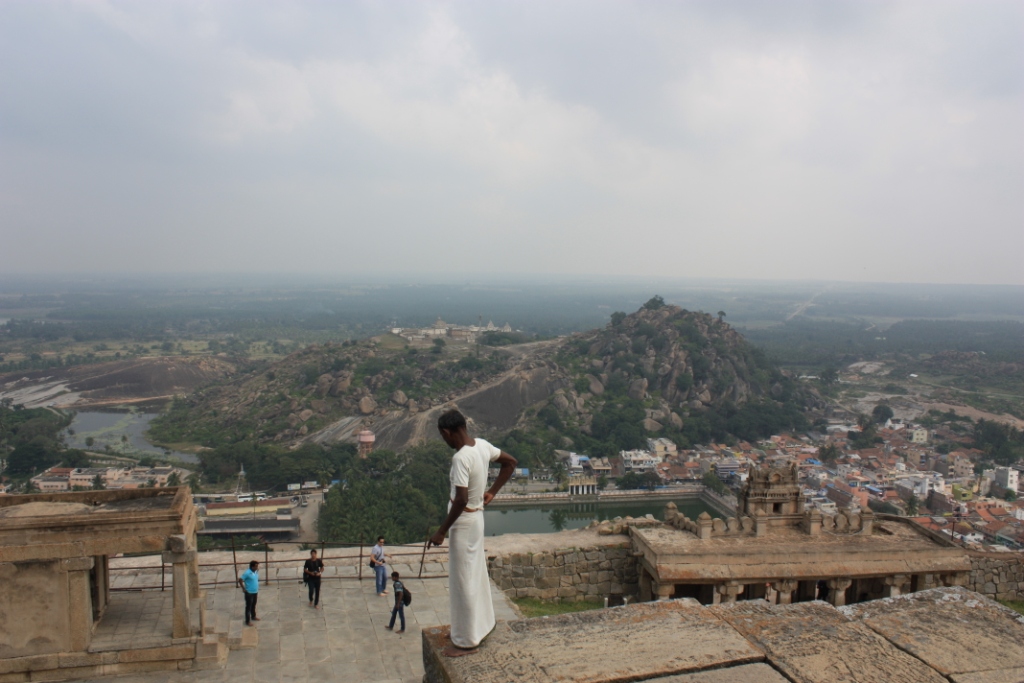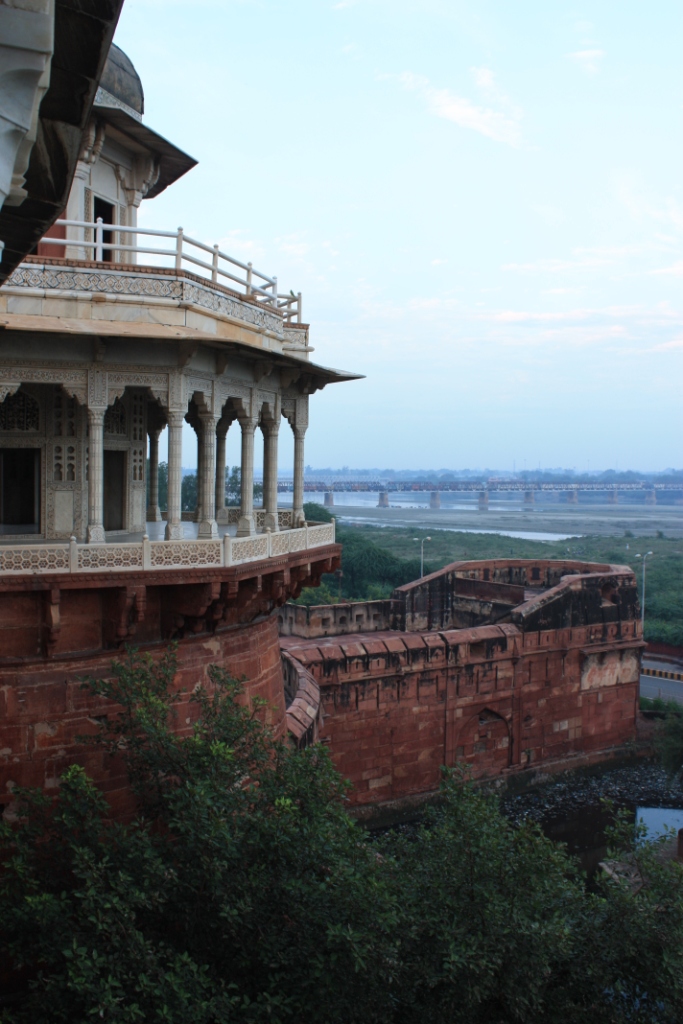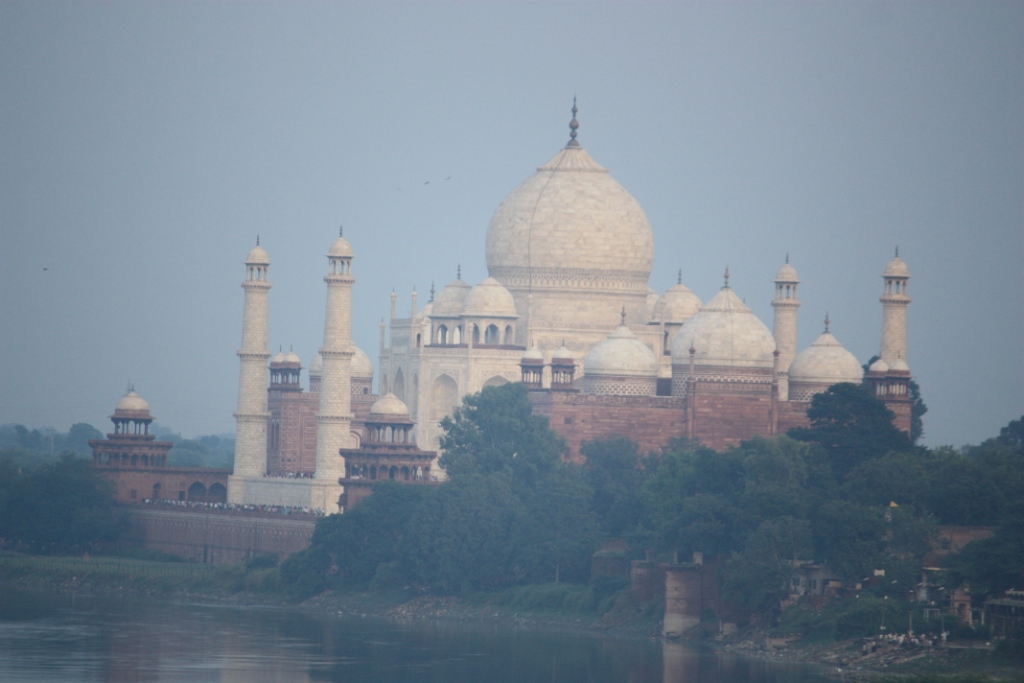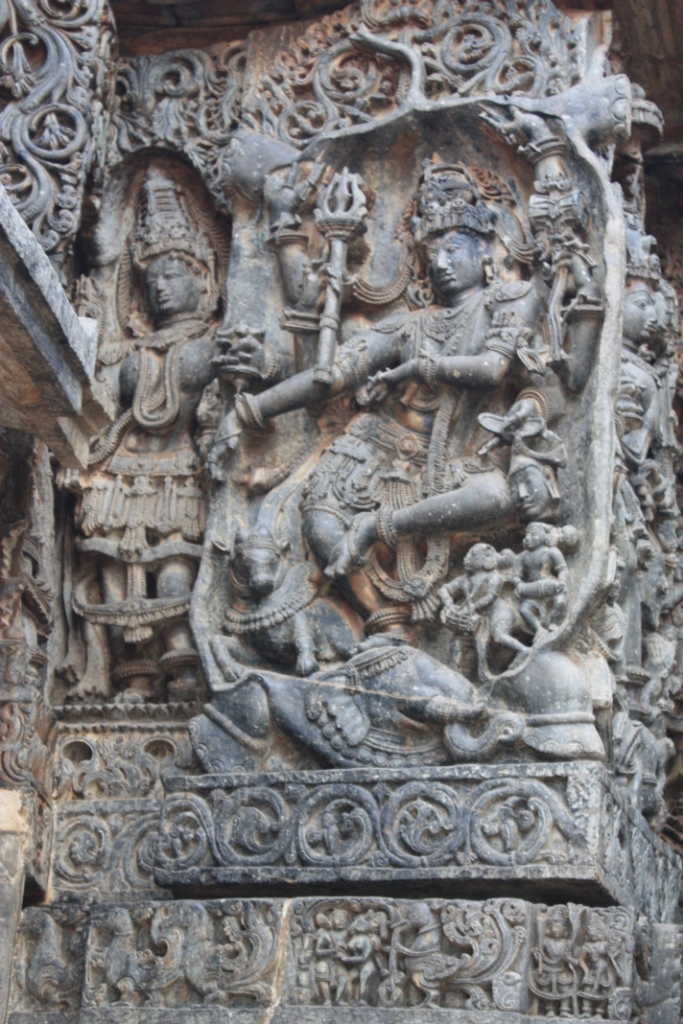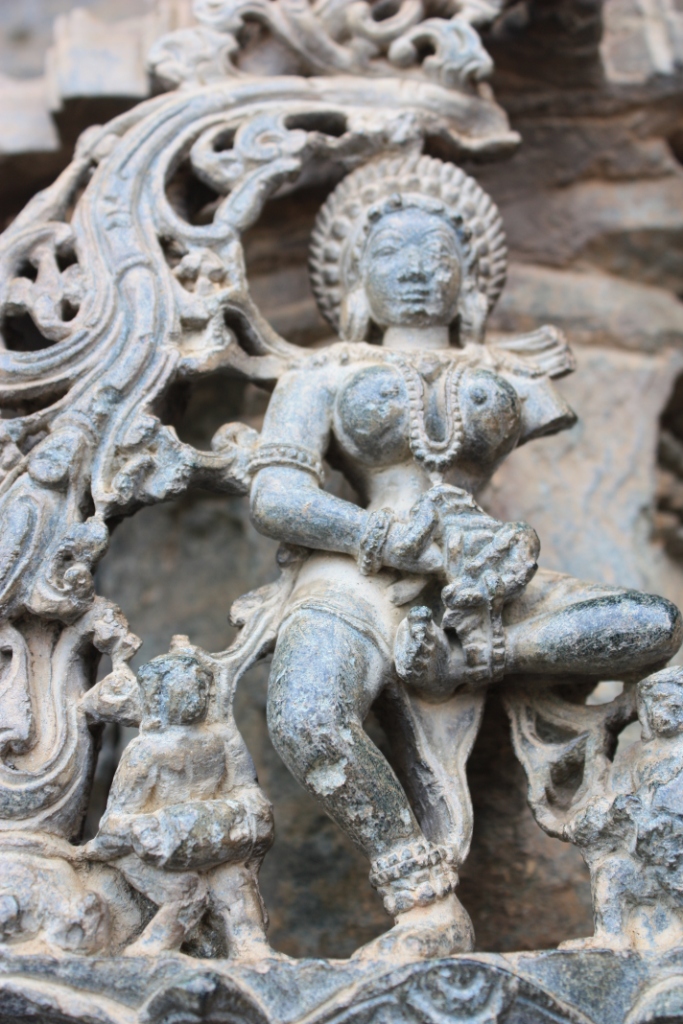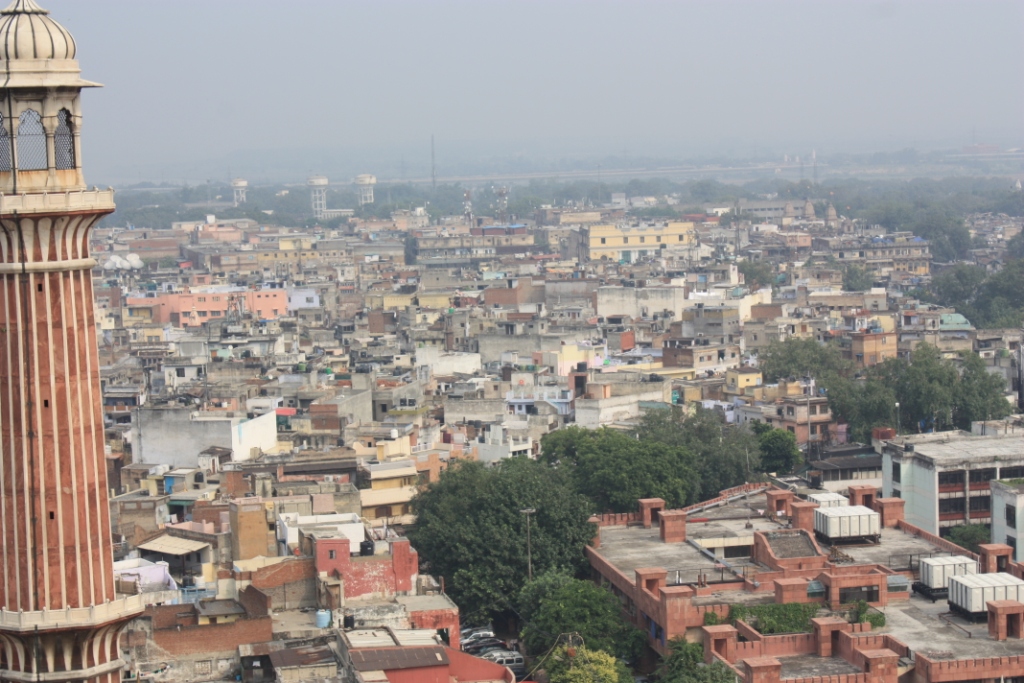
DAILY PHOTO: Columns at Achyutaraya Temple

Taken November 2, 2013 at Hampi

Taken November 2, 2013 at Hampi

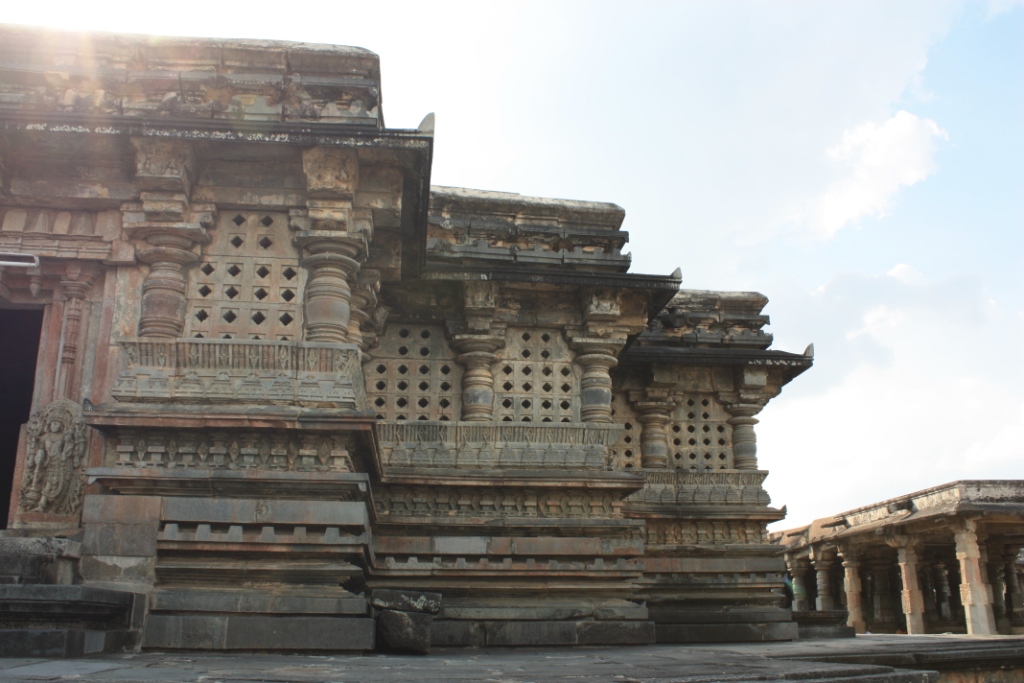
I thought the varying colors and designs of these columns made an interesting photo. This is taken at Achyutaraya Temple, which is one of the more extensive standing structures at Hampi, though not necessarily the most well-preserved/restored.

If one is on the Hampi Bazaar, walk away from Virupaksha Temple and toward the police station. Follow the steps that lie past the large bull sculpture, and when one gets to the top of the hill, just past the little Hanuman (the Hindu monkey-god) shrine, follow the fork to the right. One will soon see Achyutaraya temple down below. After visiting Achyutaraya, one can follow the flat land toward the Vittala Temple, which is sort of the crown jewel of Hampi.

Hae Kum Gang: Korean Food in Bangalore

Jeyuk-Chulpan with assorted sides.

Jeyuk-Chulpan with assorted sides.

I’ve been eating a lot at restaurants since we moved to Bangalore, both because it’s (usually) cheap and for the experience of it. I’ve eaten at enough places to have developed some favorites, but I try to keep broadening my experience by eating at as many new places as  I can.

Today, I had a lunch experience that was new on two fronts. For one thing, it was a restaurant that’s new to me, but–for another–it was my first experience with Korean food as prepared in India. I’ve eaten at several Chinese restaurants in India, and, while the places I’ve tried were all pretty good, they were all distinctively Indo-Chinese. In other words, the dishes didn’t taste like they did in other places at which I’ve had Chinese food, e.g. China. On the other hand, the Bangalorean Thai restaurant, Lan Thai, seems pretty authentic to me, except perhaps the diminished use of fish sauce (which is incredibly popular in Thailand and almost non-existent in India.) I was, therefore, uncertain what to expect from Hae Kum Gang–other than that it had a pretty high rating on Zomato and so it likely had decent food.

I can’t say what Korean food tastes like in Korea, as I’ve not yet gotten outside of Inchon airport, but Atlanta had a pretty huge Koreatown and I ate at a variety of Korean restaurants there. (A Korean man once told me that Korean food in Korea tasted very different because of the taste of the vegetables–given the spice palette of Korean food, I wasn’t sure whether to dismiss this as nostalgia–e.g. tasting the difference between American cabbage and Korean cabbage through the kim chi chili seasoning and fermentation seems a bit of a challenge.)

At any rate, what I found at Hae Kum Gang was on par with what I’ve had in Duluth, Georgia.  This was a pleasant surprise because their menu states Korean, Chinese, and Japanese cuisine. While these cuisines have some overlap–particularly with Korea in the middle–they are each distinct. My concern was based on bad experience with “multi-cuisine” restaurants in India that try to do everything and end up doing everything in a mediocre fashion.  (Hampi was loaded with such places.) What I ordered was pretty typically Korean, I imagine if you had a Chinese or Japanese dish off the menu you might not find it authentic, but rather like a Korean interpretation of the dish. (Although, Duluth has some fine sushi places with Japanese names and advertising themselves as Japanese food, but clearly owned, run, and staffed by Koreans.)  

I ordered the Jeyuk-Chulpan, which was described as: “Stir-fried pork with vegetables, served in spicy chili sauce on a sizzler plate.” The description was spot on. The platter sizzled for about 15 minutes after it got to the table. The dish had a pleasant level of heat (spice) and was tasty.  This isn’t a dish for those watching their cholesterol. The pork was quite fatty, which, of course, made it sumptuous and delicious but higher in fat content than many might desire. For lunch it suited me. It’s not something that I would eat for dinner, both because I don’t sleep well if I have red meat immediately before bedtime and because one needs some active time to burn off some of those calories  before going to bed. 

I was told a bowl of steamed rice came with this dish, but was pleasantly surprised to find seven other sides were brought out as well. Getting a load of side dishes along with your main is not uncommon with Korean food and I’ve had similar experiences elsewhere. The first small plate to arrive was Yukhoe,–a spicy Korean answer to steak tartare. I was a little reluctant about eating a raw beef dish in India, but I forged ahead and found it delectable. It was spicy, and warmed through–though not enough to cook the meat. While it was tasty and I’m none the worse for wear, I don’t know if I’d recommend you partake of this dish unless you know your constitution to be caste-iron and you like to live a little on the wild side. In the US, where there are all sorts of regulations and health inspections in restaurants, there is still invariably a warning to consume at your own risk. The same could be said of Japan, where 4 people died (35 hospitalized) in 2011 from eating a batch of the Japanese version of this dish that was tainted with E. Coli.  The standard for raw beef dishes is less than a day between slaughter and freezing and less than a day between thawing and use. I can’t say what this restaurant’s practice is. It tasted clean and fresh, but exercise care.

There was also a soup and a salad. The soup actually tasted more like something I’ve had on occasion in India than anything I’ve had in a Korean restaurant, except the vegetables were typically Korean. I believe the salad was a seaweed. There was also braised tofu, boiled baby potatoes in a teriyaki-esque sauce, and the Korean mainstay kim chi.  If you eat the Yukhoe, I’d recommend you eat your kim chi. Kim chi isn’t a personal favorite of mine, but its fermentation may offer you some assistance in digestion.

I’d recommend Hae Kum Gang.  My food was 480 Rs. (plus tax, tip, and a mineral water), which is pricey by Indian standards–but, as I always say, sushi and brain surgery are two things you don’t want a great deal on.

No, I don’t know if the name is supposed to register as “Hey, Come Gang!”

HaeKumGang2 HaeKumGang3 HaeKumGang4 HaeKumGang5 HaeKumGang6 HaeKumGang7

DAILY PHOTO: Reservoir Goat

Taken November 2, 2013 at Hampi.

Taken November 2, 2013 at Hampi.

This goat was strutting along in slow motion like he was in the opening scene of Reservoir Dogs.

Have no idea what I’m talking about? See below.

DAILY PHOTO: Climbing Lizard

Taken November 2, 2013 at Hampi.

Taken November 2, 2013 at Hampi.

These little lizards were one of the most common animal lifeforms at Hampi.  They blend into the rock quite well despite the broken white or yellow line of dots on their backs, which itself blends into the splotched pattern of the creature.

I believe they are called Psammaphilus Dorsalis, Peninsular Rock Agamas, or South Indian Rock Agamas. [However, I know nothing about lizards and am open to correction by a herpetologist.]

DAILY PHOTO: Precarious Rock

Taken November 3, 2012

Taken November 3, 2012

Part of what makes Hampi so surreal is all of the precariously balanced boulders. This shot is oriented straight up and down, i.e. the camera is not tilted, and so one wonder’s “How is that rock not falling?”

DAILY PHOTO: Stone Chariot

Taken November 2, 2013 at Hampi

Taken November 2, 2013 at Hampi

This stone chariot is one of the most iconic scenes of Hampi. The wheels on the chariot were once capable of moving, but no more. It remains an amazing sculpture. It’s in the Vittala temple complex, and is one of the first things that draws the eye when one enters through the gate that one can see in the background.

DAILY PHOTO: Towering 4-Handed Guardian

Taken November 2, 2013 at Hampi

Taken November 2, 2013 at Hampi.

These guardians of the inner sanctum can be seen here and there throughout Hampi.

I assume they were meant to be guardians and not just four-handed mutant freaks doing yoga stretches to loosen up their leg abductor muscles.

DAILY PHOTO: Yellow Blossoms

Taken November 2, 2013 at Hampi.

Taken November 2, 2013 at Hampi.

The Hampi area is painted from a different palette than most of Karnataka. Instead of uniform green, the brownish-red of the boulders dominates, and, while green lines the spaces between the rock, the vivid yellow of these flowers decorate the base of many hills.  Of course, there remain islands of green, in the form of corn fields, banana plantations, and palm groves.

DAILY PHOTO: Sunset Over Hampi

Taken on November 1, 2013

Taken on November 1, 2013

In the tropics the summer days seem so short and the winter days seem so long–at least if you grew up at 42°N (northern Indiana) and now you’re living at 13°N (Bangalore, India.) There’s no discernible adjustment in the length of days here. Maybe, if you’re a local. But it always gets dark around 6 at night and becomes light around 6am the next morning.

Can India Compete With China?

IMG_0131There’s perennial hope in the West that India will succeed. Having won the Cold War, advocates of democracy and rule of law aren’t eager to replay it and have a Communist country win–not even one that yields to market forces in large part.  Citizens of democratic nations want reaffirmation that democratic rule and rule by law, not men, is the superior paradigm. We acknowledge that such a system is rarely easy, but live with the words of Winston Churchill ringing in our ears:  

Democracy is the worst form of government, except for all those other forms that have been tried from time to time.

When I found out that I was moving to India, I read all that I could find on India in magazines I subscribed to, such as Foreign Affairs, National Geographic, and Wilson Quarterly. Needless to say, there was a lot to read. Besides India’s nuclear programs, both energy and weapons, I hadn’t followed its role in the world. These articles took me on a roller coaster ride. If one went back many years, no one expected much of India. Then, a few years back, massive enthusiasm blossomed that India was going to rocket off and leave India in its dust. Then I got to the most recent articles, which did yet another turnabout–saying that India’s growth had been ephemeral and no one should expect much from the country in the near future.

India has a number of advantages. Almost everyone who is capable of publishing is fluent in the de facto international language of business and academic publication–namely English. India has as abundant a supply of cheap labor as anywhere. Indians have a culture that values education. They are building a first-class university system by, in part, having sent students to the very best of academic institutions globally. Their universities are attracting foreign students. This, in combination with such a big population, has given them the potential to build impressive student bodies.

So, why isn’t India competitive? The first thing that should be stated is that things are never as simple as they appear in aggregate. In some domains, India is competing quite nicely–and not just with China. Here in Bangalore, it’s apparent that large IT companies see big advantages in doing business in India.

I made a recent trip to Hampi and was amazed to see how successful India was in building up wind power generation in central Karnataka. India is 5th in installed wind capacity overall. Many democracies have difficulty getting traction with wind because the public views the turbines as an eyesore.

Still, India has its problems. Political and Economic Risk Consultancy (PERC) surveyed business leaders about Asian bureaucracies and found India to be the worst bureaucracy in Asia.  On a 1 to 10 scale, where 10 is the worst possible, India rated a 9.21. This isn’t a surprise in the least. It seems to be common knowledge that business leaders who move to India do so in spite of India’s governance, not because of it.  India’s bureaucracy hasn’t embraced the IT-revolution. It’s interesting being in Bangalore, where IT-companies are state-of-the-art, and being asked for the same copies of documents a half-dozen times because the information is only stored on non-networked PC hard-drives–and paper files are collected but don’t seem to be organized in any way.

An ethos of corruption is ubiquitous in India. Police officers have been known to sit in parks and solicit “admissions fees” from tourists. I’m pretty sure I saw a shakedown in progress this past week when our car went through a toll booth on a toll road we had already paid for and two guys standing outside in front of the toll-taker insisted that our driver pay for the toll that he had already paid not ten minutes before. Being from a country where corruption is punished severely, I’m ignorant of the process of bribes. (I suspect this is why I’ve had so little success in getting anything done that involves the Indian bureaucracy.) For a less anecdotal experience, one can turn to the “Corruption Perceptions Index,” which places India in the bottom half among all nations.

One may wonder how a democracy retains a culture of corruption. Usually, citizens of a democracy get fed up and start voting their disapproval. At the Bangalore Literature Festival, I heard an interesting policy panel featuring a politician, a retired general, and a policy pundit. It was said that there is a high degree of apathy among the Indian middle class. Indian voter turnout rates are generally below 60%. There’s a belief that those most capable of affecting change are relatively happy and, thus, unwilling to rock the boat. I don’t know how true this is, but it seems that India is having trouble defeating some of the problems that wither on the vine in the face of a politically active public.

It also seems that there is a segment of the population who are completely cowed. This is a legacy not only of colonial repression but also of caste repression. While castes have been done away with, there remains a large segment of the population who are accustomed to doing just as they’re told without questioning and without making moves to get ahead.  Perhaps, because they believe they exist in a world in which there’s no getting ahead.

India’s abundance of cheap labor may be a curse as well as a blessing. While cheap labor has brought in foreign direct investment, it has also contributed to a business culture that doesn’t seem to value increased productivity. As an example, if one goes into a small shop in Chicago or Copenhagen or even Beijing, it’s likely that a single salesperson will show one merchandise, ring it up, and bag it. If it’s a big store, there may be a two person interaction–salesperson and cashier. In an Indian store, a salesperson will show one merchandise, a clerk will write up an invoice, one will take that invoice to a cashier, that cashier will take one’s money and hand one a carbon-copy of the “paid” stamped invoice and direct one to a pick up window, a bagger will bag your purchase, and  a “checker” will check your receipt and hand you the bag. I love specialization as much as the next economist, but this is a Rube Goldbergesque approach to retail operations.

If India wants to be a first-rate power, it needs to take on corruption, bring its bureaucracy into the 21st century, and its population needs to realize they can have a more satisfying life than waiting around for someone to need them for a momentary job. The citizenry needs to value good governance, and businesses need to figure out how to increase productivity.