The Science of Wisdom & The Wisdom of Science

Shrine_nearRoppongi_statues

For the purposes of this post, wisdom is neither a collection of trite adages, nor is it an accumulation of arcane or esoteric scripture. Wisdom is:

1.) the ability to quiet the mind

2.) the ability to suppress inclinations to be petty in a healthy way

3.) the ability to override instinct with conscious thought when it’s beneficial to do so

4.) the ability to know when it’s beneficial to do so (see #3)

5.) mastery of (rather than being mastered by) one’s emotions

The objective of these activities is to increase happiness, reduce strife, and exercise better and healthier decision-making.


While these are secular objectives, the pursuit of this form of wisdom has to a large extent become entwined with certain breeds of religion or spiritualism. Mystical religious traditions are the style of spiritualism that are most commonly associated with these pursuits. (Here I use mysticism in its scholarly sense, i.e. traditions that believe in a god or gods and who believe that the space in they can interact with said god is to be found inwardly. This is as opposed to the ill-defined colloquial meaning of mysticism that has a negative connotation and is infused with judgement about hippy-dippiness.) One sees the pursuit of this form of wisdom in yogic philosophy, in most branches of Buddhism, in Taoism, etc.


I’m not sure why this connection should be so entrenched. Why should agnostics and atheists forfeit the pursuit of such forms of personal improvement? Maybe the scientifically-minded think that they are knowledgeable and knowledge is wisdom, and so they think they are already on the path. I can tell you that knowledge isn’t wisdom. I base this on the experience of knowing intellectually brilliant people who couldn’t get along with anyone, who perpetually said the wrong things, and whose personal lives were a wreck. Skeptics and geeks are as subject to strained relationships, stress, and unhappiness as their pious neighbors.


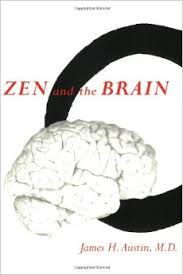
Another possible explanation is that many scientifically-minded people just don’t think that such goals are achievable because the routes to them have too often been couched in supernatural terms.   However, there’s a growing literature on how these objectives can be pursued that is rooted in neuroscience and neuroplasticity, and for which the presence or absence of a deity is irrelevant.  I’ve been reading a book called Zen and the Brain lately that offers an understanding of the effects of meditation that is firmly rooted in the science of the brain. I also recently purchased a book entitled Buddha’s Brain that takes a look at how neuroplasticity allows for a “rewiring” the brain to a healthier state. (Yes, I realize the irony of citing two books that have religious references in their titles in this post. I’d argue that this is how inexorably tangled these pursuits have become with religion. However, both of the scientist/authors of the aforementioned books, James H. Austin and Rick Hanson, have books with more secular titles if you’d prefer.)

BuddhaBrain Zen&Brain


I was once eating in a university cafeteria when I heard a religious man make the argument to a fellow he was trying to “educate” that went like this:  “If there’s not a God, why should I be nice to my wife–why shouldn’t I kick the hell out of my dog?” My first thought was that this man desperately needed therapy. If the only reason he wasn’t being a violent asshole is because he feared the wrath of an invisible, omnipotent entity who–by they way–would have to be showing a complete indifference to what people do to each other in real-time, then he’s an accident waiting to happen. If he either: a.) loses his fear of said deity, or b.) begins to think that the deity is telling him to go another way (since whatever the deity is “telling” him is almost certainly just his mind telling him), then his wife and dog are in great peril.


My second thought was, “this is the cafeteria in an institution for higher learning, how’d this guy get in without at least the rudimentary training in logic to imagine a basis of moral behavior that’s not rooted in the supernatural smiting ability of a deity [who–I might add–sees a helluva lot of smite-worthy activity on a daily basis.]”


If you’re considering an action that seems questionable, you don’t need to ask what Jesus would do? You can start by asking the question: Would my life (or those of my loved ones) be adversely impacted by living in a world in which everybody did what I’m about to do in the manner I intend to do it? (Implied is the idea that, if the action in question involves doing something to someone, you would be subject to being on the receiving end of same action sooner or later.)   If the answer is “yes,” don’t do it. If the answer is “no” there still may be reasons not to do the activity that have to do with what is good for you personally. (We’ll get into that a little further down.)


I realize that the above standard isn’t perfect, but it’s far less subject to user error than WWJD and it explains why the fellow from above shouldn’t beat his wife or his dog unless he likes rigorous and regular beatings himself. Some people might say that they don’t think they or their loved one’s would be adversely in the slightest if everyone went about walking around naked. Others might believe that they would be stressed out (or overstimulated) in such a world. However, the above approach has already gotten us to the fringe of questionable activity. Yes, some people might be traumatized if their neighbors walked around in the nude. But I suspect if everybody did it (as per the question) it would become not weird (definitely not harmful) in short order. There are those people who are so fragile that they can’t sleep knowing that a couple engaging in intercourse in privacy of a room three doors down are probably not using a missionary-approved posture. Said people need the kind of wisdom I’m talking about more than any because part of it is accepting that there may be more in heaven and earth than is dreamt of in their philosophy. Now that we know how to kill stray asteroids, if humanity ever dies out it will be at the hands of people who can’t bear anyone living by rules not those that they took for themselves.


At any rate, I think there are two reasons why the above approach is difficult for homo religiosis (religious human.) First, there are many activities that homo religiosis wants to see universally abolished because their religion considers forbidden, but which don’t adversely impact others. (e.g. Jains are pretty easy-come-easy-go, but imagine you were told you’d have to forgo onions because of that religion’s moral belief that no food should come from a plant that’s killed by harvesting. [FYI: Let me laugh now at the religious people who say “but there’s nothing crazy like that in my religion?” That just means you are so untraveled and uneducated that you can’t fathom how completely wacky some of your “moral” beliefs / practices are. e.g. How about eating salmon on Fridays as a sacrifice in lieu of eating a hamburger? That’s just nutty on all sorts of levels.])


Second, many believers really do believe that they have a special place in god’s heart and, therefore, aren’t subject to the same limitations as those poor, god unloved people. The idea that said person shouldn’t commit rape because they wouldn’t like it if someone else raped them or their sister or their mother is non-sense, because their god would never let someone else get away with shit like that with them. (Yes, there are people who’ve lived sheltered enough lives to believe that god punishes others but–at most–“tries” them.)


Most of us must accept that when it comes to being a person, we are the same as all the other people. While one may be stronger, faster, smarter, or in some dimension more talented than others, this doesn’t endow one with a different set of rights and responsibilities. On a genetic level there are no chosen people.


Earlier I mentioned that the “if everyone else did it” standard might leave one on the horns of a dilemma as to how to behave or what decision to make. Here’s where we’ve got to use our brains because the hard and fast rules go out the window. Evolution has programmed us with some guidelines that were beneficial given the constraints of the world our ancestors lived in. However, this programming of pleasure and pain may or may not be great advice given the ways in which humans have changed our own world.


Let me give some examples. Our nervous system suggests we eat foods that are sweet and fatty. We crave chocolate and bacon, and pleasure centers in the brain light up when we consume these foods. In our hunter / gatherer existence, this was excellent guidance because a.) these foods were relatively rare, b.) these foods had dense caloric content, c.) sweet foods are less likely to be poison, and d.) we worked our asses off in physical labor (i.e. high caloric demands.) However, today these high caloric foods are mass-produced, we require almost no caloric expenditure to obtain them (or to do most anything else in our cubicle-dwelling work lives), and in some cases people are literally (I don’t use “literally” lightly) killing themselves with such foods.  So part of the wisdom I’m talking about is developing the capacity to exercise conscious control over decisions about whether to eat such foods, how much of such foods to consume, and what activities to do to counter act the flood of empty calories. Our biology is a harsh mistress, and it can require intense efforts to keep such impulses under control.


We are also programmed with love, a trait which has served us well over all. I know some of you are cringing about the idea of “evolutionarily programmed love”–so unromantic. It’s simple. Those who could build connections with others disproportionately survived to pass their genes on. This further fed into our species’ rise because, while we think of ourselves as the planet’s dominant species, we produce the most vulnerable 1 year olds (or 8 year olds for that matter) of any species on the planet. A human three-year-old is good for two things–learning and food. It takes a lot of love to make sure its the former and not the latter. An extremely intense experience of love is essential to our species’ ability to not just wander off and let our pain-in-the-ass children get eaten. This gives us plenty of time to teach kids more than just how to elude a saber-tooth tiger. We have time to teach kids language, social niceties, and trigonometry.


We can, therefore, use our gigantic brains to noodle out whether a given action is best for us,  in addition to whether it does no harm to those around us. The complexity of our brains allows us to rewrite our rule book in unprecedented ways. Some of the religious “morality” that seems vacuous (e.g. don’t eat shellfish, but feel free to own as many people as you can afford) probably had a logic in that time (e.g. people were getting sick from eating shellfish because they didn’t yet know how to prepare it.) The problem is that one has to be ready to jettison obsolete advice, and that’s hard to do once it’s entrenched as dogma. This is where being Homo sapiens, the thinking human, comes into play.


READING REPORT: February 13, 2015

Welcome to a special Friday the 13th edition of the Reading Report. What’s so special about it? If you’re not deluded by superstition, then not much. If you are superstitious, reading this post may cause you to suffer a plague of locusts (or whatever plagues your particular geographic area.)


Now that we’ve gotten rid of the illiterate ninnies, we can get down to discussing books.


I finished two books this week–one nonfiction and one fiction. I’ll be posting book reviews within the next couple weeks.


The nonfiction book was called Yoga Body: The Origins of Modern Posture Practice. The author’s intriguing and controversial thesis is that yoga as it’s practiced in studios around the world today nothing to do with traditional Indian yoga, but, instead, owes it’s existence to European calisthenics and bodybuilding systems and the Indians that borrowed from them. I didn’t find the author’s argument compelling for a number of reasons that I’ll get into in my review. This isn’t to suggest that I’m certain he’s wrong. He may be right, but the way he constructed his argument left a great deal of room for doubt.


TLEG_Vol1

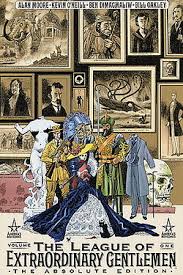
The fiction book was a graphic novel entitled The League of Extraordinary Gentlemen (Vol. 1). For those of you who haven’t seen the movie featuring Sean Connery, this comic book gathers together a team of protagonists from 19th century science fiction and adventure novels. The team consists of Mina Harker (of Bram Stoker’s Dracula), Allan Quatermain (of H. Rider Haggard’s King Solomon’s Mines), Captain Nemo (a Jules Verne recurring character), Dr. Jekyll/Mr. Hyde (Robert Louis Stevenson’s title characters), and Hawley Griffin (of H.G. Wells’ The Invisible Man). One needn’t have read all those classic stories to follow this book, but being a fan of 19th century tales of the fantastic definitely makes it more fun. The story depicted in this volume has nothing to do with the movie plot.


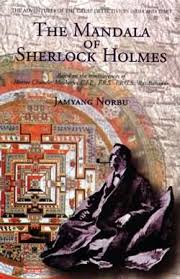
mantraSherlockHolmes

I’m more than halfway through a couple of books that I mentioned in earlier Reading Reports, they are Why Do People Get Ill? and The Mandala of Sherlock Holmes.  I read chapters 7 through 9 of the former book, which had to do with the expression of symptoms, the heart as a symbol and that symbol’s expression in illness, and the impact of mother’s experiences on infants and children. In the latter book, Holmes has arrived in Tibet, and the plot thickens. The author is Tibetan, and so has some unique insights. However, some chapters advance the story with action, and others are almost like travelogue.


I’m still early into reading two books that I’ve previously mentioned. The first is Zen and the BrainIn this book I’ve transitioned out of the part explaining Zen and the author’s experience of that tradition, and am now into the part that lays down the basic neuroscience. While the author writes in a readable style, for a neuroscientist, this is still challenging reading because of its scientific nature and the complexity of the brain. However, the chapters I read recently both raise some fascinating questions and provide useful information. The chapter I just finished dealt in part with the neurochemistry of addiction. I like that this book is divided up into short chapters. This is beneficial for taking in such complicated information. I need frequent think-breaks to ruminate on what I’ve read.


pyjamagame

The second is The Pyjama Game. After a slow start, the last two chapters have contained some fascinating information. One of these chapters dealt with the history of jujutsu, particularly as Japan transitioned from medieval to modern. The other chapter outlined Kanō Jigorō‘s development of judō.


I bought three books this week.


The first is entitled Healing Moves, and is by a married couple consisting of a fitness writer and a cardiologist. This book addresses a topic that is a prevailing theme in my nonfiction reading as of late, which is what movement, exercise, and physical activity can do to improve one’s health (not just one’s fitness.)

HealingMoves


The second book is Greatest Ever Boxing Workouts.  This book presents information about what boxers like Mike Tyson, Manny Pacquiao, and Floyd Mayweather do to prepare for fights. It’s a follow-up to an earlier book that included fighters like Muhammad Ali and Roy Jones Jr.

BoxingWorkouts


Finally, I just got a short story collection on Kindle Daily Deal the other day entitled Lovecraft’s Monsters.  This isn’t a collection of H.P. Lovecraft stories, but rather is an anthology of stories inspired by Lovecraft’s work.

LovecraftsMonsters

10 Easy Pieces of Fitness Wisdom: and Why “Fitness Secrets” are Bullshit

A few weeks ago I did a post entitled, 10 Easy Pieces of Wisdom: and Why “Secret Wisdom” is Bullshit. That article’s premise was that understanding what one needs to do to be wise is simple, but the process of doing it is inescapably arduous–often to the point of seeming Sisyphean. (For those who aren’t brushed up on their Greek Mythology, Sisyphus was the guy who was punished by having to roll a rock up to the top of the hill only to let it roll back down, and the repeating the process ad infinitum.) I’m not saying that it’s a Sisyphean task, just that it can feel that way and one has to press forward through that feeling.


This post has the same premise, but applied to fitness. Fitness and wisdom have more in common than you might first think–they are both about improvement of the self. Unfortunately, the commonality that’s relevant here is that both invite crowds who will try to convince you they have an end-run around hard work. One of my past martial arts teachers, who was also in law enforcement, said that “cons only work on people with larceny in their hearts.” So it is that the con-men that are trying to sell “enhanced formula supplements” or “a 15 minute per week workout” can only sell to the people who want something for nothing. (Clue: what you get for nothing is nothing worth having.)


Without further ado, here are the 10 easy pieces:


1.) Know Thyself. This is a two-parter:

First, don’t let your ego write checks your body can’t cash. Some students want to jet right into the most advanced exercises. That’s like a third grader taking trigonometry; it’s ultimately less than productive. These are the individuals who tear ligaments, and who you don’t see again for six months–if ever. For virtually everyone, advanced exercises–be it a muscle-up or a yogasana like Urdhva Dhanurasana (A wheel pose, chakrasana, that is entered from a standing back bend)–require a lot of time spent in capacity building via fundamental exercises.


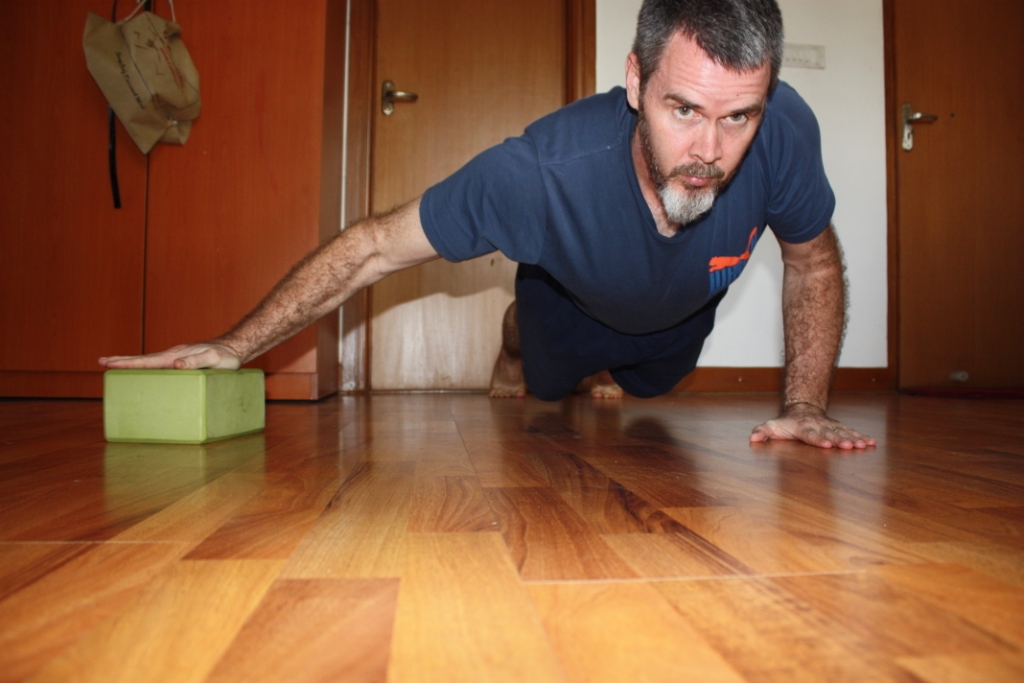
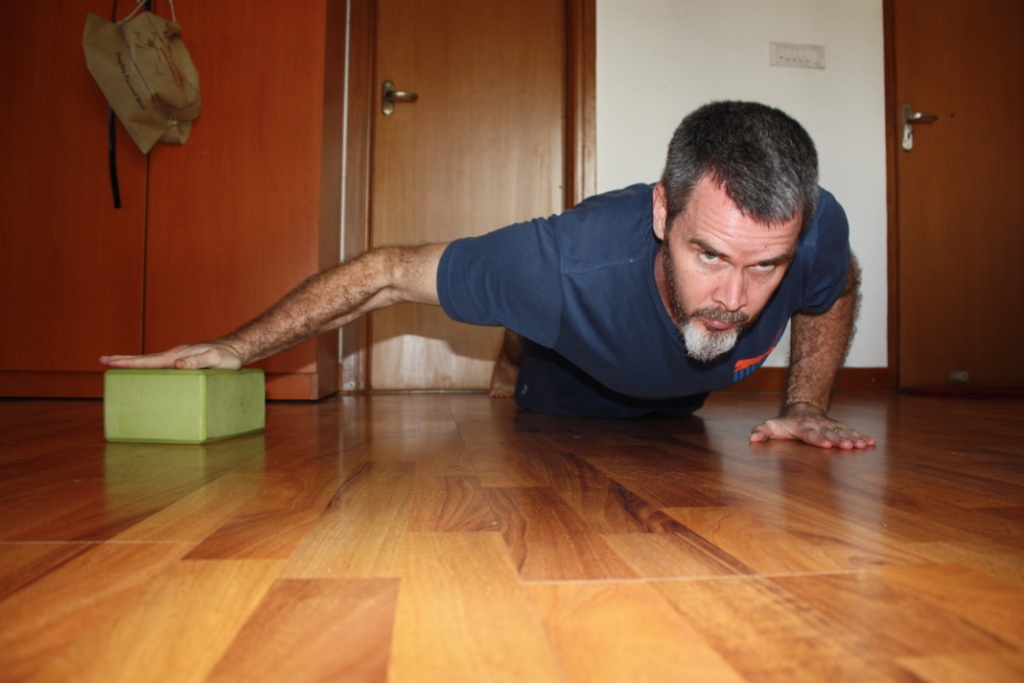
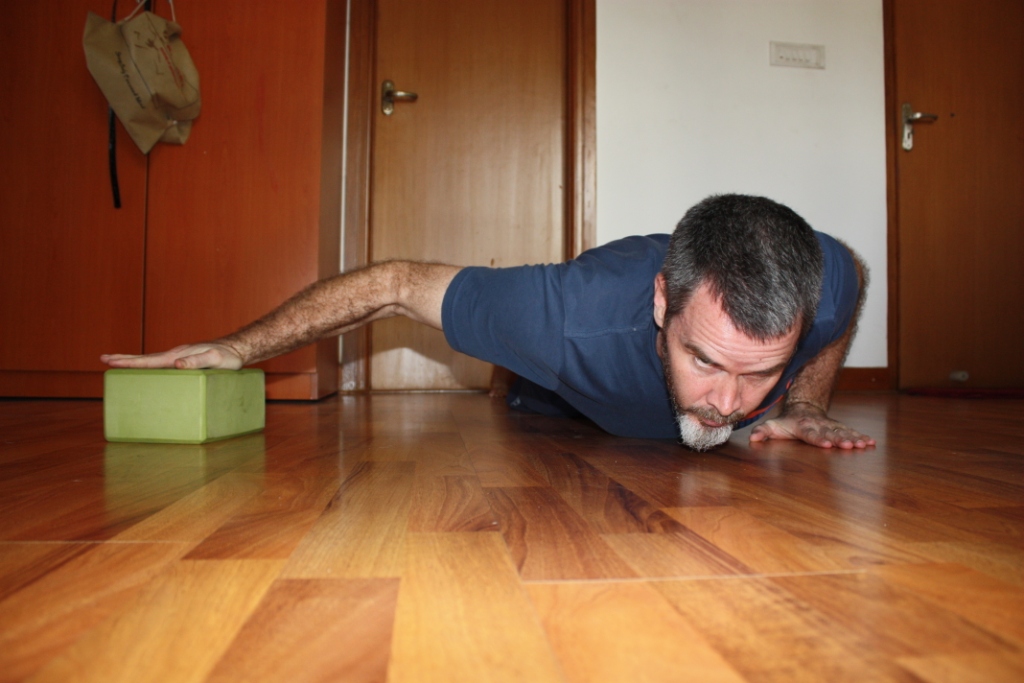
I’ll give an example, I saw someone on television yesterday doing the most horrendous single-armed push up. The only thing that kept this individual from damaging himself is that his range of motion was so tiny (he may have still injured himself.) His problem is that he heard that single-arm push-ups were cool, and he wanted to get straight to it. In reality, one needs to build into that exercise starting from a good solid standard push up, and then doing preppers (preparatory exercises) that gradually shift the load onto one arm. But maintaining form as well as one can. For example, putting one hand on a block off to the side, and gradually shifting it out to arm’s length.

IMG_3217 IMG_3218 IMG_3219


Second, on the other hand, don’t half-ass everything because you mistake discomfort for agony. This confusion cause people to greatly underestimate their capabilities. While you may think your teacher or trainer is a Sadist (only rarely are they are, really), the fact is that they are trying to give you one of the greatest gifts you can ever receive, which is the realization that you are capable of far more than you think you are–if you’re willing to gut it out through the challenging parts.


2.) Diet is the 800 pound gorilla of cutting weight. The simplified mathematics of this that adding exercise (while critically important to fitness) only marginally adds to the calories burned part of the equation. (Believe it or not one burns a lot of one’s calories just through baseline activities–breathing, walking, sleeping, etc.) However, when you cut caloric intake that’s all reduction from the intake side of the equation. However….


3.) Don’t make your goal weight loss, but rather to have a healthy and more functional body. Weight loss tends to be about external validation. That is, one wants to appear more attractive to someone else (or everybody else.) That’s a sucker’s game. People won’t necessarily notice–depending upon how often they see you and how self-absorbed they are. If you shed pounds at a healthy rate, people around you all the time don’t necessarily notice a day-to-day change.


On the other hand, as one starts feeling healthier and develops movement capacity beyond your previous capability, that can’t be taken away by anyone.


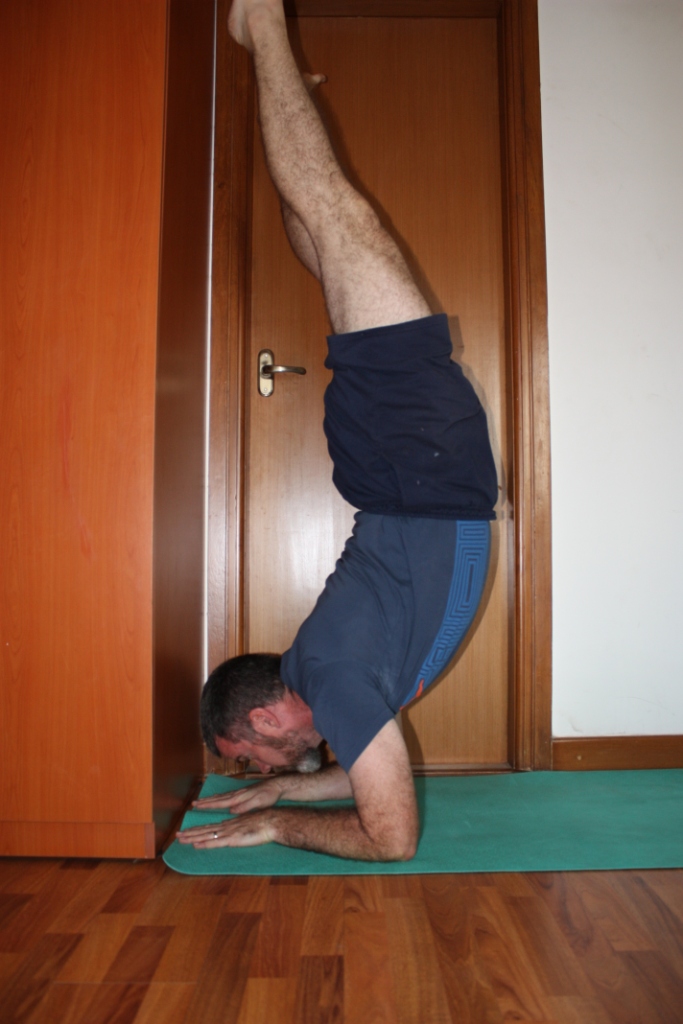
4.) When your body has been properly prepared through fundamentals, advanced maneuvers practically fall into place. I was taught a scorpion prepper  just a couple of weeks ago, and was surprised to find it was much easier than expected. I still have a lot of work to do to take it to the full pose. For example, I’m still using a wall so I don’t over-rotate in the arched back position,  but I bring my heels off the wall once I’m up. Next I’ll do away with the wall. Then it will be time to start bending my knees. My point is that  work on back stretches, core strengthening, and headstands made it relatively easy to get into the first stage.

IMG_3225


5.) Reveling in small victories can kill progress. The handstand provides a classic example. In the beginning, one starts kicking up against a wall. Even this can be a challenge in the beginning. However, as soon as it becomes doable, one should start gradually taking the training wheels off. This may begin as cautiously as pulling one leg away from the wall at a time. Then do away with the wall altogether. Then the suffering begins anew as one sheds the kick up in favor of a more controlled manner of ascent into the handstand.


6.) Don’t be quantitative.  A journalist once asked Muhammad Ali how many sit-ups he did in his training regimen. Ali said, “I have no idea. I don’t start counting until they start hurting.”

I’ve heard guys pleased with themselves because they do “sets of 100 push-ups.” This is often impressive only until you see the person actually do the exercise, and then–more often than not–you notice that they haven’t actually done one push-up. Rather, they’ve done a whole lot of mild elbow bends from a roughly plank-like position. It’s better to do 10 push-ups with a full-range of motion and controlled ascent and descent than to fool yourself with weak form.


7.) Don’t mindlessly workout. Shun the distraction of headphones, television, or cellphones . If you find working out to be so mind-numbingly boring that you need a distraction, you should re-evaluate the nature of your workouts. You should be “listening” to your body throughout the process. If your goal is to have a greater command over your body and its movement, e.g. you are a martial artist, dancer, yogi, etc., then this is particularly important.


First of all, with respect to boredom, boredom is the product of a weak mind. So you might consider working the mind out as well. Secondly, if you are truly bored, you should be upping your game.


While this may be one of my least popular points in this post, if you don’t believe me, ask Al Kavadlo.


8.) Rest is part of the process. It’s not stepping away from the process. As your body rests, your mind should be alert and taking stock of the effect of the practice on your body. Rest breaks aren’t zone out time. Also, part of having a healthy body is building a healthy parasympathic nervous system and immune system. Your body requires rest to heal, and it can heal and fight off infections tremendously effectively if you provide the right conditions.


9.) Exercises that consist of the motions you will need for your particular life are the most important.  The term “functional fitness” is ubiquitous these days, but I first read this advice in Bruce Lee’s Tao of Jeet Kune DoLee said that actions like punching, kicking, and grappling practice should make up the core of a martial artist’s workout. That doesn’t mean one should do away with general fitness activities. (Lee certainly didn’t.) Martial arts provide a prime example of an activity that requires a well-rounded form of fitness. That is, one needs core strength, good range of motion, cardiovascular endurance, and extremity strength and speed.


10.) Don’t agonize over failures. Move onward and, carefully, upward. If you aren’t (safely) failing to achieve an occasional goal, then you need to kick your way out of that box of comfort zone you’re trapped in.


BOOK REVIEW: The Key Muscles of Hatha Yoga by Ray Long

The Key Muscles of Hatha YogaThe Key Muscles of Hatha Yoga by Ray Long

My rating: 4 of 5 stars

Amazon page

This is a handy anatomy reference for yoga teachers and practitioners. The bulk of the book describes major muscles, or—when relevant—muscle groups. For each of the key muscles it gives the insertion, origin, innervation, agonists, synergists, and depicts the muscle in color drawings. The book also shows typical yoga postures in which the muscle is engaged or stretched. This gives one some idea of how the muscle is affected by changes in attitude and state of contraction.

True to the title, this isn’t a general anatomy and physiology book for yoga. It specifically deals with the muscular system. That being said, it does have some opening matter on the skeletal system, the various types of joints, and other fundamentals that one must understand to grasp how muscles create movement and change bodily alignment. It also has a few brief chapters at the end that deal with important issues like breathing and bandhas. However, if you’re looking for a book with substantial coverage of the anatomy and physiology of breath or nervous system activity, you’ll likely need to look elsewhere. The book also addresses the concept of chakra, which seems out-of-place in an otherwise scientific book, but it will be appreciated by those who view the body in that way and is easily enough ignored for those who want a strictly scientific presentation of material.

While the book is limited in its focus, it does a good job of giving a lot of information in a concise fashion. The graphics are easily interpreted and one can readily distinguish the muscles in question. I found the book to be well-organized and easy to use.

I’d recommend this book for any serious yoga practitioners, particularly teachers and those who need to be concerned about the minutiae of movement and alignment.

View all my reviews

Vinyāsa: A Few Thoughts

IMG_1254I attended a Vinyāsa Workshop this weekend at a1000Yoga in Bangalore. The workshop was taught by Bharath Shetty, who is the founder of the IndeaYoga Shala in Mysore, and who was a student of–among others–B.K.S. Iyengar.


The word vinyāsa has multiple meanings, but most commonly–and in this case–it refers to a style of yoga in which postures are linked together through transitional movements. (And, importantly, these transitioning movements establish a flow of breathing throughout the practice.)  Vinyāsa practices tend to be vigorous and challenging because one keeps moving when one isn’t holding a posture (i.e. there’s no down time), and the transitions require a lot of lifting oneself up, which necessitates a strong core and reasonably strong arms / shoulders.


Vinyāsa practices can have fixed-sequences (the same asana, or poses, are always done in the same order) or not have a fixed-sequence (the details of the practice will very from one session to the next.) There’s a great argument for the practice of a fixed-sequence. That is, one can get beyond focusing on crude alignment details and put one’s mind on fine details of breath, drishti (focal point), and keeping a slight tension in the perineum. Such facts can slip away when one is struggling to get the sequence and postural details down pat.


However, there’s a great counter-argument against fixed-sequence programs. The counter-argument goes like this, “If you get so bored out of your wits that you quit, you will also never get to the part where you focus on higher level details.” My advice would be “know thyself.” In other words, if you can keep to a fixed-sequence, you should. However, if your practice will peter out without constant fresh challenges, don’t force yourself into a fixed-sequence box. It’s better to take longer to get to a higher level of practice than to quit.


The most famous fixed-sequence vinyāsa style is the Ashtanga Vinyāsa system handed down by Sri K. Pattabhi Jois. (Note: some people call this system Ashtanga Yoga, and others don’t like that name because it implies that this system is heir apparent to Patanjali’s yoga as described in The Yoga Sutras.  [In other words, there’s an argument that that name was already taken.] Furthermore, Jois’s system isn’t really any more of an Ashtanga Yoga [in the Patanjalian sense] than any other Hatha yoga style because it focuses on only a few of the limbs (i.e. asana, pranayama, etc.) at least until one gets to very advanced stages of practice.


The most famous vinyāsa style without a fixed sequence is probably Power Yoga, although many people practice classic Hatha asana in a vinyāsa.  Power Yoga emphasizes core strength building, and was originally developed by Ashtanga vinyāsa practitioners to give one the workout of Ashtanga vinyāsa without its monotony.


This was my first experienced with a fix-sequence vinyāsa program other than Ashtanga Vinyāsa, so I didn’t know what to expect. This was the second workshop I’d attended by Bharath Shetty, so I knew that he was a skilled and knowledgeable teacher. However, I didn’t know what Indea Vinyasa, itself, would be like.


It turned out to be much like Ashtanga Vinyāsa. The general organization is identical. That is, there are two versions of Surya Namaskara, a standing sequence, a floor sequence, and a finishing sequence. Note: I’ve only been taught the first series of each of these systems, and so I can’t say how they vary at more advanced levels.


The Surya Namaskaras of Indea Vinyāsa mirror those of Ashtanga Vinyāsa, but they aren’t identical. The Indea Vinyāsa Surya Namaskara-A is slightly more involved, and includes an Utkatasana. The Indea Surya Namaskara-B, like Ashtanga Vinyāsa, features Warrior I, but doesn’t include Utkatasana (chair pose.)


The standing sequences of the two systems are identical. However, the floor sequence is very different. The Ashtanga Vinyāsa preliminary series (as mentioned above, both systems have multiple series) focuses heavily on forward bends, but the Indea Vinyāsa  preliminary series is more balanced between forward and back bends. The finishing sequence is also quite similar between the two styles.  The sarvangasana-halasana-karnapidasana-matsyasana sequence is the core of both finishing sequences.

VinyasaWorkshop

BOOK REVIEW: Principles of Tibetan Medicine by Dr. Tamdin Sither Bradley

Principles of Tibetan MedicinePrinciples of Tibetan Medicine by Tamdin Bradley

My rating: 3 of 5 stars

Amazon page

Full disclosure: let me first state that I’m a scientific-minded person and skeptic by nature, and if you’re expecting a review by a true believer, you may be disappointed.

A couple of questions may arise from the disclosure above. First, why do I feel I need to make such a commentary? Well, because this is a book about a system of medicine (i.e. gso-ba rig-pa) that developed within a country that was isolated for centuries and in which every aspect of knowledge was infused with and influenced by religious belief—both pre-Buddhist and Buddhist. Because of this, while some of the advice offered is surely sound, some of it is—from a skeptic’s point of view—bat-shit crazy. For example, there are herbal and dietary preparations to aid in digestion that may be completely sound and reasonable, and then there is the idea that Zombie spirits (one of 18 types of evil spirits) cause constant shivering.

The second question is, “If I’m not a believer, why read the book and review it?” For one thing, as I indicated above, I don’t think that just because the beliefs behind the “theory” of this system of medicine are baseless, it means that there is nothing in the book that is true or of value. The theory is that there are three kinds of energy (Loong, mKhris-pa, and Bad-Kan) and that excesses or deficiencies cause health problems. But it’s a 2500 year old system of healing; certainly they learned a thing or two in the process. It’s quite possible that they have learned things that scientific medicine has not. (Consider for example, Tibetan Buddhist monks have repeated and verifiably demonstrated capabilities—i.e. consciously controlling autonomic systems, that Western medicine would have thought impossible.)

The analogy that I always use is with kid’s Christmas presents. Parents hide the presents, and tell the kids that if there’s any tampering with them the kid won’t get anything but a lump of coal (you say that was just my parents?) Anyway, the kids find the packages, but are afraid to invasively tamper with them. Therefore, they feel the heft of them, they shake them, and they listen to said shakes. From that limited investigation, they develop a theory. The theory may be spot on, it may be completely wrong, or over several gifts it’s probably a combination of wrong and right. However, the question of whether the present does what it’s supposed to (i.e. bring joy) is not closely connected to the child’s theory, because it’s based on the parent’s observation of what the kid likes. That, my friends, is why systems of healing that are based on notions that are empirically wrong sometimes produce good results.

Second, while I’m a believer in science, I don’t always believe that Western medicine (rooted in science as it may be) consistently does a good job. Part of this is the fault of economists, policy types, as well as lazy patients who’ve created a system in which medicine only pays off if it can cut one open or give one an expensive medication. This leaves room for alternative systems of medicine that may not be so scientific, but that allow for the fact that changing patient behavior is often key to improving health.

I’ve taken a long time to get to the actual review, but I thought the reader should know from whence this reviewer was coming. The book is a little under 200 pages long. Its 11 chapters are logically oriented, and it’s easy to navigate the book. The author writes in a readable style, and jargon and foreign terminology aren’t a problem. It doesn’t have an index, but each chapter is broken up into many smaller subunits–so finding what one is after shouldn’t be hard.

The chapters cover the history of Tibetan Medicine, the nature of gso-ba rig-pa, the theory of Tibetan Medicine, causes of illness, human anatomy and physiology (not of the physical body as we know it), common diseases and illnesses, treatment techniques involving changing diet and behavior, medicinal treatment, representative case histories, and the nature of the Tibetan Medicine physician.

It’s not clear who the target audience for this book is. It’s not a self-help book as the implication is that the patient should see a doctor of Tibetan Medicine and not self-prescribe. Furthermore, while the book provides a good overview of Tibetan Medicine, it’s not an all-inclusive description by any means. The book seems to have been written primarily to make individuals aware of Tibetan Medicine and to give enough insight into the system that readers can differentiate it from Traditional Chinese Medicine or Indian Ayurvedic Medicine, both of which display similarities and differences.

I’d recommend this book if you’re interested in alternative approaches to healing, or if you’re interested in Tibetan culture in detail.

View all my reviews

BOOK REVIEW: The Medical Care of the Judōka by Anthony J. Catanese

The Medical Care of the Judoka: A Guide for Athletes, Coaches and Referees to Common Medical Problems in JudoThe Medical Care of the Judoka: A Guide for Athletes, Coaches and Referees to Common Medical Problems in Judo by Anthony J. Catanese

My rating: 4 of 5 stars

Amazon page

I’d recommend this book for anyone who holds a position of responsibility in a dōjō or a combative sport gym, including: teachers, coaches, senior students, trainers, etc. It’s intended for those involved with sport judō, but because there aren’t a lot of sport or martial art-specific books of this nature this may be one of one’s best option to get this information. I haven’t stumbled upon other books like this, but performing a search did result in similar books either generic to martial arts or for other martial arts. However, all of the others that I saw were either old / out-of-date, only available in hardcopy (usually at great expense), or were not by physicians. This book is available on Kindle and is quite inexpensive.

While it’s geared toward sport judō, many of the injuries will be common across martial arts. This is truer of grappling-oriented martial arts, but things like mat infections, students with various chronic ailments, and participants being knocked unconscious. (The latter is covered extensively, but arguably being even more of a concern for strikers.)

The book is useful in two ways. First, it discusses first aid and treatment for common injuries in the martial arts. It’s not a first aid manual, and will not replace training. (In fact, the book assumes it’s talking to someone who’s in a position where they’ve had at least minimal training / experience.) However, it may provide useful information about what injuries one should make sure to be trained in when shopping first aid courses. It also gives one ideas about differences of opinion on certain approaches to treatment or the decision as to whether a given participant is safe to participate.

Second, the book discusses whether prospective students with common chronic ailments can safely participate, and under what circumstance. In many cases, this book goes about this by saying what the judō rulebook says. While this may not be a perfect guide for practitioners of other arts, it may give a reasonable idea about how serious one should take a given disease or infirmity.

The book consists of 20 chapters. Most of the chapters cover common injuries and ailments in judō, generally arranged by anatomical systems. However, there are also chapters covering nutrition/hydration, issues for athletes going abroad / older participants / and special needs athletes, drugs and doping considerations, injury rehabilitation issues, psychological challenges, and the traditional Japanese methods of resuscitation and first aid (kappo and katsu.)

In addition to the core chapters, there is some useful ancillary material. First, there are vignettes interspersed throughout the book that could be beneficial. These vignettes reflect the benefit of having an author who is a medical doctor, a long-time judōka, and an experienced match physician. The vignettes may be more likely to stick in one’s head than the blander presentation of information, and these sidebars often address unusual cases. Also, there are two glossaries—one that deals with martial art / sports terminology, and one for medical terminology.

While written by a physician, this book is not written exclusively for other doctors or medical experts. That is to say, it’s easily readable by a lay audience. Medical jargon, when used, is explained the first time in the text, so one doesn’t need to keep jumping to the glossary.

At least the Kindle version is graphics free. That would be problematic if it was a first aid manual, but that’s not this book’s purpose.

As I said in the beginning, if you have responsibilities for the well-being of martial arts students / athletes, you should read this book.

View all my reviews

Rewiring the Brain about Pain: All That Isn’t Pleasure Isn’t Pain

IMG_0104

I see people staring at the railing on which they will stretch their hamstrings just like they would look at a side-by-side refrigerator unit that they have to move down a flight of stairs, psyching themselves up for the stretch. Or maybe they are weighing the question of whether they really need to stretch as one might ponder whether it would be better to get an engine overhaul or replace a car altogether. The point is that there seems to be an element of anxiety or dread associated with actions like stretching that aren’t necessarily pleasurable.


I have a theory about why this is the case.

First, people falsely equate discomfort with pain.

Second, the entire point of true pain is to tell one how not to move so as to avoid exacerbating an injury.

Third, this results in a desire to avoid pursuits that cause such physical discomfort.

Fourth, people create a self-fulfilling prophecy in which they tense muscles in the area of the stretch to counteract the aching stretch, but this just increases the discomfort level.


Your body has a clever little device called the myotatic reflex arc (MRA.) That’s when a muscle tenses to avoid injury because the muscle seems to be stretching too fast for comfort. However, that reflex is only relevant to dynamic movement and the fact that it’s a reflex arc means that the signals don’t go through the brain–thus–aren’t consciously controlled. The MRA is different from the tension one holds in a slow and controlled stretch. It’s fun to see people who’ve been encouraged to breath and relax into the stretch realizing that the stretch isn’t as bad as it seems.


Of course, many intense physical activities that cause discomfort may also result in a sufficient endorphin (natural painkillers) inflow and adrenaline / cortisol (stress hormones) outflow to result in net feelings of pleasure. While stretching results in endorphin release, the action of holding the muscle stretched may be too much for our natural painkillers to counteract, particularly when one is breathing easily and thus the body is not under the level of whole-body stress that might encourage the big endorphin dumps desired.


The problem is that one can’t achieve flexibility without pressing against one’s limits any more than one can make strength gains without lifting more or by employing more repetitions. If one just goes to the point at which one is no longer comfortable, you may be able to prevent losing flexibility, but you’re not going to make gains.


Another part of the problem is that people often go into stretching cold, and thus maximize their discomfort. Doing warm-ups and joint articulations before any kind of intense stretching is a good practice. These warm-ups should not test the fullest range of motion, but should move with sufficient quickness to get the muscles and the synovial fluid in the joints warmed up.


The problem with seeing stretching as painful is that it discourages it. Some individuals fail to stretch altogether, and others focus only on the major muscle groups (hamstrings and quads) and miss muscles that adduct, abduct, rotate, and generally stabilize and support the primary agonist or antagonist muscle pairing. The most common injury in the Japanese martial art that I study is a knee injury attributable in part to insufficiently flexible external rotators and abductors and the inability to keep the knee in line with the toes–thus putting too much torque on the joint and too much load on the ligaments.


Wrong: knee is not pointing over toes

Wrong: knee is not pointing over toes


Martial artists, in particular, need to avoid equating discomfort with pain. When discomfort becomes pain, pain becomes agony, and agony become intolerable. There are many factors that can determine the outcome of a combative event, including technical proficiency, physical fitness, and the ability to persevere. The last one may mean the ability to take a licking and keep on ticking as the Timex people used to say.


The good news is that it’s possible to rewire one’s brain to avoid equating the discomfort of stretching with pain.

Step 1: Get a yoga face. In the martial arts, we talk about having a warrior face, which is an expression that conveys one’s intensity and seriousness. For yoga and stretching one should ditch the agony face and replace it with a serene face. My personal recommendation is that you aim to emulate the faces on the Bayon at Angkor.

Yoga face as seen on the Bayon at Angkor

Yoga face as seen on the Bayon at Angkor


Step 2: Keep your mind on your breath, and away from the sensation of the stretch. There’s a reason yoga teachers harp on breath, it will help one reduce one’s overall tension.


Step 3: Stop using the word pain (in your own mind or when speaking out loud) to refer to the feeling of a stretched muscle. You may not be able to replace the word “pain” with something as euphemistic as “stretch bliss,” but try to avoid giving it a name with a negative connotation. It’s simply the sensation of a stretched muscle


Step 4: When you find yourself wearing an agony face and squeezing out the protective muscular tension, ease off the stretch until it’s comfortable. Then ease back into the stretch, keeping the surrounding muscles relaxed and the breath even and deep.  You can visualize expelling the tension with one’s exhalation if that helps.


Step 5: When you experience real pain, have no guilt about heeding it and giving that part of the body time to heal. Of course, this requires an ability to differentiate stretch sensation from true pain.


Now I’ll segue into a discussion of actual pain. When I was having a lot of problems with my lower back–eventually diagnosed as arthritis–I had a bizarro interaction with my healthcare provider. When I first went to the doctor, I faced this unsubtle wall of suspicion because back injuries are a common fraud device for persons addicted to painkillers. That’s because there are many forms of back injury that are hard to witness externally. However, when they x-rayed my back they could see clear indication that something was wrong. Then they were surprised when they tried to foist painkillers on me, and I wasn’t interested.


Here is how I look at painkillers. Imagine the “check-engine” light came on in your car, and you took the vehicle to the mechanic. The mechanic has your car for a brief time and comes back to you with a nominal bill. At first you are thrilled, and then you ask the inevitable question, “So what was the problem?” Your mechanic then says, “Oh, I have no idea, I just disconnected the light. That light won’t be giving you any more trouble.” Needless to say, you are decidedly less thrilled. You wanted the underlying problem fixed.


Don’t get me wrong, I’m not saying that there’s no place for pain-killing medication. If one has pain that is so severe that one cannot rest, one’s body won’t be able to heal itself properly.


However, if you pop painkillers to do away with bodily aches, you should reconsider. Those aches are what being alive feels like, and if they come from exercise or labor they should be welcomed and not be framed in a negative light. If they are an indication of a postural misalignment or some sort of systemic problem, you should look into fixing the underlying problem.


[To be fair to my aforementioned doctor, I think people aren’t conditioned to the notion that they are the key participant in their own healthcare and that fixing problems will often require hard work on their part. So a part of the problem in some places–most notably America–is that healthcare isn’t profitable unless they are pushing surgery or expensive medications. However, another part of the problem is that people just want to go to the doctor and have the expert fix them without requiring the personal effort of fixing postural deficiencies or cutting weight. I can understand why doctors are a bit fed up with suggesting people do the work only to get no response. I saw a statistic recently that only 1 in 8 people threatened with a lethal illness would make a behavioral change recommended by a doctor to reduce the threat of the ailment–e.g. stop smoking, stop drinking, cut weight, etc.]


BOOK REVIEW: Yogic Management of Common Diseases by Dr. Swami Karmananda

Yogic Management Of Common DiseasesYogic Management Of Common Diseases by Satyananda Saraswati

My rating: 4 of 5 stars

Amazon page

The title of this book gives one a nutshell description. It’s a book that discusses what yoga practices are beneficial for various common ailments. These practices include not only asana (postures), but also pranayama (breathing exercises), shatkarma (cleansing practices), yoganidra (a relaxation technique), meditational practices, and dietary and other yogic lifestyle practices. The book also discusses both the medical and yogic explanations of various diseases, and provides enough background on the relevant anatomy and physiology to give a layperson an understanding of the basic causes of each disease (if known.)

The book covers about 37 classes of disease, and is arranged into seven parts by bodily system (head and neck, cardiovascular system, respiratory system, gastro-intestinal tract, joints and musculo-skeletal system, urogenital system, and a miscellaneous ailments section that deals with skin diseases and varicose veins.) Some chapters deal specifically with one disease, while others cover two or more related ailments (e.g. Bronchitis and Eosinophilia, Sinusitis and Hay Fever, or skin diseases.)

This book has a number of strengths. First, it’s grounded in a scientific view of these ailments and isn’t selling yoga as a panacea. As suggested above, the title was carefully chosen. It’s “Yogic Management of Common Diseases.” The word “Management” is a critical one. If you’re looking for a book about how yoga can single-handedly cure your Stage IV lung cancer, this isn’t the book for you. If you’re looking for a book on how yoga can help you live a better life if you have arthritis, diabetes, or are hernia prone—possibly in conjunction with medication or other medical treatments—this may be the book for you.

Second, the diseases covered seem to have been carefully chosen. The selection of common ailments is not just to appeal to a broad audience. Many of these ailments are caused by common lifestyle problems that offer relatively easy fixes. Other diseases may not offer any fix per se, and, therefore, the ability to live a high quality of life with the affliction may be valuable. Also, I know a number of the diseases covered are particularly promising candidates for a yogic solution / mitigation.

Having given the strong points, I will say there are a couple of weaknesses to the book as well. First, it’s not illustrated in any way. Given that there is a lot of discussion of biology and anatomy, there are places where a picture might be worth a thousand words. I will note that this isn’t a book for a yoga newbie. It uses Sanskrit names for practices without so much as a glossary. That said, yoga teachers and intermediate/advanced students will probably not find this much of a problem because they will have built an appropriate vocabulary or have the necessary reference close at hand. I didn’t deduct for the lack of explanation, because the book is clearly intended for established practitioners (the Introduction warns as much.)

The second weakness is that there’s no explanation of why the listed practices should work particularly well for the given disease. I think the book does a great job of explaining the nature of the disease for a non-expert reader. However, then it just lists practices by type (asana, pranayama, relaxation, diet, etc.) In some cases, the reader can easily make the connection, but in others it’s not so clear why one should do practice “X” for disease “Y.” I do realize that drawing these connections could be space-intensive and technical. The book is a nice slim 245 pages, and it could rapidly grow to an untenable length. However, I’m concerned that some of the recommendations might not be rooted in experience and observation.

I would recommend this book for yoga teachers and intermediate / advanced practitioners who are interested in yoga as a component of building a healthy body. If you are new to yoga, you will probably want to first familiarize yourself with many of the classic asana, pranayama, and shatkarma practices of yoga—otherwise you’ll have to look up terminology constantly.

It should be noted that this book is put out by the Bihar School (of Swami Satyananda Saraswati fame), and the same publisher has put out a number of books that delve much more deeply into specific ailments. (At least some of these are written by the same author, Dr. Swami Karmananda.) Also, let me say that while the school self-publishes through its Yoga Publications Trust, it puts out books on a large-scale, of high-quality, and they appear to be available globally through Amazon and the like. (Swami Satyananda Saraswati alone was extremely prolific and wrote the APMB, which is one of the seminal reference works on yoga.)

View all my reviews

BOOK REVIEW: Sleep: A Very Short Introduction by Lockley & Forester

Sleep: A Very Short IntroductionSleep: A Very Short Introduction by Steven W. Lockley

My rating: 4 of 5 stars

Amazon page

This is one book in a large series of books put out by the Oxford University Press. All of these “Very Short Introduction” books are brief summaries of the state of research on a given topic in the arts, sciences, or humanities. Based on this book, I’d say the series is geared toward a readership of educated non-specialists. I say “educated” because the book did get into some technical areas, and while it doesn’t presume any particular knowledge of the science of sleep, it does use a scientific vocabulary with occasional academic sentences (i.e. packed with precise detail and lacking concern about readability.) That said, I’d say the readability is higher than the journal articles from which the information for the book was drawn. I suspect I’ll read more from this series. They are cheap on Kindle, provide a concise injection of the basics for a wide range of topics, and are pleasantly readable if you’re used to reading academic literature.

This particular book is about sleep. While, on average, sleep takes up one-third of a person’s life, it’s a subject that is often taken for granted. Like water, one doesn’t really think about it until one isn’t getting enough. However, as the book discusses in detail, all sorts of problems are associated with sleep deprivation, insomnia, and parasomnias (i.e. sleep events like sleepwalking, night terrors, nightmares, bedwetting, sleep-eating, and groaning.)

The book is written in nine chapters covering: the history of sleep, sleep generation and regulation, a brain on sleep, reasons we sleep, variation in sleep throughout one’s life-cycle, the nature of poor sleep, the connection between sleep and health, and the effect of our shift to a round-the-clock society.

There are a number of fascinating questions addressed by this book including:
1.)What does sleep do for us?
2.)Have people always tended to sleep eight hours per night?
3.)Why are some people morning people and others night owls?
4.)Why does one feel drowsy after lunch, but not necessarily when it’s time to hit the sack?
5.)How long can one go without sleep?
6.)Do all animals sleep?
7.)How do sleep and hibernation differ?
8.)Why do teenagers and the elderly have such odd (but different) sleep habits?
9.)Why do people sleepwalk, sleep-eat, groan in their sleep, or have night terrors?
10.)What is the effect of long-term insomnia on health?
11.) What happens to sleep if one has no rising and setting sun cues?
12.)What is jetlag and how can one fight it?

I learned some interesting facts, such as:
1.) On average, women report more insomnia, but, paradoxically, tend to sleep better than men.
2.) Pre-industrial people slept for about 10 hours a night on average, it’s believed.
3.) Many parasomnias occur mostly during REM (Rapid Eye Movement) sleep.
4.)The government can deprive prisoners of sleep for 7.5 days without it being considered torture (then they have to allow a full 8 hours sleep before another 7.5 day period started.)
5.) Long-term insomnia has been linked to heart-disease.
6.)Shift workers have a 50% greater incidence of breast and prostate cancer than day-workers.
7.)Visiting teams win 46% of the time if they are in their home time zone, 44% if they are traveling ‘with their body clock,’ and only 37% if they are traveling against their body clock.

I found this book interesting and informative. However, there are many books on the subjects of sleep and dreams that are more catered to a popular audience. Such books delve into intriguing cases and don’t dig as deeply into the minutiae of the science of the subject. I’d recommend this book, but not for readers who get bogged down or bored with scientific and technical discussions. If you’re looking for a book that’s loaded with pithy facts and fascinating stories, you can find a book closer to the mark by journalists who focus on science writing and who’ve got more flare for creative writing.

View all my reviews