PROMPT: Evening

What are you doing this evening?

Probably just reading and otherwise restfully winding down from the day.

But who can know what the future holds?

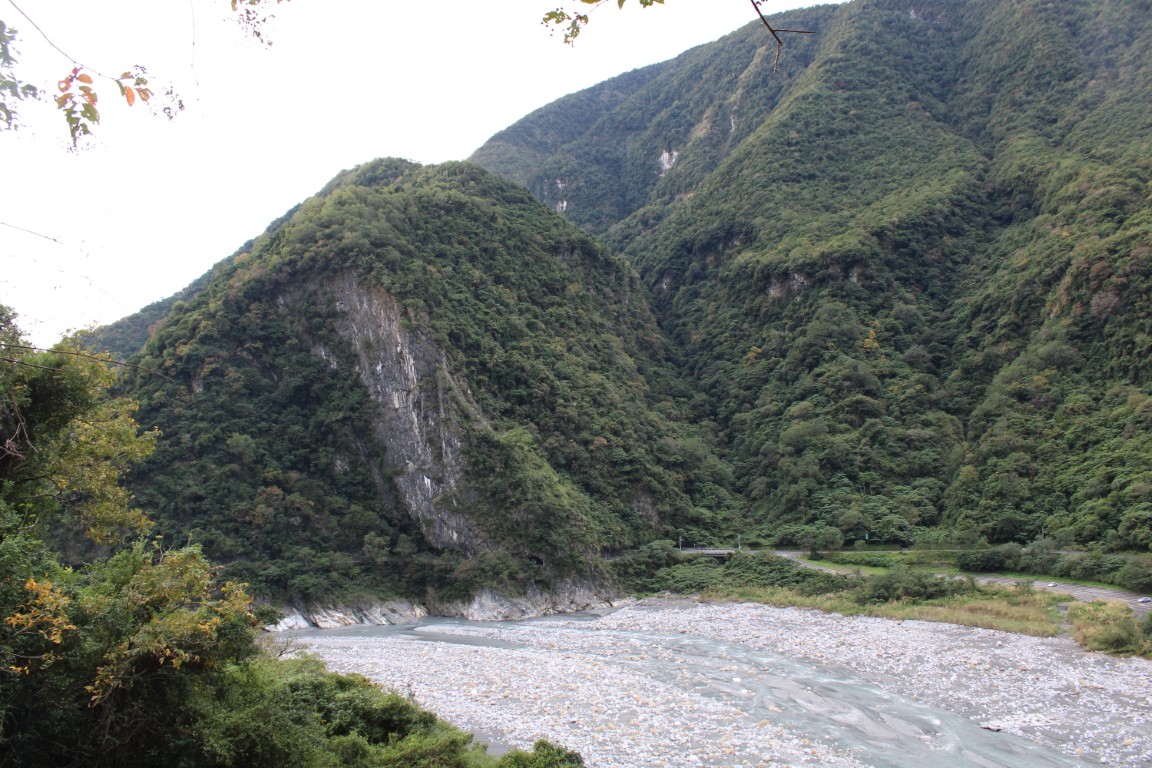
Future River [Haiku]

the river trickles.
but its broad shoulders tell
 of expectations. 

PROMPT: Future Past

Do you spend more time thinking about the future or the past? Why?

I spend the most time trying to figure out how to live mostly in the present. The past is dead and the future is unknowable, so I might as well settle into this moment.

BOOKS: A Few Rules for Predicting the Future by Octavia Butler

A Few Rules for Predicting the Future: An EssayA Few Rules for Predicting the Future: An Essay by Octavia E. Butler
My rating: 5 of 5 stars

Amazon.in Page

Release Date: April 16, 2024

This brief essay by one of science fiction’s greats, Octavia Butler, discusses her thoughts about forecasting the future and why it’s worth doing even though it’s so difficult (at some level of precision– even impossible.) Butler tells a few stories about questions from fans, being prescribed medication, and growing up during the space race and Cold War, stories that cleverly present her thoughts on the challenging art of anticipating the future.

It should be pointed out that this is a very short work. Even the sixty-ish page count is deceptive as that is accomplished with lots of white space, with large fonts, and even with colorful blank pages (and / or artwork.) If you’re paying full book price for it, be forewarned that, as clever and quotable as it is, it’s essentially magazine article length (and not a long article at that.)

If you can get your hands on this essay for a price commensurate with its word count, I’d highly recommend reading it.

View all my reviews

PROMPT: Three Years

What will your life be like in three years?

Who can say? I could be dead. I could be one of the last humans alive after the next pandemic or a nuclear Holocaust or a solar flare that sends humanity back to the Stone Age, or some combination of these and / or other disasters. I could be sitting where I currently sit, doing what I’m currently doing.

I’m no fortune-teller. (If there’s one thing my time as a social scientist taught me, it’s that people think they are much better at making predictions than they are.)

PROMPT: Future

Daily writing prompt
What are you most worried about for the future?

As far as humanity’s future goes, nothing worries me. This despite the fact that I believe the odds are good that we’ll destroy the species before spreading to other planetary bodies. (Spreading so as to make humanity more robust in the face of extinction.) Even achieving colonization of other planetary bodies probably cannot be done by humanity as we know it but will require moving beyond biology — i.e. being able to carry consciousness into a sturdier vehicle. Everything is impermanent. We are no different.

Yes, in time, AI and robotics may be able to do every productive task more effectively than humans, but I’m confident I’ll outrun that. Besides if they can, they deserve to do so. I don’t want to be one of those participation trophy speciesists who believe we should be granted a victory even if we’re outperformed — all while whining about unfair advantage.

As for my personal future, the only thing that worries me is losing the ability to go out on my terms — i.e. losing command of mind and / or body with my body still being able to function enough to remain “alive.” Everything that lives will certainly die, so fearing death seems futile.

Impending Cataclysm [Free Verse]

Everything is dull
before the world changes.

People live their rituals,
complying with habits.

But the world will change,

change from one day to the next,

and not the subtle, unceasing change --
perpetual and ubiquitous --
that has always been.

No. This will be an eight megaton
shift into the new,

and nothing will ever be 
as it's always been.

Never again.

It will happen without warning
or precursor --

without a hint that the world
is about to be revealed, 

to be discovered 
to be something
wholly different
than anyone ever imagined.

Welcome to the new now
[prematurely speaking.]

Future Imperfect [Free Verse]

skyscrapers rise & fall
storms hit & wither
waves crash & recede

nature neither blesses nor curses,
despite the constant counting 
of its boons & banes; 
its bonanzas & broken bones

one who can feel grateful 
in the face 
of ignorance & imperfection
is free 

one who feels suffering 
in the absence of perfect comfort
will never know freedom 

such a one as that 
imprisons himself
in a cycle of imagining 
& coveting 
a perfection that has 
never existed  

The Metaphorical Path [Tanka]

the trail curves.
what's around the bend?
i don't know -
it's a better 
metaphor than a route

BOOK REVIEW: A Natural History of the Future by Rob Dunn

A Natural History of the Future: What the Laws of Biology Tell Us about the Destiny of the Human SpeciesA Natural History of the Future: What the Laws of Biology Tell Us about the Destiny of the Human Species by Rob Dunn
My rating: 5 of 5 stars

Amazon.in Page

Out: November 9, 2021

Maybe you’ve seen “Save the Humans” bumper stickers. They came about due to twin realizations. First, the desire to save whales proved too remote to spur humanity into better behavior. Second, the sci-fi subtext that humans don’t need other species and that we can survive any form of cataclysm [including those that kill off everything else] is wrong on both counts.

Dunn’s book explores what changes Earth’s lifeforms can expect of the future. As one might expect, these changes are heavily influenced by climate change, but Dunn also looks at the effect of other factors – notably the growing resistances that results from heavy use of biocides (e.g. pesticides, antibiotics, etc.)

Dunn investigates the effect of islands on evolution and speciation, and goes on to show that not all islands are surrounded by water. (By geographic definition they may be, but in terms of constraints that restrict the movement, interactions, and well-being of lifeforms there are many besides water.) This is important because climate change will drive species to attempt migration to areas that present the conditions to which the species is evolutionarily adapted. Some will fail and may go extinct. Some will succeed, but will upset the ecological applecart of the location into which they’ve moved.

Chapter nine discusses a crucial principle: being able to break a thing doesn’t mean one can readily fix it. Dunn describes plans to use robotic drones to replace the extinct bee pollinators that play a crucial role in our ecosystem, as well as the ways the drones are likely to fail to live up to their predecessors.

I found this book to be immensely thought-provoking. One can argue whether the author is too gloomy about human future (“human future” because Dunn is clear that life on the planet will go on), but it’s impossible to ignore that challenges exist.

View all my reviews