BOOKS: Kingdom of Fear by Hunter S. Thompson

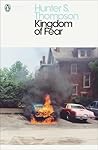
Kingdom of Fear: Loathsome Secrets of a Star-crossed Child in the Final Days of the American CenturyKingdom of Fear: Loathsome Secrets of a Star-crossed Child in the Final Days of the American Century by Hunter S Thompson
My rating: 5 of 5 stars

Amazon.in Page

Kingdom of Fear is part memoir and part commentary on the state of America at the turn of the millennium. As a memoir, it explores Thompson’s bid for Sheriff, his arrest and judicial proceedings for drug and explosives charges that resulted from a “he said / she said” accusation that did not warrant charges in and of itself, a wild and wooly road-trip through Nevada, and Thompson’s position at the center of an investigation of a “threat” on the life of actor, Jack Nicholson.

As a commentary on the decline of America it discusses the battle for Grenada, a trip to Cuba, 9-11 and its aftermath, and the book revisits the ’68 Democratic Convention. It’s all written in Thompson’s drug-fueled Gonzo style, making it incredibly entertaining to read even as the hard walls between fact and fiction seem to dissolve. While the factualness might be at times in question, there is always a kind of truth that can only be received from those who’ve tossed off the shackles of societal convention and are willing to tell it as it is — even the embarrassing bits (especially the embarrassing bits.)

It’s not for those who take life and authority figures too seriously, but otherwise it’s a tremendously compelling and sometimes hilarious in its depiction of pre- and post-Y2K America.

View all my reviews

PROMPT: Motivation

Daily writing prompt
What motivates you?
The need to break free of the program -- e.g. to be master of fear & anger, not slave to them. 

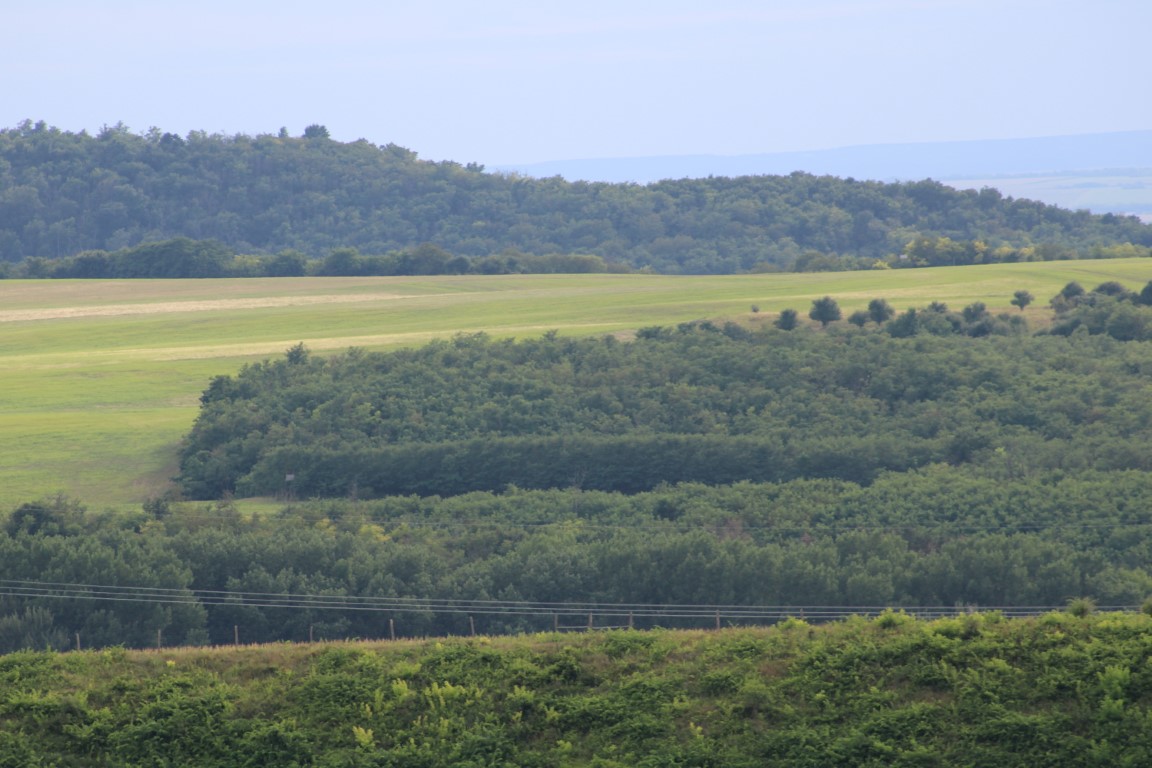
Green Hills [Free Verse]

fingers of forest
 interspersed with 
  fingers of pasture --

the hidden & 
 the exposed --
 
two kinds of danger:
 being seeable &
  being unable to see.

is the mind fearful
 of being exposed
  the same as the mind fearful
   of being confined?

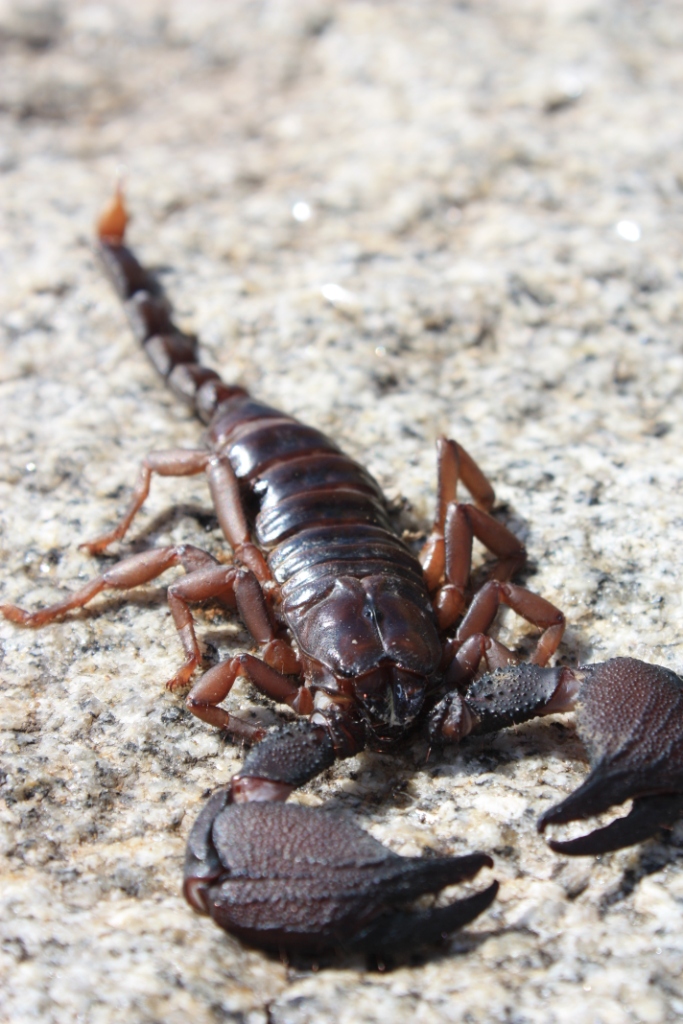
Startle Response [Haiku]

even in death
 the scorpion can evoke
  momentary fear.

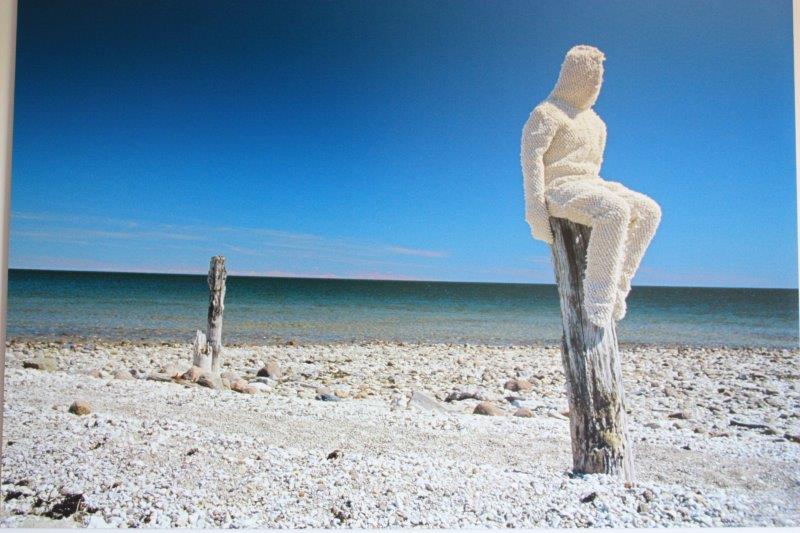
Scarecrow [Free Verse]

Scarecrow, n. - that which exists 
                         solely to evoke fear.

There are so many scarecrows:
   global - the end of the world
                    as we know it.
   societal - the end of the tribe
                    as we know it.
   individual - scarecrows of the soul.

Scarecrows lead us into the worst
        versions of ourselves: 
 The one who's stressed, and mean
        because of it.
 The one who imagines conspiracy
        around every corner.
 The one who sees threat in every
        change & in every difference.
 The one who wants an orderly world
        of people just like themselves -
        familiar, cozy, and lacking surprises.

Scarecrows even march us off to war,
        and war should be the scariest state
              imaginable --
        death doled out on a random basis.
 
War should be the scariest, but terrible certainties
         spur less fear than any old uncertainty.

BOOK REVIEW: Laches by Plato

LachesLaches by Plato
My rating: 5 of 5 stars

Amazon.in Page

Project Gutenberg

This early Socratic dialogue asks, “what is courage?” Two older gentlemen, Lysimachus and Melesias, regret that they never had their mettle tested. The seniors ask two younger men who’ve served in battle, Nicias and Laches, whether the elder men should have their sons learn the art of fighting in armor to build courage in the young men. Nicias and Laches suggest that Socrates, who showed great valor in battle, should be asked the question.

Lysimachus believes this to be a good idea because then they have a tie-breaker if the two disagree. However, Socrates leads Lysimachus to understand the folly of this approach. What if the dissenter is the only one who truly knows what courage is and how it can be pursued? Socrates admits he has no great expertise in the matter, but is willing to help determine whether Nicias or Laches is more qualified to answer the question.

Laches goes first and defines courageousness as standing one’s ground in battle. However, under Socrates’ interrogation, Laches has to admit that a man who stays in place foolishly can’t be thought more courageous than one who fights in strategic retreat.

Nicias presents a definition that is more nuanced. Nicias says that courage is knowledge of what is fearful and what is hopeful. One might expect this to please Socrates because the philosopher famously believed that ethical behavior sprang from knowing – i.e. if a man knew what was right, he would act virtuously. However, as Socrates questions Nicias a couple issues become apparent. First, Nicias admits that the courageous person must know what is fearful and hopeful in the future as well as present (and who knows that?) Second, Nicias can’t really differentiate courage from virtue as a whole.

This brief dialogue is short, focused, and well worth reading.

View all my reviews

POEM: Rainy Day Rambling Brain

Sitting on the balcony, watching the rain, I see spreading concentric rings ping into each other in the puddles below. The expanding rings of big drops swamp those of the smaller droplets. More evenly-matched pairings of waves becomes something new — not pure chaos, but much more complex than either of their parents. The analogy to the workings of my mind is intuitively felt — if not intellectually understood.

A pigeon struts along the ledge of concrete slab on a building under construction next door. The slab intends to become a balcony like the one on which I’m sitting.

I want to think that only a winged creature could walk so confidently on that ledge, but I remember reading that skyscraper construction companies in New York City hired lots of men from a certain Western tribe known for fearlessness vis-à-vis heights.

But were they fearless?

Sooner or later, fearless creatures become careless creatures — at least among humans.

The chipmunk bobbing at the twiggy, distal end of a branch seems fearless to me, but I also feel that I’d see a lot more sidewalk-splattered chipmunks if the little beast didn’t have some kind of feeling about the precariousness of its situation. Maybe, I anthropomorphize.

And one puddle reaches a tipping point, pouring into another…

POEM: Fear & the Snowflake [Day 24 NaPoMo: Confessional]

Reading about Audie Murphy vaccinated me with perspective.

Maybe you heard of him as a star of silver screen cowboy cinema.

He also received the Medal of Honor for single-handedly taking on a unit of Nazis from atop a burning tank after sending his men to the concealment of a forest.

But he was also known for stage fright and intense shyness. Once, asked to give a speech, he said he’d rather storm a Nazi machinegun position, and he should know.

That seems like a strange mix of fearlessness and fearfulness, but isn’t everyone’s?

I’m less afraid of giving a speech than I am of having to mingle with strangers at a cocktail party.

I’m less afraid of being punched in the face than I am of misspeaking. (Sadly, I have enough experience with both to say as much.)

I’m less afraid of dying than I am of being so incapacitated that I don’t have the option to wheel, crawl, or hobble my failing body off a cliff.

I’ve been found fearless by people mortified by hand-standing  or petting a strange dog.

I’ve been considered cowardly by masters of cocktail party mingling.

And they are both correct.

And they are both so wrong.

POEM: Fear in Motion [Day 20 NaPoMo: Sestina]

[A sestina consists of six-and-a-half six-line stanzas. It generally follows a metrical pattern, though there is no consensus agreement on a particular meter. (In English language poetry, pentameter is common but not universal.) Sestinas don’t rhyme, but instead use a pattern of repetition of the end-words. So the last word of each line in the first stanza becomes the last word of a line in the other stanzas, but in a rotated order. In this poem, I’ll be using the most common rotational scheme. The envoi (i.e. the three line stanza at the end) must use all six end-line words — three are set as end words and the other three can appear anywhere in its designated line.]


The fluid dynamics of fear:
spreads like fire, but rolls like water.
Through contact or its lack, it creeps.
There’s fear of what is and what’s not —
fear of loud noises and the dark,
of nightmares that seep into day.


Some feel it at the end of day —
that looming specter, rising fear,
as if strength were leached by the dark —
vigor melting; salt to water.
But it’s what lies unseen, and not
the darkness, that gives one the creeps:


-the monster men and lurking creeps
-not today, but some future day
-that those you love might love you not
-the stealth beasts you don’t know to fear
-whether your roof will shed water,
-and your lamp banish all the dark.


When you hear a sound in the dark
and up your spine a tingle creeps,
like the rill of flowing water.
But it can’t hold ’til break of day.
It’s too fluid a form of fear.
It dives where your conscious cannot.


Go. Seek those cloaked fears but you’ll not
see more than shadow in the dark.
Fear is shadow and shadow, fear.
It’s mind myths that give one the creeps;
fears can’t survive the light of day.
They flow and are still — like water.


In my dream, I’m in flood water,
near a plane the pilot could not
save. Hoping to float ’til the day
arrives to free me from the dark.
But I hear something swims or creeps.
It must. Unseen motion is fear.


Treading water in seas so dark
that not a soul can see what creeps
from timeless void to day of fear.

BOOK REVIEW: Anxious Joseph E. LeDoux

Anxious: Using the Brain to Understand and Treat Fear and AnxietyAnxious: Using the Brain to Understand and Treat Fear and Anxiety by Joseph E. LeDoux
My rating: 5 of 5 stars

Amazon page


This book examines the neuroscience of anxiety, though psychology also makes a prominent appearance in the discussion – particularly toward the end of the book. It’s written by one of the top researchers in the field emotional neuroscience, though LeDoux discusses the work of other labs, comparing and contrasting their work with that of his own, and thus giving an idea of the fault lines in the field. (By that I mean more the questions that remain in dispute, not who hates whom.)

The book addresses a number of key questions such as: How does brain activity result in the emotional experience? How do conscious emotional feelings relate to and interact with non-conscious responses to threatening stimuli? Is the human emotional experience a hand over from animal ancestors or a uniquely human condition? How effective are drug-based versus psycho-therapeutic approaches to anxiety disorders? What has been learned about extinguishing anxious responses to threatening stimuli? Needless to say, this book doesn’t answer all the questions, as many of the questions – particularly those regarding consciousness – remain to be definitively answered. It does offer a great overview of the state of understanding in the present day.

I won’t present a chapter by chapter outline, but rather a look at the book’s general flow. LeDoux starts by laying groundwork, and in this case that means clarifying the relationship between fear and anxiety. While the former often captures the imagination because of its dramatic and traumatic causes, the latter is more of a concern as its grinding long-term effects can cripple the immune system and have other adverse effects. The early chapters also discuss what has been learned about how emotions are formed in the brain and how views about this have changed over time.

Chapter five is where LeDoux explores the relationship between animal emotionality and human emotional life. This is an important subject as it relates to the question of whether research with animals can teach us anything relevant to the human experience. As it has become progressively more difficult to conduct any research that causes human subjects any emotional distress, this question may be instrumental to making progress in the field.

Chapters six through eight are interconnected by the question of consciousness. Chapter six discusses the nature of consciousness, which remains one of the most slippery and least understood concepts in the natural world. Chapter seven delves into memory and consciousness – an important topic as anxious responses can be viewed as learned responses and this begs the question of unlearning. Memory will later be revisited with respect to the question of whether it’s possible to erase painful or anxiety-inducing memories (ala, “Eternal Sunshine of the Spotless Mind”) – based on work that came out of LeDoux’s lab – and, if so, whether it’s a good idea. The final consciousness chapter gets into consciousness of emotion, specifically (as opposed to all the other thoughts and feelings of which one can be consciously aware.)

The last three chapters are also interconnected by movement from the question of how is anxiety felt / experienced to the question of what one can do about it. The first of these chapters discusses an epidemic of anxiety (entitled “40 million anxious minds,” and that refers to the US alone) and what has been learned about drug-based treatments. As it happens, drug-based treatments haven’t proven reliably effective, leaving plenty of room for other approaches, e.g. psychotherapy. This fact is the basis for the last two chapters that discuss different approaches to extinguishing the connection between a stimulus and the anxious response. The first of theses chapters (ch.10) is more general and the last chapter dives deep into the research that has been done in recent years. Chapter 11 also offers a nice discussion of how breath exercises and meditation can be instrumental in reducing the adverse effects of anxiety.

As would be expected of a scholarly work, the book is heavily annotated, has an extensive bibliography, and uses a great number of graphics in an attempt to lend clarity.

I would put this work in the same category as the works of Robert Sapolsky. That is to say, it resides in a space between the level of detail usually seen in works of popular science and that which is seen in textbooks for specialists. That is to say, LeDoux does get into some detail and this isn’t a light read for anyone without a heavy-duty background in biological sciences. That said, if you have a basic scientific literacy (and / or don’t care too much about the fine detail), it’s by no means impossibly dense. When it’s not diving into the various brain regions and neuronal pathways, it’s quite readable.

I’d recommend this book for anyone who is interested in a detailed look at how anxiety arises and how it can be quelled.

View all my reviews