BOOKS: The Half Known Life by Pico Iyer

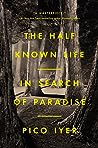
The Half Known Life: In Search of ParadiseThe Half Known Life: In Search of Paradise by Pico Iyer
My rating: 5 of 5 stars

Amazon.in Page

The subtitle to this collection of travel essays might suggest Iyer intends to write about the most idyllic places on Earth. In a way, he does, but he’s also revealing the conundrum of “paradise” by showing the reader places that have been called “paradises,” but which are also some of the furthest places from serenity imaginable. I wouldn’t say that the author is revealing the concept of paradise to be an illusion, but rather that he’s showing that there is an inextricable tangle of dark and light in any earthly paradise. I think the idea is best expressed in a quote from the book, “A true paradise has meaning only after one has outgrown all notions of perfection and taken the measure of the fallen world.” [FYI: the main title is from a quote from Moby Dick.]

From my experience with some of the places that Iyer covers (e.g. Kashmir, Sri Lanka, Varanasi, etc.) I can glimpse the substance that started him digging. It isn’t just that these places are superficially paradisaical (though Kashmir and parts of Sri Lanka are definitely scenically idyllic,) but there is some other (deeper) quality by which these places feel fantastical. Of course, the examples that I mentioned (as well as others: e.g. Jerusalem) are simultaneously examples of the antithesis of paradise. These are troubled places with histories of violence and dysfunction. I even learned that Bali (which doesn’t have its own chapter but is discussed) has barbarity in its own history, and it seems as likely a candidate for true paradise as any.

I enjoyed reading this book. I must admit that part of my fascination with it derived from the fact that I’d tread much of the same ground that Iyer covers. I’d highly recommend the book for readers of travel writing.

View all my reviews

Five Wise Lines from Tsurezuregusa by Kenkō

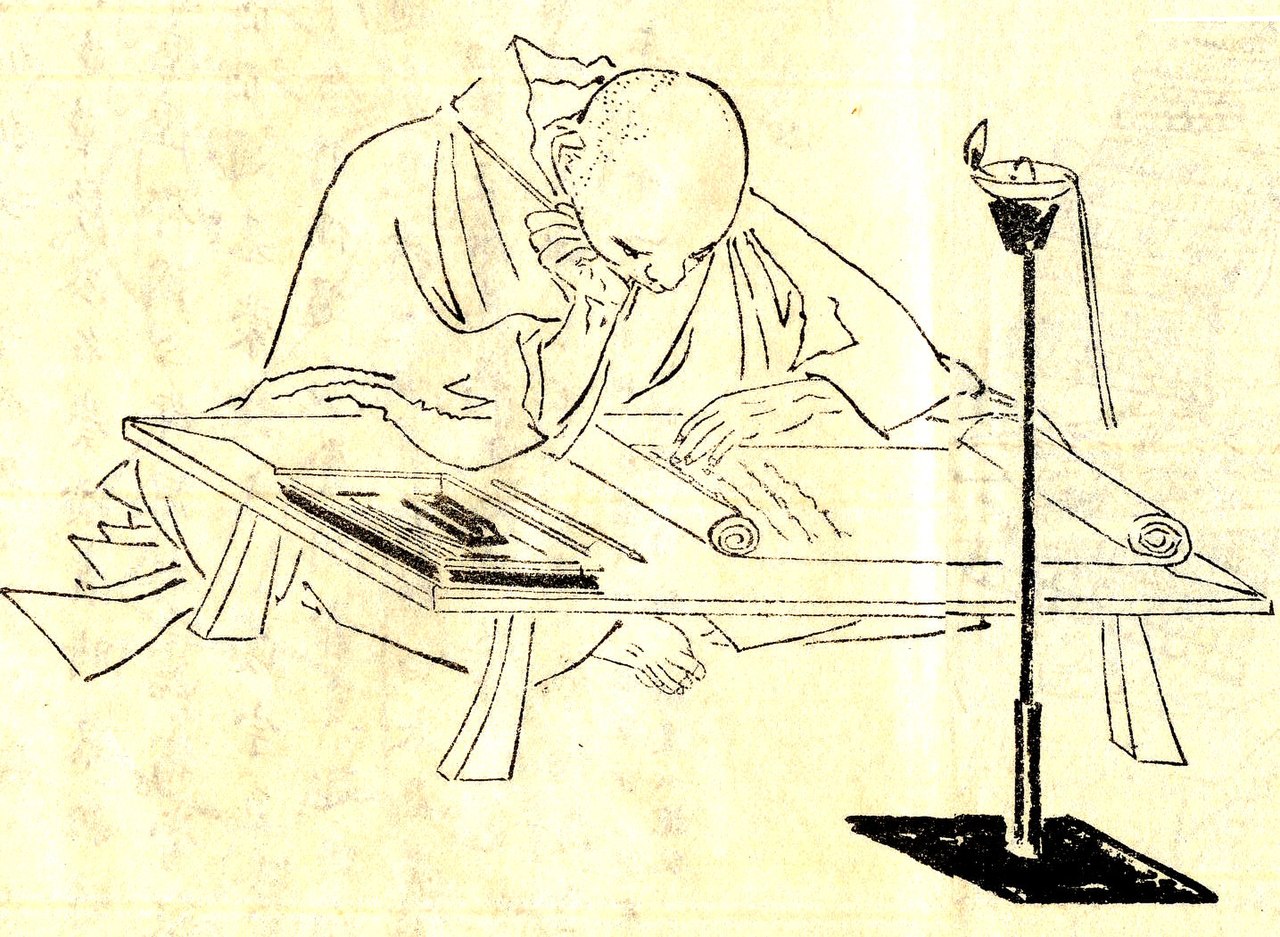
Yoshida Kenkō by Kikuchi Yosai [Date Unknown]

There is much to admire, though, in a dedicated recluse.

Kenkō Yoshida, Essays in Idleness (No. 1)

Going on a journey, whatever the destination, makes you feel suddenly awake and alive to everything.

Kenkō Yoshida, Essays in IdleNess (No. 15)

You can find solace for all things by looking at the moon.

Kenkō Yoshida, Essays in Idleness (no. 21)

Something left not quite finished is very appealing, a gesture toward the future.

Kenkō Yoshida, Essays in Idleness (No. 82)

It’s in easy places that mistakes will always occur.

Kenkō Yoshida, Essays in Idleness (No. 109)

CITATION: Kenkō Yoshida & Kamo no Chōmei. 2013. Kenkō and Chōmei: Essays in Idleness and Hōjōki. London: Penguin. 206pp.

Five Wise Lines from Chōmei’s Hōjōki

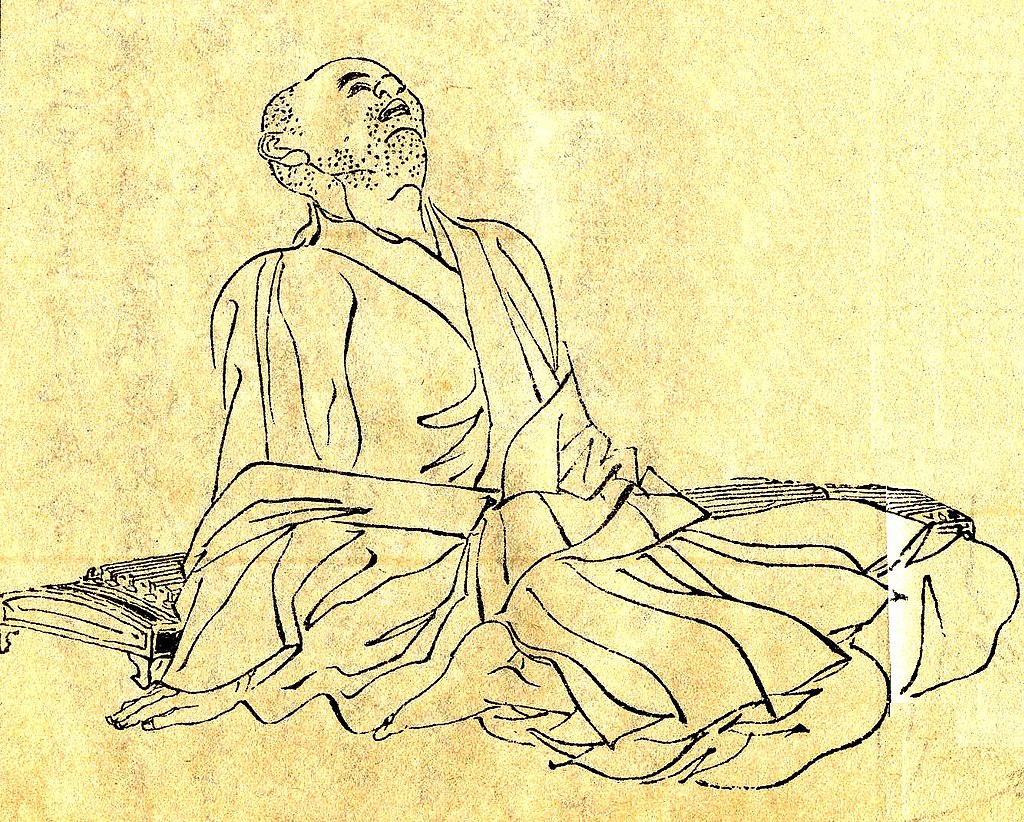
drawing by Kikuchi Yōsai

On flows the river ceaselessly, nor does its water ever stay the same.

 Kamo no Chōmei, Hōjōki

No one owns a splendid view, so nothing prevents the heart’s delight in it.

Kamo no Chōmei, Hōjōki

Knowing what the world holds and its ways, I desire nothing from it, nor chase after its prizes. My one craving is to be at peace; my one pleasure is to live free from troubles.

Kamo no Chōmei, Hōjōki

These days, I divide myself into two uses — these hands are my servants, these feet my transport.

Kamo no Chōmei, Hōjōki

When I chance to go down to the capital, I am ashamed of my lowly beggar status, but once back here again I pity those who chase after the sordid rewards of the world.

Kamo no Chōmei, Hōjōki

Reference: Saigyō Hōshi, Kamo no Chōmei, Yoshida Kenkō. 2021. Three Japanese Buddhist Monks. New York: Penguin Books. 112pp.

Available Here

BOOK REVIEW: The Abolition of Man: Deluxe Edition Carson Grubaugh, et. al.

The Abolition of Man: The Deluxe EditionThe Abolition of Man: The Deluxe Edition by Carson Grubaugh
My rating: 4 of 5 stars

Amazon.in Page

Release Date [for Deluxe Ed.]: July 25, 2023

This is marketed as the first comic book illustrated by an AI. That makes it a very different beast from the usual graphic novel or comic book, and it means the purpose for reading it is entirely different. If I were to rate this for someone who wanted to read an entertaining story (the usual purpose of a graphic novel,) I would rate it “horrible,” “worst-ever,” “unreadable,” – zero stars. However, if you bothered to read the book blurb, you probably aren’t still considering this book for the purposes of entertaining story.

What other reasons might one have for reading this book? I can think of two: one major and one minor. The major purpose is to see what an AI does with illustrations, how it “thinks” (for lack of a better word,) and how it fails. For this purpose, I’d say the book was fascinating to peruse. As a complete neophyte to both AI and graphic arts, I was struck by the “glimpse-comprehensible / close look-grotesque” nature of the illustrations. That is, if one just took a quick look, there tended to be something that felt like it made sense in the panel, but then when you looked closer it was a cabinet of curiosities freak show.

The minor reason for reading this is because one has an interest in the philosophy of mankind in the modern world, a topic that informs the first and last issues (or the philosophy of information, which informs the appendiceal essays.) In this regard the book made some thought-provoking points.

The base text the AI was fed to come up with illustrations varied across the five issues. The first was the eponymous C.S. Lewis book — i.e. “The Abolition of Man.” While this didn’t present the Lewis text word-for-word, it was certainly the most readable portion of the book. The second and third comics drew on text from a comic written by Grubaugh. I assume the AI processed this text somehow because the text presented was often incomprehensible, was full of typos (or what seemed like them,) but had a couple amusing lines by virtue of what I can only assume was unintended sexual innuendo. The fourth issue is almost textless, but what few text bubbles exist were supposedly composed by AI (they don’t have much information value.) [FYI- this penultimate issue is the stuff of nightmares. In places, it looks like a guide to fatal birth defects.] The final issue is a philosophy essay on the role of human dignity in privacy expectations. It’s an interesting enough read, but the graphics are like a PowerPoint by someone who took, but failed, a course on PowerPoint graphic design.

If you’re curious about how close AI is to drawing graphic novels and have an interest in philosophy of humanity and / or information, you’ll find this book to be a worthwhile read. If you’re expecting an interesting story, you’ll be sadly disappointed. If you’re a budding Andy Warhol, looking for a way to make the next artistic breakthrough requiring little effort or creativity on your own part, you might see the next big thing.


View all my reviews

BOOK REVIEW: 100 Poems to Break Your Heart ed. Edward Hirsch

100 Poems to Break Your Heart100 Poems to Break Your Heart by Edward Hirsch
My rating: 5 of 5 stars

Amazon.in Page

Release Date: January 31, 2023

This anthology (and the accompanying analytical essays by Hirsch) covers over two-hundred years of poetry and works with a large set of translated languages as well as poems of English language origin. Therefore, the poems include an eclectic set of forms and schools of poetry. There are narrative poems and philosophical poems. There are sparse poems and elaborate poems. Besides the fact that they are all short to intermediate length poems (a few pages, at most,) the only thing the included poems have in common is some serious subject matter at each poem’s core. There are elegies and cathartic poems of illness or ended relationships, as well as tales of various types of tragedy (personal, global, and of scales in between.)

That said, not all of the poems feature a dark and melancholic tone. There are several poems that are humorous — in a gallows humor sort of way. Such poems include: Dunya Mikhail’s “The War Works Hard,” Harryette Mullen’s “We Are Not Responsible,” and Stanley Kunitz’s “Halley’s Comet.”

Of course, there are many poems that are as devastatingly sad as the title leads one to expect. Of these, Eavan Boland’s “Quarantine,” the story of a man carrying his illness-ravaged wife in search of survival during a famine in Ireland in 1847 takes the award for saddest. There are poems in this book that are more brutal, encompass vaster scales of suffering, or combine lyrical skill and emotional experience more artfully. But none of those poems socked me in the chest like Boland’s. One thing that struck me during my reading was what an intense force multiplier story is in creating poignant poems. Several others among my favorites told stories that made for visceral reads. These include: “Song” by Brigit Pageen Kelly, “The Race” by Sharon Olds, “Terminus” by Nicholas Christopher (also among the most savage tear-jerkers,) and “The Gas-Poker” by Thom Gunn.

Other favorites include: Langston Hughes’s “Song for a Dark Girl,” Miklós Radnóti’s “The Fifth Eclogue,” Stevie Smith’s “Not Waving but Drowning,” and “Mendocino Rose” by Garrett Hongo.

I’d highly recommend this book for poetry readers.


View all my reviews

BOOK REVIEW: The American Sonnet ed. by Dora Malech & Laura Smith

The American Sonnet: An Anthology of Poems and EssaysThe American Sonnet: An Anthology of Poems and Essays by Dora Malech
My rating: 5 of 5 stars

Amazon.in Page

Release date: January 12, 2023

The first one-third of this book is an anthology of sonnets by American poets that highlight some of the characteristics of form and content that evolved in America. Therefore, one shouldn’t expect these to all be fourteen lines of iambic pentameter. America is the land of Whitman, and discomfort with strict rules and constraining requirements along with a desire to etch one’s individuality and voice into all activities is part of what makes a thing American. It’s an enchanting and suitably diverse (also an inherently American requirement) selection of poems, and I think all poetry readers would enjoy reading it. Included among the almost 100 poets are: Walt Whitman, Phillis Wheatley, Natasha Trethewey, Robert Frost, Langston Hughes, Gwendolyn Brooks, Agha Shahid Ali, Claude McKay, Edna St. Vincent Millay, e.e. cummings, Countee Cullen, Natalie Diaz, Emma Lazarus, Terrance Hayes, Muriel Rukeyser, Sylvia Plath, James Wright, Gertrude Stein, Paul Lawrence Dunbar, Ralph Waldo Emerson, and Lucille Clifton. The poets run the gamut from the Colonial Era to present-day heavyweights, and their works approach the sonnet from perfectly conventionally to wildly experimentally.

The remainder of the book is a collection of short essays that discuss various aspects of the sonnet in America. While the editors don’t explicitly group the essays, I would put them in three baskets. First, there are those essays that examine the work of a particular poet and discuss that artist’s influence on the sonnet. Second, some of the essays examine sonnets through the lens of a particular demographic and investigate how poets of that demographic have influenced, been influenced by, or modified the sonnet, be it those of a particular race, sexual identity, place on the autistic spectrum, etc. Third, most of the other essays explore technical aspects such as line length, rhyme schemes, metering, etc.

As I mentioned, I believe poetry readers will enjoy the selection of poems anthologized, herein. The essays are another matter. They are much more of a mixed bag for poets and poetry readers and are more geared toward other scholars. That is to say, some of them are both interesting and useful for poets and poetry readers, but others will probably not be of much interest to the non-academic reader. While the essays are brief and most are quite readable, a number of them either delve into arcane matters or tumble so deeply down the rabbit hole of wokeness that it’s hard to grasp what the author’s point is (or whether he or she has one.)

If you enjoy poetry and are interested in the American influence on the sonnet, this book is well worth reading – at least the poems and a selection of the essays.


View all my reviews

BOOK REVIEW: A Transcendental Journey by Stephen Evans

A Transcendental JourneyA Transcendental Journey by Stephen Evans
My rating: 4 of 5 stars

Amazon.in Page

Release date [for 25th Anniversary ed.]: September 10, 2022

Get Speechify to make any book an audiobook

A Transcendental Journey intersperses a quirky travelogue of a rambling road-trip through America with a book report on selected essays of Ralph Waldo Emerson. On a positive note, the book offers genuinely funny lines within a generally amusing wandering discussion of events, and there’s something authentic about the voice – you may find yourself hearing the words in the voice of someone you know (or a character) who is idiosyncratic and nerdy in a way that is not uncommon in America. I did. In addition to the funny lines, there are statements that feel profound and are definitely thought-provoking.

Some of the offbeat elements go a bit too far, reaching the point of distraction. For some reason, the author decided to note not only each time he drank a Coca-Cola, but the size of the beverage. At first, it’s just a bit of weirdness that seems to contribute to the aforementioned authentic voice, but eventually one is made sad by the idea that this guy is giving himself diabetes and involving you, as reader, in the process. I can’t say that the philosophy bit is particularly well integrated into the travelogue, and the author often seems like an Enlightenment guy more than a Transcendentalist. (Transcendentalism being an offshoot of Romanticism, a philosophy meant to counteract the perceived cold, hard rationality of Enlightenment thinking and take a more mystical / spiritual [though not necessarily religious] view of the world.) That said, I can’t fault an inability to keep these schools of thought in boxes, as my own philosophy and worldview are fairly ala carte. My point is just that someone who picked up the book expecting to have a clearer view of what distinguishes Transcendentalism from other philosophies might come away confused.

If you enjoy travelogues, particularly of the United States, you’ll find this book a fun read. If you’re familiar with the works of Emerson, I wouldn’t expect any deep philosophical insight, but there are some fine quotes and discussions to remind you of Emerson’s great ideas and beautiful language. (And there are certainly many varied insights to ponder.)

View all my reviews

ESSAY REVIEW: The Kentucky Derby is Decadent and Depraved by Hunter S. Thompson

The Kentucky Derby Is Decadent and DepravedThe Kentucky Derby Is Decadent and Depraved by Hunter S. Thompson
My rating: 5 of 5 stars

Online Available Free: Grantland

Available within the collection: The Great Shark Hunt

This story is cited as the first work of gonzo journalism, a highly entertaining style of immersion journalism which takes liberties with objectivity and factual detail for comedic effect or heightened narrative impact. The Kentucky Derby is more setting than subject of the story. It’s Thompson attempting to throw together coverage of the horse race at the last minute for Scanlan’s Monthly, a magazine that existed less than a year. So, the story is as much Thompson racing around trying to con his way into some press passes as he and the graphic artist sent by the magazine go on a booze-fueled junket on and around the race track grounds.

The story is laugh-out-loud funny in places, and features Thompson’s irreverent and fast-paced style throughout. It really was something new. Thompson, apparently, thought he’d failed completely when he sent in the story, but the response indicated that – rather – he’d invented something new, something for which there would be a huge market.

It’s definitely worth reading this story, just don’t expect deep insight into the horse racing tradition of Kentucky.

View all my reviews

ESSAY REVIEW: Confessions of a Book Reviewer by George Orwell

Confessions of a Book ReviewerConfessions of a Book Reviewer by George Orwell
My rating: 5 of 5 stars

Amazon.in Page

Available free through the Orwell Foundation

An amusing essay that reveals the dirty secrets of book criticism, while proposing that the vast majority of books don’t merit a review. Just a few pages long.

View all my reviews

BOOK REVIEW: An Essay on Criticism by Alexander Pope

An Essay On CriticismAn Essay On Criticism by Alexander Pope
My rating: 5 of 5 stars

Amazon.in Page

View free at The Poetry Foundation

This essay is a poem, i.e. heroic couplets in iambic pentameter, to be precise. It advises both poets and critics of some of the mistakes made in their respective pursuits (though at the outset he warns that bad criticism is a bigger sin than bad poetry.) To critics, Pope advises against nit-picking, as well as failure to recognize the tradeoffs inherent in poetry – i.e. sometimes the better sounding line is grammatically strained, or the wittier line may be less musical. To poets, he lays out a range of insights from stylistic to psychological, and it is an essay both about improving the product of writing as well as improving the relations between writers and critics.

Those unfamiliar with the essay will still be aware of a few of its lines, these include: “A little learning is a dang’rous thing;” “To err is human, to forgive, divine.” “For fools rush in where angels fear to tread” and anyone who’s learned to write iambic pentameter (and the sins, thereof) will remember: “And ten low words oft creep in one dull line.”

But those everyday aphorisms are by no means the full extent of this essay’s wise words and its clever phrasing. My favorite couplets of the poem include:

“Some neither can for wits nor critics pass, // As heavy mules are neither horse nor ass.”

“Trust not yourself, but your defects to know, // Make use of ev’ry friend – and ev’ry foe.”

“For works may have more wit than does ‘em good, // As bodies perish through excess of blood.”

“Words are like leaves; and where they most abound, // Much fruit of sense beneath is rarely found.”

“True ease in writing comes from art, not chance, // As those move easiest who have learn’d to dance.”

“Some praise at morning what they blame at night; // But always think the last opinion right.”

“Unhappy wit, like most mistaken things, // Atones not for that envy which it brings.”

“All seems infected that th’ infected spy, // As all looks yellow to the jaundic’d eye.”

“’Tis best sometimes your censure to restrain; // And charitably let the dull be vain:”

I delighted in this poem. It’s full of food-for-thought, and reads remarkably well for a piece from the year 1711.


View all my reviews