BOOK REVIEW: “War is a Racket” by Smedley D. Butler

War is a Racket: The Antiwar Classic by America's Most Decorated SoldierWar is a Racket: The Antiwar Classic by America’s Most Decorated Soldier by Smedley D. Butler
My rating: 5 of 5 stars

PDF available online

This impassioned essay is a call for a more restrained — some would call it isolationist — application of military force. Regardless of how one might feel about the isolationist stance, you’ll likely be moved by the essay’s central premise that we have too much war because it’s profitable — not profitable for those who fight and die in wars but for businessmen and politicians.

Butler, a US Marine Corps General, was a fascinating character — a two-time Congressional Medal of Honor recipient who served in the Philippines, Tianjin (during the Boxer Rebellion,) at various places across Central America and the Caribbean, and in the First World War in Europe. He was also a whistleblower about a plot to unseat FDR. Butler writes in a conversational style that exudes a commanding presence.

I’d highly recommend this essay for its critical insights by one of the most impressive Marine Corp officers of all time.

View all my reviews

Wen Fu 11 “Banal & Sublime” [文赋十一] by Lu Ji [陆机] [w/ Audio]

Some shoots and stalks stand out --
Taller than the masses.
Their form eludes pursuit,
Sound slips through, like gases.
Great lines are always disjunct:
Don't weave with mid'ling lyrics.
They're pent up and peerless:
Chop them? A win that's pyrrhic.
Jade flecks make mountains shimmer,
Pearly waters enchant.
The thicket mustn't be clipped
If Kingfisher's glory, grant.
Stitched words end under snow,
Work the weft, steady and slow.

The original in Simplified Chinese is:

或苕发颖竖,离众绝致。
形不可逐,响难为系。
块孤立而特峙,非常音之所纬。
心牢落而无偶,意徘徊而不能揥。
石韫玉而山辉,水怀珠而川媚。
彼榛楛之勿翦,亦蒙荣于集翠。
缀下里于白雪,吾亦济夫所伟。

Wen Fu 7 “Music” [文赋七] by Lu Ji [陆机]

Matter comes in countless varieties,
And the forms are evershifting, as well.
Writers must dance the varied characters
To dulcet lines where elegance dwells,
Finding the right pace, cadence, and stresses
To blend like harmony in the five hues.
Though the tune fades in and out randomly
And the path is rugged and hazard-strewn,
Those who know the ways of change and order
Will find all falls into place with a flow.
But if one misses the proper pivots
It's like grabbing the tail to steer the nose --
Like yellow painted onto wet, black walls,
One's writing becomes muddy, and it stalls.

The original in Simplified Chinese:

其为物也多姿,其为体也屡迁。 
其会意也尚巧,其遣言也贵妍。
暨音声之迭代,若五色之相宣。
虽逝止之无常,固崎锜而难便。
苟达变而识次,犹开流以纳泉。
如失机而后会,恒操末以续颠。
谬玄黄之粗叙,故浍涊而不鲜。

Wen Fu 6 [文赋六] “Modes of Writing” by Lu Ji [陆机]

Poetry is poignant and ornate;
Essays are deep and content-centric.
Stele entries are true to the essence;
Paeans, moving and melancholic.
Inscriptions are concise and kindly;
Telltales have a logic and cadence.
Odes show great grace and refinement;
Op-eds are unrepressed and intense.
Music 's penetrating and stately;
Speeches must sparkle with cleverness.
Though there ever so many forms,
All thwart evil and allow release:
Expression, sans pride overweening,
With no waste of words or lost meaning.

Original in Simplified Chinese:

诗缘情而绮靡,赋体物而浏亮。
碑披文以相质,诔缠绵而凄怆。
铭博约而温润,箴顿挫而清壮。
颂优游以彬蔚,论精微而朗畅。
奏平彻以闲雅,说炜晔而谲诳。
虽区分之在兹,亦禁邪而制放。
要辞达而理举,故无取乎冗长。

BOOK: “Toleration and Other Essays” by Voltaire

A Treatise on Toleration and Other Essays (Great Minds Series)A Treatise on Toleration and Other Essays by Voltaire
My rating: 5 of 5 stars

Project Gutenberg — Free Access

This collection gathers together eight essays and a poem. The theme that interconnects these works is a petition to avoid petty tribalism and irrationality / superstition in the practice of one’s religion. The titular essay, “On Toleration,” sets the collection’s tone, beginning with its detailing of the murder of Jean Calas on religious grounds and its exploration of many more acts of savagery attributable to sectarian forces in alliance with authoritarian governments. The poem, “Poem on the Lisbon Disaster,” echoes the central idea of “Candide” — i.e. the idea that we live in the best of all possible worlds is patently false.

As one would expect of Voltaire, there is plenty of humor and satire throughout these pieces. The arguments are also generally well supported by facts. It is clear that Voltaire possessed a great deal of the knowledge of his day. That said, the reader may well find some factual errors. Most notably, Voltaire tends to attribute a kind of enlightened utopian vision to cultures with which he was likely largely unfamiliar as he builds a case against many within the culture with which he is familiar. This isn’t to say that there isn’t some truth to Eastern traditions being historically more tolerant of other sects than the Abrahamic religions, but the degree to which he extends these idyllic views of those outside of Europe (and the details, thereof) don’t always seem to comport with the historic record.

While some may be inclined to dismiss this book as a collection of anti-religion writings, it is really not anti-belief at all. (Though he does poke holes in many a Biblical myth, so too does he actually provide a deist argument in favor of the existence of a god or gods in the book’s final essay.) Instead, the collection is anti-intolerance, anti-superstition, and anti-authoritarianism. I’d highly recommend this book for all readers. Whatever flaws it may contain are outweighed by the great importance of its message and the cleverness with which Voltaire conveys said message.

View all my reviews

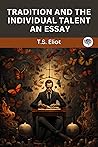
ESSAY: “Tradition and the Individual Talent” by T.S. Eliot

Tradition and the Individual Talent: An EssayTradition and the Individual Talent: An Essay by T.S. Eliot
My rating: 5 of 5 stars

Read for free at the Poetry Foundation

Amazon.in Page

While this is a controversial essay and I don’t accept it wholesale, myself, I would wholeheartedly recommend it as required reading for poets (and other artists.) What is Eliot’s controversial thesis? It’s that poetry should be less about the poet. That broad and imprecise statement can be clarified by considering two ways in which Eliot would make poetry less about the poet. First, Eliot proposes that poets should be in tune to the historic evolution of their art and — importantly — should not be so eager to break the chain with the past masters. He’s not saying a poet needs to be a literary historian, but rather that one be well-read in the poetry of the past. Second, Eliot advocates that a poet avoid packing one’s poetry with one’s personality, and – instead – let one’s personality dissolve away through the act of creation.

A quote from the essay may help to clarify — Eliot says, “Poetry is not a turning loose of emotion, but an escape from emotion; it is not an expression of personality, but an escape from personality.”

One can imagine the accusations of pretension and dogmatism that Eliot received in 1919 from the mass of poets who were moving full speed ahead into poetry that was suffused with autobiography, was avant-garde, and which was free of meter, rhyme and other compositional elements that had once been seen as the defining characteristics of poetry.

I don’t see this essay as being the map to our new home, but rather as the catalyst of a conversation that could move us to a more preferable intermediary location. I have, too often, picked up a collection by a young poet that was entirely autobiographical and (also, too often) of the “everybody hates me, nobody loves me, I think I’ll go eat worms” variety of wallowing in personal feelings. And I always think, when I want to read something depressing, I’ll read something from someone who has lived tragedy — e.g. a Rwandan refugee, not something from a twenty-four-year-old MFA student at some Ivy League school.

So, yeah, maybe we could use more connection to the past and a bit less autobiographical poetry from people who haven’t lived a novel-shaped life.

View all my reviews

BOOKS: “Hōjōki” by Kamo no Chōmei; Trans. by Matthew Stavros

Hojoki: A Buddhist Reflection on Solitude: Imperfection and Transcendence - Bilingual English and Japanese Texts with Free Online Audio RecordingsHojoki: A Buddhist Reflection on Solitude: Imperfection and Transcendence – Bilingual English and Japanese Texts with Free Online Audio Recordings by Kamo no Chōmei
My rating: 5 of 5 stars

Amazon.in Page

Release Date: May 7, 2024 [for Tuttle’s bilingual edition]

This is the Japanese Walden, except that it was written several hundred years before Thoreau’s essay and was predominantly philosophically informed by Buddhism rather than Transcendentalism. (Though those philosophical systems do agree on a number of points, most relevantly that materialism is not a sound route to happiness.) Like Walden, Hōjōki is an autobiographical promotion of the hermitic lifestyle. Both works sing the virtues of life in a simple, rustic cabin in a natural setting, a life of minimalism and subsistence living.

There are many translations of this work available, and so I’ll spend the remainder of this review on what differentiates this edition from the two others that I’ve read. First and foremost, the other versions I’m familiar with were presented as prose essays. This edition is presented in verse, which I understand to be the form that the original Japanese work employed. I should say that in some places the work comes across as poetic in the conventional sense, though in others it seems like a versified essay.

Secondly, this edition has a few handy ancillary features. One is that it is bilingual. Romanized Japanese allows the reader to experience the sound quality of the original. This edition also has graphics in the form of maps, artwork, and photographs. Some of the graphics support or expand upon the information delivery while others seem to be more a matter of creating atmospherics. Also, there are explanatory endnotes that help readers unacquainted with Kamakura Period Japan to understand some of the book’s references that might otherwise remain unclear.

I enjoyed and benefited from reading this edition, even having read others. If you are looking for insight into the ascetic life, I’d highly recommend it.

View all my reviews

BOOKS: “Simple Passion” by Annie Ernaux

Simple PassionSimple Passion by Annie Ernaux
My rating: 5 of 5 stars

Amazon.in Pge

I’ll admit, I picked up this book because Ernaux won the 2022 Nobel Prize for Literature and I’m uncomfortable being ignorant of the work of a Literature Nobel Laureate. Her work is atypical of Nobel Prize winners. She is primarily known as a memoirist rather than a novelist, poet, or even essayist, and while she has a large body of works, many are quite short for prose work — i.e. under 100 pages.

This is a straightforward story of obsession, the author’s obsession with a married man, a diplomat from Eastern Europe during the late days of the Cold War. (The book doesn’t get into any Cold War intrigues, so don’t expect any. It’s a completely personal story.) The autobiographical narrative describes the lifecycle of obsession and is loaded with psychological insight. One sees the degree to which Ernaux’s yearning to be with this man intrudes on all aspects of her life, in as much as she can be said to have a life, so much of it being laid aside for their periodic dalliances. It is the kind of compulsion known mostly to young first lovers and those of addictive personalities.

A couple of the most compelling insights come as fourth wall breaks when Ernaux offers insight into her thoughts on writing. (One is that writing should have an effect like pornography [not necessarily be pornographic,] and another is that she writes to learn if anyone else does the things she does.)

I enjoyed read this. It’s an extremely fast read as it’s only around sixty pages and puts the reader in that compulsive mindset. I’d highly recommend it. I can’t speak to how typical it is of her work because it’s the first I’ve read from her, but it was mentioned prominently in the “best of” lists that came out around the time of her Nobel win.

View all my reviews

Five Wise Lines from In Praise of Shadows by Jun’ichirō Tanizaki

Have you never felt a sort of fear in the face of the ageless, a fear that in that room you might lose all consciousness of the passage of time, that untold years might pass and upon emerging you should find you had grown old and gray?

But our thoughts do not travel to what we cannot see. The unseen for us does not exist.

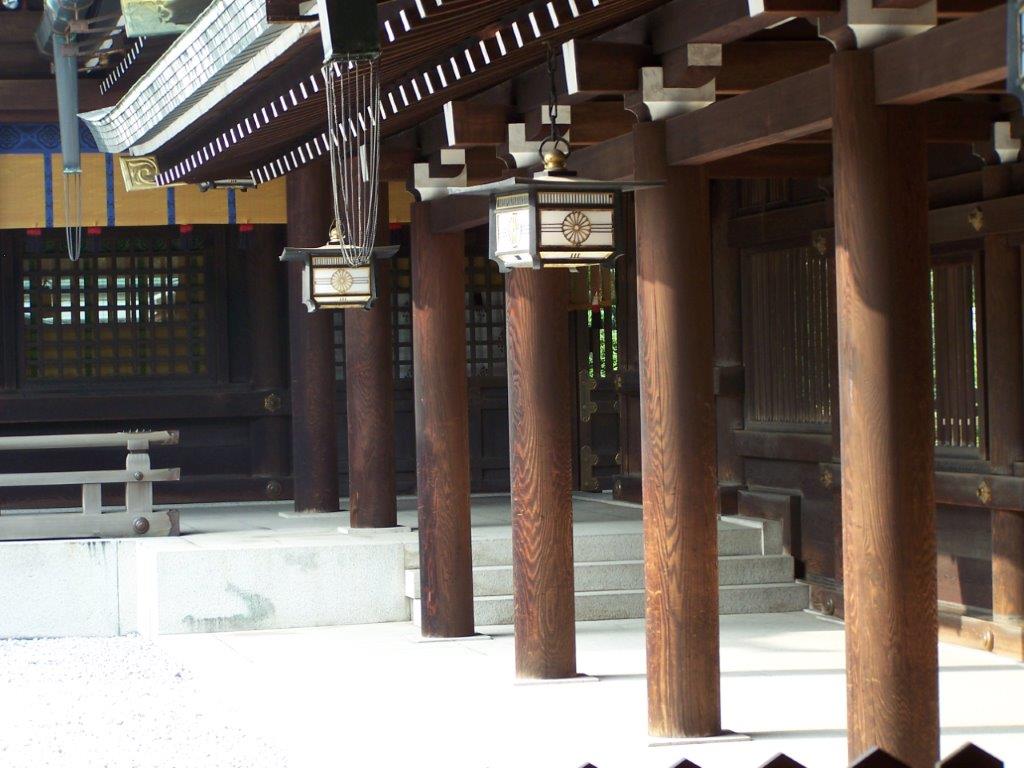
This was the genius of our ancestors, that by cutting off the light from this empty space they imparted to the world of shadows that formed there a quality of mystery and depth superior to that of any wall painting or ornament.

I wonder if my readers know the color of that ‘darkness seen by candlelight.’ It was different in quality from darkness on the road at night. It was a repletion, a pregnancy of tiny particles like fire ashes, each particle luminous as a rainbow.

Whenever I see the alcove of a tastefully built Japanese room, I marvel at our comprehension of the secrets of shadows, our sensitive use of light and shadow.

BOOKS: In Praise of Shadows by Jun’ichirō Tanizaki

In Praise of ShadowsIn Praise of Shadows by Jun’ichirō Tanizaki
My rating: 5 of 5 stars

Amazon.in Page

Tanizaki’s essay on Japanese aesthetics doesn’t just show the reader the simple, rustic, and weathered traits of Japanese beauty, it fully submerges them in an otherworldly place ruled by different principles of seeing. So enamored with this pre-modern Japanese aesthetic was Tanizaki that we are convinced he would give up all present-day conveniences to see the world this way (but, alas, he recognizes the impossibility of maintaining a household or business in today’s world that way.)

While the book is principally a tour of this Japanese shadow world, moving from architecture to toilets to lacquerware to Noh plays to skin tones to hotels (with other stops along the way,) it is also a critique of modernity, and particularly a modernity shaped by the West by virtue of Western countries building a lead in a number of key technologies. The most crucial of these technologies, and the one Tanizaki most decries, is electric lighting, which does away with the artistic beauty that derives from the interplay of varied toned shadows (and occasionally a little bit of light.) [I should say, he’s not bashing the Western technology or ways, but rather how poorly they work with maintaining Japanese aesthetic ways.]

I’d highly recommend this book for all readers. If you’re interested in aesthetics, art, architecture, culture, or “things Japanese,” then all the more so, but I can’t remember the last time description pulled me into a book as hard as this one. The essay can be a bit rambling and shifts from euphoria to rant and back, rapidly, but that is part of its magic.

View all my reviews